
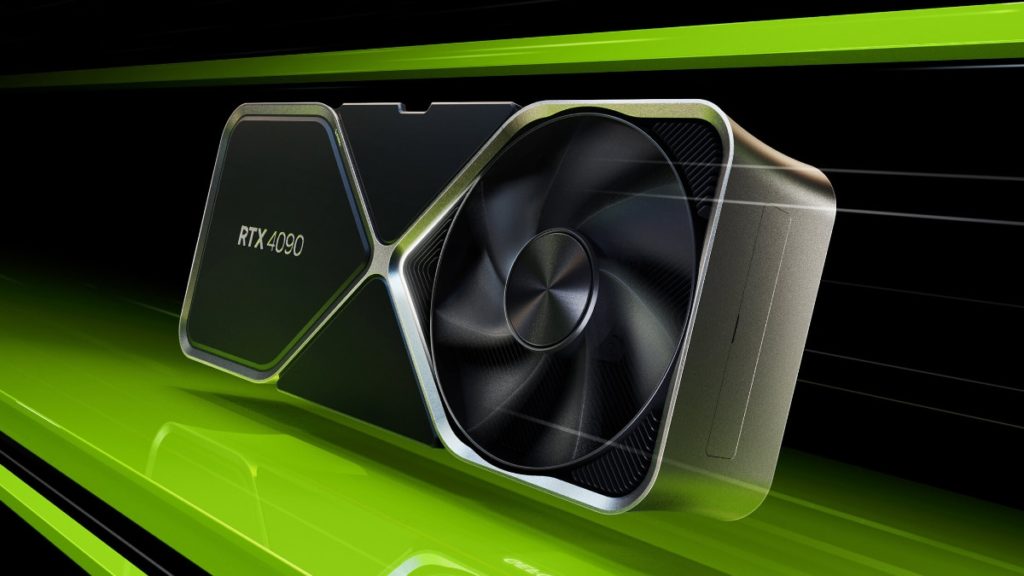
The NVIDIA GeForce RTX 4090 is up to 60% faster than the GeForce RTX 3090 Ti in terms of rasterization performance, according to an early benchmark published on the Geekbench 5 database that suggests the new Ada Lovelace-powered flagship can reach a CUDA Score of 424,332. NVIDIA has claimed that the GeForce RTX 4090 is twice as fast as the GeForce RTX 3090 Ti while using the same amount of power.

From a Wccftech report:
While NVIDIA has been feeding gamers with DLSS 3 and Ray Tracing performance numbers, there’s been little information regarding the rasterization performance of their next-gen parts. Now, we’ve got the first non-DLSS and non-RT benchmark leak out within the Geekbench 5 CUDA database.
The NVIDIA GeForce RTX 4090, not knowing if this was a reference Founders Edition or a custom AIB design, was tested on an AMD Ryzen 9 7950X CPU platform with 32 GB of DDR5-6000 DRAM. The graphics card offered a maximum reported frequency of around 2.58 GHz. In terms of CUDA performance, the graphics card scored 417713 points. For comparison, the RTX 3090 Ti scores a total of 260,346, and the RTX 3090 scores a total of 238,123 points in the same benchmark. This is a 60% and 75% increase over those graphics cards, respectively.
The NVIDIA GeForce RTX 4090 will be released on October 12 at a starting price of $1,599.00. Key specifications of the Founders Edition include 16,384 CUDA Cores, a 2.52 GHz boost clock, 24 GB of G6X VRAM, and a graphics card power rating of 450 watts.
Discussion (9 replies)
Join Discussion →That sounds like a vast difference from 200 to 300%
60% is still a fairly substantial generational jump - if it more or less applies across the board, but yeah, when your marketing is saying 400%, that's... not quite the same bracket.
They never claimed that for rasterisation performance, only for some DLSS stuff.
Hmm.
Well, yeah, in the fine print.
But the headlines were all "Up to 400%" -- without qualifiers.
The thing is obviously impressive, its also gigantic, requires its own power outlet, and it costs your first born.
In the end, this is not the product, the products are the 4080 variants. These things are the equivalent of limited edition suped-up Corvette or some such.
Takes mindshare, works as a profitable marketing tool.
I don't know why AMD won't do the same, but I'd imagine they can't beat a top nvidia card even if they go insane in the specs, and there is no point if you can't beat them. Wished they would try though.
60% of the time it's faster every time.
NVIDIA GeForce RTX 4080 lineup revealed:
So when will GPU manufacturers provide cards with slots for user installed memory like motherboard manufacturers do?
Try comparing memory bandwidth and latency between video card memory and system memory. That will answer your question or validate it.