
RDNA 4 Architecture Breakdown
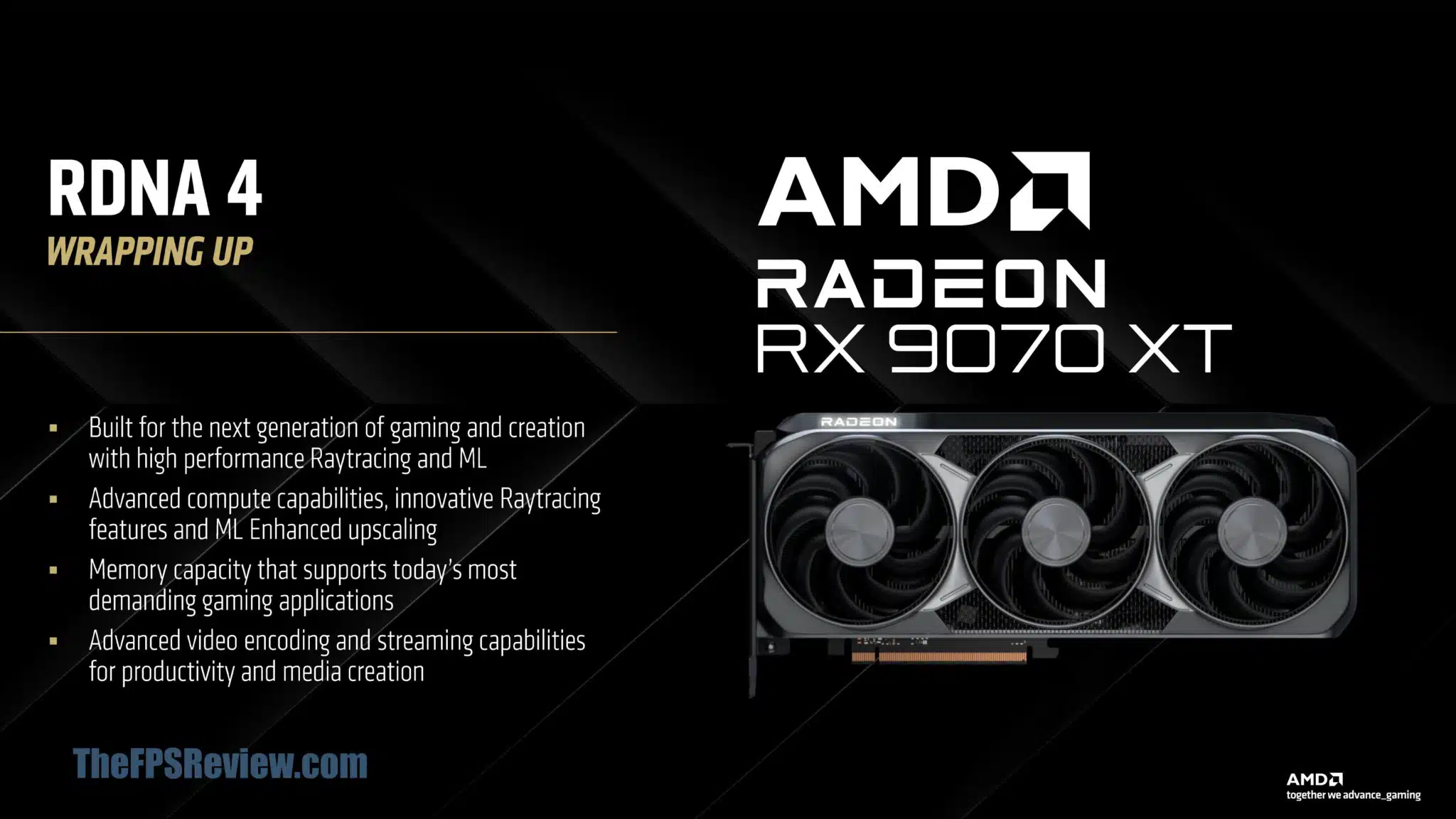
On this page, we will not post the entire RDNA 4 Architecture Press Deck for your viewing pleasure, with some commentary from us.
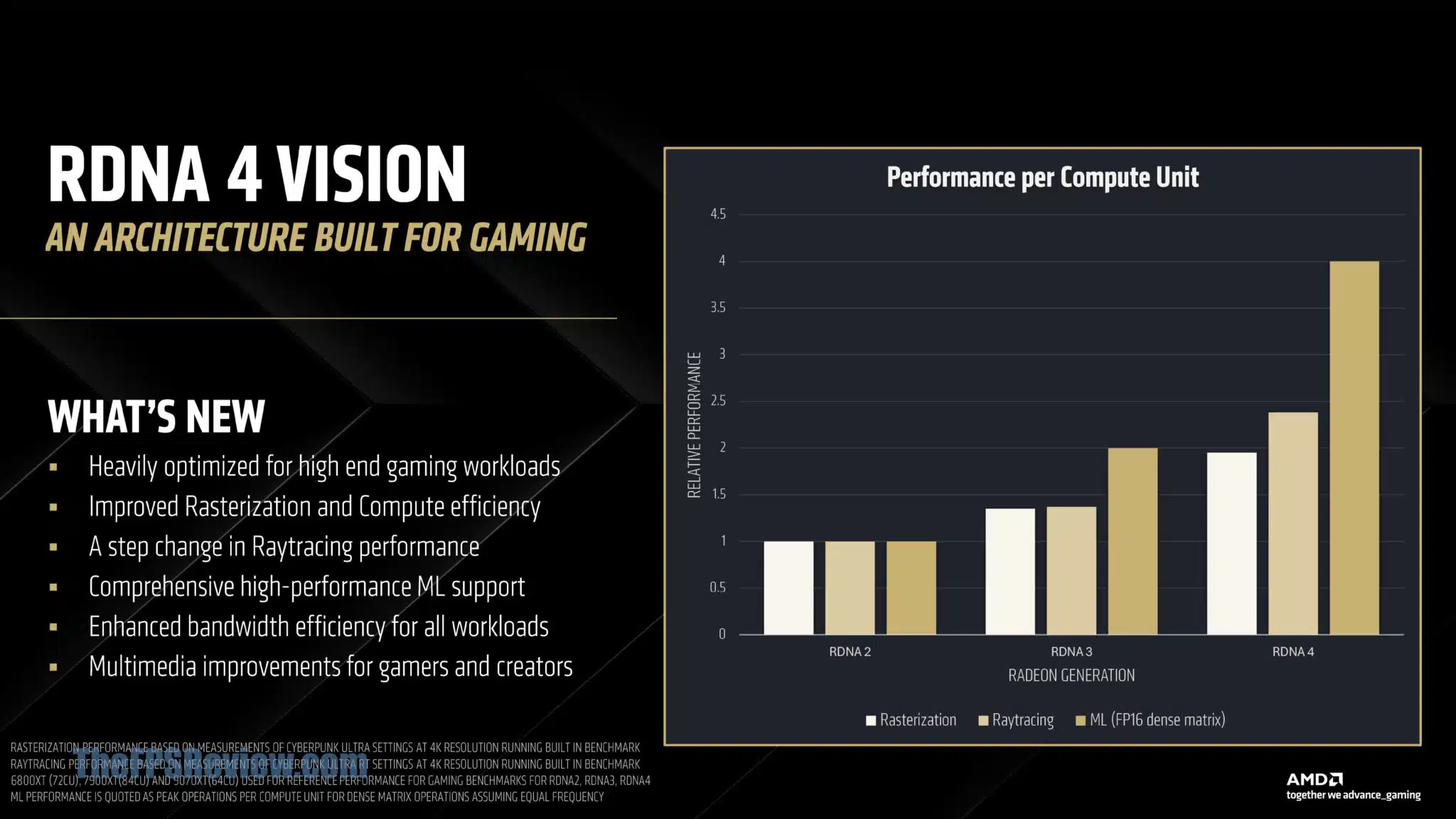
The RDNA 4 vision was to develop a compute unit built for high-end gaming workloads, improving rasterization and compute efficiency and a step change in Raytracing performance. AMD also designed it with high-performance ML support and enhanced bandwidth efficiency for all workloads, as well as multimedia improvements for gamers and creators. There was a large focus on AI performance this generation, as well as Raytracing, at least according to the graph.
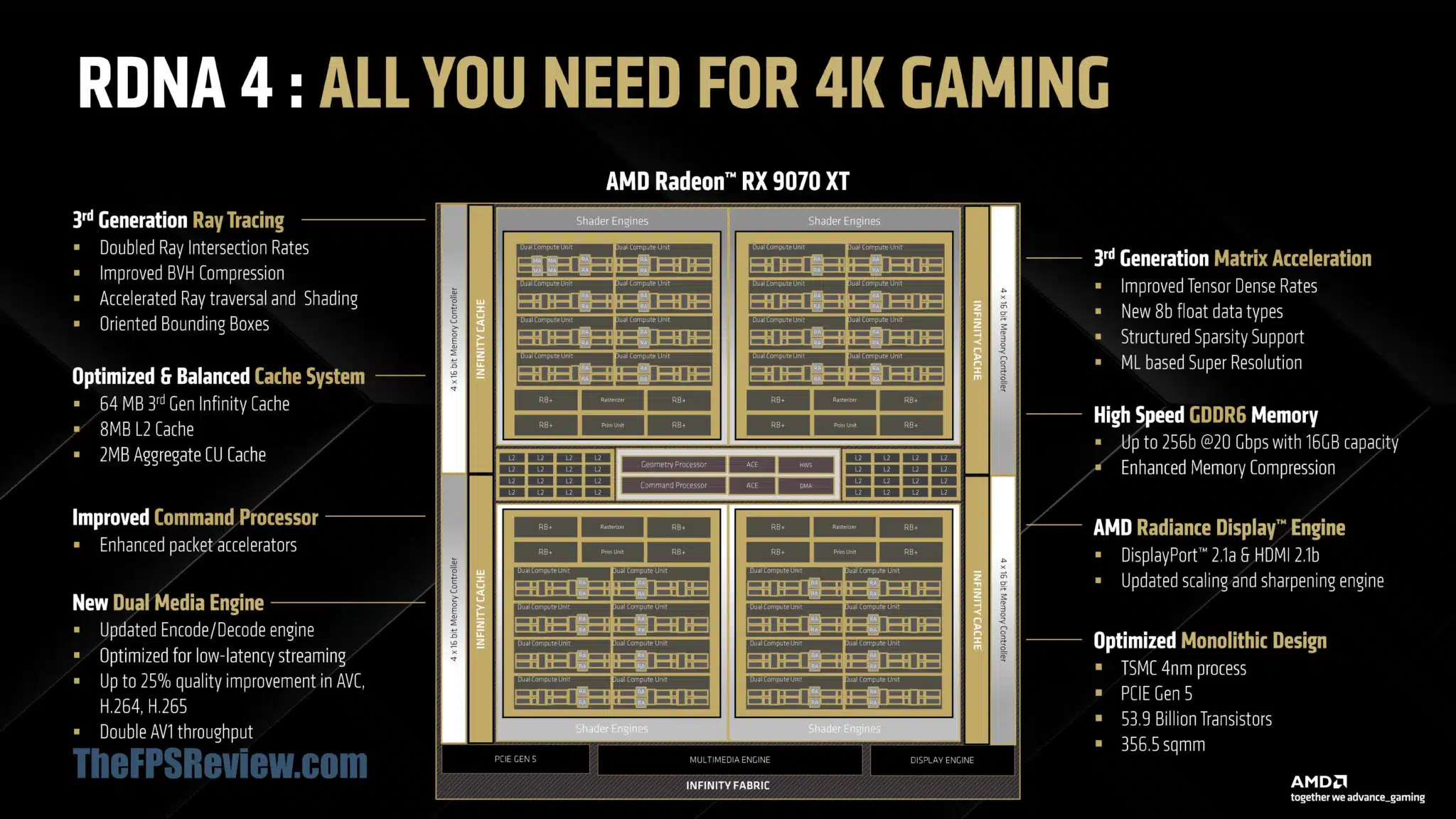
The second screenshot above is a high-level overview of the improvements. Take note that with the 3rd Generation Ray Tracing units, they have been improved to Double Ray Intersection Rates and Improved BVH Compression with improvements to Ray traversal and Shading. The improved AI acceleration with the 3rd Generation Matrix Accelerators has improved Tensor Dense Rates, new 8b float data types, Structured Sparsity Support, and ML-based Super Resolution support.
There are also improvements to bandwidth, such as an optimized cache system. This uses 64MB of 3rd Gen Infinity Cache and 8MB of L2 Cache with 2MB Aggregate CU Cache. It is connected with a 256-bit GDDR6 memory interface at 20 Gbps with 16GB capacity and memory compression.
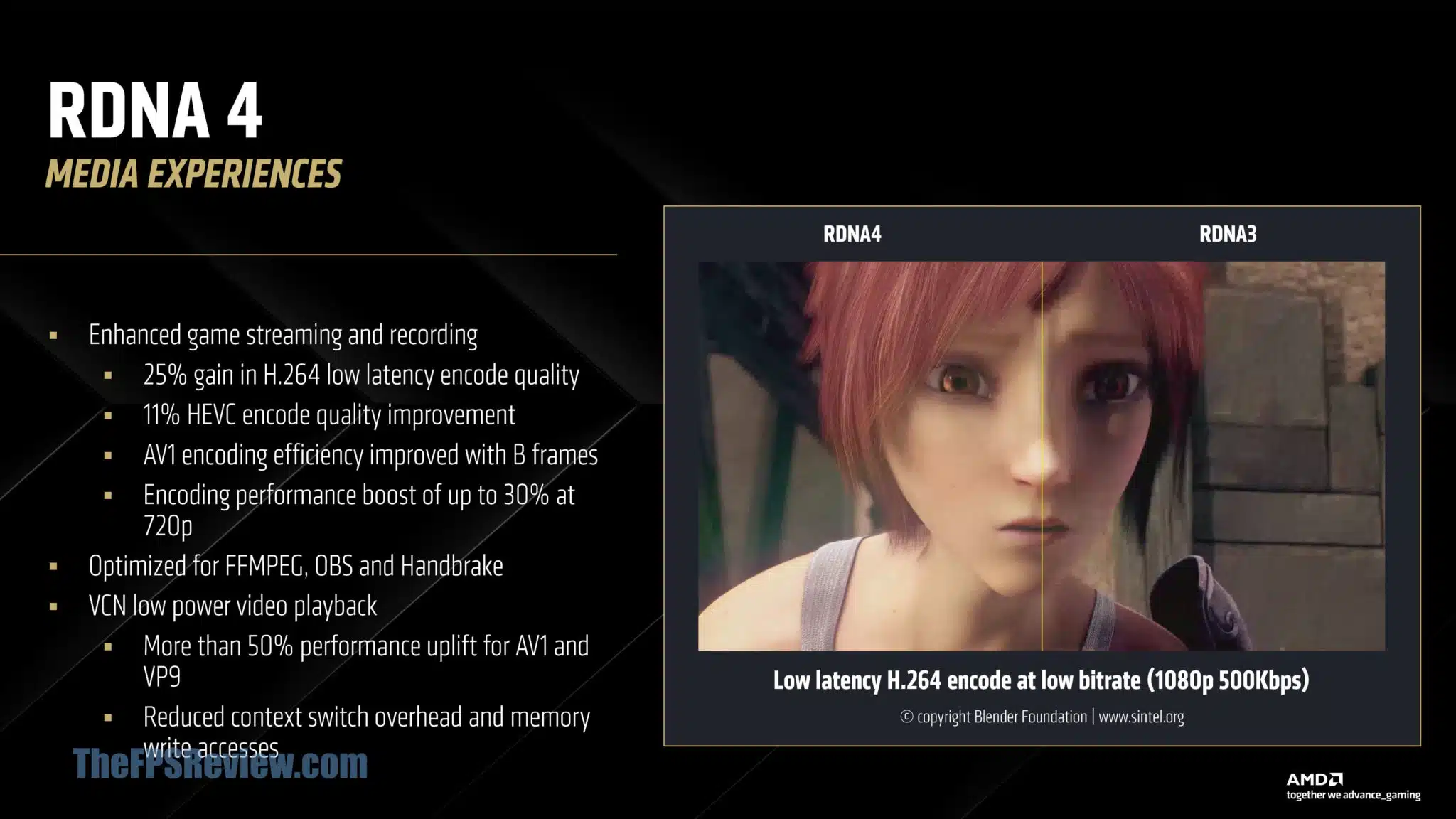
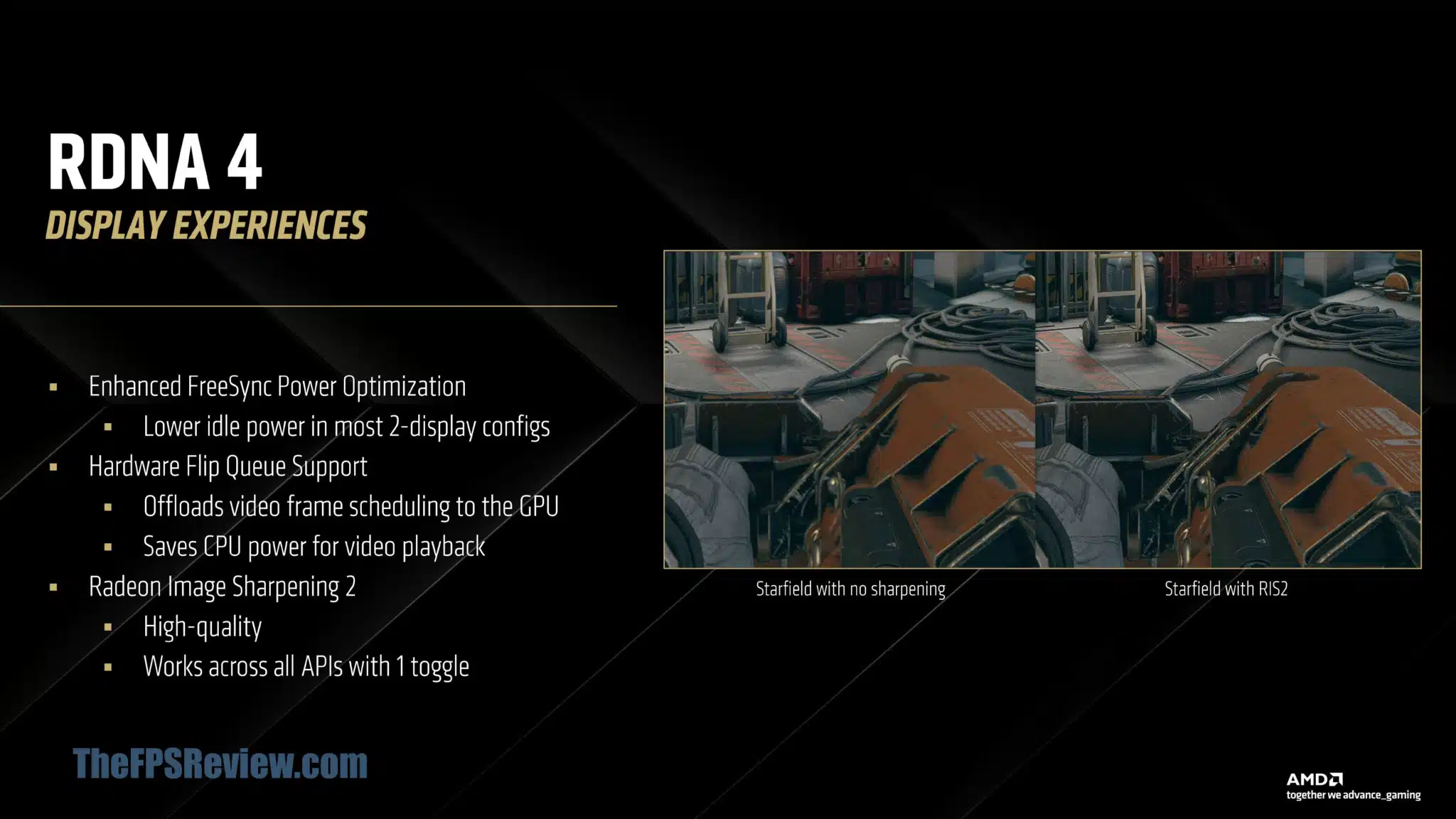
There are some big improvements to the Media Engine and AMD Radiance Display Engine. The Encode/Decode engine is updated and optimized for low-latency streaming with up to 25% quality improvement in AVC, H.264, and H.265 with double AV1 throughput. AMD is claiming a 30% encoding boost at 720p and updates to reduce overhead. The Radiance Engine supports DisplayPort 2.1a and HDMI 2.1b with an updated scaling and sharpening engine.
Overall, RDNA 4 is built on a TSMC 4nm process and supports PCIe Gen5 with 53.9B transistors.
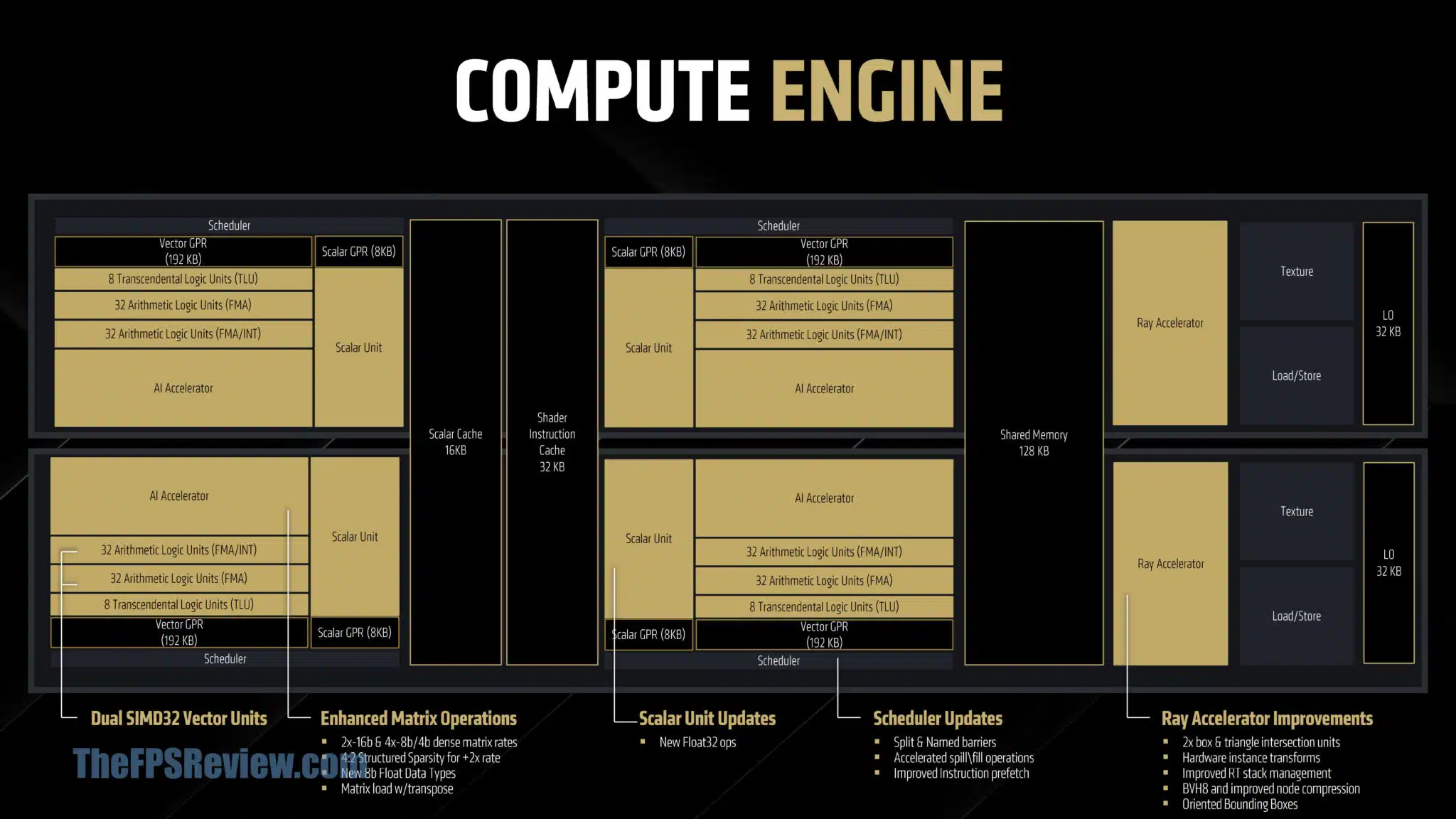
Above, you will find the new Compute Engine in RDNA 4. It’s a dual SIMD32 Vector Unit configuration and has major updates to the Matrix Operations with new ops supported.
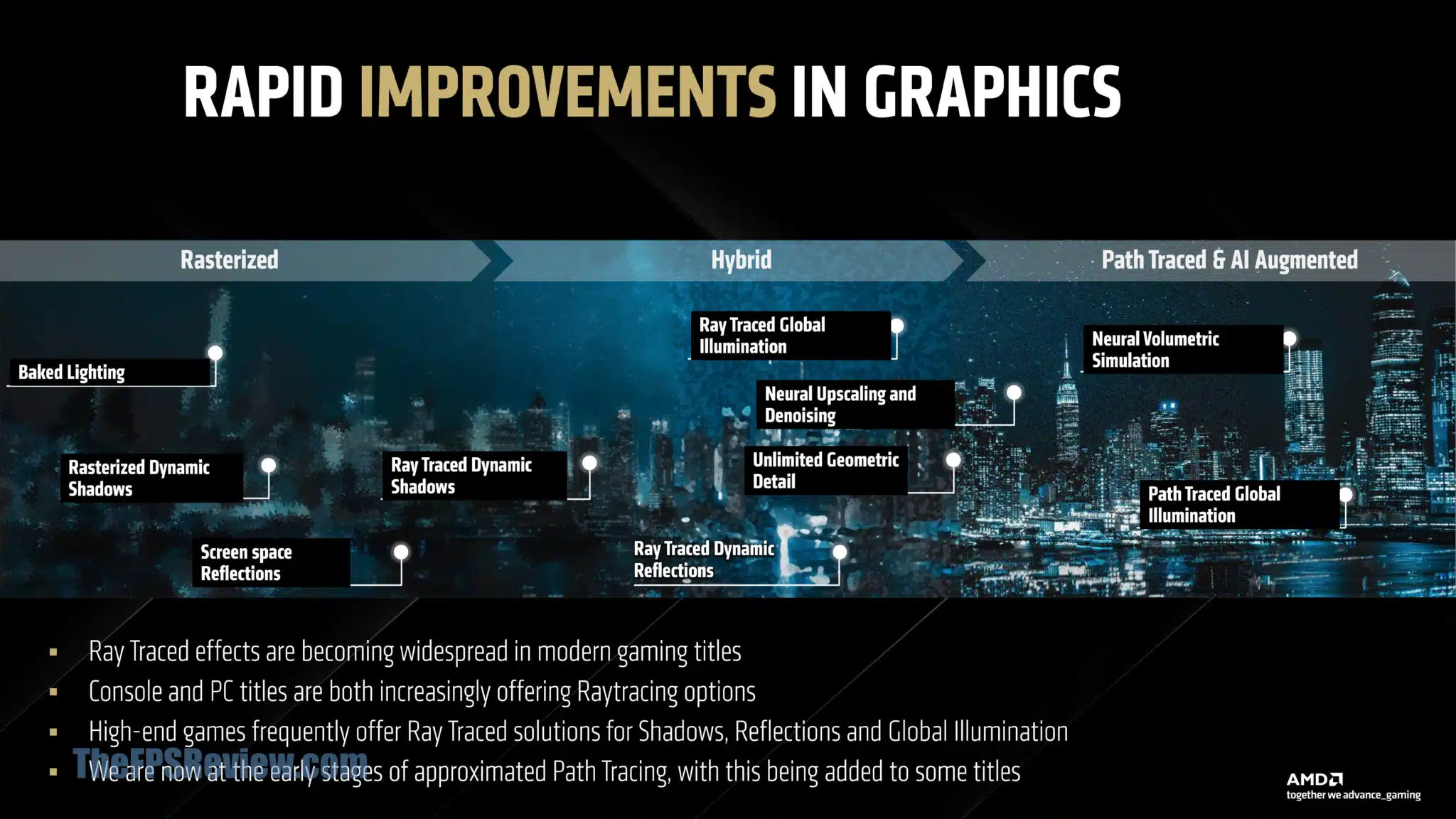
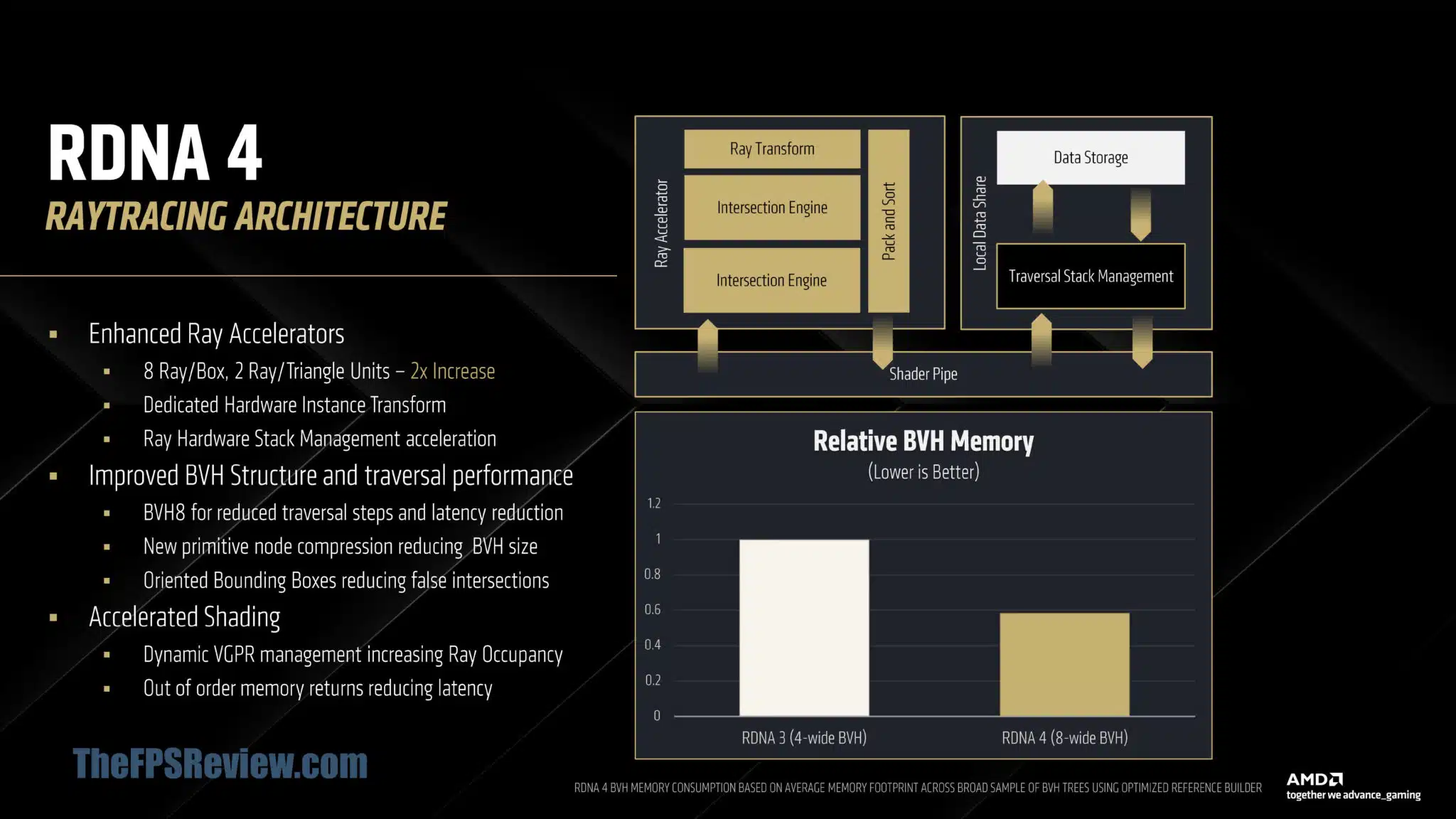
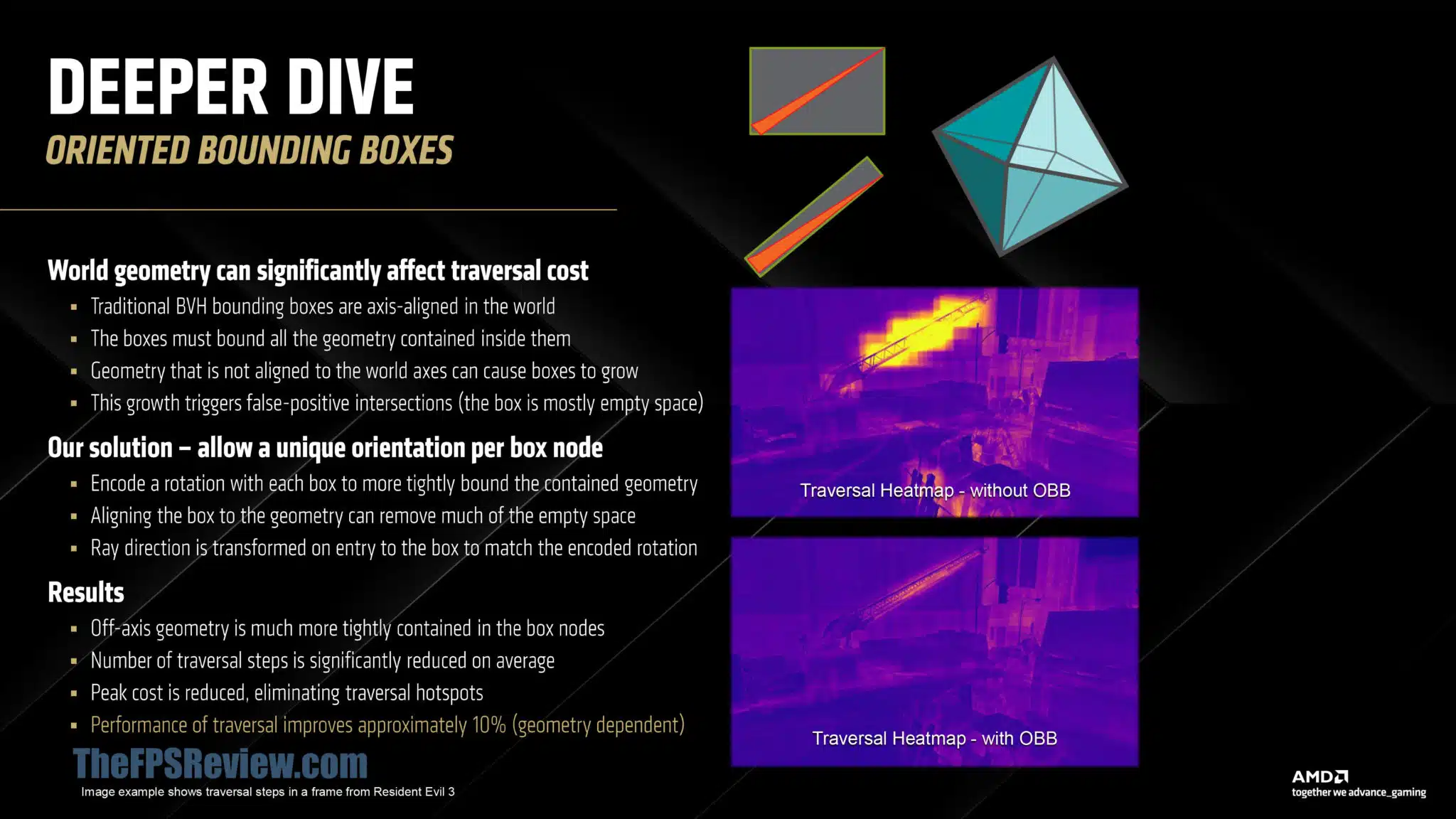
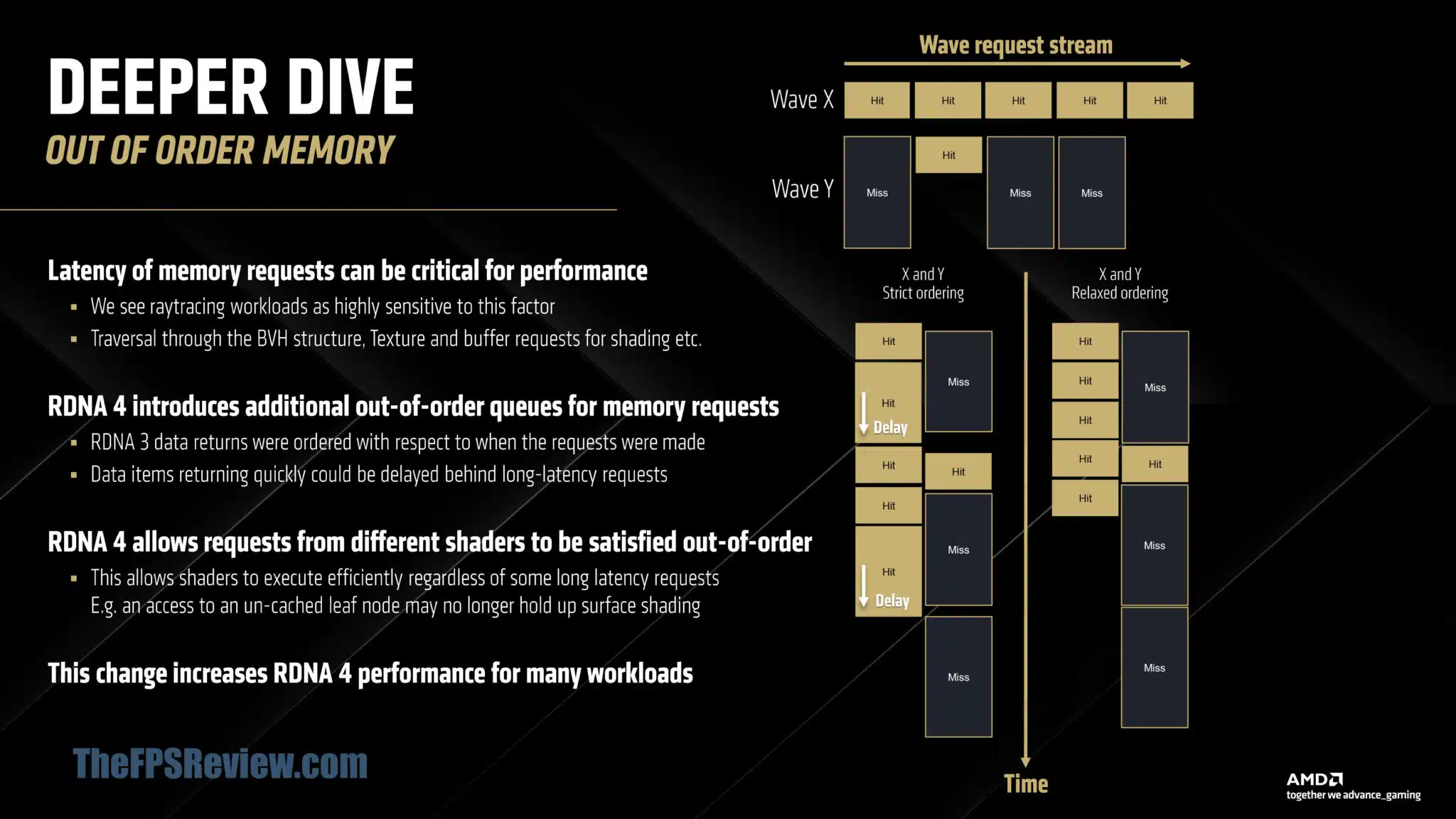
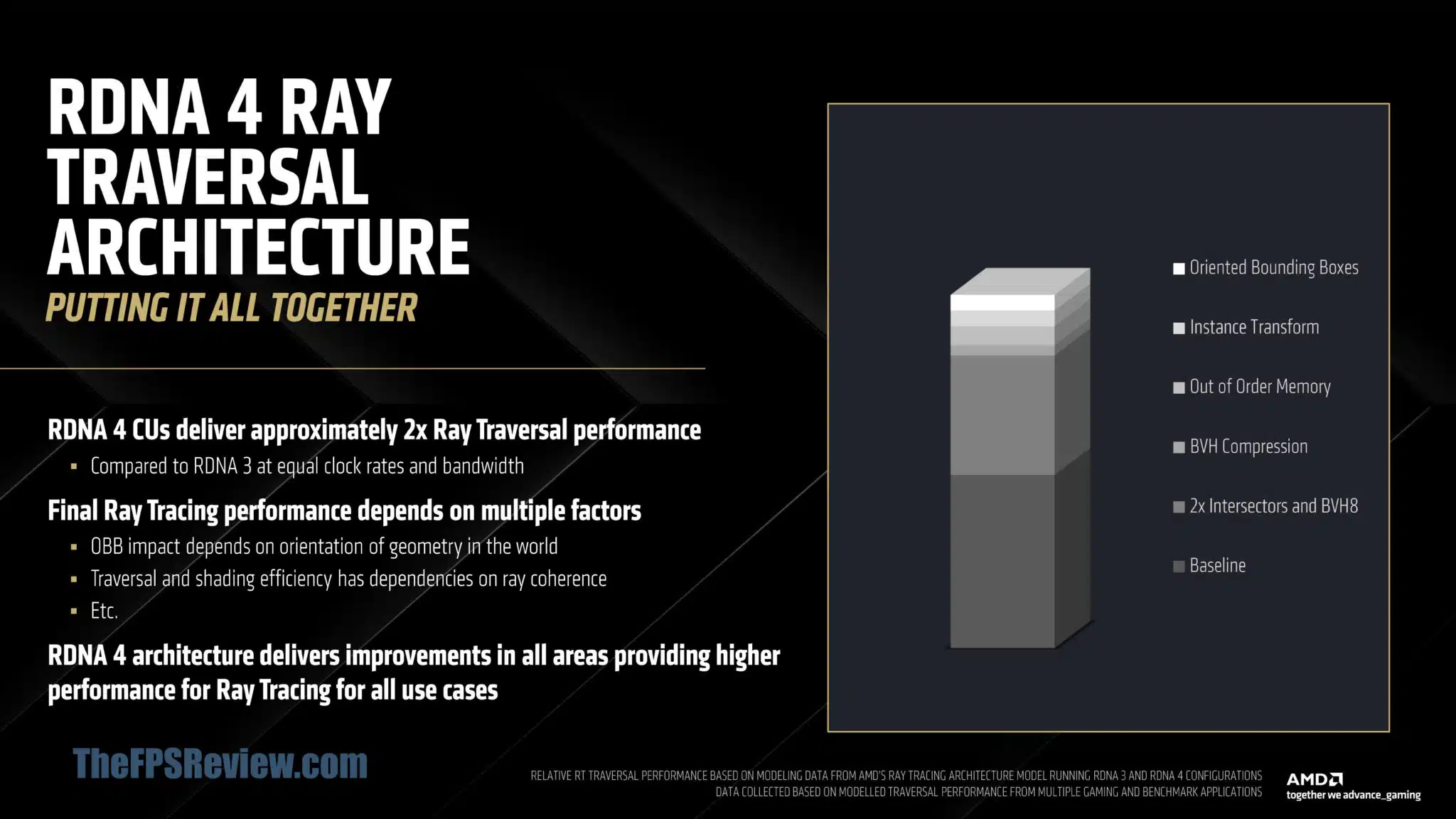
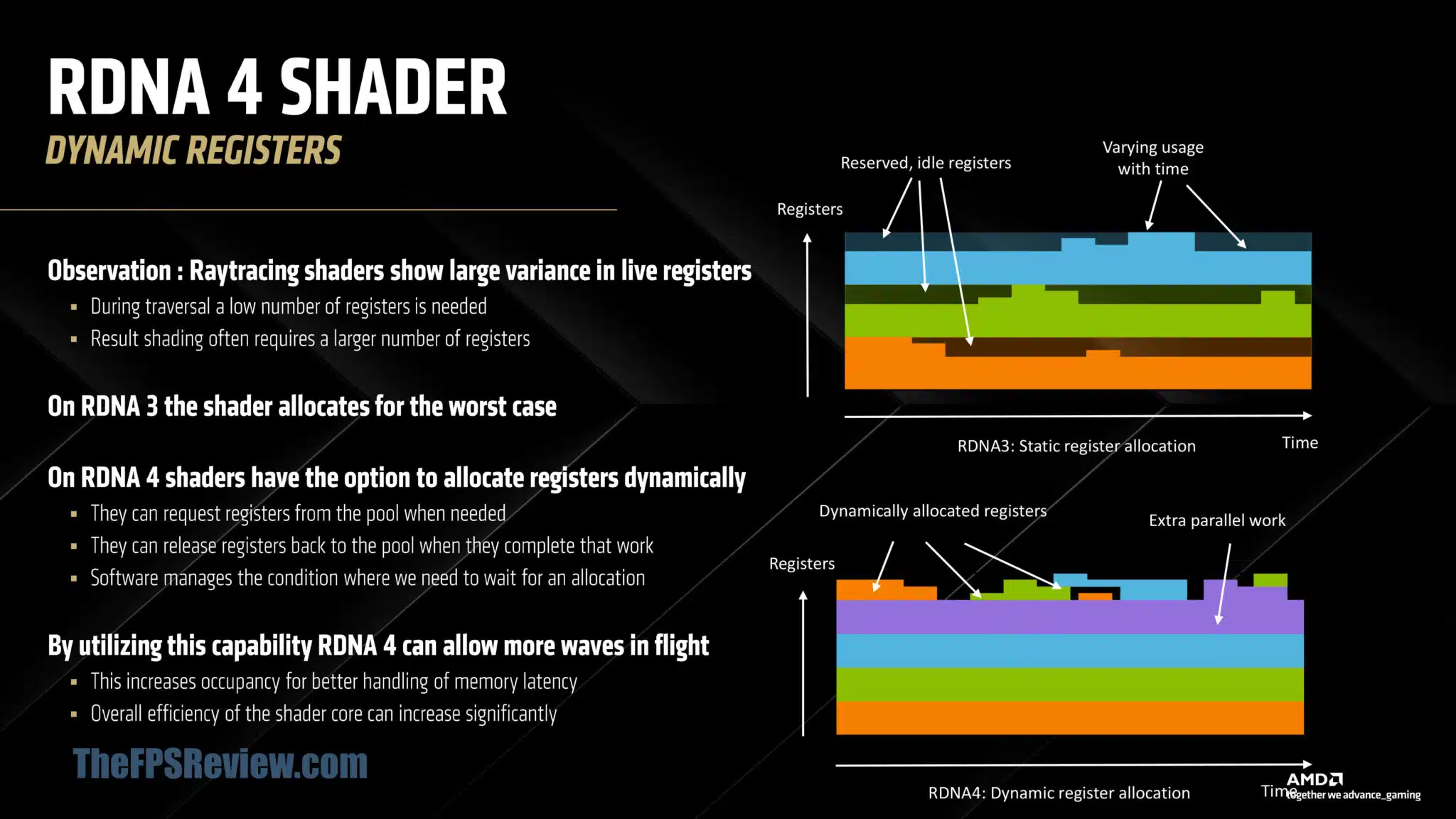
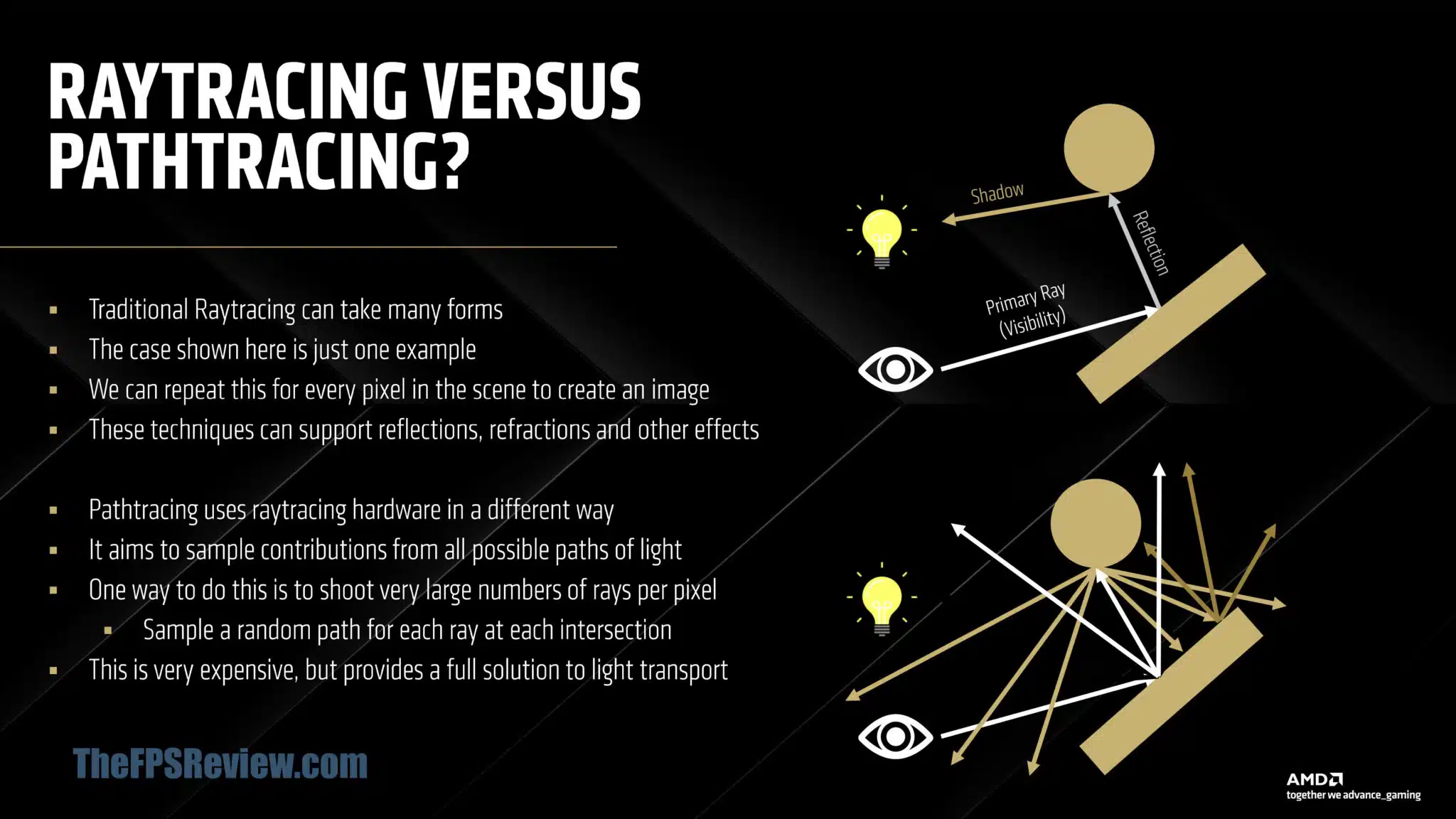
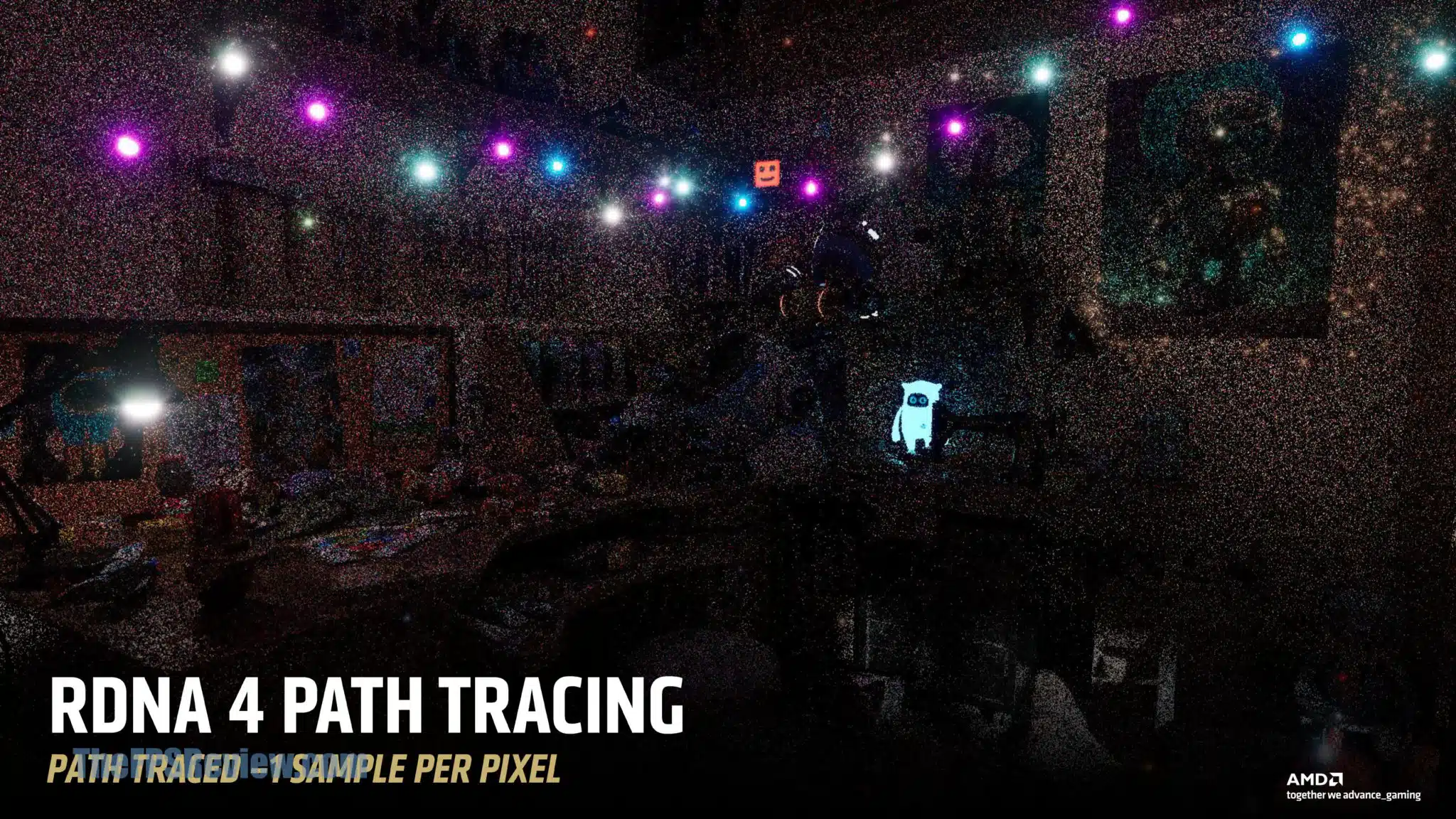
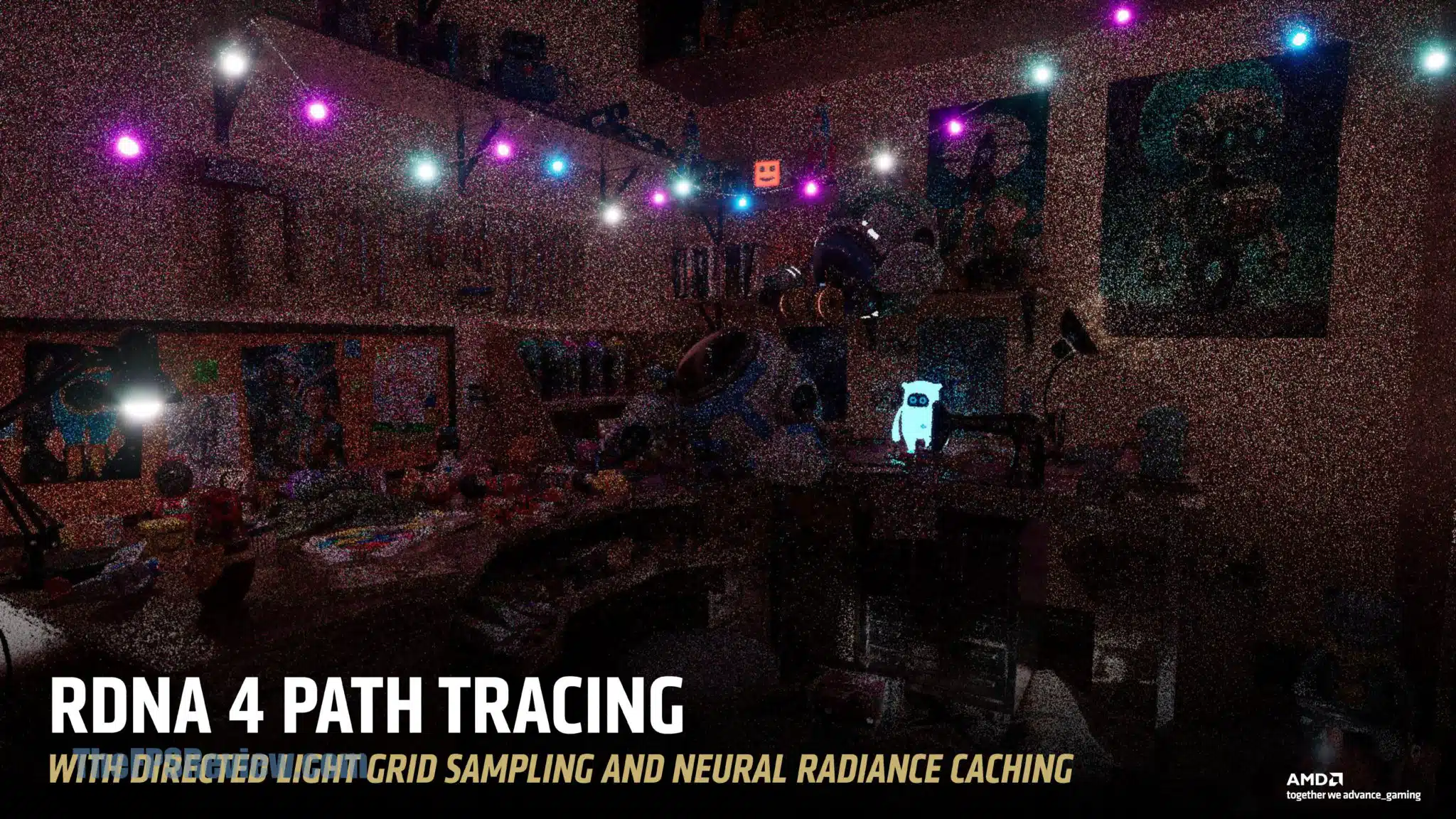
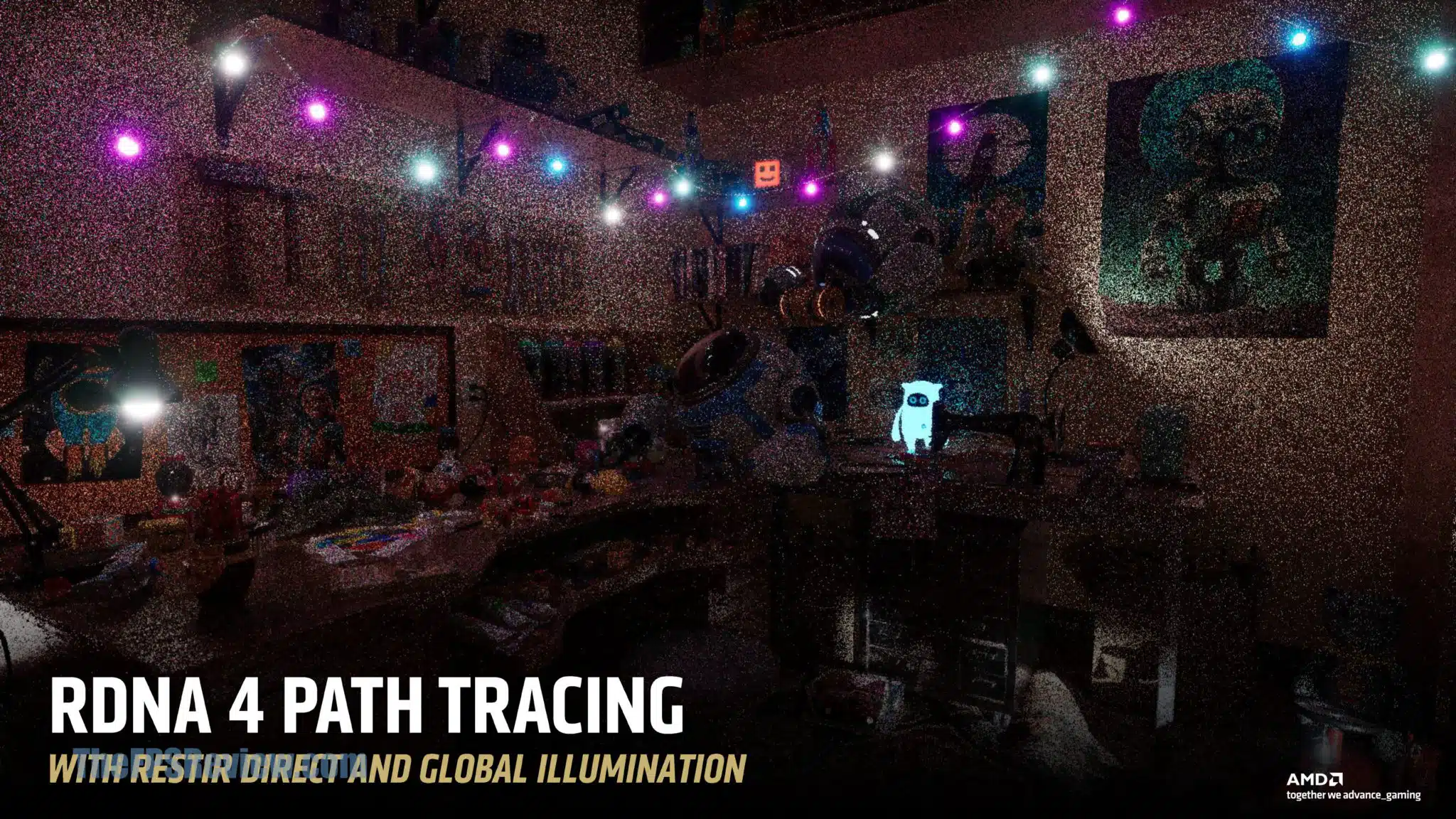
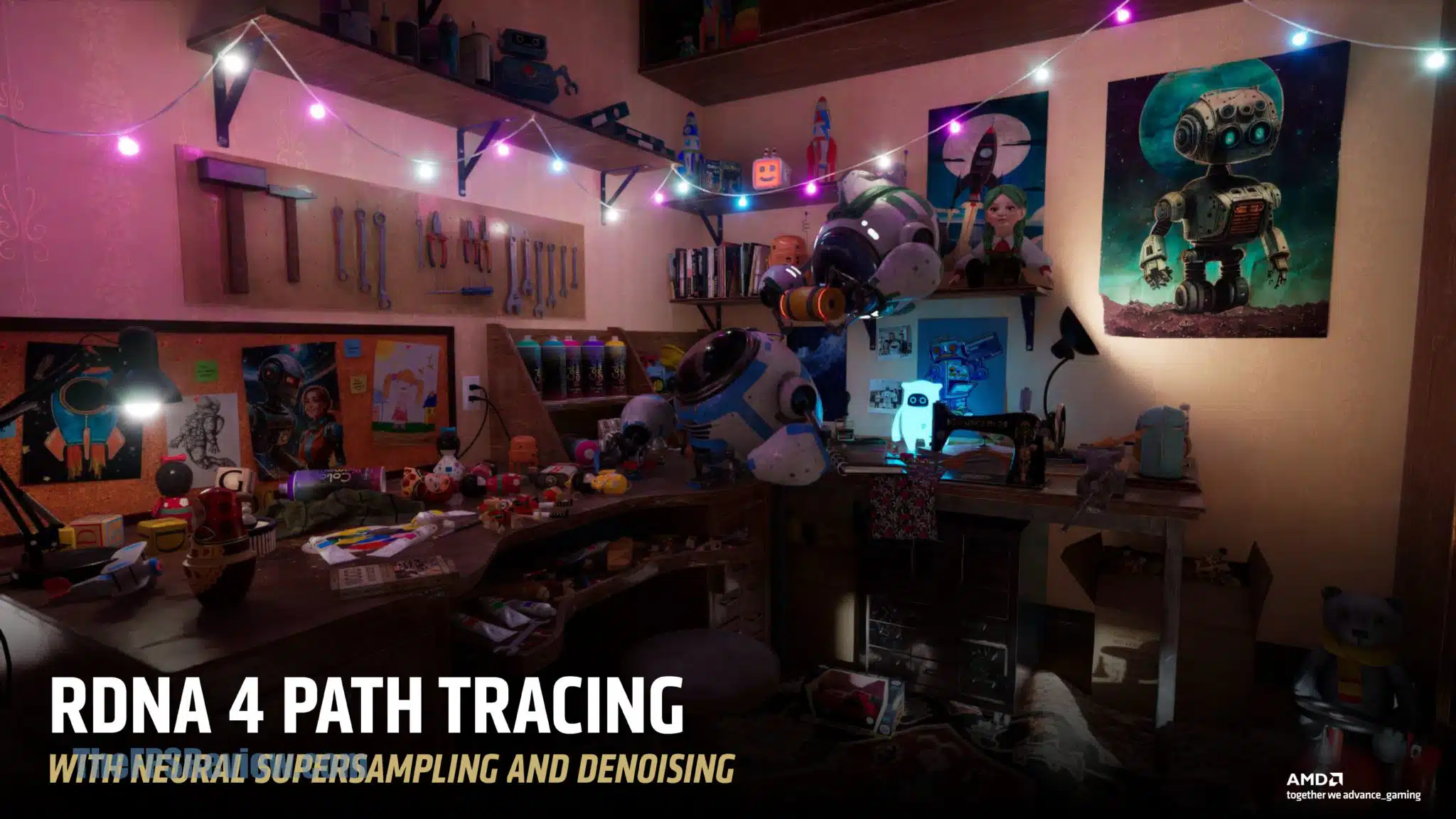
AMD has seen the light, and that light is Ray Traced. AMD is acknowledging that Ray Traced effects are becoming widespread in modern gaming titles, and both console and PC demand these Raytracing options. The Ray Accelerators have been improved in RDNA 4 by doubling the Ray Intersection. With an improved BVH Structure and traversal performance and Oriented Bounding Boxes, perhaps RT will be faster per CU compared to RDNA 3.
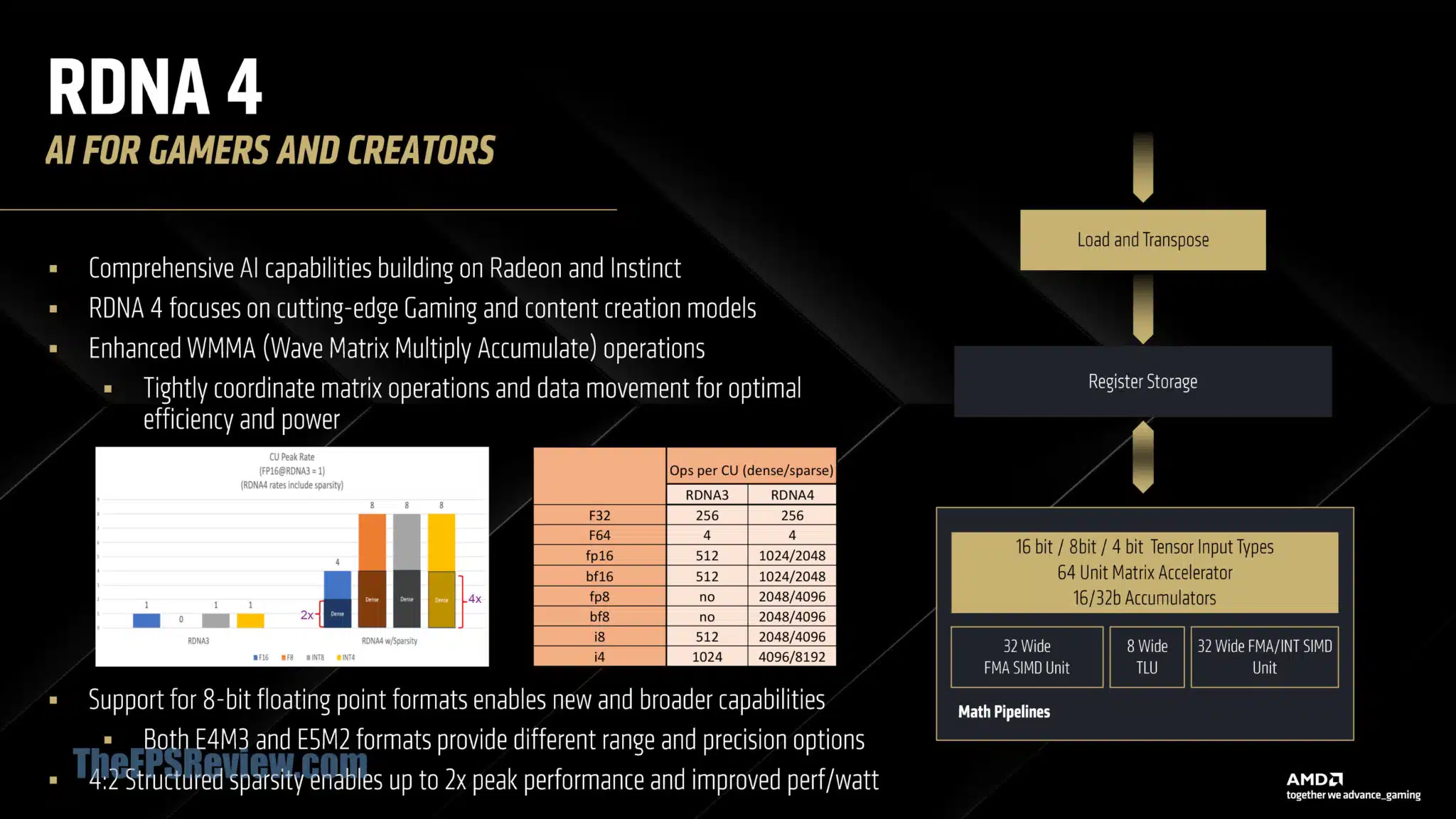
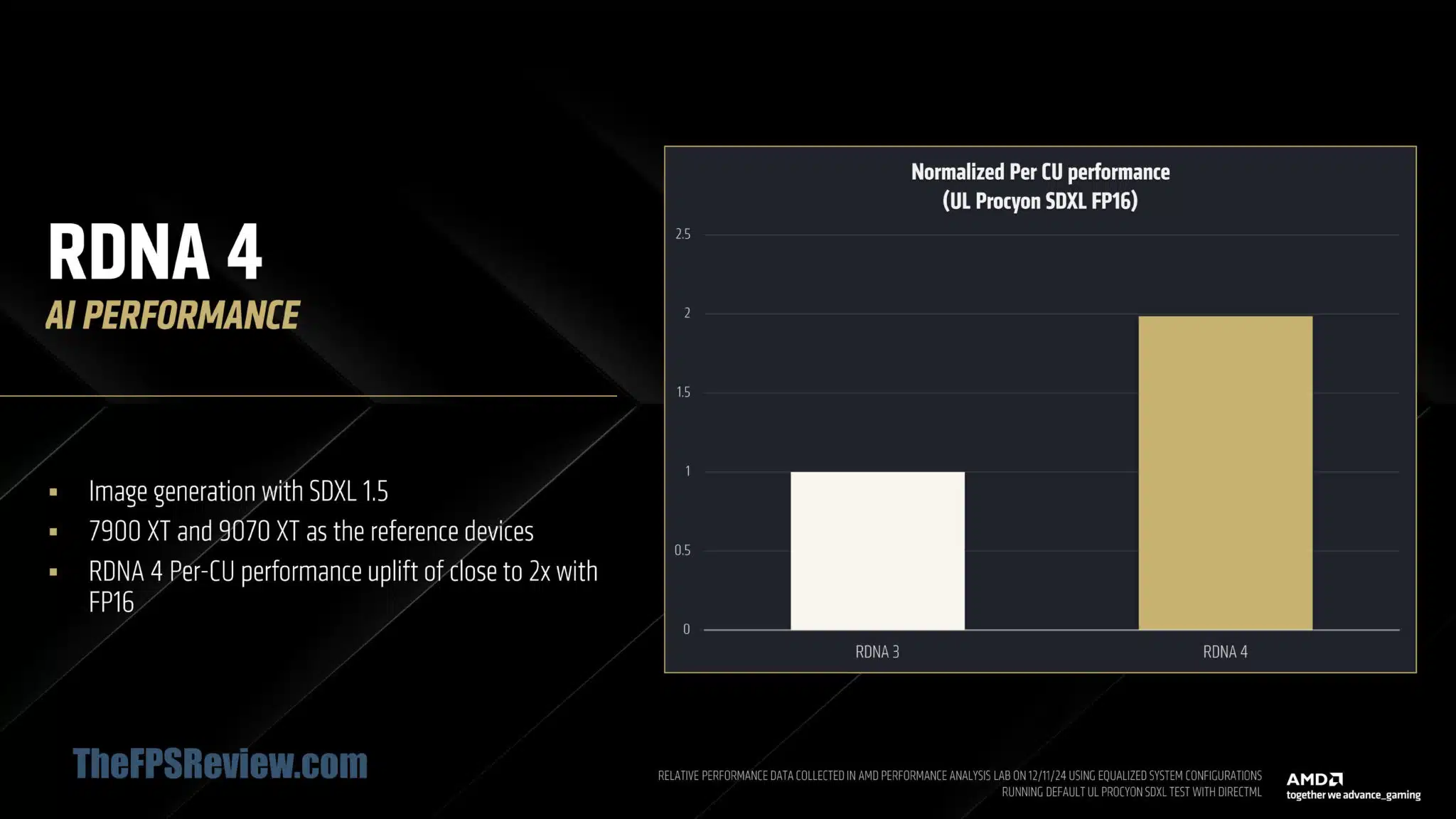
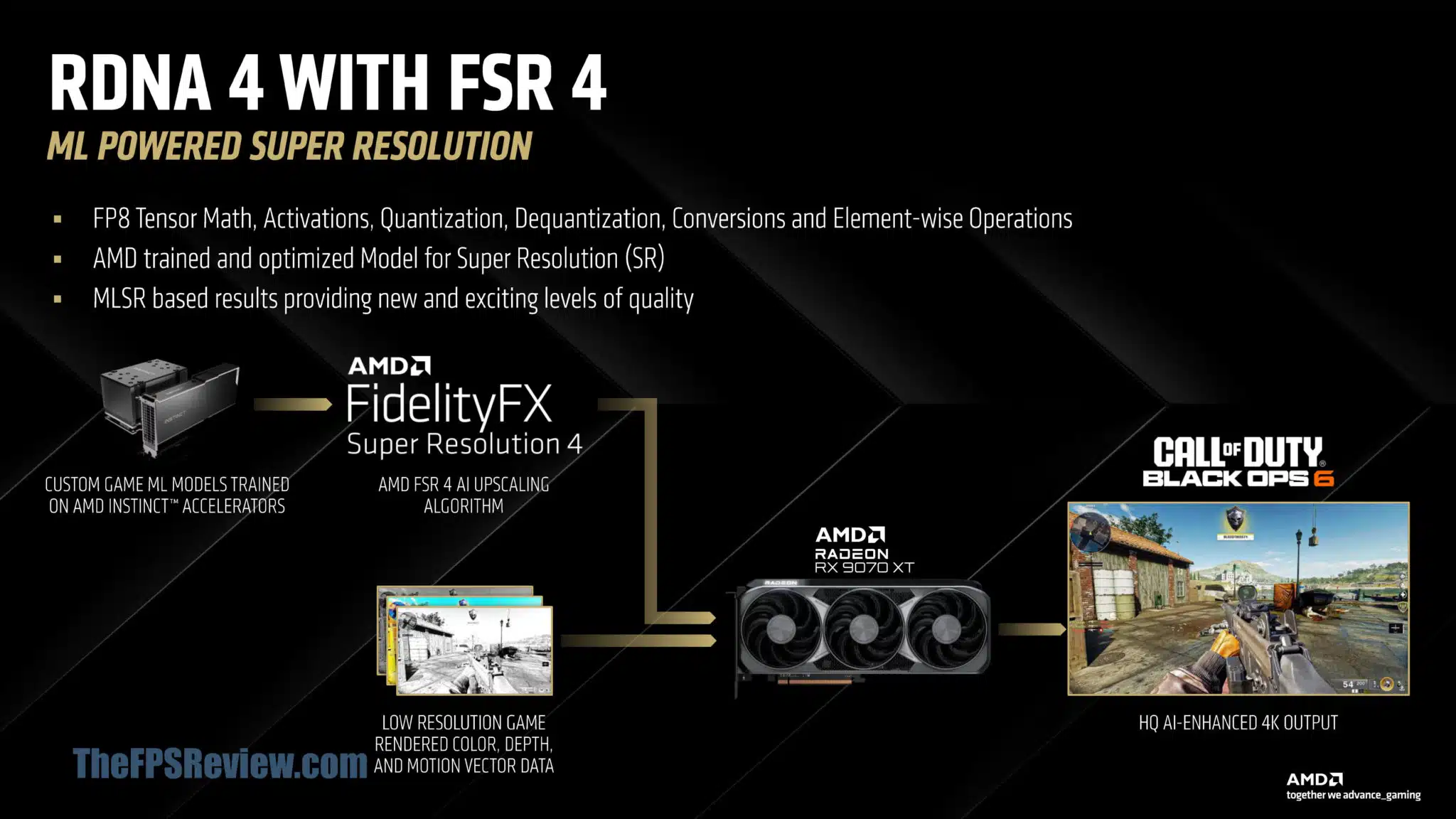
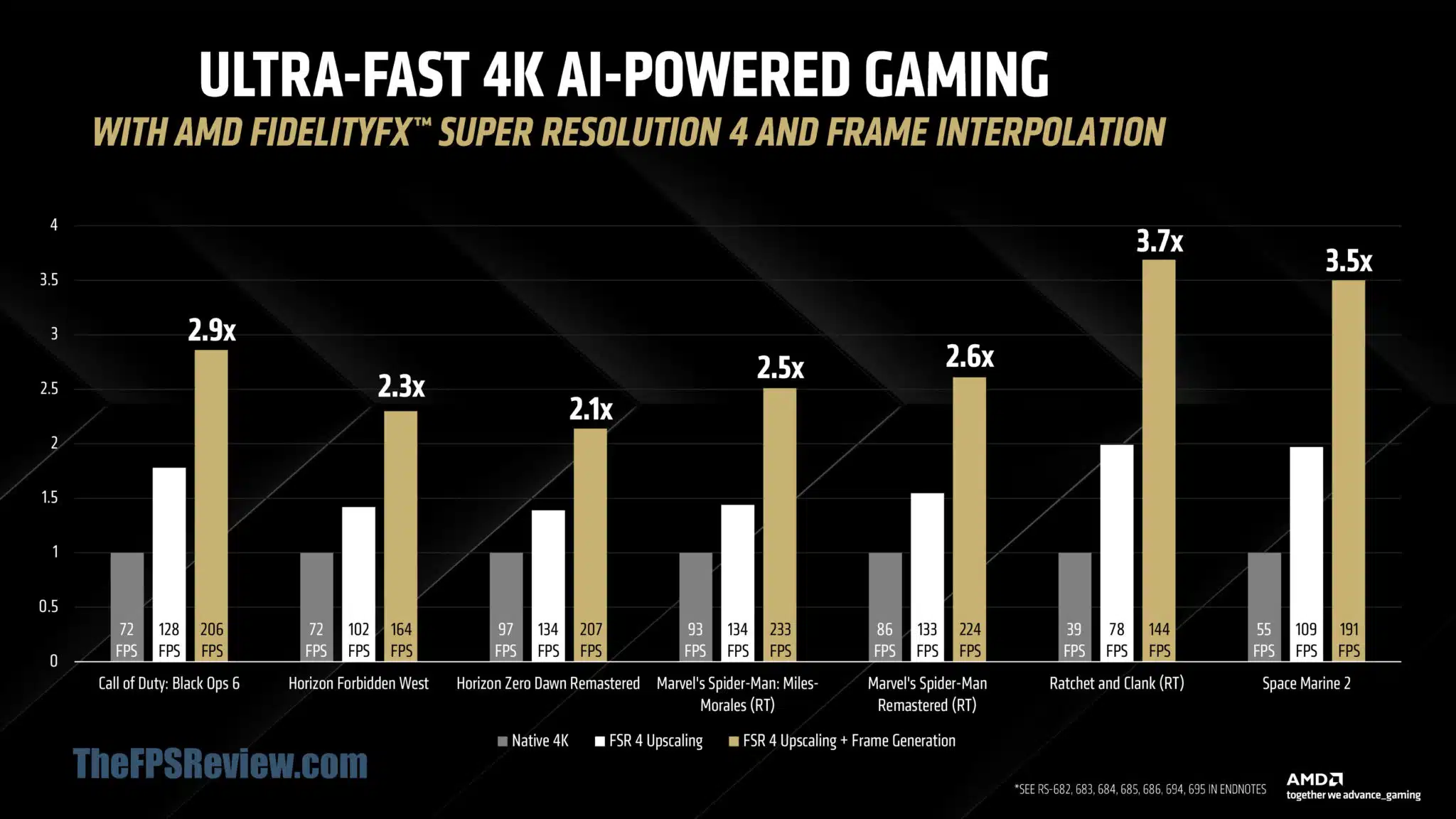
We cannot forget the AI features of course, and you can see those improvements above.
Discussion (19 replies)
Join Discussion →$600 enough said.
Vs 5070 ti
It is at times like this that I miss Anand's in depth tech coverage.
BTW AMD claiming FSR 4 performance mode is better than FRS3.1 is not saying much but at least is a step in the right direction.
Interesting read... I found it... odd they did comparisons to cards 2 gens old today... made me uncomfortable with what they are delivering.
I can only hope that thanks to the 9070 series prices, 5070Ti prices will como more down to earth and be closer to MSRP (once stock settles).
I don't really see nvidia cutting the 5070Ti price but at least getting them for closer to $750 would still be good news.
Well I think the argument could be that people tend to skip a generation to upgrade, so people upgrading from say a RTX 3070Ti/3080Super can see the benefits of going with a 9000 series.
That used to be true in my house, but that was also when there was a sub-$200 market and top-end was $700. But the last few, it's been more like every 3 or 4 generations...
So much information, it hurts your head. Nice complete article.
The real deal here is can these cards compete with what is out right now, not a 3090 or a 7900GRE or whatever.
I would hope a brand new GPU could stomp a card from 2 generations ago. Next, what can these things do in real-life gaming.
Finally, is there actually a MSRP card to be had? Like anything else, the upper tiers are going to be two or three hundred dollars more, now you're in the realm of $1000 for a GPU ...........I hope AMD does well, we'll see.
Think of the 9070 as a 7900gre replacement & 9070xt as a 7900xt replacement
They will continue to sell the 7800xt & 7700xt until stocks last
7900xtx is sold out everywhere
I currently have a RTX3070Ti and skipped RTX40, not sure if I'll go RTX50, might end up skipping it as well.
Pretty good prices: if I can find a halfway decent 9070 XT late next week @ MSRP in MicroCenter, I'll go for it. It'll be a very nice upgrade over my (aging) RX 6700XT ...
I hope that AMD can keep the supply coming for these because they are very competitively priced (I'll be doing a post on that later).
I went from a 980 to a 3080. Not looking to upgrade this generation either, from either team.
My son though, he has a RX 5600, I think - maybe even an older RX560. He's probably due, but he doesn't care if his games run at 27 FPS, apparently... so I'm not buying him a new GPU. He's old enough he can earn money to get a new one if he wants to.