
Introduction
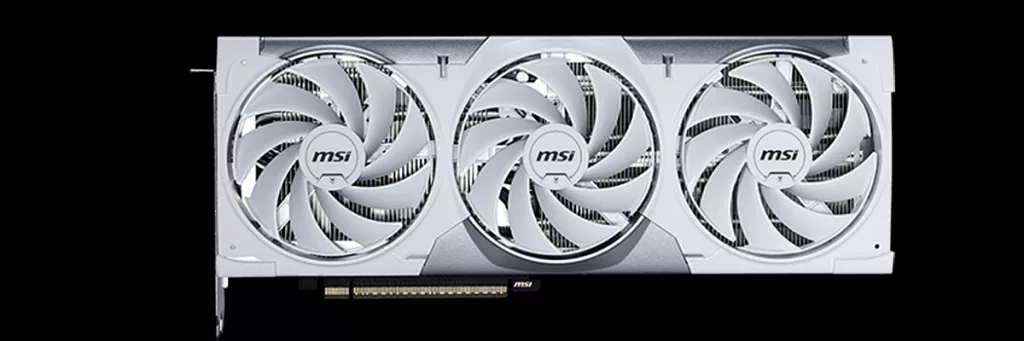
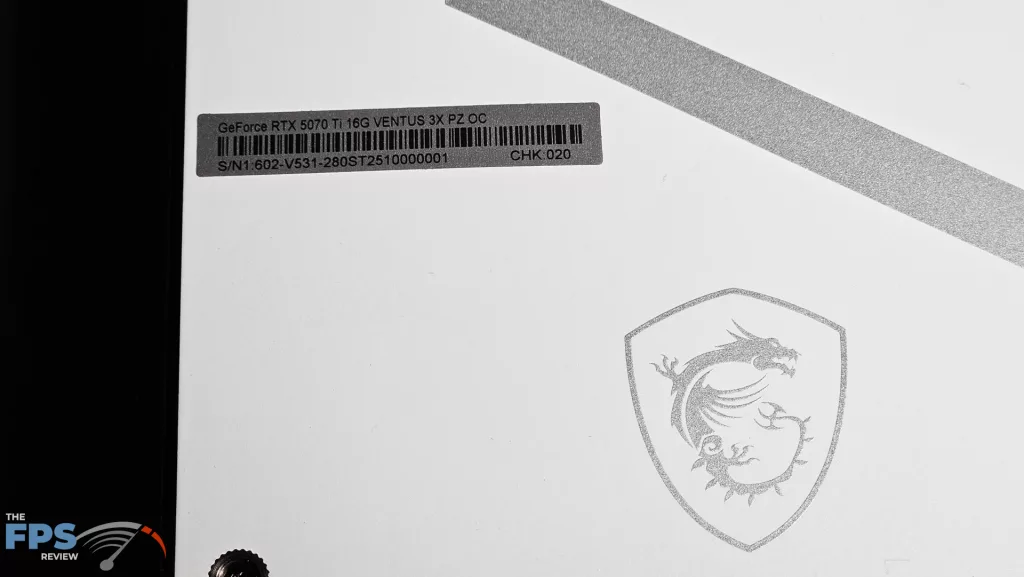
In our fourth review of MSI Project Zero, we have the MSI GeForce RTX 5070 TI 16G VENTUS 3X PZ OC video card (G507T-16V3ZC) to evaluate. This is the sole video card in the MSI Project Zero lineup. If you are so inclined, there is a non-OC version available as well. The VENTUS video card line is one step up from the lower tier of MSI cards, the GeForce RTX 5070 Ti 16G SHADOW 3X. It represents a very lean card with reference clocks and no RGBs. Nonetheless, MSI generally provides a very robust cooling solution and clean design.
What sets this card apart from its “normal” variants is the Project Zero 12VHPWR connection and backplate. As we have discussed in our previous three articles covering Project Zero (here, here, and here), this design concept is all about clean, crisp-looking PC design and minimal or no cable clutter. So, in that vein, the RTX 5070 Ti 16G VENTUS 3X PZ OC has been constructed with a removable magnetic backplate and a 12V 2×6 HPWR connection dongle that sits along the back of the heatsink completely out of sight.
Just briefly, the NVIDIA GeForce RTX 5070 Ti was launched in February 2025 and stands overall as the number three card in the lineup. The RTX 5070 Ti was launched as a partner card only, so no Founders Edition. We reviewed a couple of cards here at launch, and also just recently, we published an overclocking article. The GeForce RTX 5070 Ti is based on the GB203 die, and NVIDIA Blackwell architecture on TSMC 4nm 4N NVIDIA custom process. The NVIDIA GeForce RTX 5070 Ti consists of 6 GPCs, 35 TPCs, and 70 SMs with 128 CUDA Cores per SM. When you add all this up, the NVIDIA GeForce RTX 5070 Ti has 8,960 CUDA Cores, 280 5th Gen Tensor Cores, 70 4th Gen RT Cores, 96 ROPs, and 280 Texture Units. The GPU Boost Clock is set at 2452MHz.
Our MSI GeForce RTX 5070 Ti 16G VENTUS 3X PZ OC comes from the factory with an overclock, as the name says. MSI sets the Boost clock at 2482MHz or a 1% overclock. Memory consists of 16GB of GDDR7 on a 256-bit memory bus at 28Gbps, giving it 896GB/s of memory bandwidth. The TGP (Total Graphics Power) is 300W.
MSI does focus on cooling for the VENTUS PZ, in addition to the Project Zero modifications. The cooling highlights are Torx Fan 5.0, copper heatsink baseplate, square core heatpipes that directly contact the baseplate, vented backplate, and triple fan heatsink. The video card BIOS is also set to shut down the fans at low temperatures, called ZERO FROZR. MSI emphasizes quiet fans and lower peak temperatures. Last but not least, the MSI GeForce RTX 5070 Ti 16G VENTUS 3X PZ OC is built specifically to conform to NVIDIA SFF specifications, so this video card will fit nicely into any qualifying SFF PC case. We have a discussion of the “NVIDIA SFF Program” here.
The MSI GeForce RTX 5070 Ti 16G VENTUS 3X PZ OC is $849 MSRP on the MSI Storefront and also at Newegg. The video card carries a three-year warranty.



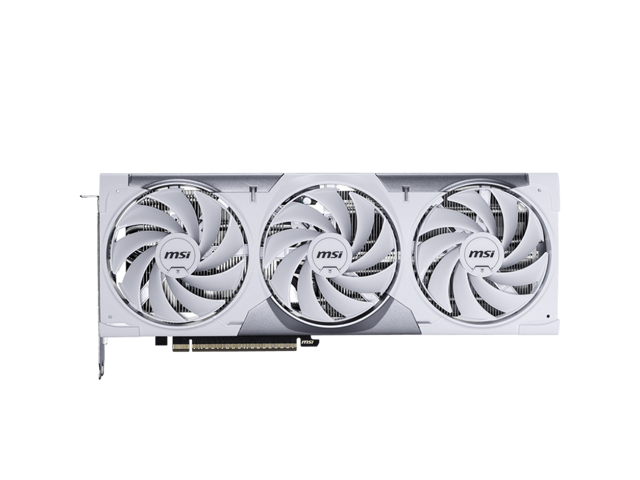
MSI GeForce RTX 5070 Ti 16G VENTUS 3X PZ OC
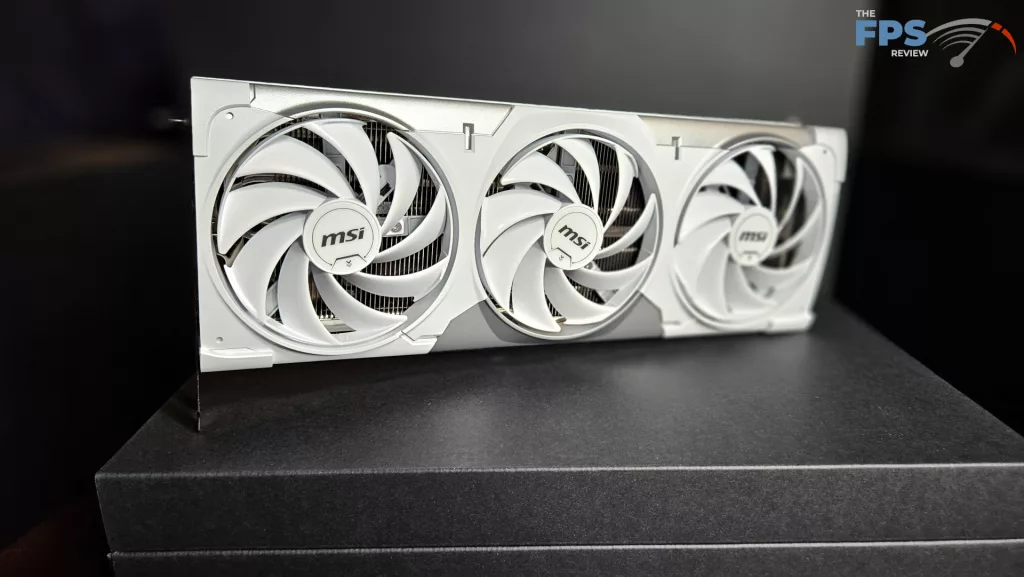
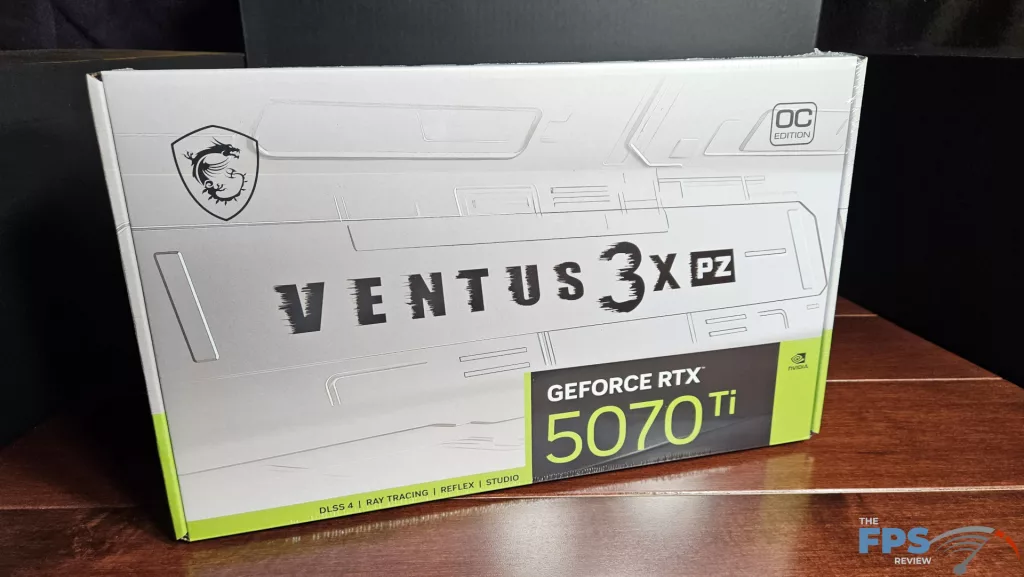
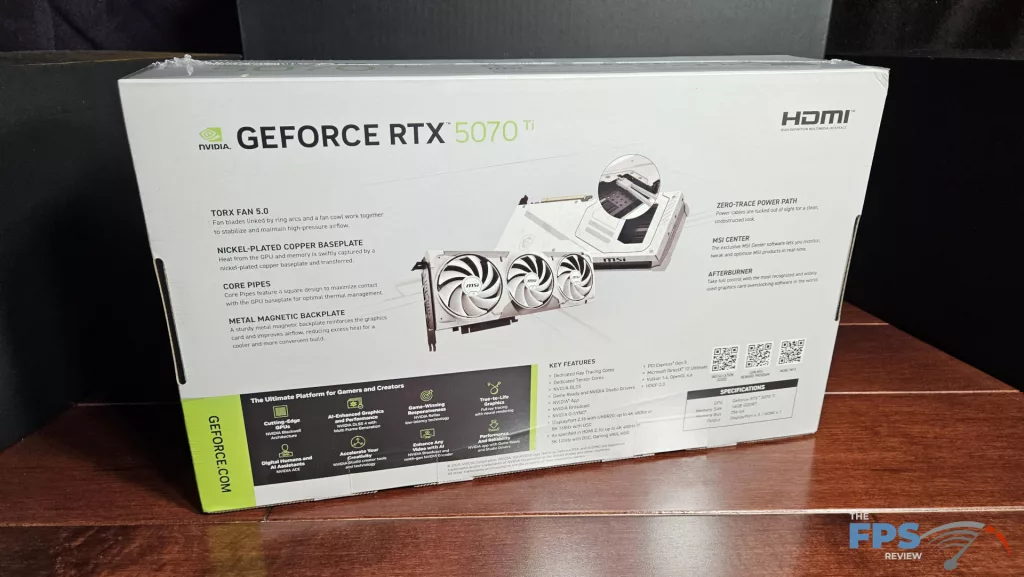
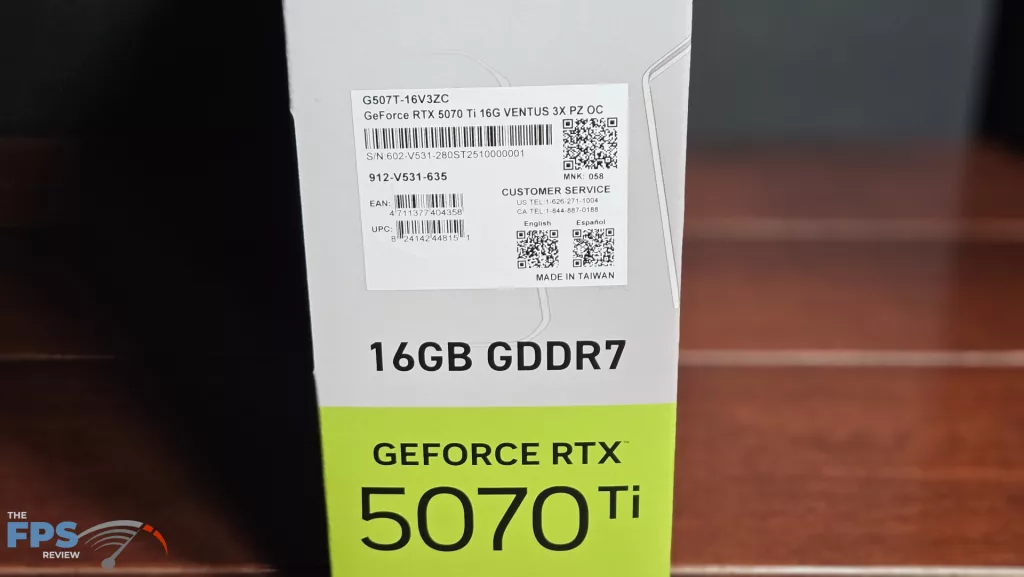
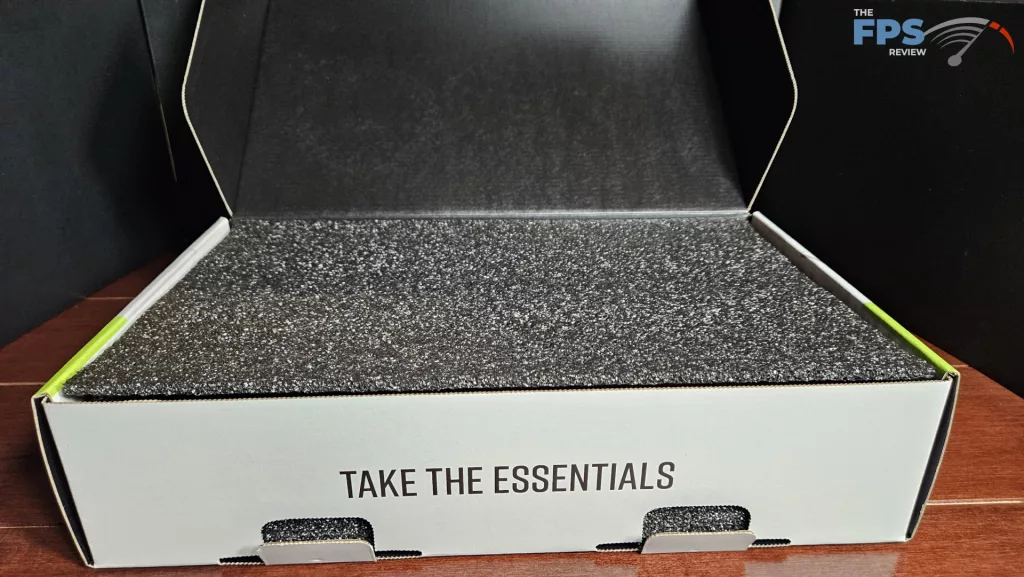
The video card arrived to us drectly from MSI. This is the full retail package, wrapped in plastic shrink-wrap. This is a single heavy cardboard box hinged at the back. Upon opening, the video card is protected by formed foam and wrapped in a plastic bag. In the front slot are the accessories: a magnetic video card stand and the dual PCIe 12V 2×6 HPWR dongle. This dongle differs from what we generally see in the RTX 5000 series, as it is much longer and all white. The wiring is also sleeved in white PET.
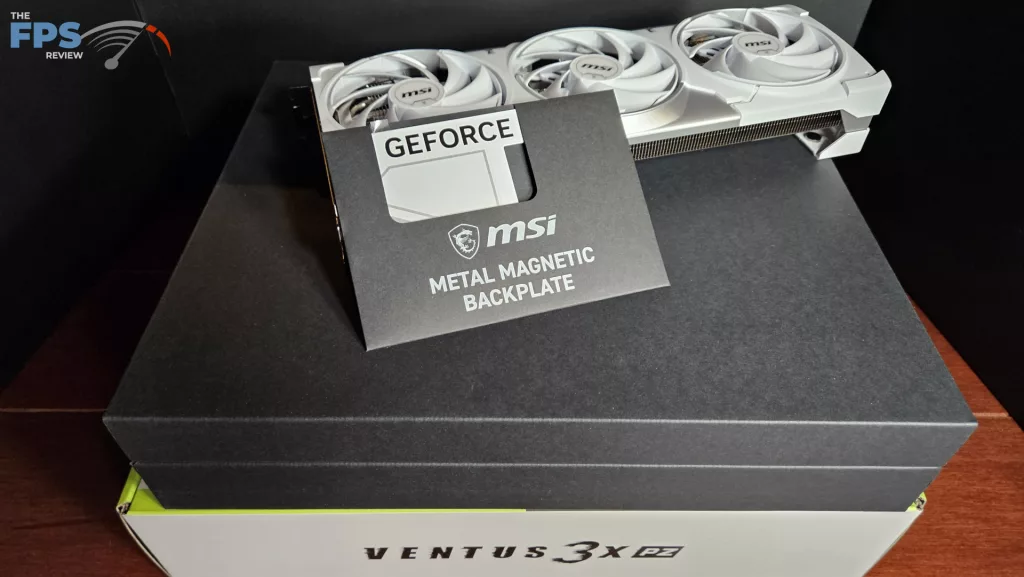
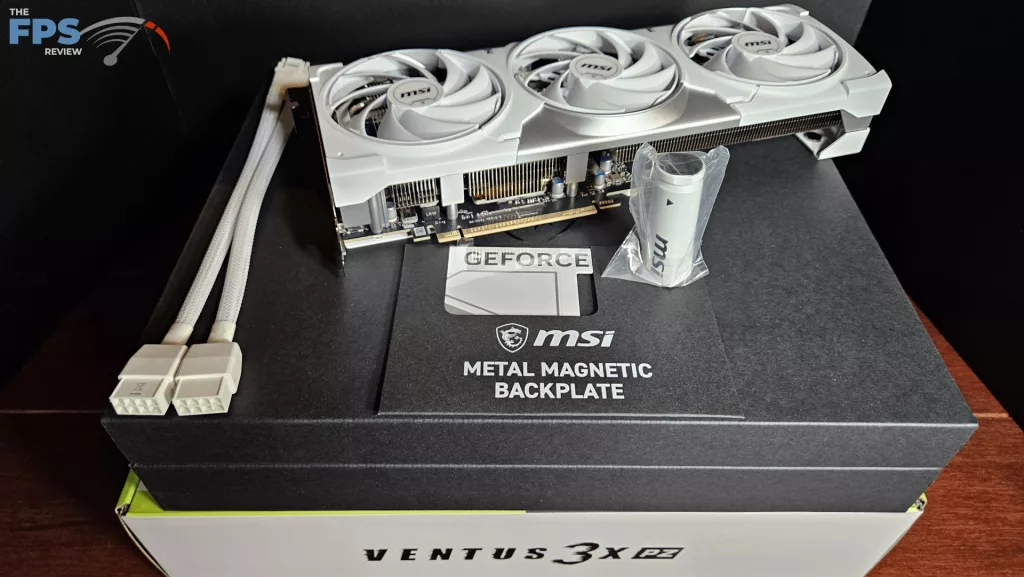
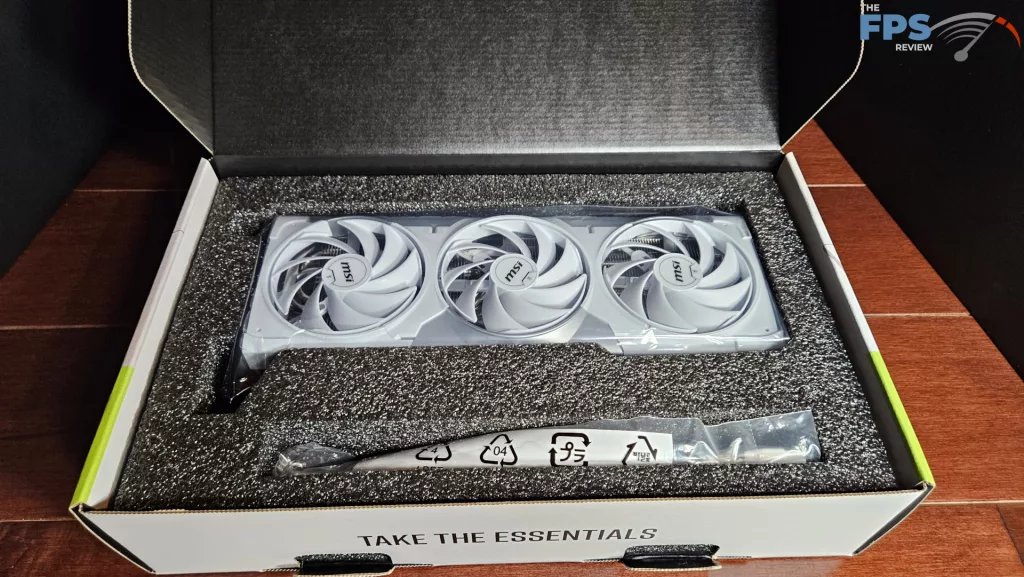
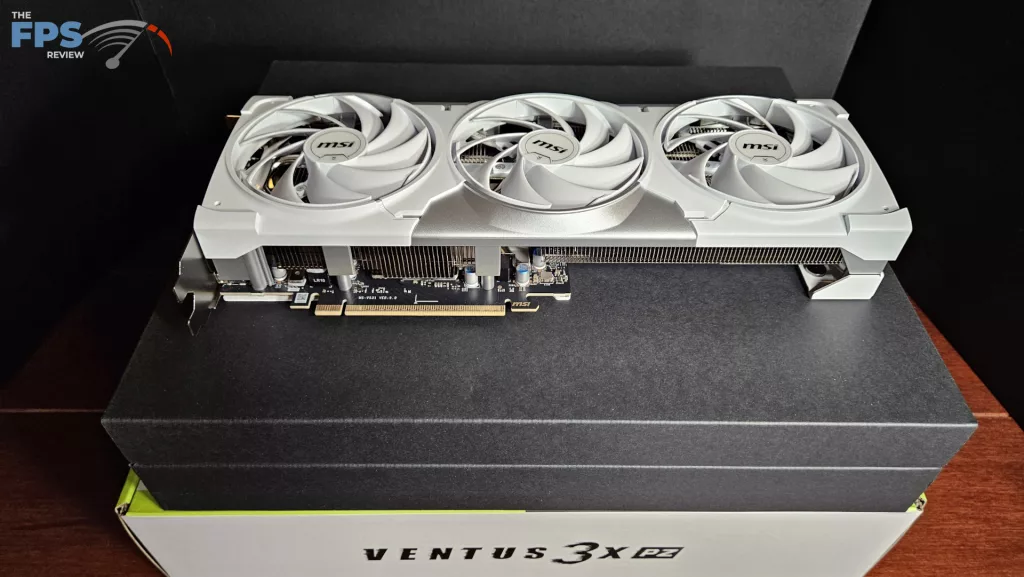
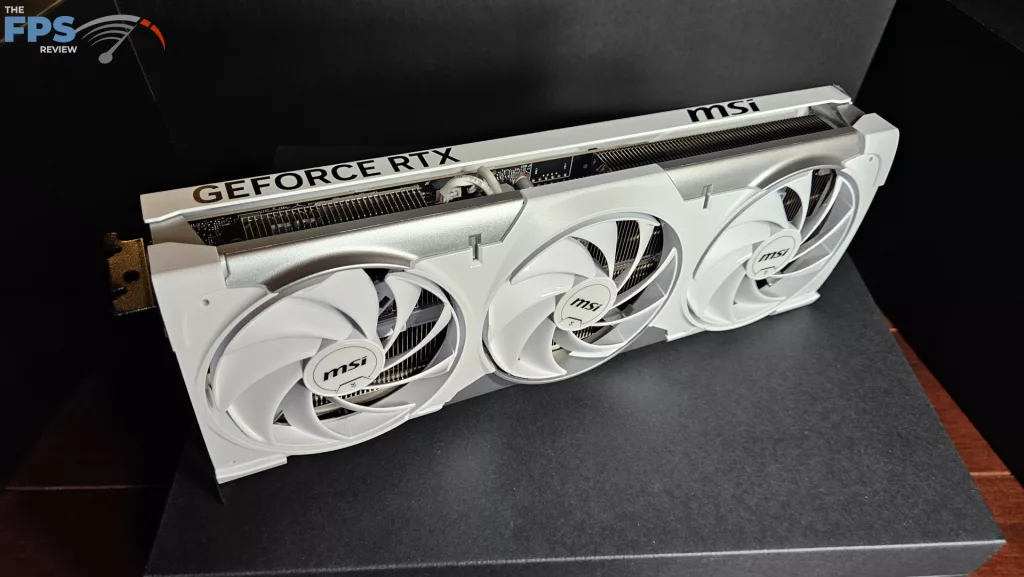
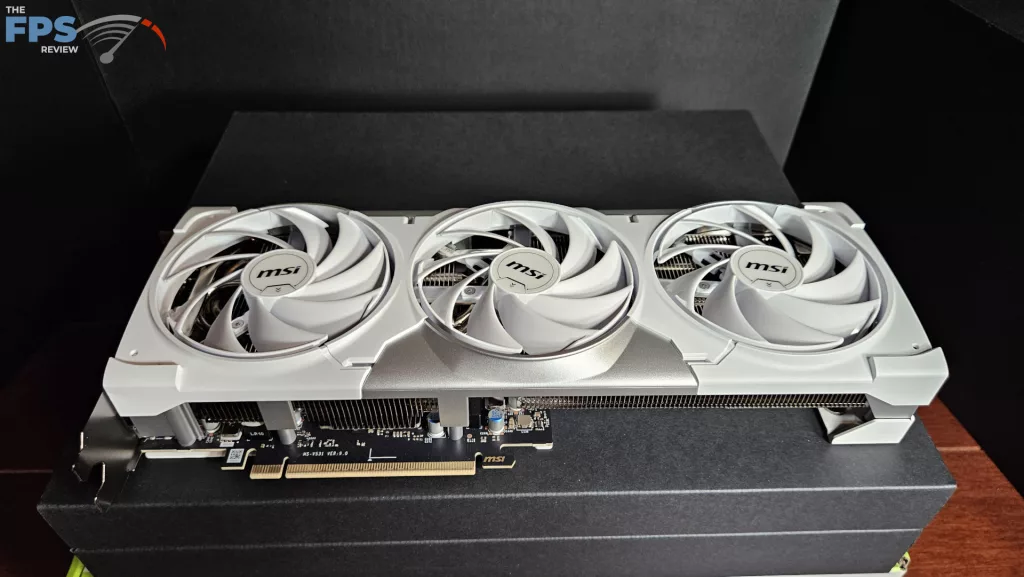
The video card has been designed to conform to the MSI Project Zero aesthetic, so it is primarily white with silver accents. This complements every piece we have reviewed thus far. The top shroud is plastic with raised fan cowlings. The TORX 5.0 fans are 90mm nine bladed double ball bearing fans. There are three groups of three blades joined at the periphery, which MSI calls Ring-Arc. This design is touted to increase airflow by 23%. The heatsink is full-length and quite generous, but surprisingly lightweight.
As we stated above, cooling is by a nickel-plated copper baseplate with heatpipes directly contacting the baseplate. The magnetic backplate has a large cut-out to improve ventilation. The entire backplate is powder-coated metal, which wraps around the heatsink to provide extra support. As you will see in the pictures, the 12V 2×6 HPWR connector is inside the video card just above the heatsink fins. This allows the dongle to pass under the backplate and out the underside of the card. Connected horizontally in a case, you will never see a cable, plus the cable remains essentially without bends, kinks, or curves, a key to safety when using a 12VHPWR cable. There is a fabric piece inside resting on the heatsink fin stack that protects the HPWR dongle from heat, as you will see.
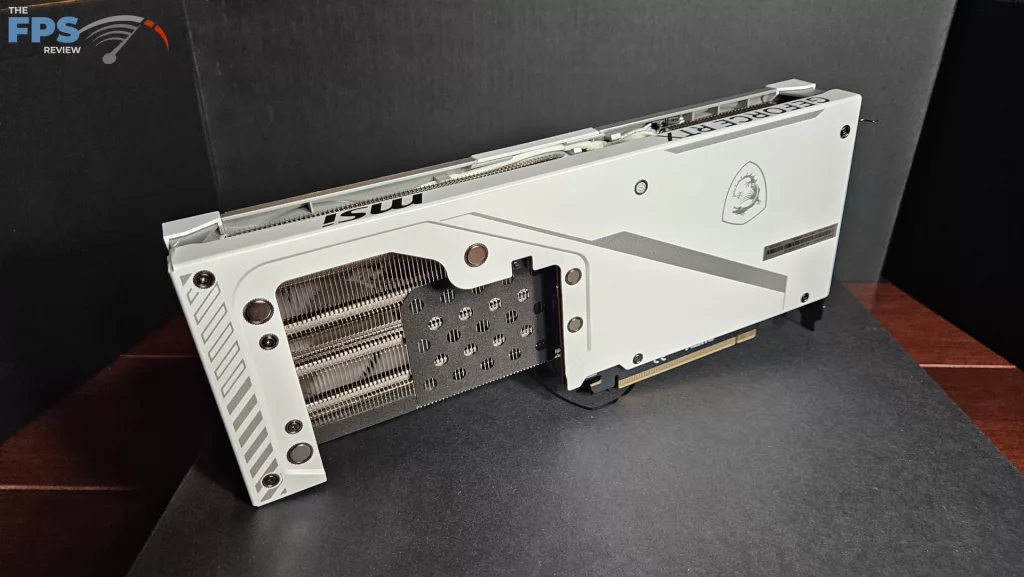
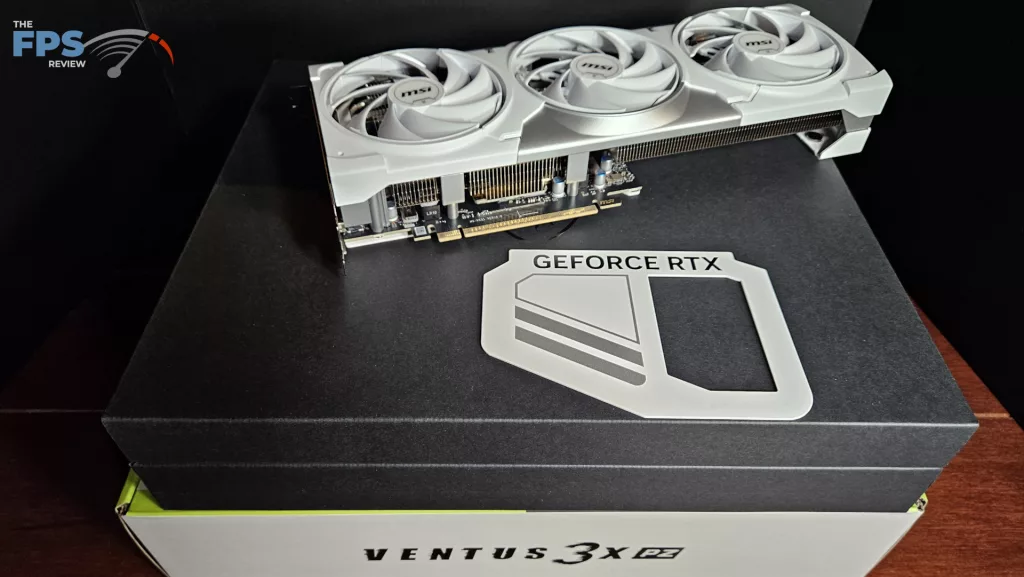
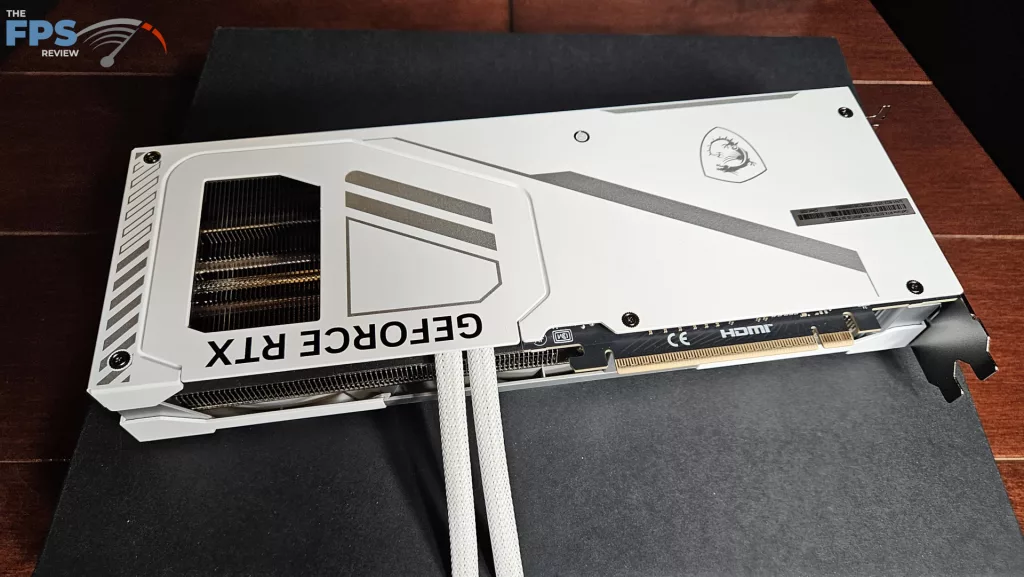
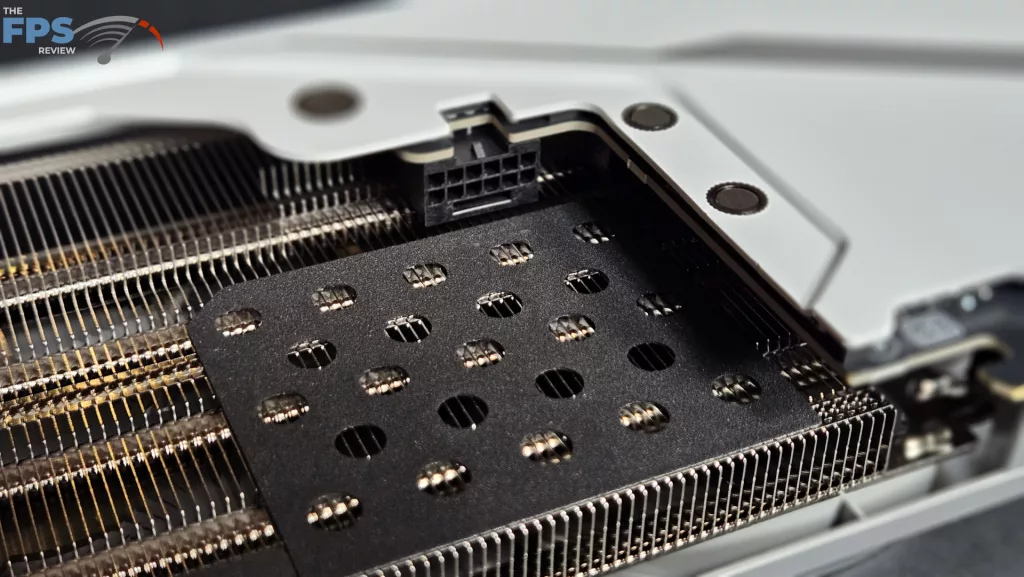
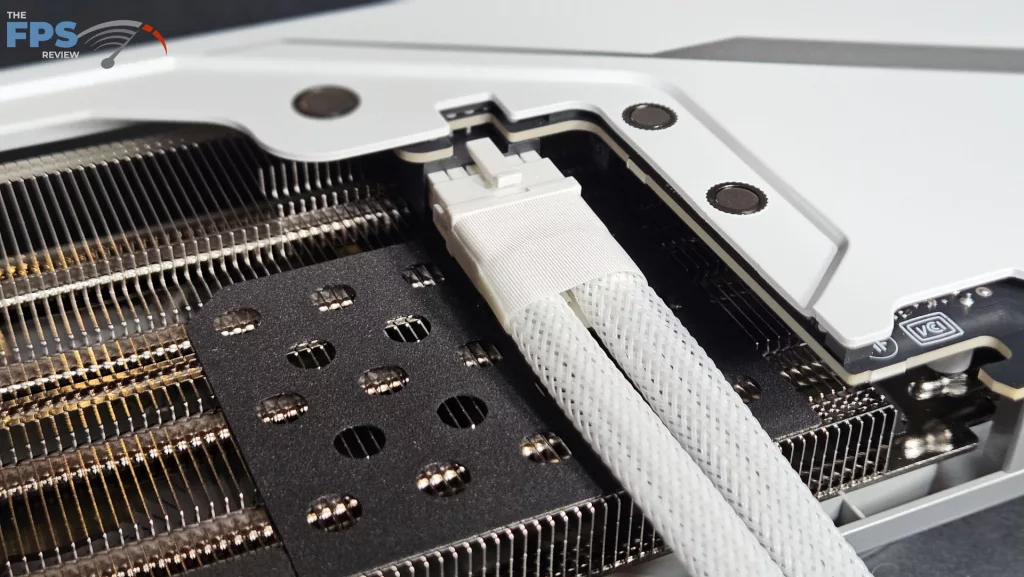
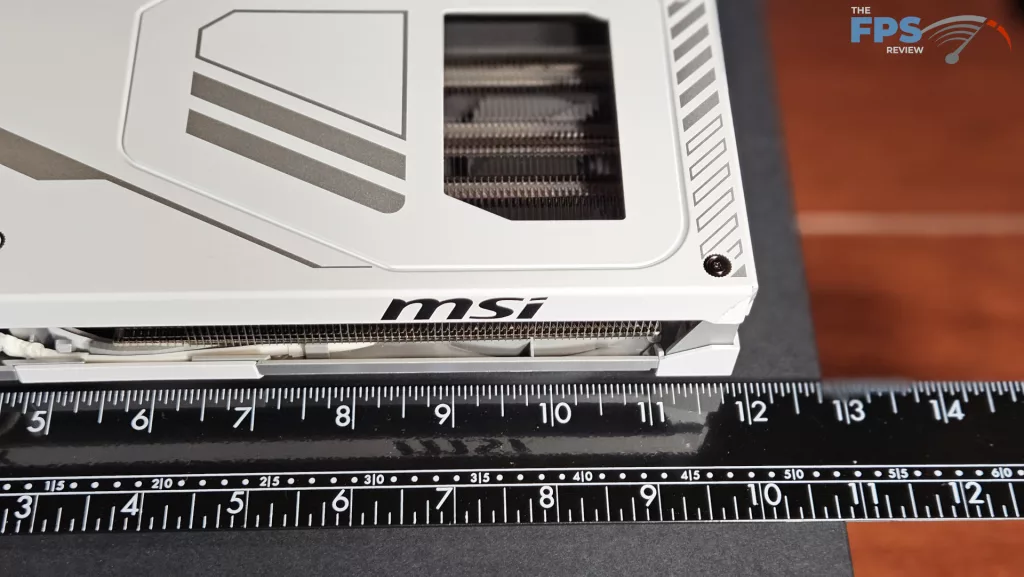
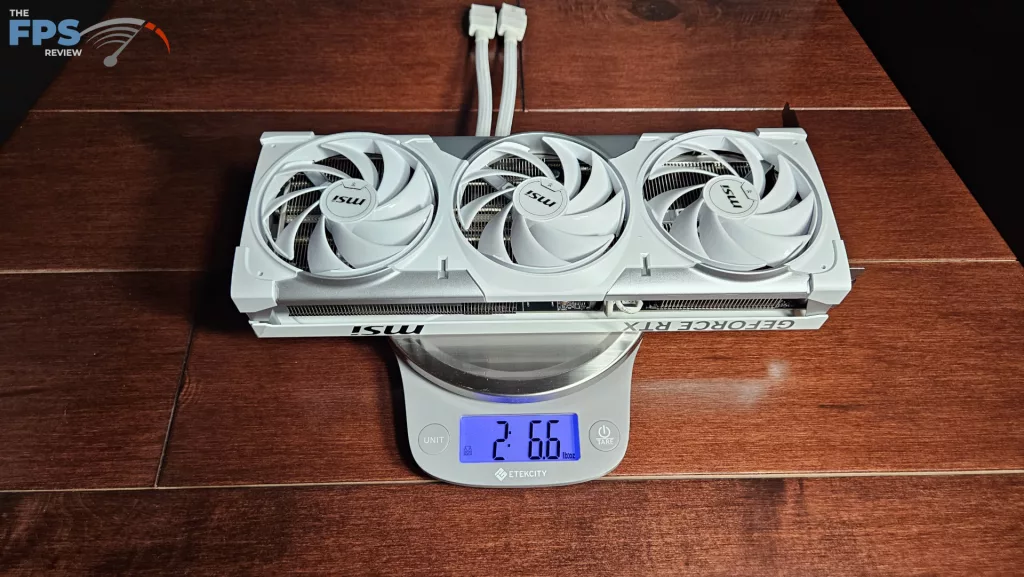
As we stated, the design aspects are very Spartan, no RGB. This does work well with the overall finished look that Project Zero is aiming for. All in all, the fit, finish, and design concept are excellent. The video card is very sturdy, but overall quite light. Measurements are 11 7/8 x 4 x 1 7/8 inches, overall a 2.5 slot card. This easily conforms to NVIDIA’s SFF specification. The video card weighs in at 2 pounds 6 oz. Outputs are the usual HDMI 2.1a and three DisplayPort 2.1b. The total board power is listed at 300Watts in which at least a 750Watt PSU is recommended. The video card supports PCIe 5.0 x 16.
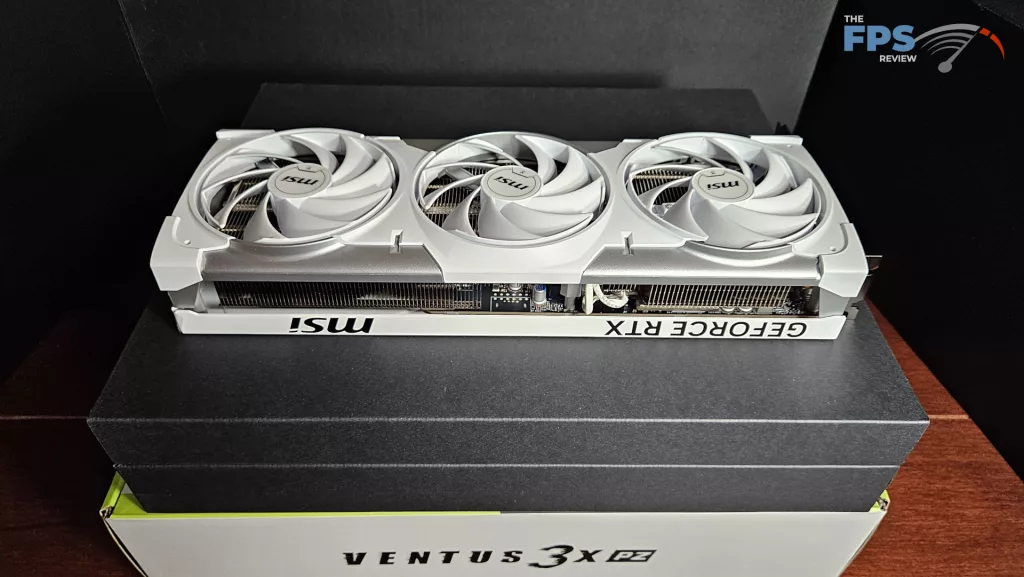
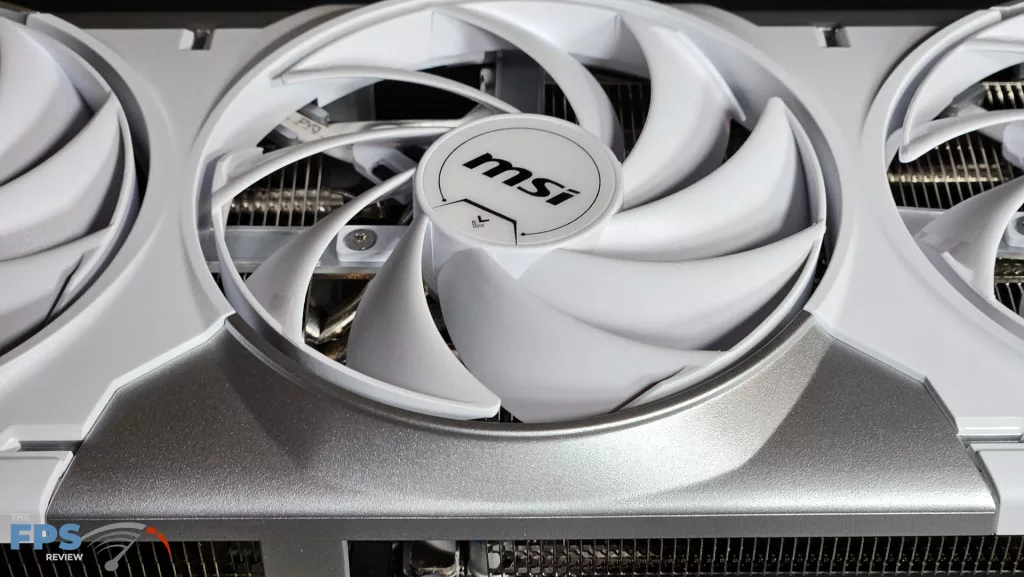
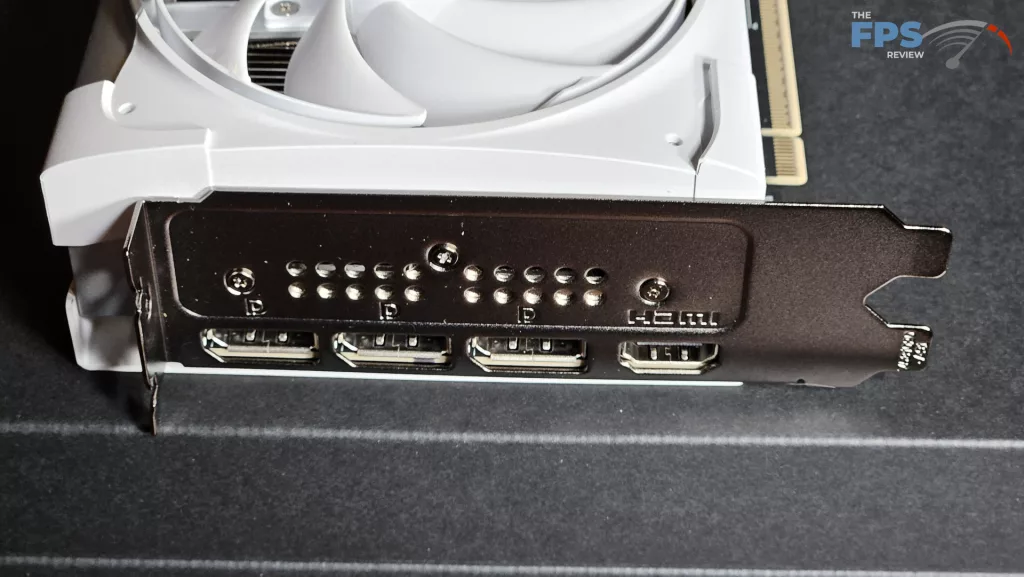
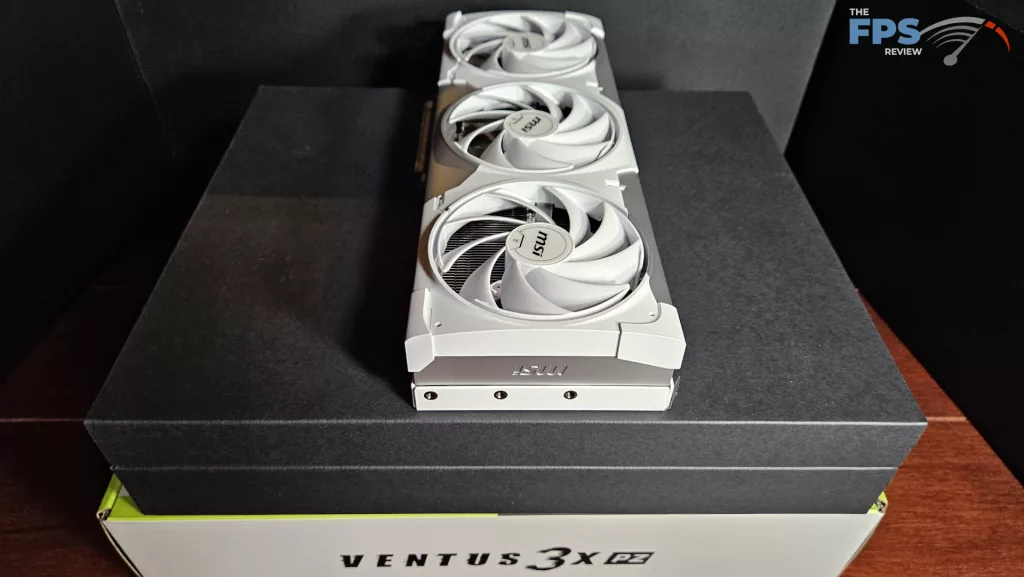
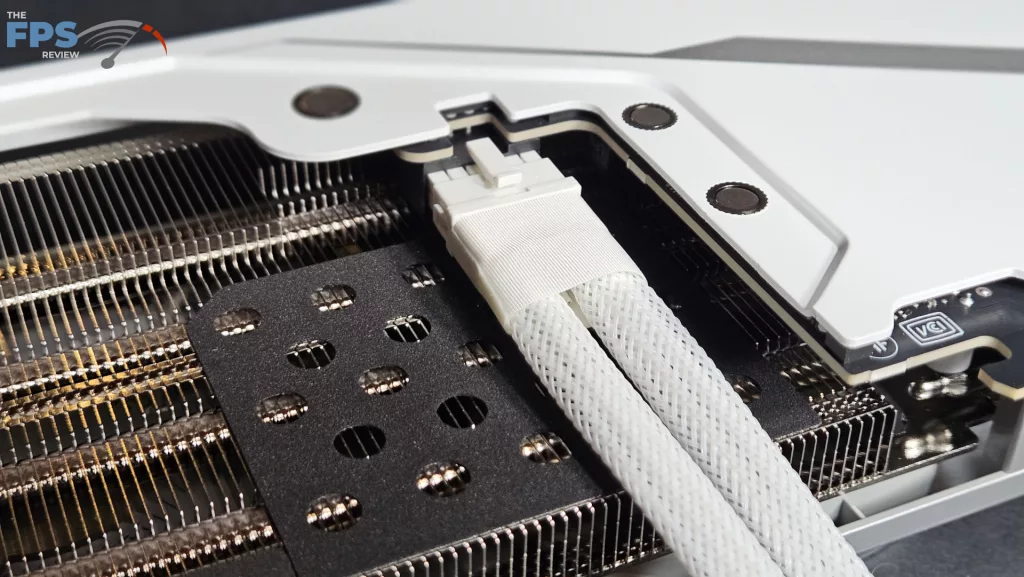
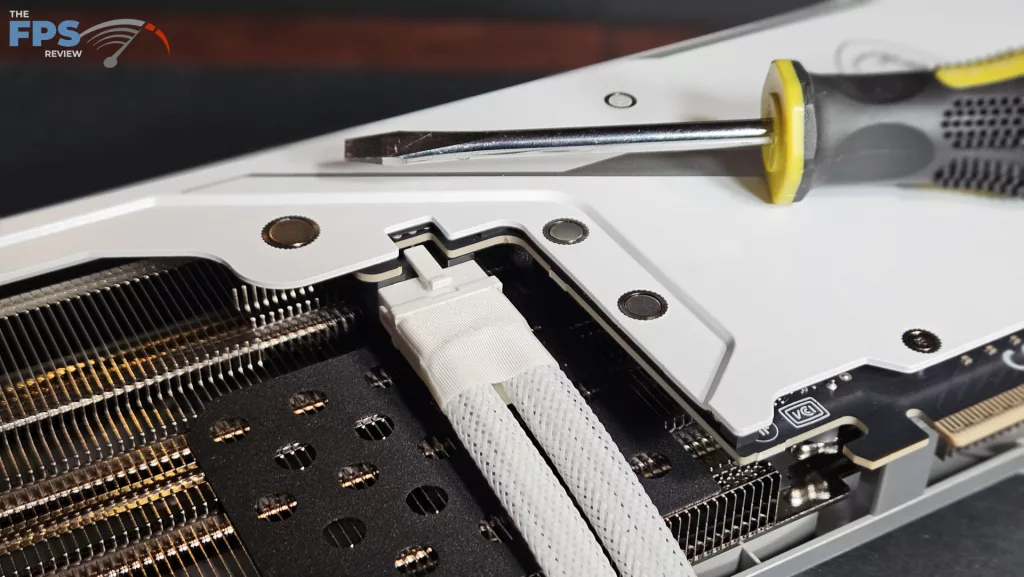
We should mention that the only gripe we had with this video card was the dongle. We found the design to be a bit concerning in that there is no good way to grasp the connector to place it into the socket on the card. Given all the reports of damaged video cards due to “faulty” connectors, we certainly wanted a firm connection. If you have average or above fingers, you can not push the connector snugly into the socket. The connector was quite unwilling to slide in; you can not push it via grasping the fabric or PET sleeve, or else you will grossly bend the wiring.
That, and you cannot get your fingers around the top of the connector for lack of space. We had to enlist a specialized “connector insertion tool,” as you can see. By placing the blade of the screwdriver at the edge of the plastic on the connector, we gently wiggled it fully in place. We don’t recommend being in a hurry in this step. We also recommend inserting the 12V HPWR cable before mounting the video card into the motherboard. On our test platform, we used our own PSU 12V HPWR 2×6 cable as it was much easier to insert.