
Conclusion
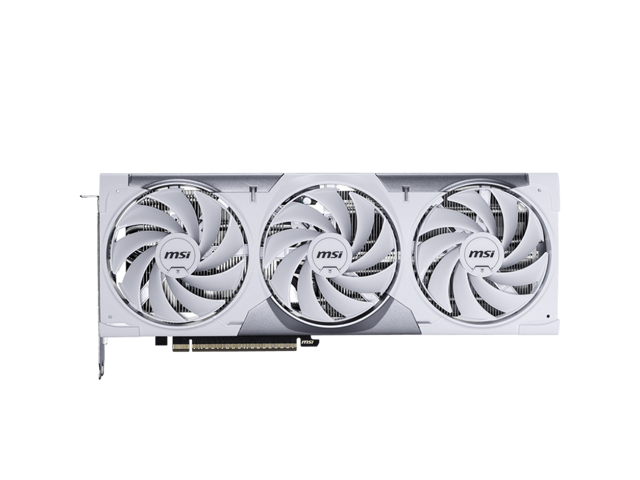
This is the fourth review in a series focusing on the MSI design concept, Project Zero. The lone video card in Project Zero is the MSI GeForce RTX 5070 Ti 16G VENTUS 3X PZ OC. Here we reviewed the overall design of the video card as well as the performance in our gaming suite. We looked at plain raster, always-on ray tracing, and optional ray tracing as usual. We compared the performance to the XFX Swift Radeon RX 9070 XT White Triple Fan Gaming Edition, a video card we reviewed a while back that impressed us. Overall, the MSI GeForce RTX 5070 Ti 16G VENTUS 3X PZ OC is very much a custom-designed RTX 5070 Ti. It does exactly what you would expect, and the overall performance, cooling, and design are solid.
Project Zero Design
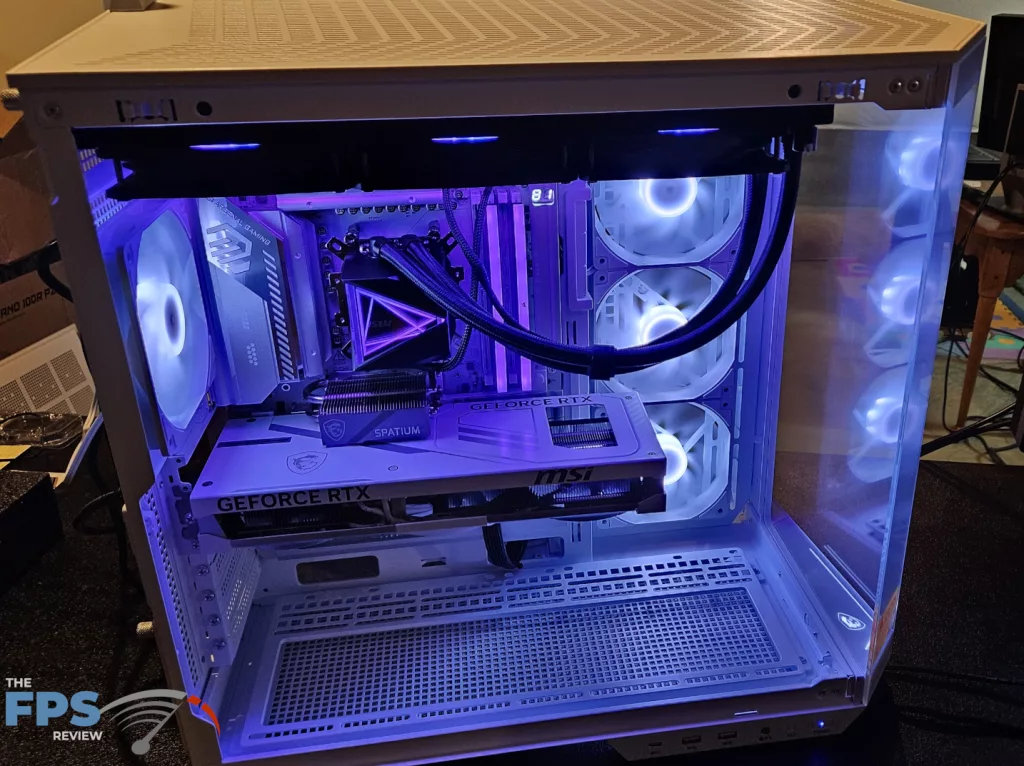
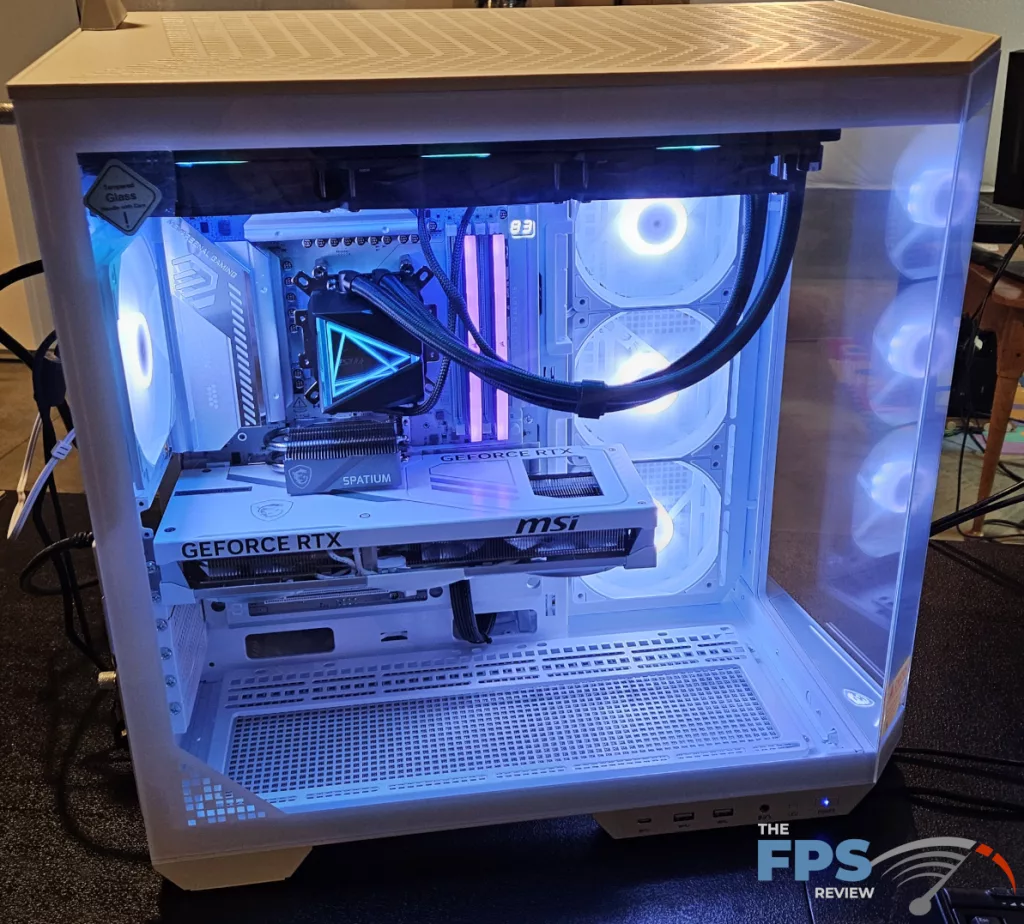
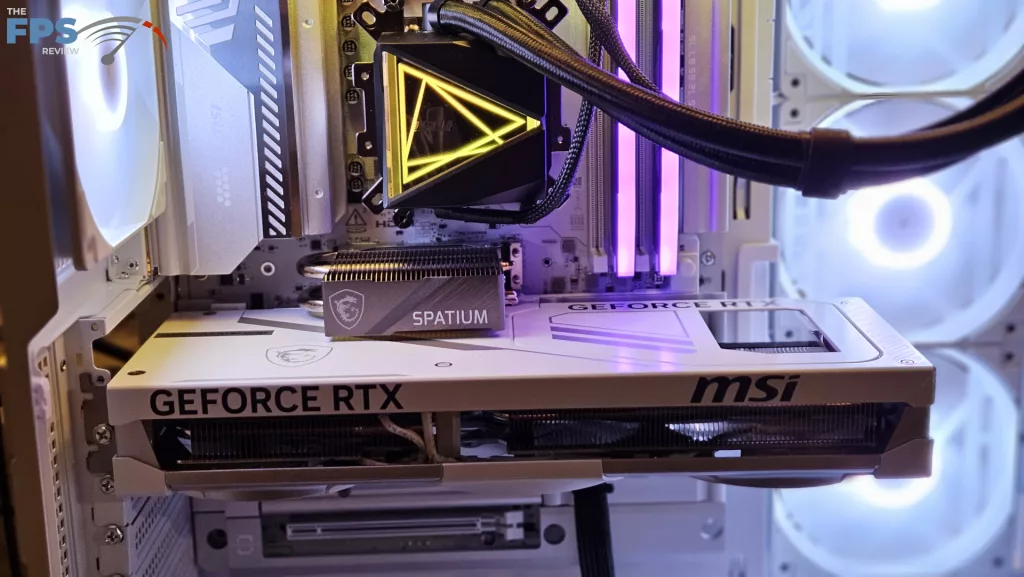
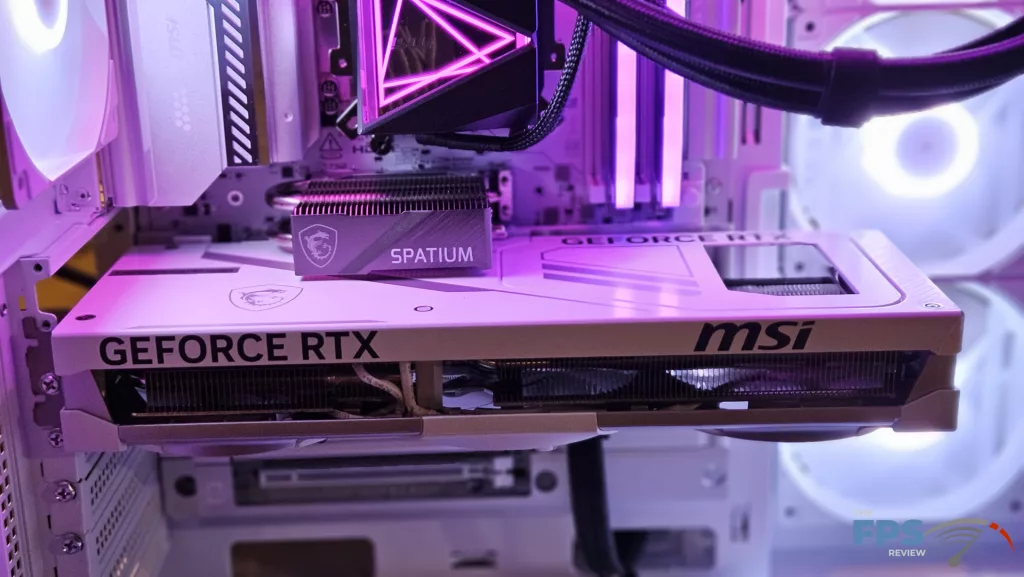
This video card is obviously a bit different, as you can tell from the name. The design and color aesthetic fit perfectly with the look of the Project Zero pieces we have already reviewed. Project Zero isn’t flashy; it’s actually the opposite, and this video card fits right in. Something that looks clean and crisp (and white).
The unique functional aspect of this video card is the hidden power connection and the magnetic backplate. It works very well to fit into the “uncluttered” concept of Project Zero. The placement also keeps the HPWR cable from being bent or strained. Every NVIDIA video card should follow this design aspect.
This video card is not exclusive to a Project Zero motherboard or case. It could be used in any PC build and would be a great addition. We have seen this magnetic backplate and hidden connector only once before on the Sapphire Nitro+ Radeon RX 9070 XT. We liked the concept then, and we like it now.
Game Performance
This is not the first time a Radeon RX 9070 XT and a GeForce RTX 5070 Ti have been used in comparison in our reviews. The performance is very close between these two video cards. This review was no different. In plain raster gaming at 1440p, the MSI GeForce RTX 5070 Ti 16G VENTUS 3X PZ OC was the faster performer in 4 games, the XFX Swift Radeon RX 9070 XT White Triple Fan Gaming Edition was faster in 3 games, and there were two draws. Every game in the suite was playable in native resolution without upscaling. On average, there was only 1-2% separating the two cards. As always, there are outliers, but all told, these two video cards are simply neck and neck.
When we change over to games that have optional ray tracing, things are still heavily in favor of the MSI GeForce RTX 5070 Ti 16G VENTUS 3X PZ OC. The margins are quite wide here compared to plain raster gaming, yet the only game that was playable without upscaling or overclocking was Black Myth: Wukong out of the four. Hard-core ray tracing is still the purview of the NVIDIA RTX-based video cards.
Overclocking
Simply put, the MSI GeForce RTX 5070 Ti 16G VENTUS 3X PZ OC should be overclocked. This video card is handicapped by the fact that you can’t give it more power, yet it still overclocks by over 20% compared to the factory settings. It’s very much like putting a restrictor plate on the Plymouth Superbird. In every game in the suite, except one, the fastest result, either plain raster or optional ray tracing, was from the overclocked MSI GeForce RTX 5070 Ti 16G VENTUS 3X PZ OC. We show the boost from overclocking to be 10% on average, which is quite substantial. Free performance, that is a good thing.
Power and Temperature
The MSI GeForce RTX 5070 Ti 16G VENTUS 3X PZ OC uses less power than the XFX Swift Radeon RX 9070 XT White Triple Fan Gaming Edition by around 13%. The temperature crown goes to XFX here, as the Swift Radeon RX 9070 XT White has an excellent cooling system. The MSI GeForce RTX 5070 Ti 16G VENTUS 3X PZ OC isn’t too far behind, and the cooling solution is very quiet. We could not hear the fans, whether in the case or on the open bench.
Final Points
In this, our fourth Project Zero review, we had a chance to show you the concept of Project Zero and the performance of the MSI GeForce RTX 5070 Ti 16G VENTUS 3X PZ OC. The specific design of this video card is purpose-made for Project Zero. The look is simple, subdued, and clean. The performance is right on par with any other NVIDIA RTX 5070 Ti. The video card is an excellent overclocker and rewards you with extra performance. The concealed HPWR connection and magnetic backplate design very much helps to show off Project Zero. This video card was purpose-built, thus it does carry a price premium, however the design and performance make this an excellent choice for any PC build.



The MSI GeForce RTX 5070 Ti 16G VENTUS 3X PZ OC has earned The FPS Review Silver Award. It is a unique video card from MSI in the Project Zero design, has a well-hidden 12VHPWR connector cable, and also overclocks very well, given its power budget.
