Introduction
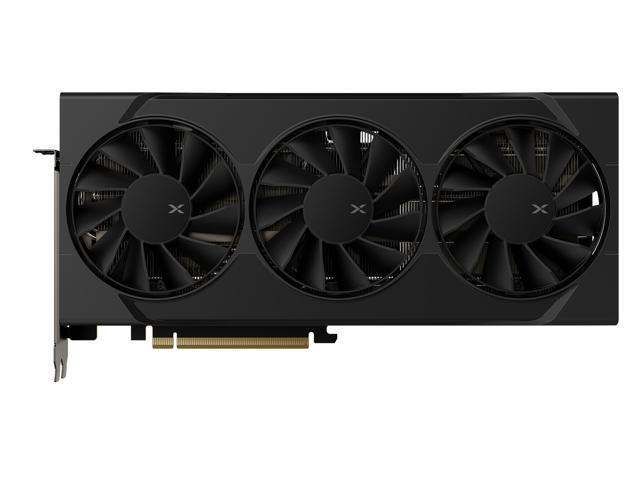
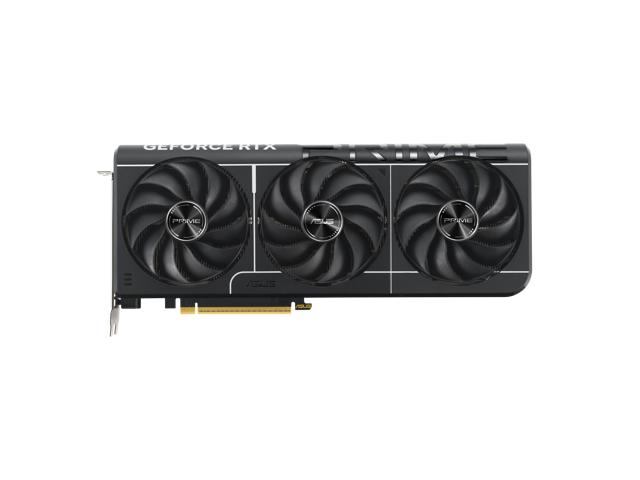
2025 is ending, and it’s time to take a quick look back at the most interesting or best hardware launched in 2025 that we have reviewed. 2025 started off with the excitement of new GPU launches from NVIDIA (GeForce RTX 50 Series Blackwell GPUs) and AMD (AMD Radeon RX 9000 Series RDNA 4 GPUs). Throughout the year, the entire lineup of GPUs from both camps was launched up and down the product stack.
AMD also started off the year with a lot of exciting announcements, which were also released throughout the year. The AMD Ryzen 9 9950X3D and Ryzen 9 9900X3D were launched. There were a couple of launches centered around AMD FSR Redstone (FSR 4) technologies that have now come to RDNA 4 in 2025.
In motherboard land, we saw refreshes of motherboards with some new X3D Turbo Mode features, and an emphasis on X3D performance. Storage was exciting with the introduction of the new Phison E28 controller. It’s time to take a look back at some major launches and things we’ve reviewed in each category, and see what interested us the most.
CPU
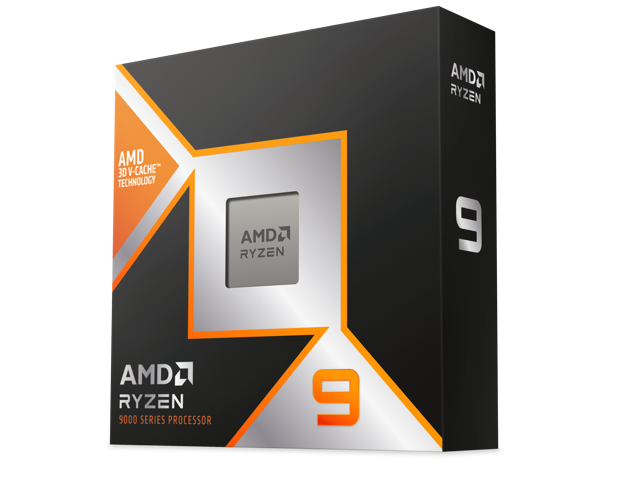
AMD Ryzen 9 9950X3D
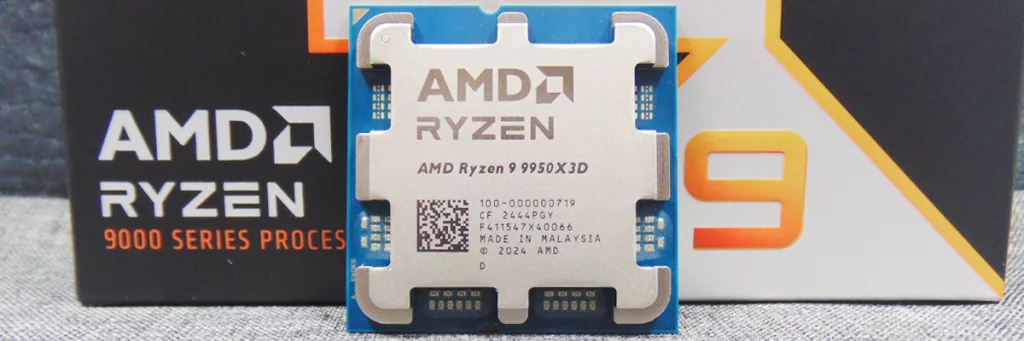
Without a doubt, the best CPU launched and reviewed in 2025 has to be the AMD Ryzen 9 9950X3D. Launched in March of 2025, it debuted at an MSRP of $699, coming in at the same launch price as its predecessor, the AMD Ryzen 9 7950X3D, when it launched in February of 2023. Pricing has remained fairly consistent since its launch, near MSRP, with some short, temporary swings closer to $650 at the lowest, in some stores. Otherwise, current pricing at the time of writing has it sitting on average around $680 at the popular online shops, which is just a tad below MSRP.
For this price, you do get what you pay for, and the AMD Ryzen 9 9950X3D CPU delivers on performance for both creative content and multitasking, with a focus on gaming. Though it still uses one CCD for the extra 3D V-Cache, it utilizes the newer 2nd Gen AMD 3D V-Cache, which flips the cache underneath the CCD. The benefit is the ability for the CPU to hold higher boost clocks compared to the 7950X3D, fixing one of the major issues with that CPU when it came to productivity performance. The Ryzen 9 9950X3D, therefore, is a perfect 16-core/32-thread productivity CPU, with high performance, that also has the potential to provide the highest gaming performance on high-end GPUs like the RTX 5080 and RTX 5090.
In our game testing, the AMD Ryzen 9 9950X3D provided an uplift between 10-20% over the previous generation AMD Ryzen 9 7950X3D. Compared to the AMD Ryzen 9 9950X, the AMD Ryzen 9 9950X3D’s 3D V-Cache provided between a 20%-30% performance advantage in games, which is a huge benefit. It is the “best of both worlds” CPU, and with recent updates to AMD’s chipset software, core utilization is better than ever. Though there have been a slew of lower-end CPUs released in the latter half of 2025 (AMD Ryzen 7 9700F, AMD Ryzen 5 9500F, AMD Ryzen 5 7500X3D, and AMD Ryzen 5 7400), if you just want the best, bare none, the AMD Ryzen 9 9950X3D is the best CPU launched and reviewed in 2025.
GPU
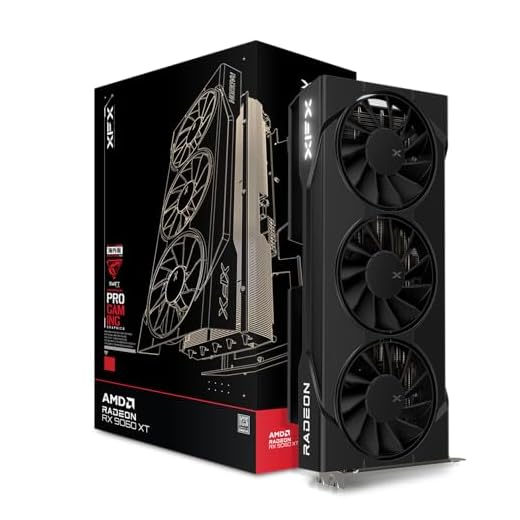
AMD Radeon RX 9060 XT 16GB
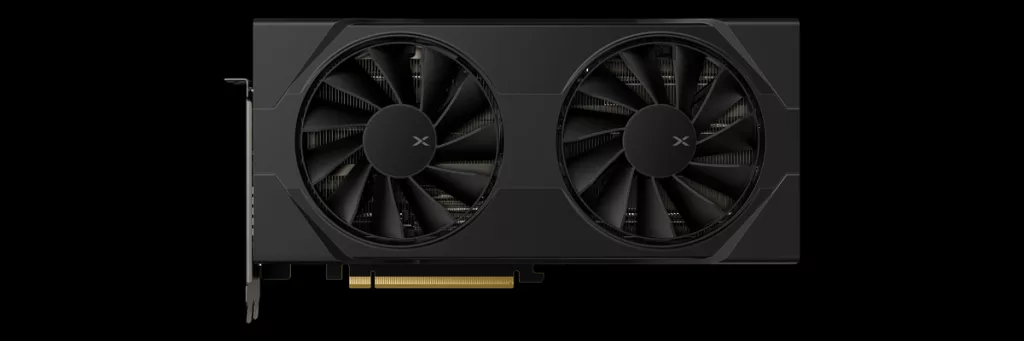
The best GPU launched (from AMD or NVIDIA) and reviewed in 2025 is the AMD Radeon RX 9060 XT in general. Launched in June (the summer) of 2025, the Radeon RX 9060 XT 16GB debuted at $349 MSRP and is based on the RDNA 4 architecture. Pricing generally started off above MSRP on the AMD Radeon RX 9060 XT 16GB, but still below $400, in the $370-380 range. It did dip down at times, close or at MSRP with some models; however, here in the latter part of 2025, prices have risen due to the current VRAM market. At the current time, you can get it as low as $380, but with several models around the $400 mark now.
In 2025, both AMD and NVIDIA launched new series of GPUs, NVIDIA with the GeForce RTX 50 Series Blackwell architecture, and AMD with the AMD Radeon RX 9000 Series RDNA 4 architecture. When it comes to what is the “best” GPU, we look at both performance and value based on pricing, plus longevity. The AMD Radeon RX 9060 XT 16GB offers the best bang for buck; it sits at the sweet spot for performance and pricing, and should be the minimum consideration for longevity with 16GB of VRAM. With the AMD Radeon RX 9060 XT, you also get full support for AMD FSR Redstone features such as ML-Upscaling, ML-Frame Gen, Ray Regeneration, and Radiance Caching.
The AMD Radeon RX 9060 XT 16GB has proven to offer great midrange performance in 1440p gaming with or without FSR. It can even run some games well at 4K with FSR thanks to its 16GB of VRAM on board. The 16GB of VRAM allows you to receive the full potential of the performance the GPU can deliver in games. It is perfectly positioned to provide a great gaming experience.
In our testing, the AMD Radeon RX 9060 XT generally provided a 40%-50% performance improvement over the previous generation Radeon RX 7600 XT in games. The Radeon RX 9060 XT 16GB was also competitive with the GeForce RTX 5060 Ti 16GB, in some games faster, in others very close to performance, but comes in at $80 cheaper by MSRP, making the Radeon RX 9060 XT 16GB a whopper of a value.
Runner-Up NVIDIA GeForce RTX 5070 Ti
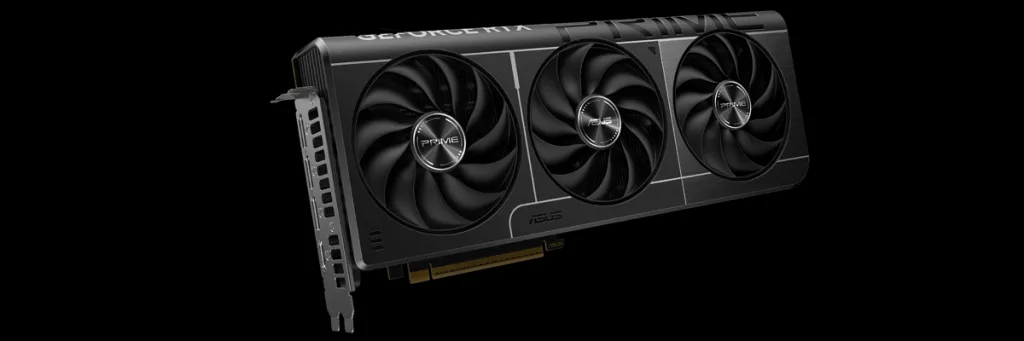
We have a runner-up in the GPU category in the high-end performance segment. We are giving the NVIDIA GeForce RTX 5070 Ti launch in 2025 the runner-up selection this year. The GeForce RTX 5070 Ti was launched toward the beginning of 2025, in February, at an MSRP of $749. The base-model of the GeForce RTX 5070 Ti has actually remained very consistent over the course of the year, close to the MSRP of $749. Only now, toward the end of the year, prices have crept up above $800 due to the current state of VRAM pricing. However, you can still find some models around $749 with some searching.
The GeForce RTX 5070 Ti 16GB has proven to be a powerhouse for gaming. The GeForce RTX 5070 Ti 16GB is based on NVIDIA’s Blackwell architecture, and supports DLSS 4 Transformer model, and Frame Gen. This is a higher-tier video card that allows great 4K gaming with DLSS, and better Ray Tracing performance. If you are after a video card to run at Ultra settings with Ray Tracing, at 1440p, or 4K with DLSS, then this is it.
AIB Video Card
MSI GeForce RTX 5080 16G EXPERT OC Video Card
When looking specifically at AIB video cards in 2025 that we have reviewed, several stand out. Toward the beginning of the year, we reviewed the XFX Quicksilver AMD Radeon RX 9070 XT Magnetic Air Edition Video Card. The XFX Quicksilver AMD Radeon RX 9070 XT Magnetic Air Edition launched in March, and the RGB Mercury version of this video card is currently $750 online, which is the same launch price as the Quicksilver.
What makes the XFX Quicksilver AMD Radeon RX 9070 XT Magnetic Air Edition unique, or any Magnetic Air Edition from XFX, is the unique removable magnetic fans. The fans are held by a strong magnet, but can easily be pulled off and snap back on for cleaning. It’s an ingenious and easy-to-operate method. The XFX Quicksilver AMD Radeon RX 9070 XT Magnetic Air Edition is based on the AMD Radeon RX 9070 XT RDNA 4 GPU and delivers great performance with quiet operation.
Another interesting and unique design we came across in 2025 were video cards like the SAPPHIRE NITRO+ Radeon RX 9070 XT Video Card that has a removable magnetic backplate and ability to hide the cable away. The SAPPHIRE NITRO+ Radeon RX 9070 XT launched early in the year, March 2025, with an MSRP of $729. The SAPPHIRE NITRO+ Radeon RX 9070 XT Video Card was also customized to provide a custom I/O configuration and improved factory overclock.
The SAPPHIRE NITRO+ Radeon RX 9070 XT Video Card also stepped out of the pack by using a 12V-2×6 HPWR connector instead of the traditional 8-pin connectors. In this way, SAPPHIRE was able to make the power connector STEALTH, where it can hide inside the back of the video card. There is a magnetic backplate that is removable and snaps into place, hiding the cables. Pricing has been pretty consistent on this video card, and it could be found as low as $699.99 for a time, but is now back close to its MSRP at $750.
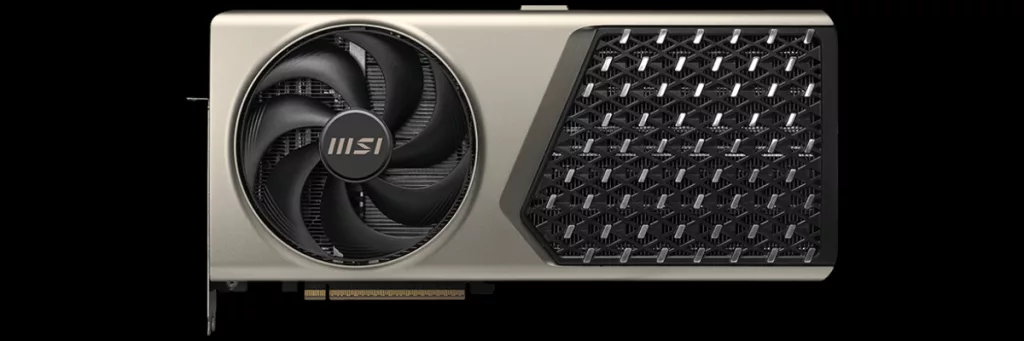
If we had to pick one design in 2025 that was aesthetically appealing, then the MSI GeForce RTX 5080 16G EXPERT OC Video Card would be that card. This one tickled our nostalgia itch, which brings a reminiscent old-school Founders Edition feeling and design into a modern video card. The MSI GeForce RTX 5080 16G EXPERT OC is based on the GeForce RTX 5080 GPU, and launched in August of 2025 with an MSRP of $1,299.99.
This MSRP is higher than the reference GeForce RTX 5080 MSRP of $999, but you are paying for the looks, cooling, and it is factory overclocked as well. The cooling design is inspired by the NVIDIA push/pull front and reverse fan design, but with MSI’s own flair. The entire video card is encased in die-cast aluminum and has a unique dual-tone gold and black color scheme. The front of the video card has a mesh pass-through design. The video card eschews elegance, precision, and luxury, with a throwback design, yet at the same time modern in form and function.
There really were a lot of interestingly designed video cards in 2025, so it is hard to pick just one. We also want to shoutout the design on the GIGABYTE cards, the GIGABYTE AORUS GeForce RTX 5080 MASTER and GIGABYTE GeForce RTX 5060 Ti GAMING OC series graphics cards have a very clean look.
Motherboard
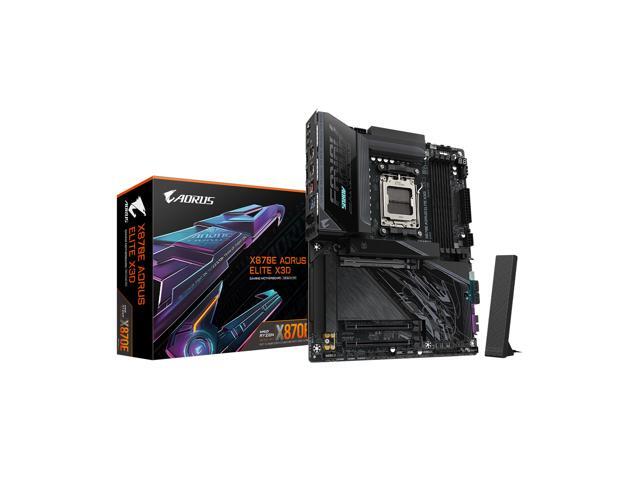
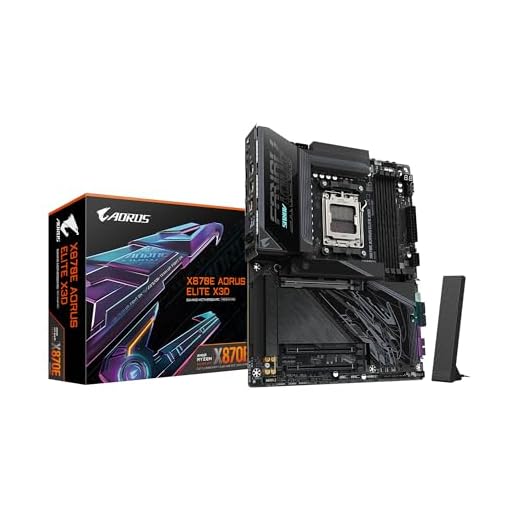
GIGABYTE X870E AORUS ELITE X3D

We have reviewed a lot of motherboards in 2025, and there are several that stand out in features, value, and aesthetics. We saw a trend this year of offering new designs and looks, but also features that focused on X3D Turbo modes or back-side connectors. One motherboard that impressed us on features and performance has to be the GIGABYTE X870E AORUS ELITE X3D. The GIGABYTE X870E AORUS ELITE X3D launched in the latter part of 2025, with an MSRP of $379. Since it was launched, pricing has remained consistent, and it is currently available at MSRP. GIGABYTE also has a white “ICE” version of this motherboard, allowing for a unique color scheme choice in the same motherboard.
The GIGABYTE X870E AORUS ELITE X3D introduced GIGABYTE’s newer X3D Turbo Mode 2.0, which we thoroughly tested. The VRM configuration is beefy, with 16+2+2 and 80Amps, with plenty of thick VRM cooling. It also has support for GIGABYTE’s D5 Bionic Corsa and can support up to 9000MT/s RAM. It is absolutely loaded to the brim with I/O and functionality, USB-A ports, five 10 Gb/s and three 5Gb/s as well as three USB-C ports, two USB4 and one 20Gb/s and 5Gbps ethernet and Wi-Fi 7.
Runner-Up MSI Project Zero Motherboards

For our runner-up, we have to mention MSI’s Project Zero motherboards, specifically the MSI MAG X870E TOMAHAWK MAX WiFi PZ and MSI B850 GAMING PLUS WiFi PZ, and the MSI PRO B850M-A WiFi PZ. MSI Project Zero is MSI’s “Back-Connect” motherboard design, denoted as “PZ” in the product name. Each of these motherboards allows all cables to be connected on the back-side of the motherboard, creating a clean and uncluttered appearance. Each motherboard we reviewed recieved high-marks for the features, performance, pricing, and custom, well-designed nature that allows a clean build with no PSU cables visible.
Storage
Phison PS5028-E28 Reference Design 2TB PCIe Gen5 M.2 NVMe SSD
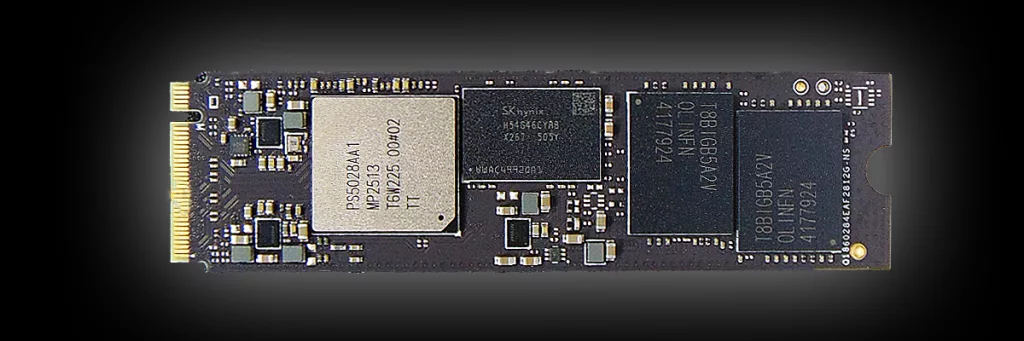
The clear winner for M.2 NVMe storage devices was the launch of the Phison E28 controller-based SSDs. The Phison E28 brings what we’ve been waiting for on PCIe 5.0 x4 (Gen5) SSD performance, power, effeciency and thermals. By far, the reference Phison E28 controller SSD was the fastest SSD we tested in 2025. It is based on NVMe PCIe Gen 5.0 x4 and has a maximum read speed of 14,900MB/s and write speed of 14,000MB/s. In our testing, the Phison E28 Reference Design SSD won every benchmark and hit its mark in performance. The Phison E28 will herald in a new generation of SSDs.
Runner-Up Western Digital WD_BLACK SN7100 1TB PCIe Gen4 M.2 NVMe SSD
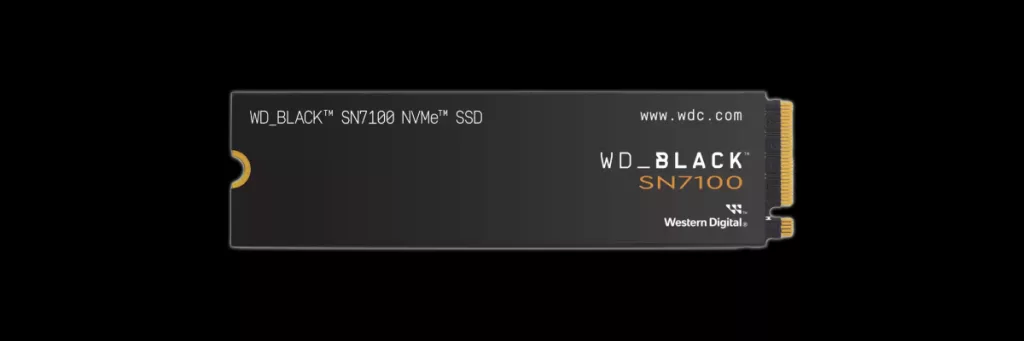
Since the Phison E28 reference SSD is not a production-branded SSD, we do need to set what we think was the best reviewed or launched SSD in 2025 that is an actual product. Therefore, the Western Digital WD_BLACK SN7100 1TB PCIe Gen4 M.2 NVMe SSD gets that distinction. The Western Digital WD_BLACK SN7100 was launched at the beginning of 2025 in February in three capacities: 500GB, 1TB, 2TB, and 4TB.
This drive was aiming to be a performance drive at a value, and offers PCIe 4.0 x4 (Gen4) NVMe performance at speeds up to 7,250MB/s read and 6,900MB/s write, which is very top-end performance for Gen4 drives. Prices started off very affordable and with great value around $120 at launch for the 2TB model, and remained steady until now. Similar to other NAND flash devices at the end of the year 2025, prices have risen significantly. In our performance testing, this drive performed very well and hit its marks; game load times were very fast.
Case
MSI MAG PANO 100R PZ Gaming PC Case

At the end of 2025, we reviewed the new MSI MAG PANO 100R PZ Gaming PC Case, based on MSI’s Project Zero back-side connector motherboard design with full support. Pricing has been up and down since it has launched, with initial pricing around the $140-$150 mark at launch, but has now settled down to a reasonable $130 price range.
Similar to the MSI Project Zero motherboards, this case is designed with back-side power connectors in mind, with plenty of cut-outs and routing ability to support MSI’s Project Zero motherboards and route a very clean PC build. The MSI MAG PANO 100R PZ Gaming PC Case is a “squatty” mid-tower PC case and supports full-size ATX motherboards. It has a ton of space inside with multiple fan racks, a glass front, and side panels that allow a full 270-degree panoramic view of the PC build. In our thermal testing, the case performed well and kept our CPU and GPU well-cooled, with plenty of ventilation and configuration options.
Cooling
Lian Li Hydroshift LCD 360R AIO

We reviewed the Lian Li Hydroshift LCD 360R AIO CPU cooler early in 2025, launched with an MSRP of $199. Searching online, we find the Lian Li Hydroshift LCD 360R AIO to be sitting just below MSRP here at the end of 2025, making it an even better value. In our testing, we concluded that the Lian Li Hydroshift LCD 360R AIO has the best thermal performance that we’ve had on our test bench in 360mm AIO’s. However, it does suffer from being noisier, but that can be mitigated with configuration. It also has a very bright LCD screen and a lot of software features to work with. It quickly ended up being our favorite 360mm cooler yet for 2025.
Conclusion
That is pretty much going to wrap it up for our look at the best hardware launches for 2025. Looking back at 2025, we find that the front half of the year was front-loaded with GPU launches. We started with the NVIDIA GeForce RTX 50 Series in January and onward, as those slowly trickled out. Then we were met with the AMD Radeon RX 9000 series in the summer, and those proved to offer great value for the performance provided.
It wasn’t much of a CPU-driven year. The year started off with the AMD Ryzen 9 9950X3D and Ryzen 9 9900X3D, which simply ended up being the best launch for AM5. There have been some other CPUs launched toward the end of 2025, such as the AMD Ryzen 7 9700F, AMD Ryzen 5 9500F, AMD Ryzen 5 7500X3D, and AMD Ryzen 5 7400, which might be of interest for the right scenario, but they were released with little fanfare.
When it is all said and done, it seems like NVIDIA’s Blackwell GPUs and AMD’s RDNA 4 GPUs are the real powerhouses for 2025’s year of product launches. AMD also had a big showing on the software side with the introduction of AMD FSR Redstone, basically FSR 4 ML-Upscaling, and now ML-Frame Generation. AMD is now very competitive on the image quality front with upscaling. That’s pretty much how this year has gone.
Looking ahead to 2026, displays may be interesting for the new year. OLEDs have come down in cost a lot and have become more affordable for gamers. Mini-LED displays are on the rise, with more appealing options if you are looking for an IPS LCD display for both work and play. In fact, looking forward, 2026 may be a very bright year for new displays. With the pricing of DRAM, flash, and hardware going up, displays may be the interesting hardware for upgrades. Otherwise, we are expecting CPU launches to be the driving force for 2026. Perhaps an Intel refresh or new architecture, and from AMD, maybe a new architecture as well, possibly. On the GPU side, we aren’t expecting much, maybe a refresh, maybe not at all. 2026 may be a CPU-oriented year for main components. We will have to wait and see. For now, 2025 – End of Line.