
DLSS 4 & 4.5 Gameplay Performance Comparison
In this section, we tested a group of video cards against two NVIDIA driver releases to gauge performance and image quality in the new DLSS 4.5 release. Driver 591.44 is the most recent before DLSS 4.5, and of course, the release driver 591.74. We also used the updated version of the NVIDIA App 11.0.6.379. Games chosen were a blend of “always-on” ray tracing and optional ray tracing. We only ran benchmarks with ray tracing enabled or “always-on”. With two exceptions, the game settings were our usual, highest quality.
On each performance slide, you will see listed the video card tested, the resolution, and the quality settings. Video cards used include: EVGA GeForce RTX 3080 FTW Ultra 10G, MSI GeForce RTX 5090 32G SUPRIM SOC, MSI GeForce RTX 5070 Ti 16G VENTUS 3X PZ OC, MSI GeForce RTX 5070 Gaming TRIO OC 12G, and the GIGABYTE GeForce RTX 4070 Ti WINDFORCE OC 12G.
Each game heading will show the comparative performance results for each video card. Please note that NVIDIA ray regeneration and path tracing were disabled in games as an option, as those two selections disable the new DLSS 4.5 presets at the moment. The test system for the EVGA RTX 3080 was a much older platform; the video card was part of a custom watercooling loop in which removal would have been too labor-intensive. We also feel that the CPU used in that system was limiting the performance of the RTX 3080, so that there could not be a fair separation of FPS between Quality and Performance modes. In benchmark runs in ray tracing and raster, the CPU performance was consistently nearly 90% utilization.
Alan Wake 2
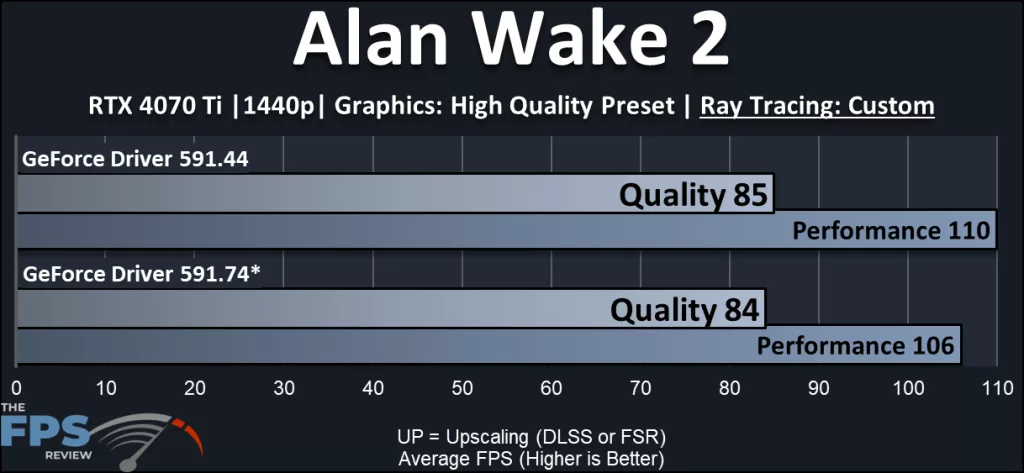
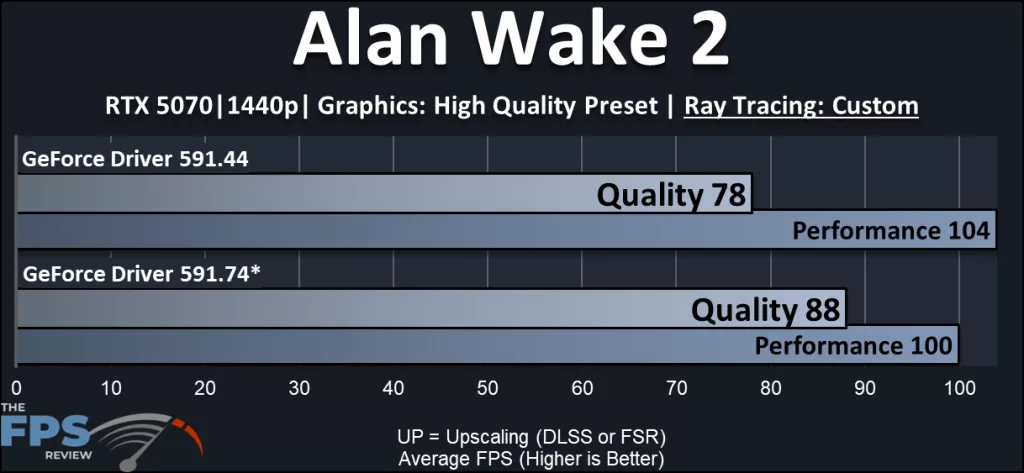
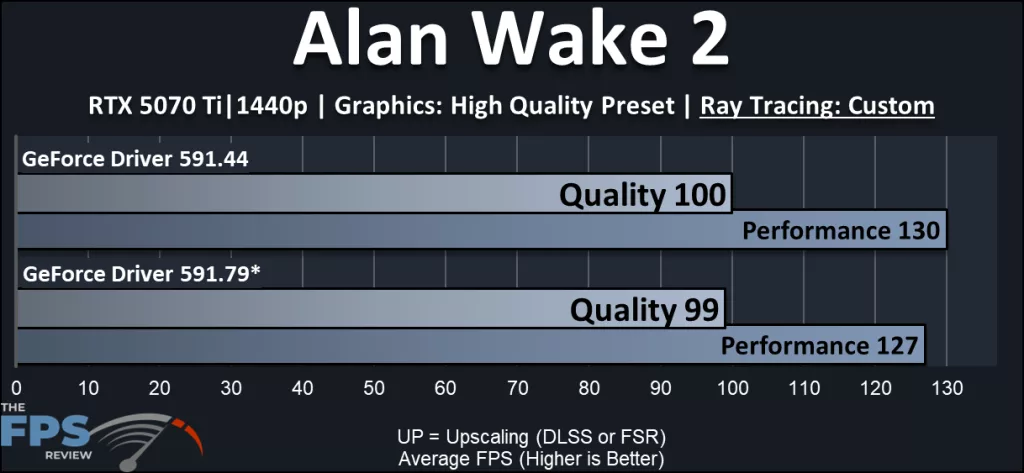
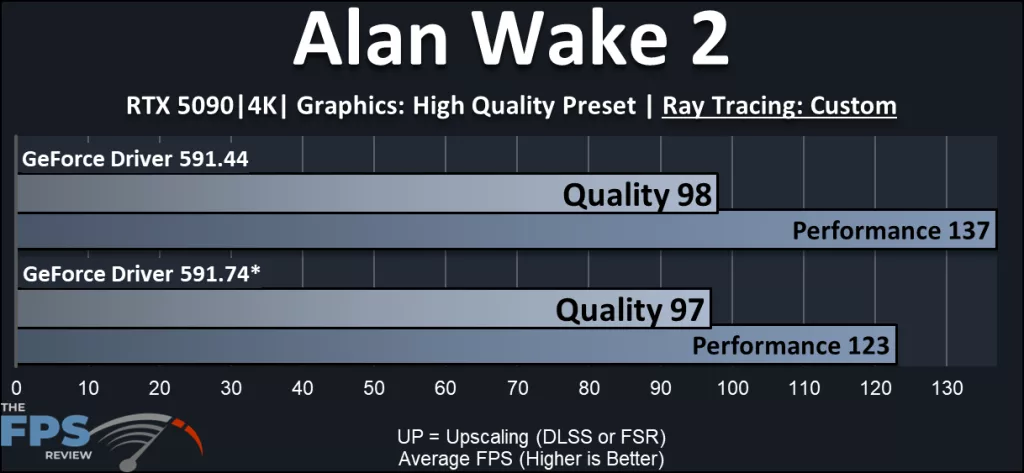
Alan Wake 2 is one of the games where we had to disable ray regeneration and path tracing. You can see in each graph that there is minimal reduction in performance under the Quality setting, but a reduction in the performance selection of 4 to 11 % when enabling DLSS 4.5.
Claire Obscur: Expedition 33
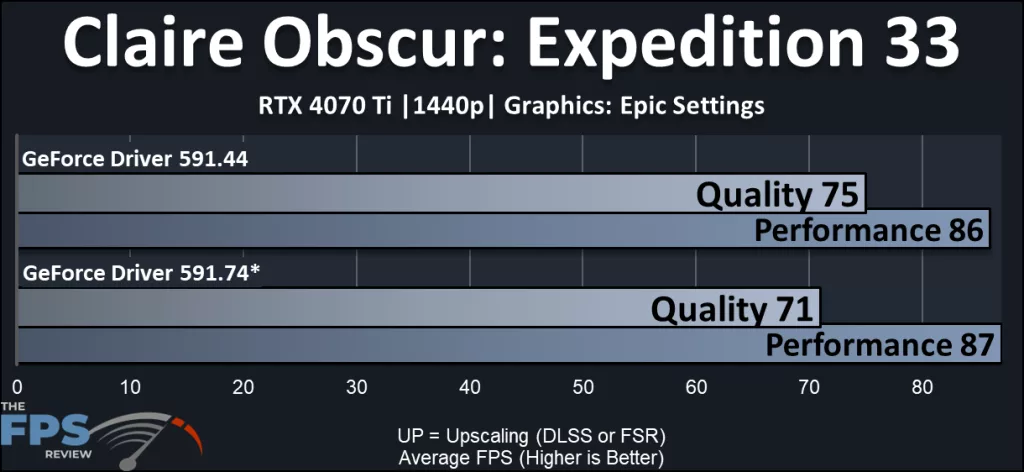
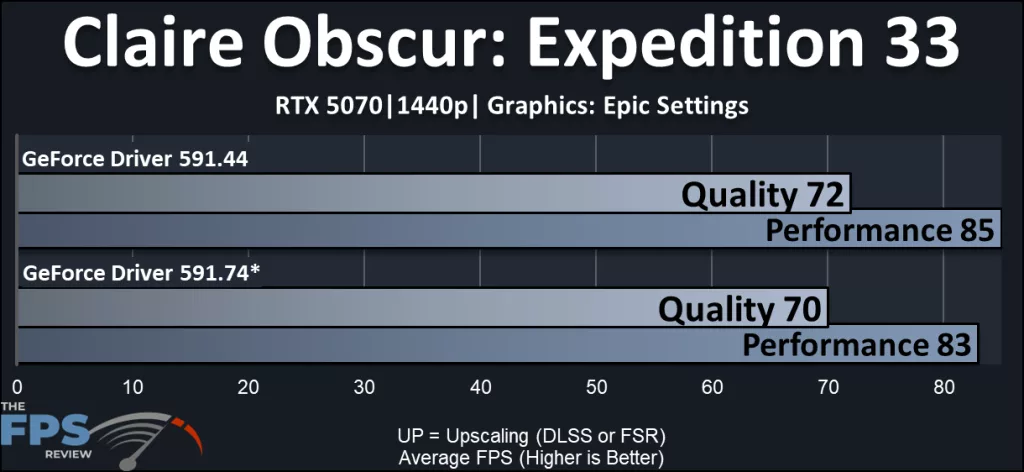
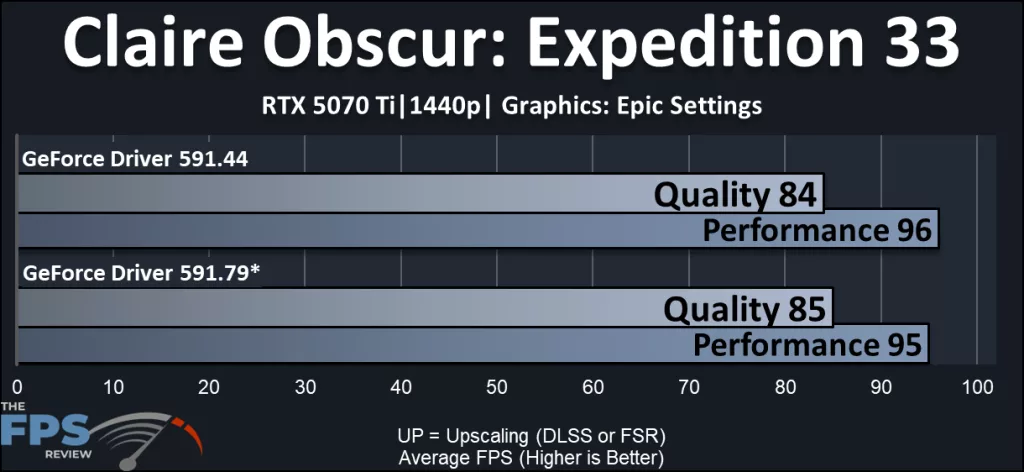
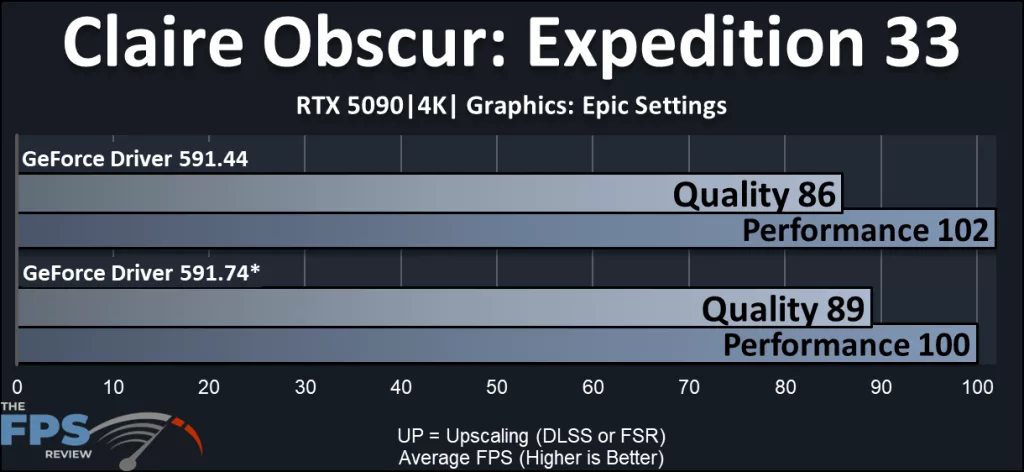
In Claire Obscur, we see some mixed results, but actually a slight gain in performance FPS using DLSS 4.5.
Cyberpunk 2077
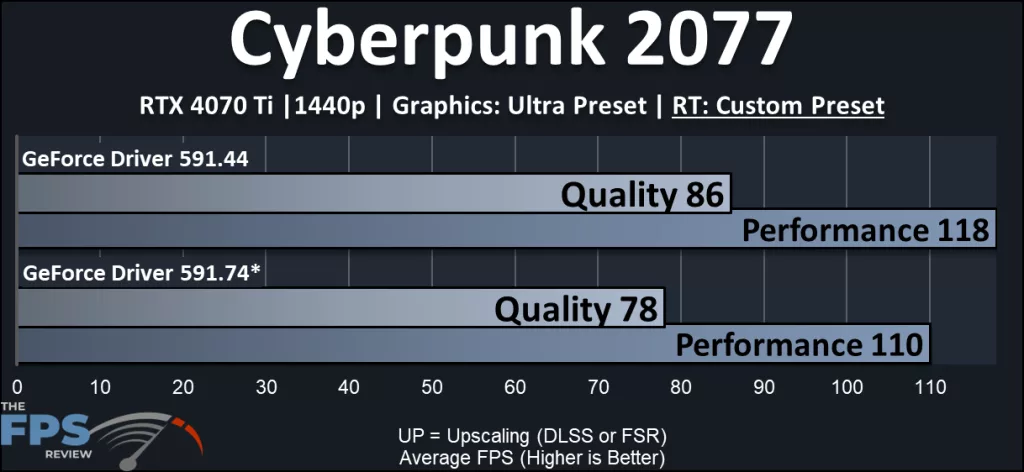
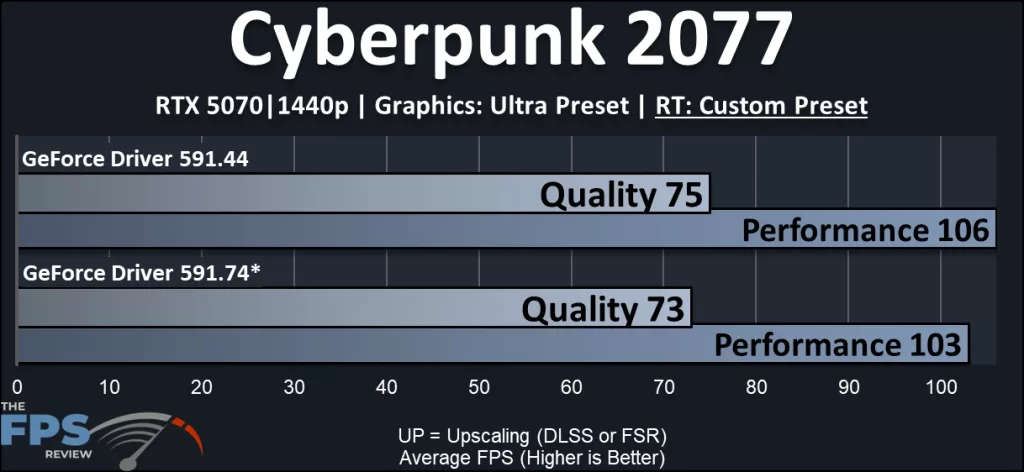
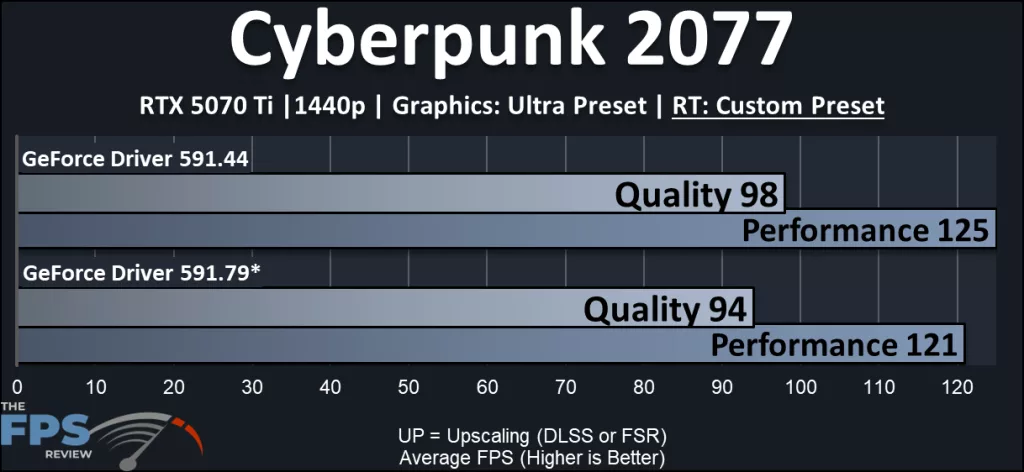
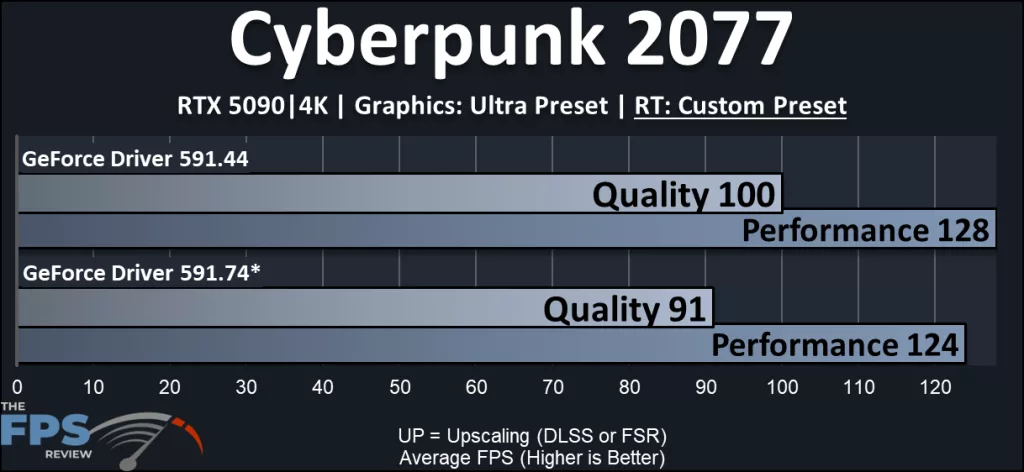
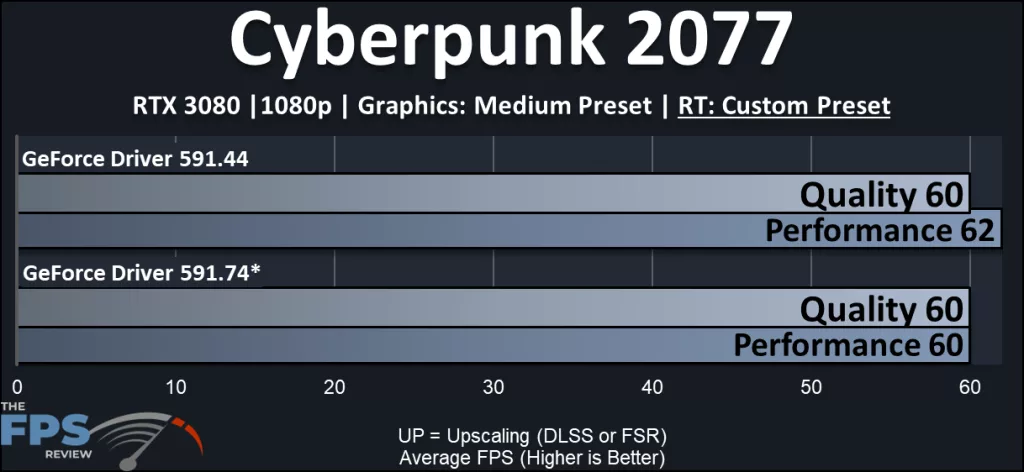
In this grouping, we included the EVGA RTX 3080. As you can see, the RTX 3080 does not change much in the new DLSS format, as FPS was essentially the same in both driver sets; again, most likely, performance was held back by the CPU. Overall, in Cyberpunk, however, 591.44 shows faster FPS by as much as 12% and an average of about 5%.
DOOM: The Dark Ages
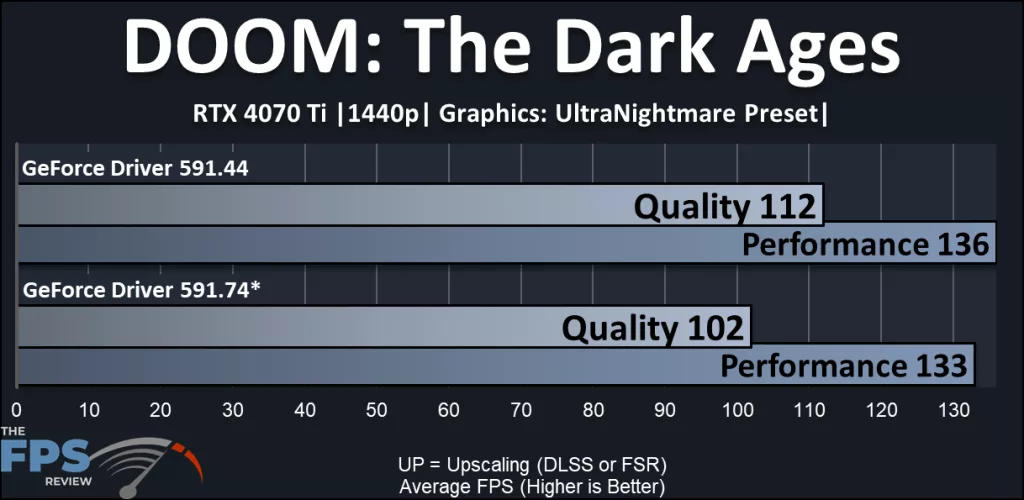
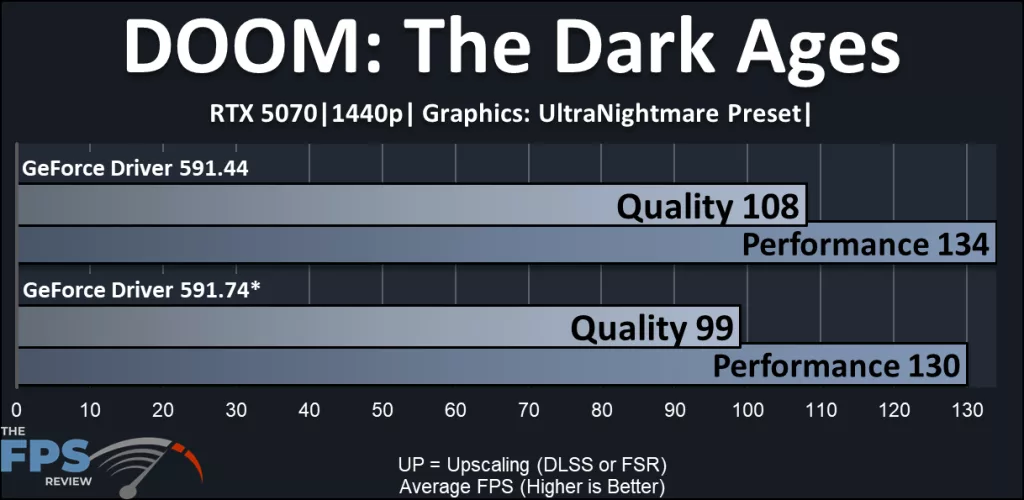
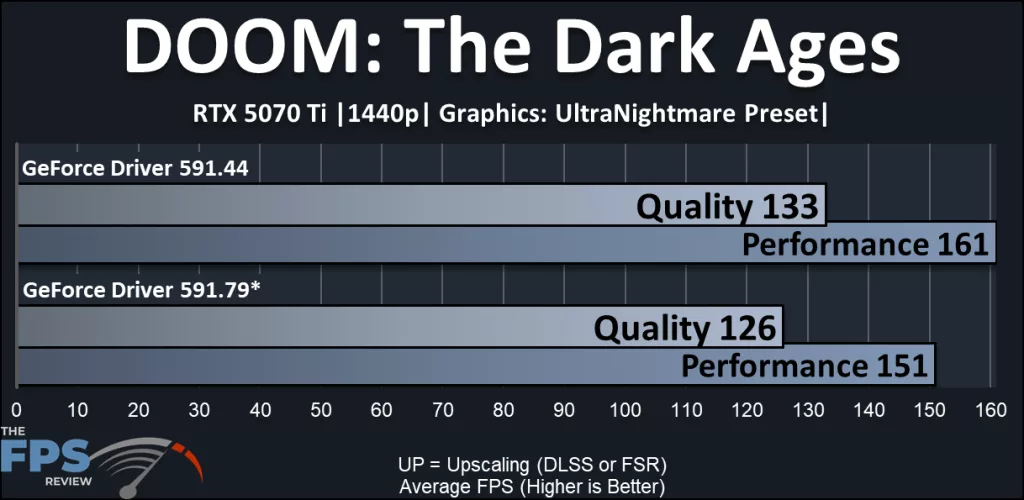
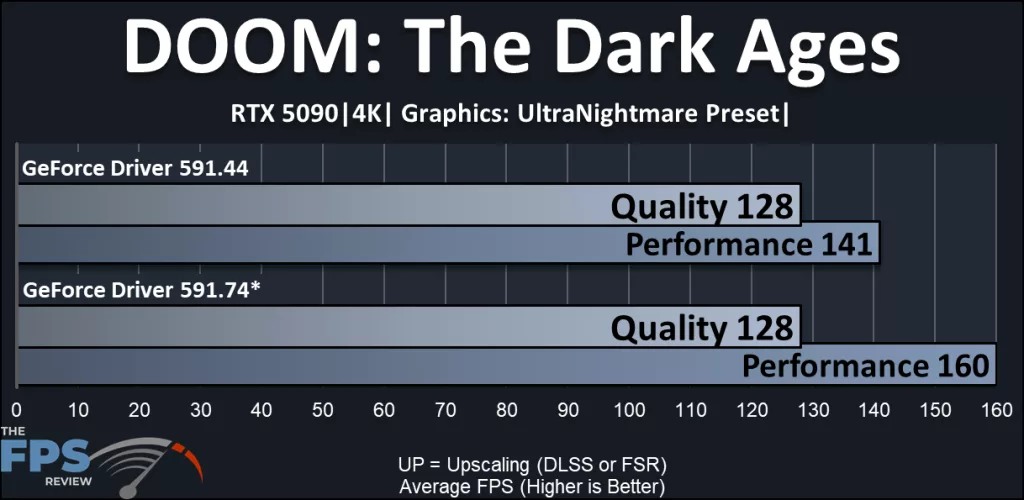
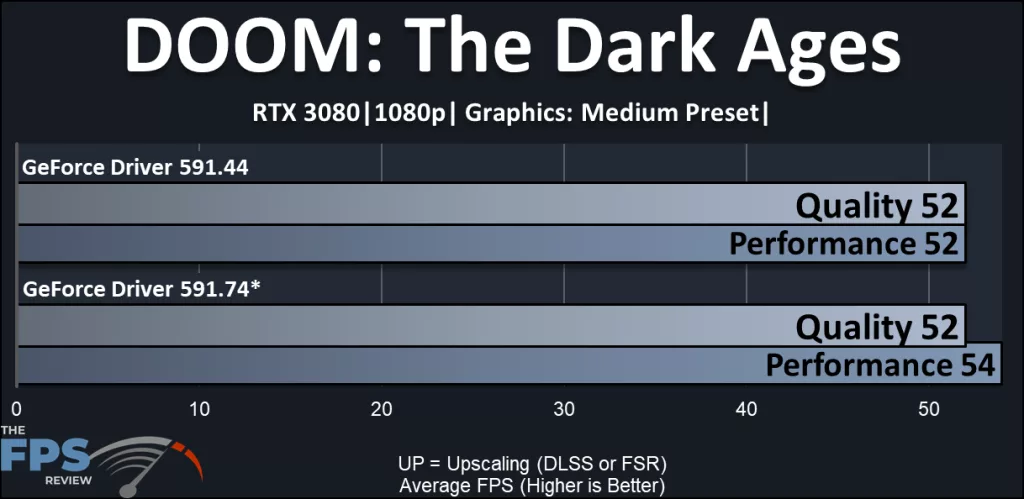
Here in Doom: The Dark Ages, there is a similar performance on the EVGA RTX 3080. No matter the driver set or setting, there was no performance difference. Otherwise, there was a performance advantage once again to 591.44. The biggest margin was 12% with an average difference of 6%.
S.T.A.L.K.E.R. 2: Heart of Chornobyl
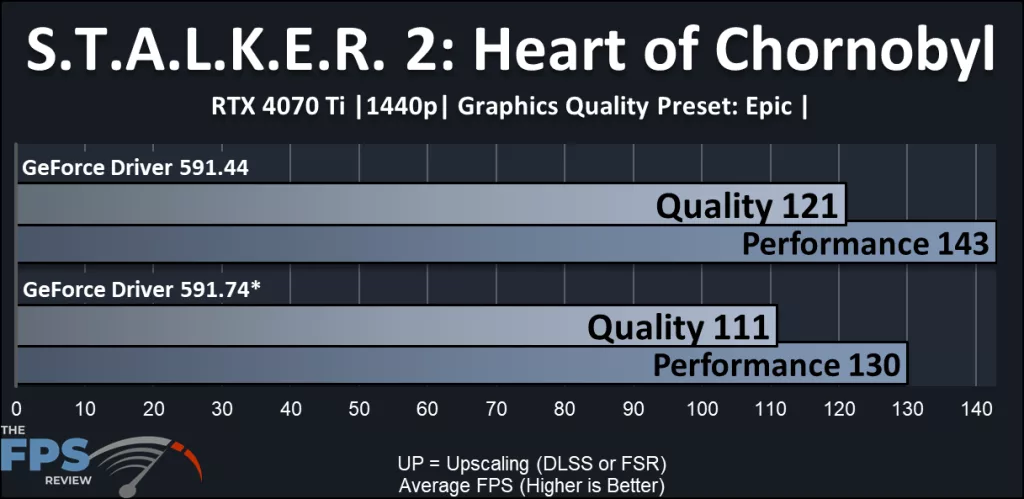
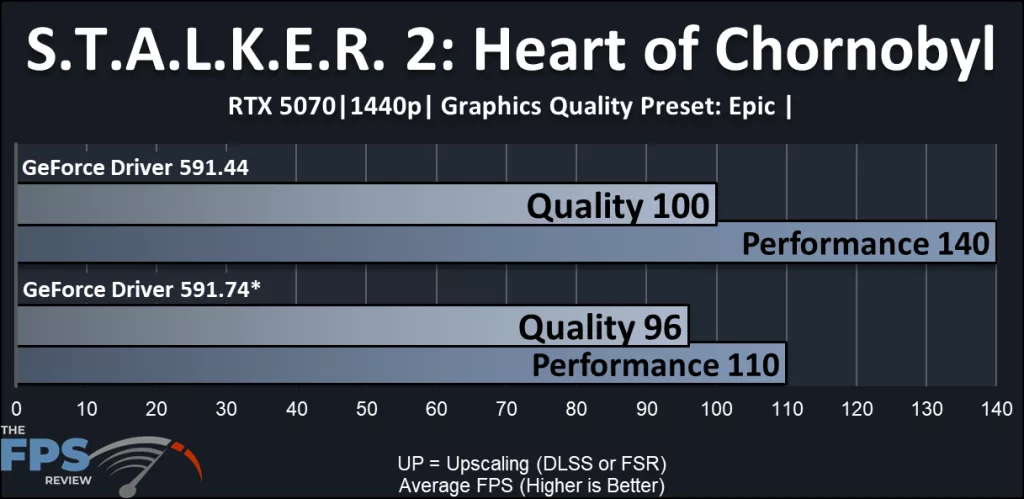
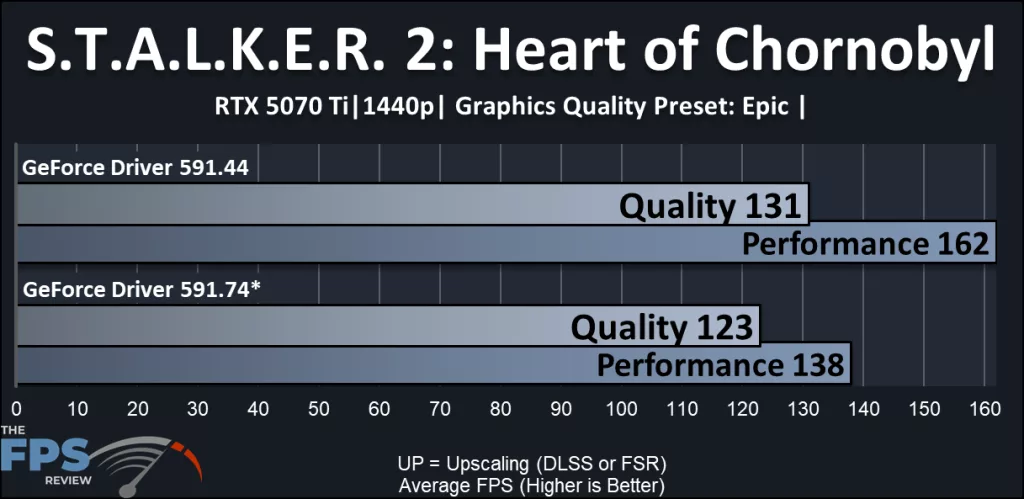
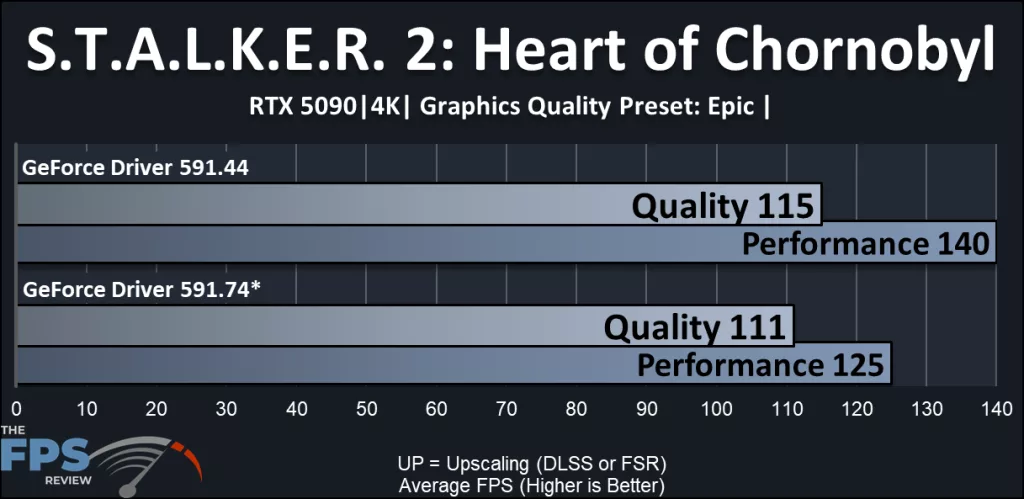
In STALKER 2, we see a performance advantage in the older 591.44 driver set. STALKER had the largest differences of all our games tested, with an average of 11% and the largest single spread of 27% on the MSI RTX 5070.
Gameplay without ray tracing
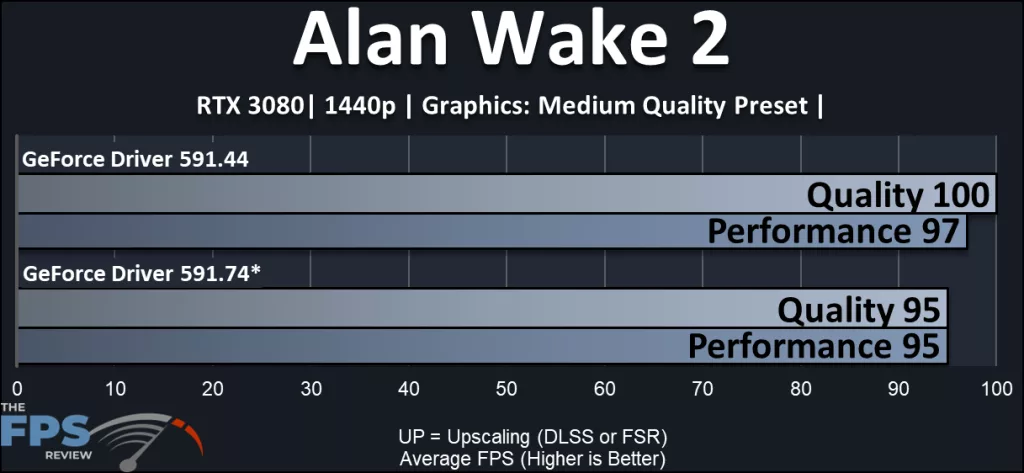
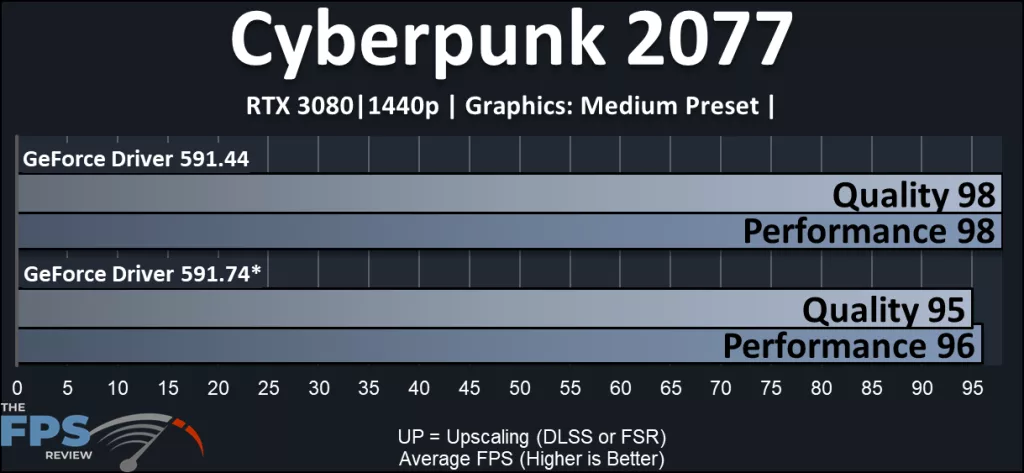
In these two games, we chose to demonstrate performance without ray tracing on the RTX 3080. Here you can see that once again driver 591.44 does provide faster FPS by 2-5%. Without the demand for ray tracing, the frame rates are faster, and the image quality could be increased. The lack of separation of FPS between Quality and Performance is felt to be directly related to the older Core i5 7600K that drives the system this video card is housed in. Nonetheless, the result does demonstrate that the new driver/DLSS mode in the 4.5 release will function in the older RTX 3080 quite well.