Introduction
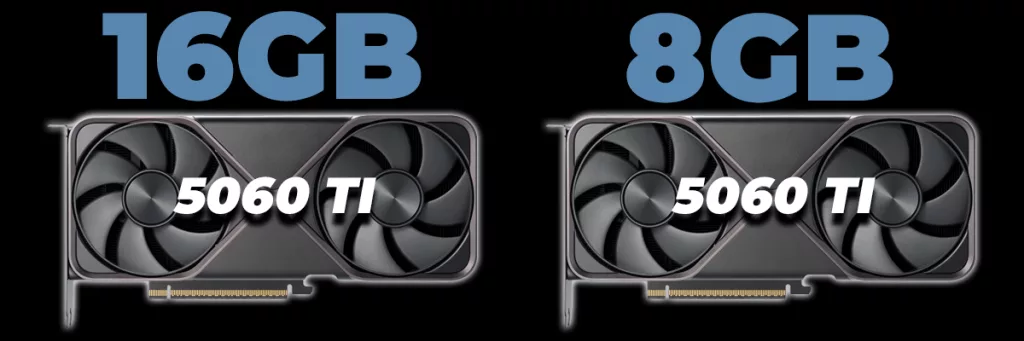
There is no better time than now to evaluate gaming performance between 16GB of VRAM versus 8GB of VRAM, specifically on the GeForce RTX 5060 Ti. In light of the current memory pricing and availability issue plaguing 2026, VRAM capacity and pricing are also affected. NVIDIA has two flavors of the GeForce RTX 5060 Ti GPU, with video cards based on two memory configurations. Having two memory configurations affords the ability to hit two different pricing segments, and potentially allows more affordable pricing on the lower-end configuration with the GeForce RTX 5060 Ti GPU.
In this GeForce RTX 5060 Ti 16GB versus GeForce RTX 5060 Ti 8GB gaming performance review today, we are specifically going to compare gaming performance between a 16GB GeForce RTX 5060 Ti and an 8GB GeForce RTX 5060 Ti video card. We will evaluate 1440p Native resolution, 1440p with DLSS Upscaling, as well as 4K with DLSS Upscaling and Ray Tracing. We will show both AVG FPS as well as 1% Lows. In this way, we can evaluate the gaming performance in demanding scenarios, plus using features like DLSS Upscaling that one would use with the GeForce RTX 5060 Ti when gaming to achieve playable performance at both 1440p and 4K.
GeForce RTX 5060 Ti
The NVIDIA GeForce RTX 5060 Ti was launched in April of 2025 as a mid-range video card to fill out the GeForce RTX 50 Series Blackwell gaming video card lineup. It sits right above the GeForce RTX 5060 and right below the GeForce RTX 5070. One of the unique features of the video card was its ability to be sold in both an 8GB and a 16GB configuration. The MSRP of the GeForce RTX 5060 Ti 16GB was launched at $429, while the MSRP of the GeForce RTX 5060 Ti 8GB was launched at $379.
| Specifications | GeForce RTX 5060 Ti 8GB | GeForce RTX 5060 Ti 16GB |
|---|---|---|
| GPU Codename | GB206 | GB206 |
| SMs | 36 | 36 |
| CUDA Cores | 4608 | 4608 |
| RT Cores | 36 | 36 |
| Tensor Cores | 144 | 144 |
| ROPs | 48 | 48 |
| Texture Units | 144 | 144 |
| GPU Boost | 2572MHz | 2572MHz |
| VRM | 8GB GDDR7 | 16GB GDDR7 |
| Memory Interface | 128-bit | 128-bit |
| Memory Clock | 28Gbps | 28Gbps |
| Memory Bandwidth | 448GB/s | 448GB/s |
| TDP | 180W | 180W |
| MSRP | $379 | $429 |
Both the GeForce RTX 5060 Ti 16GB and GeForce RTX 5060 Ti 8GB utilize the same 4N FinFET GB206 Blackwell die. Both configurations use the full configuration of GB206, and thus have the full performance specifications of cores that the GeForce RTX 5060 Ti GPU is capable of. This includes 4,608 CUDA Cores, 48 ROPs, 144 TMUs, 144 Tensor Cores, and 36 RT Cores. Both the GeForce RTX 5060 Ti 16GB and GeForce RTX 5060 Ti 8GB have a Base Clock of 2407MHz and a Boost Clock of 2572MHz. Both the GeForce RTX 5060 Ti 16GB and GeForce RTX 5060 Ti 8GB have a TDP of 180W.
Both the GeForce RTX 5060 Ti 16GB and GeForce RTX 5060 Ti 8GB operate with a 128-bit memory bus using GDDR7 memory at 448GB/s of bandwidth. The only place the GeForce RTX 5060 Ti 16GB and GeForce RTX 5060 Ti 8GB differ is in the capacity of GDDR7. The 16GB model utilizes 8x memory chips of 2GB capacity each in a clamshell configuration. The 8GB model utilizes 4x memory chips of 2GB capacity on one side.
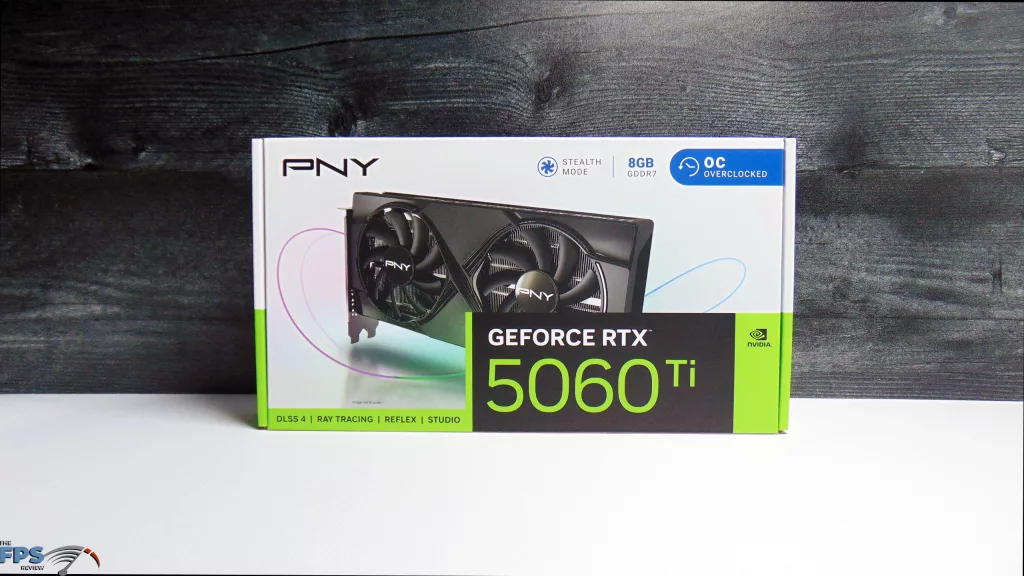
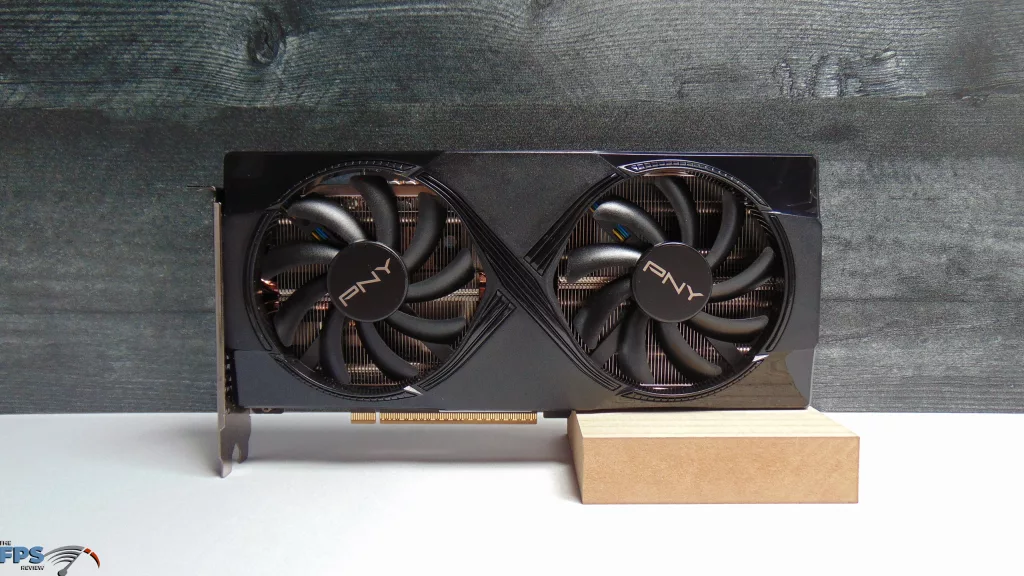
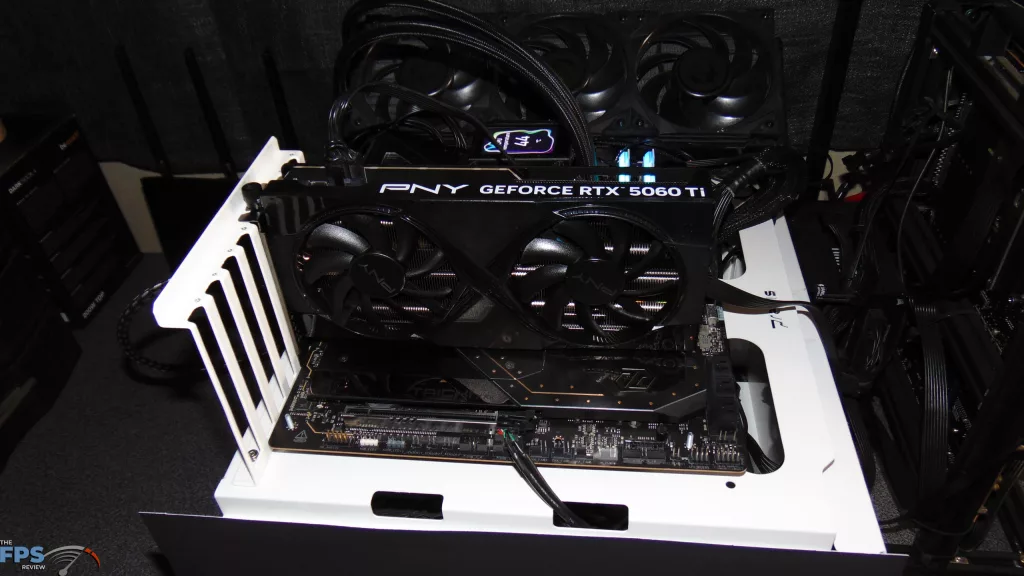
Back in January 2026, we reviewed an 8GB GeForce RTX 5060 Ti with the PNY GeForce RTX 5060 Ti 8GB Overclocked Dual Fan Video Card. We gave that video card a comprehensive review, looking at performance in 13 games focused on the 1080p gameplay experience, and we included DLSS Upscaling performance as well. We compared it against the competition’s 8GB Radeon RX 9060 XT.
In that review, we looked at what kind of gameplay experience and game settings you would be able to achieve at 1080p on an 8GB GeForce RTX 5060 Ti, and found it quite capable in modern games at 1080p. We generally found it capable at High-Ultra game settings at Native Resolution. Only in a few very demanding games, at Ultra settings, did we need to enable DLSS Upscaling. DLSS 4 Transformer Model Upscaling has improved greatly at lower resolutions, like 1080p. In addition, DLSS 4.5 Upscaling is now available and possible, furthering the image quality improvements at lower resolutions like 1080p.
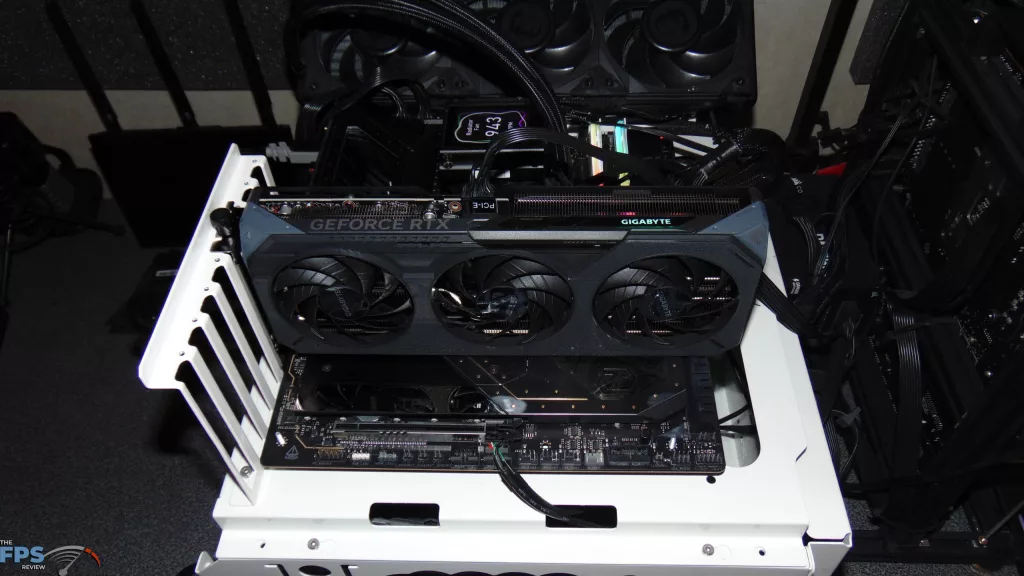
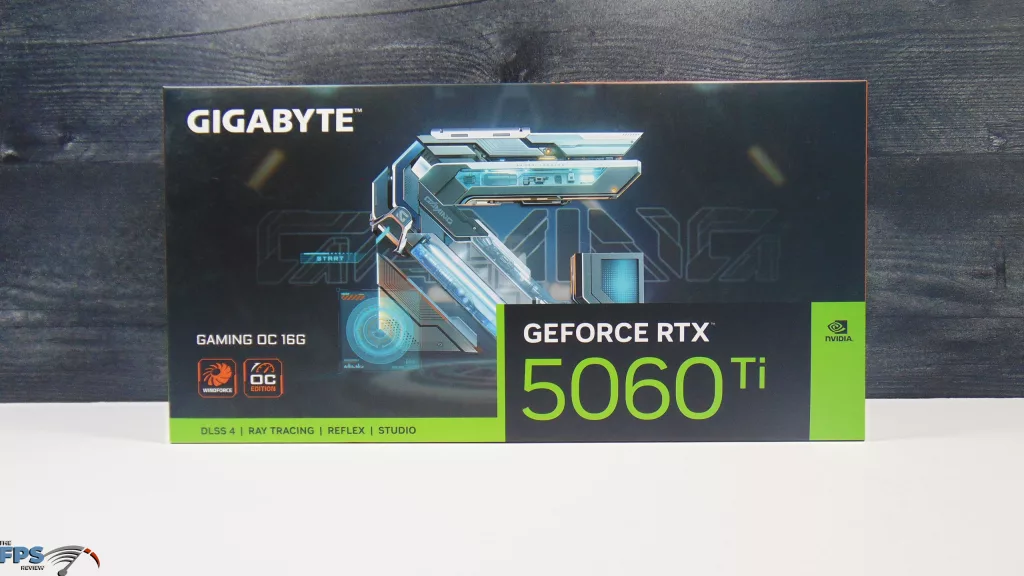
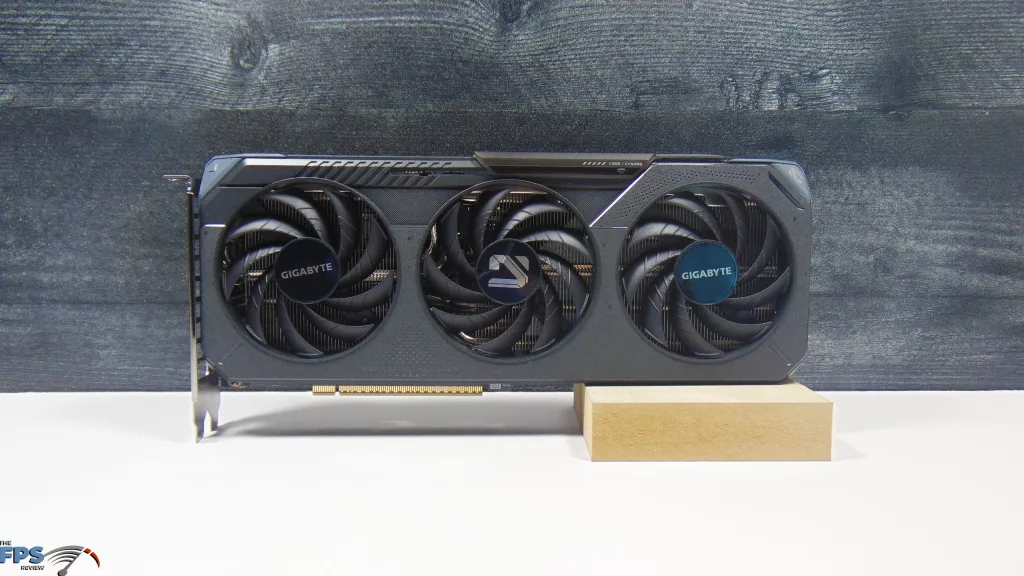
We have also reviewed several 16GB GeForce RTX 5060 Ti’s, including the GIGABYTE GeForce RTX 5060 Ti GAMING OC 16G we are using in the review today. We found them quite capable for the gameplay experience. Now it is time to mash the two together and see how much VRAM affects gaming performance in modern games at 1440p, DLSS Upscaling, and 4K with DLSS Upscaling, as well as some Ray Tracing.