
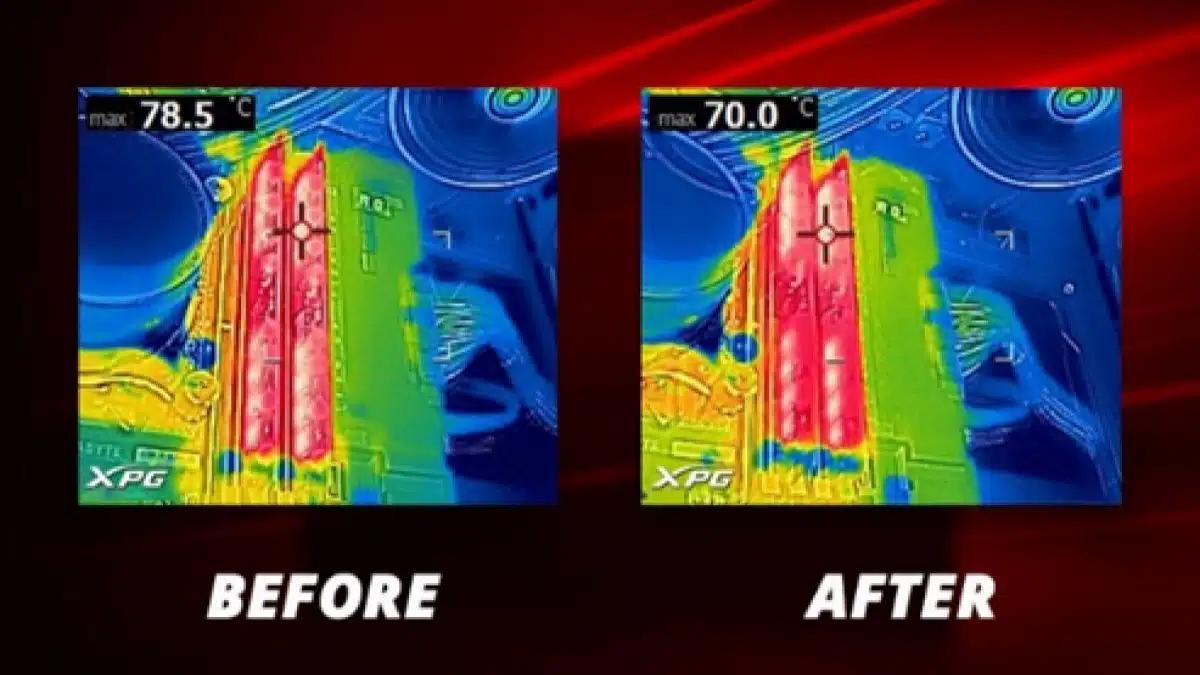
DDR5 memory running at 8,000 MT/s has been seen operating much cooler than before as ADATA details its new heat-dissipating coating. ADATA has applied the thermal coating to its upcoming line of XPG overclocked DDR5 memory to reduce temperatures by more than ten percent versus using other heatsink technology. Given the increased amounts of power usage and heat generation in modern PCs, any achievement to passively reduce component temperatures is sure to be a welcome feature.
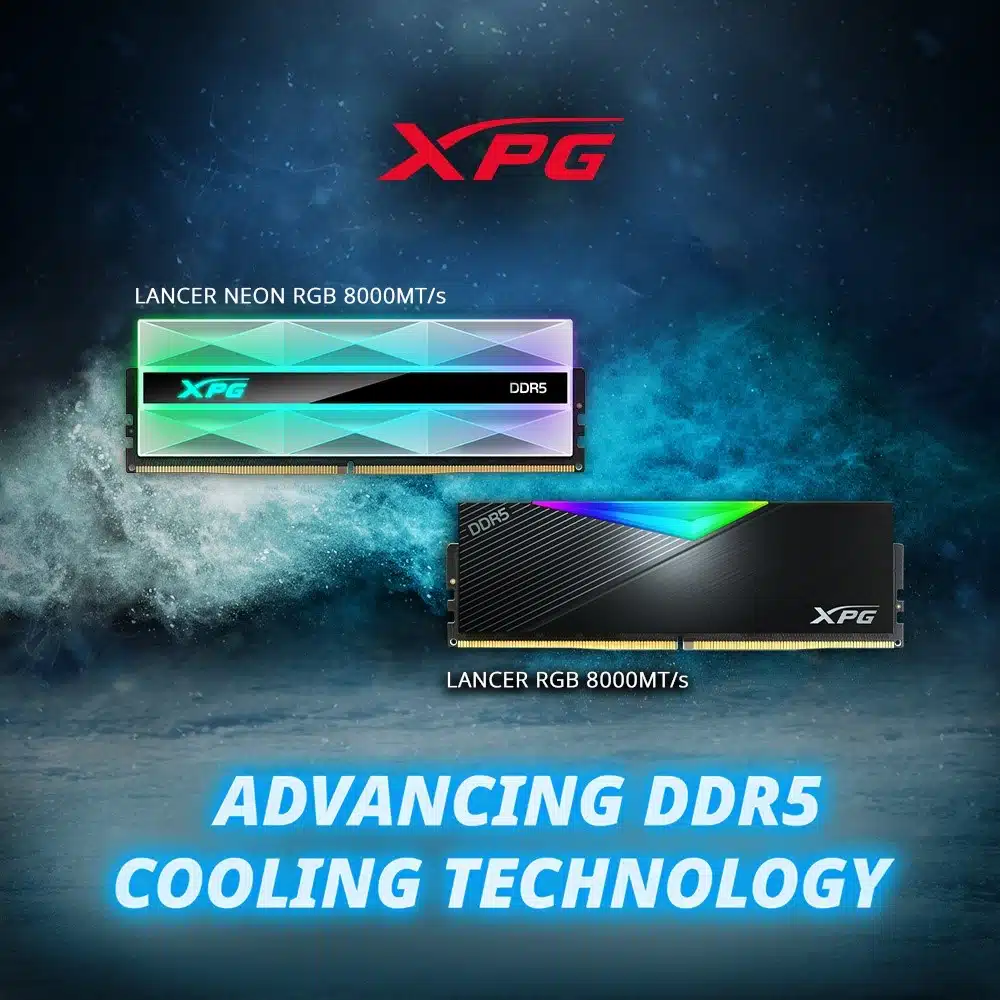
The new coating will be featured on XPG’s new LANCER NEON RGB and LANCER RGB DDR5 8,000 MT/s memory. ADATA details that the PCB coating technology is part of a “solder mask” which not only helps with heat dissipation but also insulates the memory modules for optimal cooling. Real-world testing showed a temperature decrease of 8.5°C in comparison to other heatsink applications. ADATA has said that these XPG LANCER NEON and LANCER RGB modules will launch in Q2 24 but has not yet revealed pricing for them.
Press Release (via manufacturer news posts 1, 2):
“The world’s leading memory module and flash memory brand, ADATA Technology’s e-sports brand XPG specializes in high-performance and stylishly designed e-sports products that cater to gamers, tech enthusiasts, and overclockers. High temperatures generated by high-speed overclocked gaming memory affects system stability, performance, and reliability. Therefore, XPG is leading the industry in applying PCB (printed circuit board) thermal coating technology to overclocked memory, effectively reducing temperatures by more than 10%. This new PCB thermal coating technology will be introduced in the second quarter on high-end overclocked DDR5 gaming memory with a clock speed of 8000MT/s or more, to ensure stable and efficient operation in this grade of memory.
Revolutionary heat dissipating coating effectively reduces temperatures by more than 10%
PCB heat dissipation adopts technology that integrates heat conduction, heat radiation, and insulation into an optimized solder mask which not only insulates, but also dissipates and conducts heat to achieve a superior cooling effect. Compared with standard overclocked DDR5 gaming memory heatsinks, this coating’s thermal radiation and heat dissipation effects greatly increase dissipation area and efficiency, slowing heat generation at high clock speeds. Real-world testing demonstrate a 8.5°C temperature reduction in overclocked DDR5 memory with PCB heat dissipating coating technology compared to standard overclocked memory and an enhanced heat dissipation efficiency of 10.8%. Users can enjoy extreme overclocking while maintaining high performance, meeting all challenges without compromise.
Heat dissipating coating applied to memory modules running at 8,000MT/s or more
As a leading memory brand, ADATA Technology continues to pursue innovation and breakthroughs. In response to the dawn of AI computing, speed has become a common objective for the market and, consequently, temperature issues born of high performance has also become a common issue for everyone. XPG has prioritized the application of the latest thermal coating technology to overclocked DDR5 gaming memory running at 8000MT/s or more including the new LANCER NEON RGB and popular LANCER RGB series memory modules expected to be launched in the second quarter and officially unveiled at Computex 2024. For more detailed product information, please visit the XPG website www.xpg.com.”
Discussion (3 replies)
Join Discussion →Wouldn't the MORE impressive advancement be to operate at higher MT/s but require LESS power to do so? You know, design efficiency?
I'm sorry but I had to laugh but you're not wrong! At least we are starting to see more efficient designs on the Gen5 drives though.
They do look sharp - literally and figuratively - I did have a Lancer kit when I started working with DDR5, and only returned it while troubleshooting what turned out to be a bum Gigabyte motherboard (thanks Gigabyte, I returned four kits due to their poor initial DDR5 release, three of which were actually broken by the board).
Will have to see what prices, speeds, and capacities they make available.
That's literally what DDR5 has over DDR4. You'd have to dump 1.6v+ into DDR4 and use custom active cooling to even approach what bare DDR5 green sticks can do at 1.2v (and lower).