
Forty years ago, Microsoft joined the GUI party, which included rivals Apple, Atari, and Commodore, by offering Windows 1.0. It was the 1980s, and the console crash had just happened, but PCs had begun the move to the 16-bit era, ushering in new graphics and processor capabilities. At this point, there’d been multiple generations of command-line-based OSes dating back decades, and users were ready for something new: the graphical user interface.
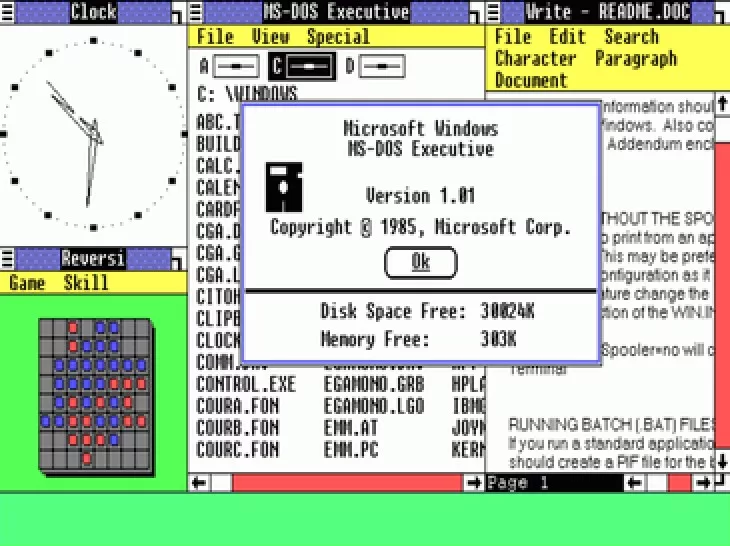
It could be said that the GUI party began in 1984 with the Apple Macintosh, but it would really take off in 1985 with the launches of the Commodore Amiga and Atari ST series of computers, and a software add-on layered over MS-DOS, called Windows 1.0. The first iteration of Windows only just barely had any resemblance to what many are familiar with today, as it literally was a collection of windows that had more in common with a series of ad pop-ups than what we see today. Meanwhile, other GUIs were already on their way to the more traditional desktop experience now seen, but it wouldn’t be long until Microsoft caught up to them and began developing its own identity.
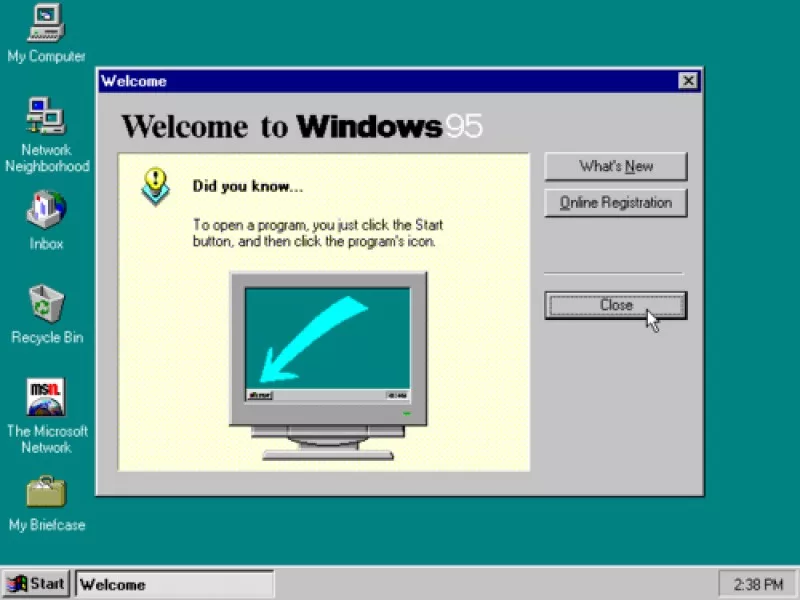
By the 1990s, things had changed quite a bit, and PCs had entered the 32-bit era, gaming consoles had made their comeback, and GUI-based desktops were common. From spreadsheets, databases, MIDI, and gaming to email, PCs had taken a greater foothold in households across the planet, and Windows had adapted to the many tasks a PC could be used for. It was also in 1993 when Microsoft settled with Apple in a case where the latter accused Microsoft of infringing on its GUI copyrights. Meanwhile, Windows 95 would bring the desktop experience that even the youngest PC users today would recognize and be able to navigate, and despite the latest version being called Windows 11, the list below shows roughly 15 versions since the first.
Windows releases (as per VideoCardz):
- Windows 1.0: November 20, 1985
- Windows 2.0: December 9, 1987
- Windows 3.0: May 22, 1990
- Windows 3.1: April 6, 1992
- Windows 95: August 24, 1995
- Windows 98: June 25, 1998
- Windows ME: September 14, 2000
- Windows 2000: February 17, 2000
- Windows XP: October 25, 2001
- Windows Vista: January 30, 2007
- Windows 7: October 22, 2009
- Windows 8: October 26, 2012
- Windows 8.1: October 17, 2013
- Windows 10: July 29, 2015
- Windows 11: October 5, 2021
Discussion (19 replies)
Join Discussion →[embedded media]
I admit to watching that mostly just to watch her run down the isle with her hammer.
And I own (owned if I cant find the box/license I suppose) most of those versions. Starting with 3.1.
Yea infused most but base windows 8. Never touched that tile hell.
I basically went from Atari DOS (1>2>3>3.5) to MS-DOS, and then to Windows 95, since I stopped using PCs for a bit in between, and have used almost every version since. The two I most loathed were Vista and 8, but I mainly upgraded to them for DX API stuff and just worked through any issues I had with them. Ten had some rough patches here and there, but given how long it was around, I think it did okay overall.
If Windows Update makes Edge my default browser one more f'n time...
I'm gonna go all Red Stapler.
You are missing Windows NT, and XP64 if you are really picky.
Windows really started with 3.11 and gained traction with 95, but 98SE paved the way to what MS is today, more so from a gaming standpoint.
Best Windows OS Ranking IMO
Windows 7
Windows XP
Windows 10
Windows 98SE
Worst
Vista
Windows Me
The rest were neither as good nor as bad.
Funny, I totally agree and thought those were in that list I got from VideoCardz. In my head I thought the same about them because while I didn't use NT personally, I know a lot of folks loved it and pretty sure our old servers ran a version of it (which I did maintain until they were retired a few years back).
Heck NT core is what's been running most every server OS since well... NT.
ME didnt have the time to hit it's stride, IMhO
Vista, again IMhO, the OS/giu etc were fine. It was just a pissant poor product launch. MS did get much resistance from developers, including big companies, to making new drivers.
The sound blaster I had at the time never got a new driver. Had to buy a new card - soured my perception of creative labs for sure. Took some time for everything on the device manager to work. (like a year or more).
Is MS to blame? Yes, lots of other companies too.
-edit
really should not post from my phone. Fixed grammar and clarity.
I got a lot of miles out of Windows 2k - almost as much as I did XP.
Win10/11 may as well be the same system... and I think the prophets were right 25 years ago when they claimed the OS is dead, the Browser has taken it's place -- I think that's largely true, although I'd augment that to say "Browser and mobile app" today. The OS isn't entirely insignificant, but it's pretty darn close for most things outside of corner cases (some of those cases are important, I agree, like bare metal performance).
I used 2K until Vista, never used XP at home only at work
Xp was the first one I felt was 'real' not quite as crash prone as 95/98/me - I remember having to reinstall 98 4 times in one day because of .dll conflicts.
Vista/7 were each incrementally more solid and less crash prone.
8 looked goofy, like a phone OS, but worked just fine.
IMO 10 was great, and so is 11. I know people have issues, some valid, but it works and is efficient enough for me.
I guess I have to draw a dinstinction... as an OS, yeah, 10/11 seem to work fine. What I really don't like is Microsoft's attitude of updates/features they keep pushing. Like... Notepad now has AI? Start Menu has advertising? Updates tend to break more things than they fix?
I'm all for evolving... but it seems like the OS has been relatively stagnant since 10 and just used as a platform to push peripheral stuff on top of it lately.
You can turn all of that off. I think the issue is for personal consumers is non tinkers are getting home systems and tablets and phones and largely dont care so the get the ads and such. While us tinkers are frustrated by the bloat.