
Introduction

ADATA XPG sent us three (3) of their new(ish) XPG VENTO PRO 120 PWM fans for us to take a look at. The ADATA XPG VENTO PRO 120 is a collaboration between XPG and Nidec to bring a high-static, low-noise fan to the market. Those of us who have been around for a while might see some similarities to a well-regarded fan from 10+ years ago, the Scythe Gentle Typhoon. The similarities are more than just aesthetic, as Nidec was the designer and manufacturer of the original series in collaboration with Scythe. Since the original version of this fan appeared in 2008, Nidec has continued to manufacture and upgrade its design, leading to what we have in our hands now, the ADATA XPG VENTO PRO 120 PWM.
ADATA XPG VENTO PRO 120 PWM Features & Packaging
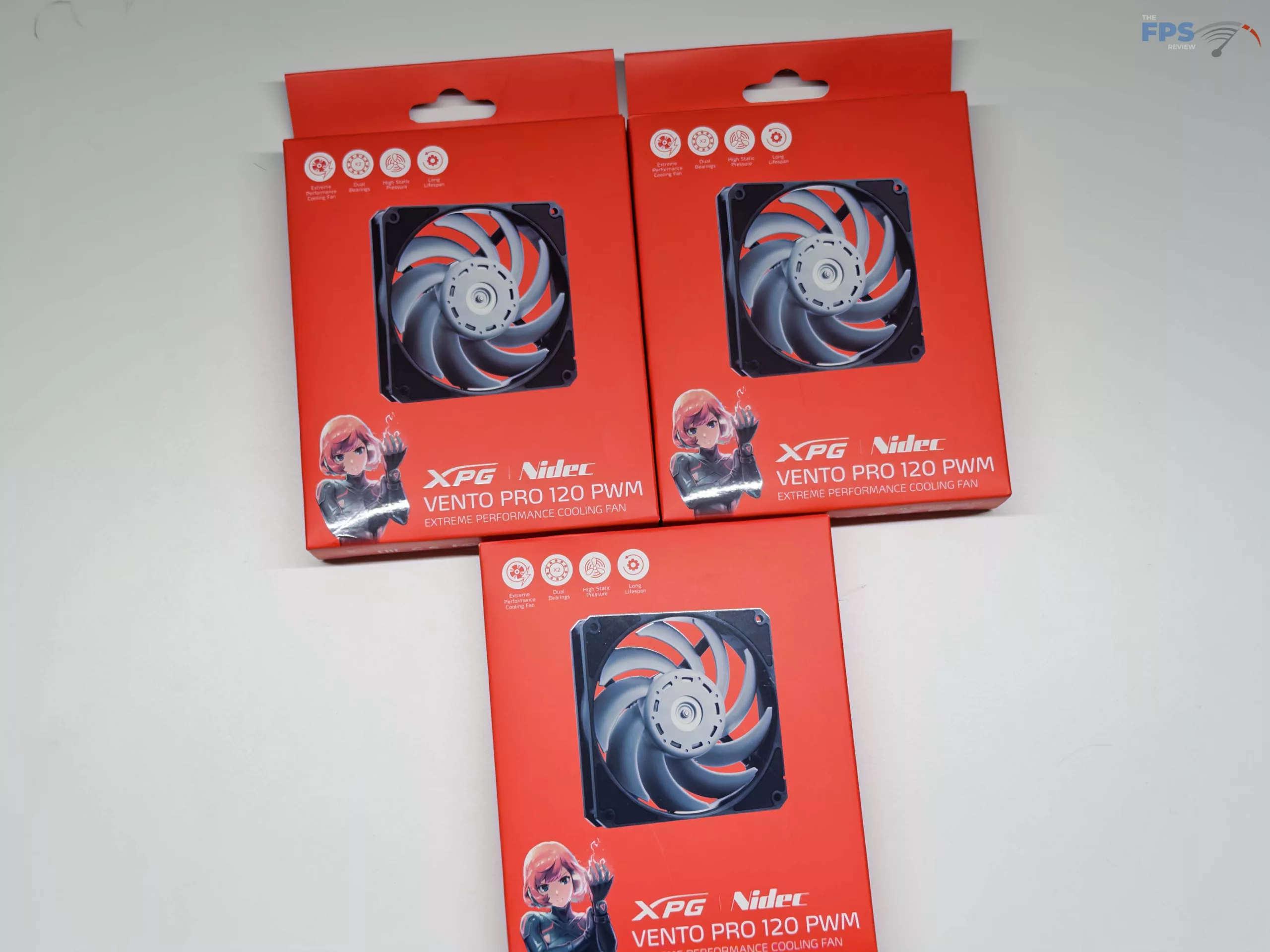
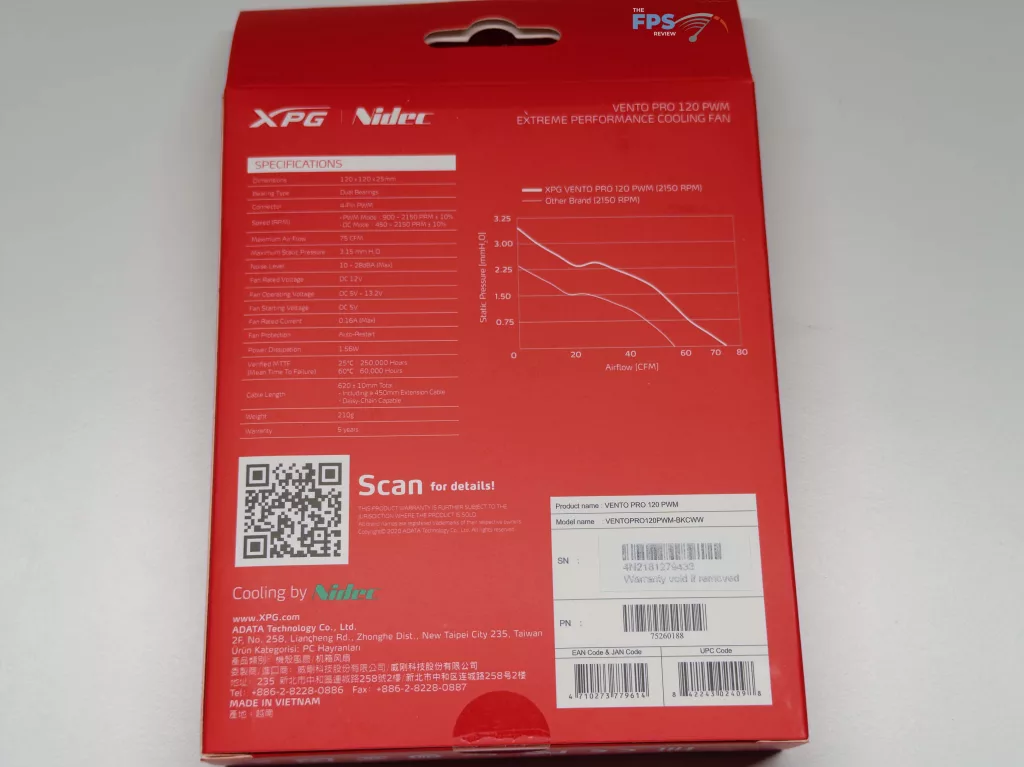
XPG lists the VENTO PRO as having a maximum Air Flow of 75 CFM, a maximum Static pressure of 3.15 mmH20, and a Noise Level from a maximum of 28 dBA to an astonishingly low 10 dBA. When you take a look at this fan compared to its first-generation predecessor, it is not hard to see where its inspiration comes from.
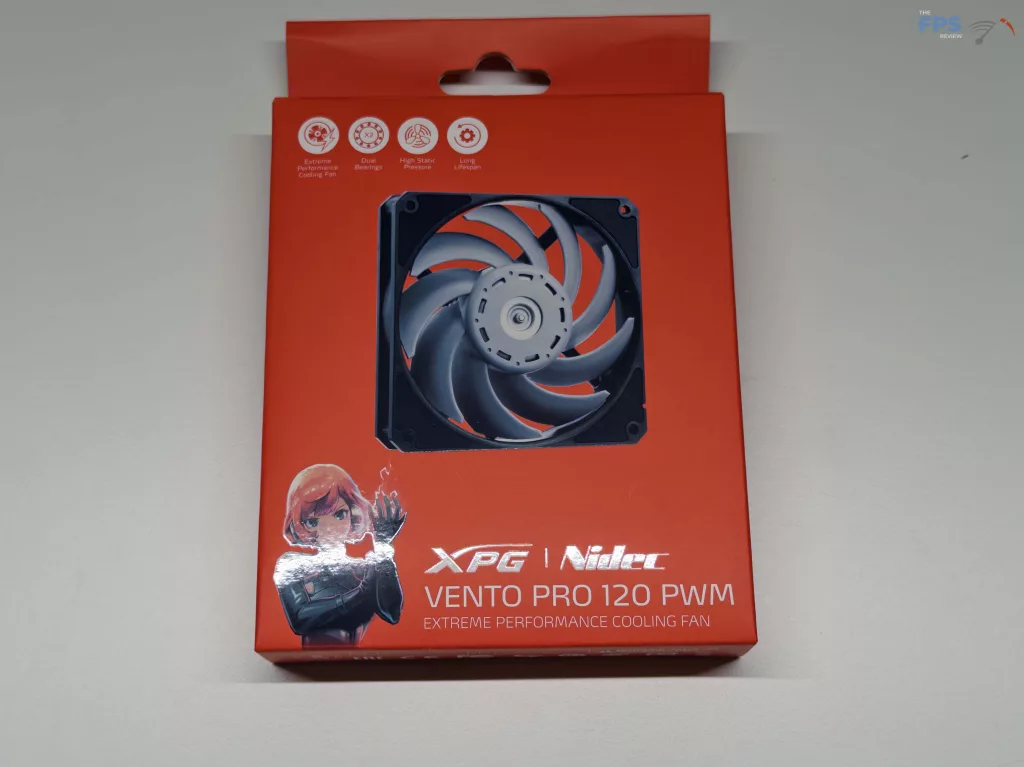
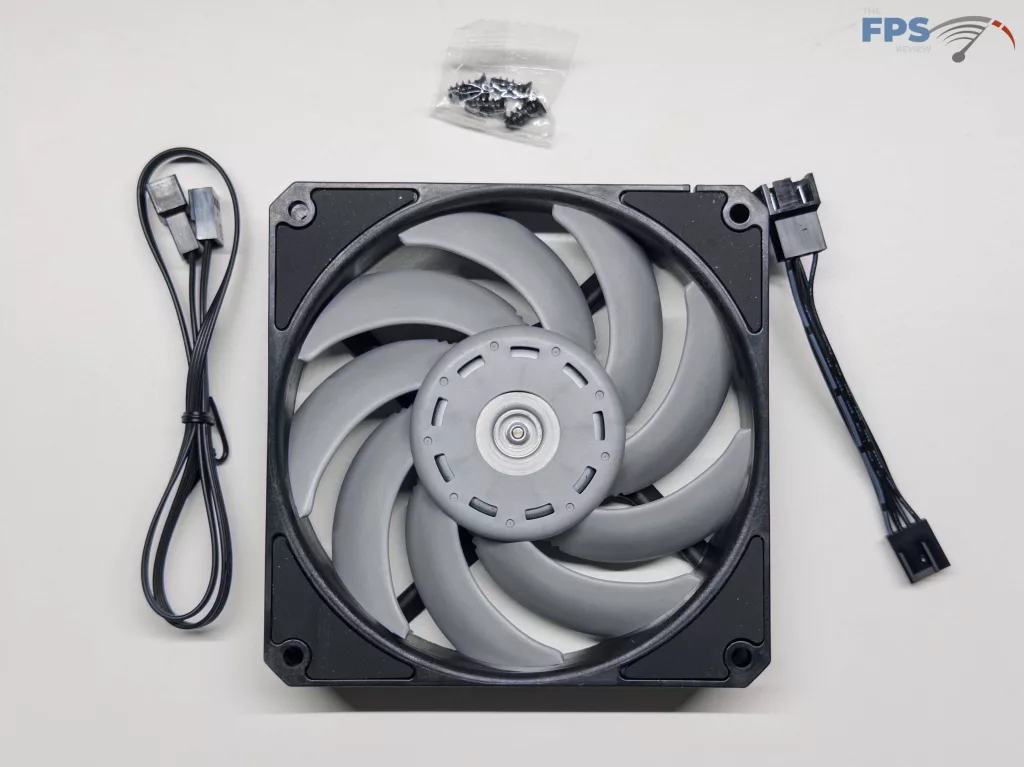
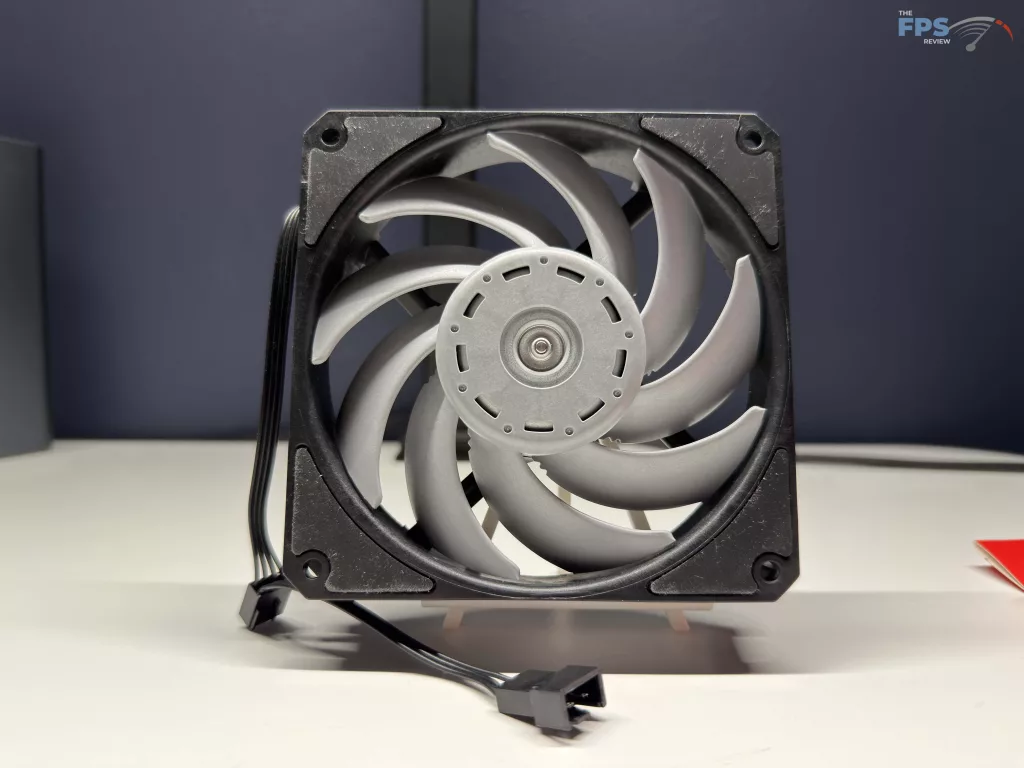
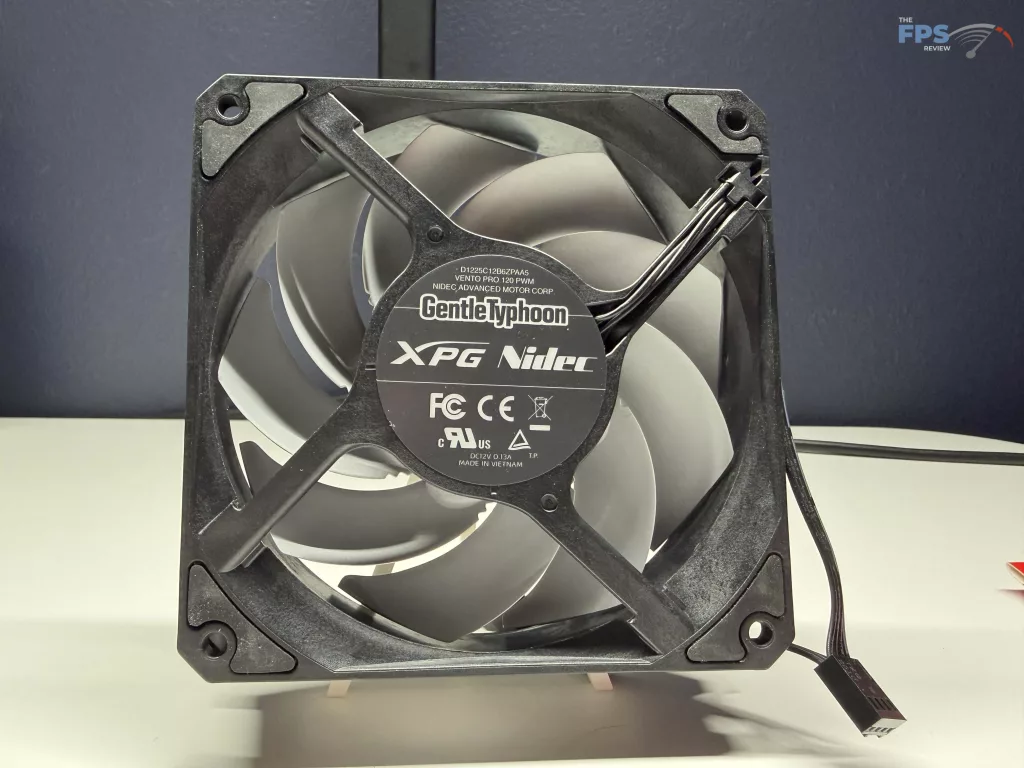
XPG has added rubber mount points to all corners of the fan to help with noise abatement, as well as providing PWM capability (added before the XPG collaboration). Outside of the rubber mounts, the fan is nearly identical visually to its predecessor, with only the colour of the power wires changing. One last thing we want to call attention to is that XPG has elected not to provide any RGB with these fans; they are definitely not being marketed at the flashy gamer, but rather to the performance-minded one.
Performance Testing
For testing, we are using our MSI MAG CORELIQUID I360 AIO CPU Cooler that we reviewed in October 2024, as our CPU cooler and radiator. There are no shortages of high-end fans on the market; however, the intent of this review is to see how the XPG VENTO PROs stack up to the fans that come with an AIO cooler, so we will be comparing them to the stock fans. So how do the stock MSI fans compare to the XPG VENTO’s?
The first thing to note is that the VENTO’s have a higher maximum listed CFM of 75 CFM vs. the 70.7 CFM rating provided by MSI. Unfortunately, we are unable to compare static pressure between the two fans as MSI does not list any rating; however, XPG lists the maximum static pressure at 3.15 mmH20.
It is a similar story when looking for sound data; MSI has no rating listed, and XPG gives a range of 10-28 dBA (Depending on your speed). When it comes to sound, at full speed, the XPG fans seemed to be quieter than the MSI fans; however, that is highly subjective and has many factors going for it.
The last point of comparison we want to go to is maximum power draw. This is where the XPG really shines; it has a rated current of 0.16 Amps, giving a maximum wattage of 2.2 Watts, while MSI has a maximum wattage of 3.6, with a standard power draw of 2.4 Watts per fan.
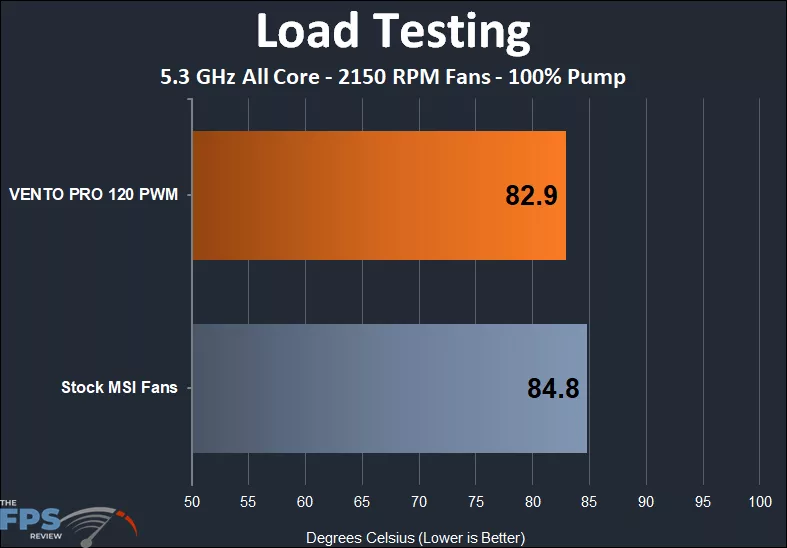
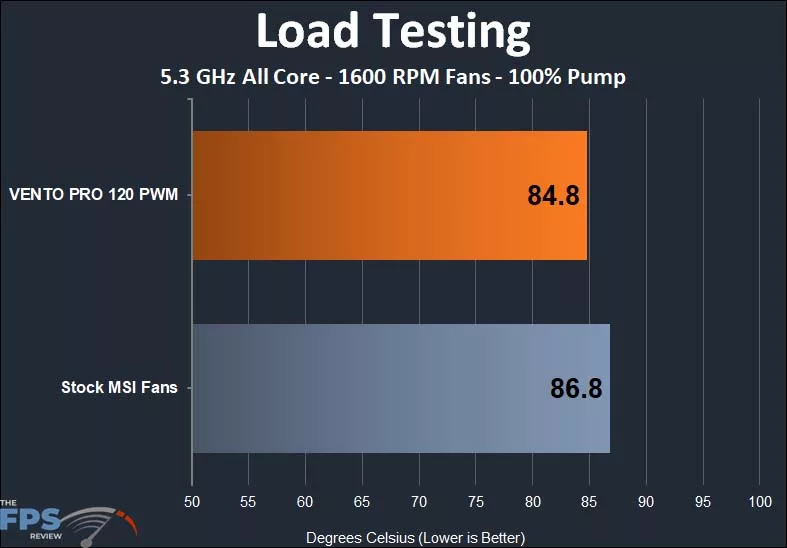
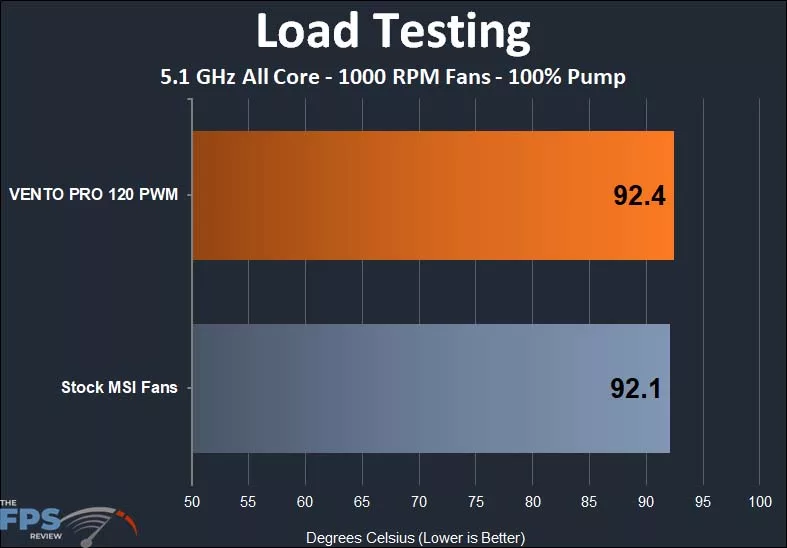
With the specification of each fan compared, how do they actually compare in real-world testing? For testing, we ran CineBench R23 on max cores for 20 minutes, and logged temperature readings every 0.5 seconds with the latest HWiNFO.
From this data, we removed the first and last minute to remove any artificially low temperatures due to starting the run or ending it. This allows us to take the average of an 18-minute test run and compare the results in the tables above.
We expected the XPGs to come out ahead on all testing, but this was not the case. At 1,600 RPM and above, it was the winner; however, at 1,000 RPM, it lost (barely) to the stock fans, and when we tried to go lower to 600 RPM, the fans would not run, whereas the stock fans did.
Conclusion
Our testing of the ADATA XPG VENTO PRO 120 PWM led us to some somewhat surprising results. Since we had some experience with the older Gentle Typhoon fans these are based on, we expected these fans to easily beat stock fans. What we did not expect was that stock fans have really improved over the last 10-15 years.
At 1,600 RPM and above, we saw a 2°C drop in temperature in testing; however, at the lower speeds where we expected the blade design of the XPG to excel, the fans struggled to even match the stock fans. Outside of the equal performance with stock fans at 1,000 RPM speeds, there is nothing we found to dislike about these fans. They are very well made, are about as easy as you can expect from a fan to install, and most importantly, they seemed to be quieter than stock in our testing.
These fans can be found for $25.99 from ADATA’s XPG storefront, when they are in stock, and provide good bang for your buck when compared to the standard stock fans.
Discussion (1 reply)
Join Discussion →I really liked how the testing was done in comparing to stock AIO and CPU cooler fans. I've always considered replacing various ones with different builds but don't remember ever actually getting around to it so it was nice to see the various pros and cons there.