
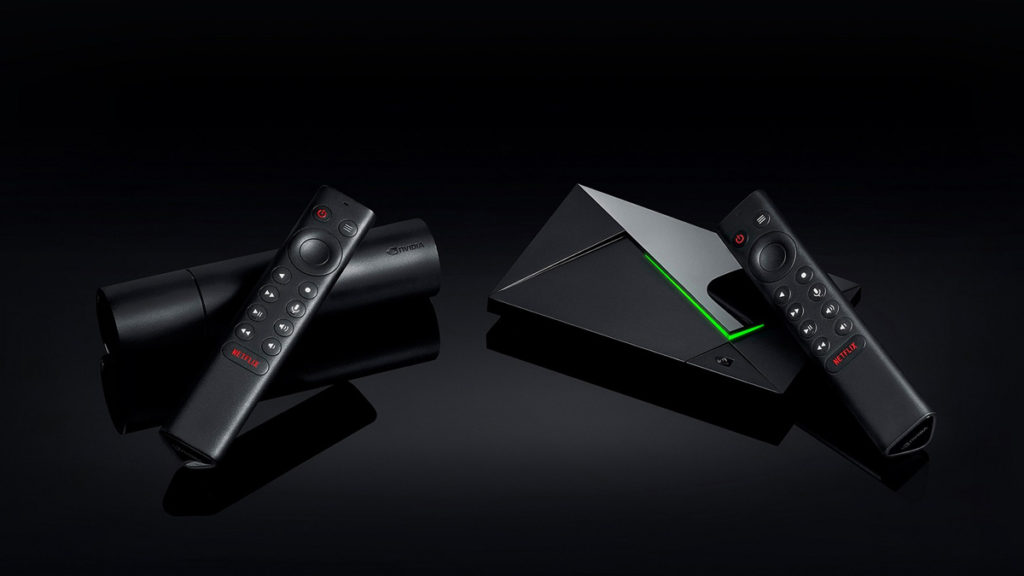
Most folks are lucky if they get a handful of years of support with mobile-based OSes, but that’s not the case when it comes to NVIDIA’s SHIELD TV family. There was a time when NVIDIA had its own interest in making a gaming console, but sometimes things don’t always go according to plan, and you can be all the better for it. The NVIDIA SHIELD TV launched in 2015 with its Android OS and TEGRA X1 Arm processor, which was born out of a $357 million buyout of PortalPlayer in 2007 and would go on to power the first Nintendo Switch, and before its launch, had started as an experiment in creating a new gaming device.
Anyone with a bit of knowledge regarding gaming console history knows that it can be a risky venture fraught with many challenges, and the industry’s past is littered with failed or short-lived product launches, but thankfully, that was not to be the fate of the NVIDIA SHIELD TV. Ironically, while in testing, its engineers had tinkered with designing it for themselves for a different purpose, and one day, NVIDIA co-founder and CEO Jensen Huang saw their experiments and thought well enough of them to support a different direction for the device. NVIDIA Senior VP of hardware engineering, Andrew Bell, has shared some heartfelt details with Ars Technica regarding the history of the SHIELD family of devices, along with some hints of things to come.
“Selfishly, a little bit, we built Shield for ourselves, We actually wanted a really good TV streamer that was high-quality and high-performance, and not necessarily in the Apple ecosystem. We built some prototypes, and we got so excited about it. [CEO Jensen Huang] was like, ‘Why don’t we bring it out and sell it to people?”
– Andrew Bell, NVIDIA Senior VP of hardware engineering
This led to the first SHIELD TV being launched in 2015, and while there was some focus on gaming, which included a controller and other features, it didn’t take long for the company to see there was more interest from consumers who wanted a premium streaming device. Streaming services were still in their infancy back then, but that ecosystem was growing, and an assortment of cheap dongles and boxes left many looking for a better experience. By 2017, and then again in 2019 with a refresh, NVIDIA launched the SHIELD TV Pro, which featured numerous hardware upgrades but still largely stayed true to the original’s user experience by focusing on streaming, which now began to explode with many new services and platforms.
The first model arrived at a staggering $200 price in 2015, and while its price has dropped, the Pro version still goes for that, but NVIDIA says that even in 2025, sales remain consistent. NVIDIA’s engineers have consistently kept them updated with security patches and features over the last decade, a feat very rare for mobile-based OSes, but some began to worry when updates seemingly came to a halt in 2023. It turns out they simply needed time to work on some complex steps to fix 4K DRM support. Bell said the team worked for roughly 18 months to fix, during which other companies dropped support for their products to then launch newer versions, but his team stayed the course to keep their creation alive.
When it comes to what is possibly an inevitable successor, Bell states the team is always experimenting in the lab to discover new concepts and ideas. If it really makes them excited, they’re all in for giving it a try. One such feature is supporting the VP9 Profile 2 hardware decoding, which would allow users to play files with Dolby Vision or YouTube videos with HDR, and also the ability to play formats like AV1 and HDR 10+. There was also some joking about moving or resizing the Netflix button to lessen its accidental pressing, given the remote’s current layout. All that aside, one of the standout points with the NVIDIA SHIELD TV platform is its ongoing support, to which Bell clarifies, folks shouldn’t worry about that ending anytime soon.
“We were all frustrated as buyers of phones and tablets that you buy a device, you get one or two updates, and that’s it! Early on when we were building Shield TV, we decided we were going to make it for a long time. Jensen and I had a discussion, and it was, ‘How long do we want to support this thing?’ And Jensen said, ‘For as long as we shall live.’”
– Andrew Bell, NVIDIA Senior VP of hardware engineering
Discussion (18 replies)
Join Discussion →That's kind of cool actually.
I’m really amazed nVidia hasn't f’d this up. I agree this is cool
Maybe Jensen has that one uncle who refuses to part with his own launch day Shield.
I've never seen sales figures of the shield, so I don't really know if it's a success or not. Better be after 10 years.
Still, it's one of the best streaming devices ever, most of its competitors are either dead or have been replaced with newer models. Even today, most streaming devices can't match it.
It failed as a gaming console, nvidia's initial push for android tv games fell quickly (there were ports of Doom 3, portal and Jedi knight among others), I think nvidia tried to push it for like a year or so. Still, it's an awesome emulation console running everything under PS2.
I've owned it for like 9 years now. Both controller and remote no longer work because of dead batteries (if anyone knows where to get a replacement battery, please let me know). It has outlasted 3 Smart TVs, actually my wife took years to realize the shield was doing the streaming instead of the smart TV.
Nvidia isn't really known for f*cking things up. To be fair this was close to be a failed product as I mentioned it was released as an android gaming console, but it breathed new life as the best streaming console.
I owned the smaller one for a while but didn't catch on with me. I use an AppleTV as a streaming box, and the only thing the Shield did that the AppleTV couldn’t do better was nVidia game streaming
Well, I'm more into the android/windows ecosystem, so NO AppleTV for me. Even after all these years I don't see a reason to get an apple TV, much less replace the shield TV
It gets so much support it hasnt been hardware refreshed?
Last updated hardware was released in 2019 I think.
How many versions are there?
I got two Nvidia Shields I use for streaming. I didn't get the controller for them as I can just use my Playstation controller if I wanted, but the remote controls all have regular AAA batteries.
edit
Oh I see. If you still use the shield then just buy a triangle remote for it. They're apparently the best remotes for the device. I don't know any better since that's all I've ever used on mine.
Even when they do; they have the best astorturfers money and brand loyalty can buy.
They are continuing support because it is yet another gateway to GeforceNOW.
5 according to Wikipedia.
Yep, 2019 was technically the refresh for both models and there's been no word of a new model since, but NV has, in recent years, expanded the software side of it to select TVs. I know we have a few articles on it here somewhere.
I recall a few (very few maybe one or to) TVs with the same tegra SoC and software. I'm not even sure they came to market.
I recall hearing about these shield tvs as well. I wonder if Nintendo using tegra in the switch keeps nvidia updating the shield as the test bed before nintendo?