
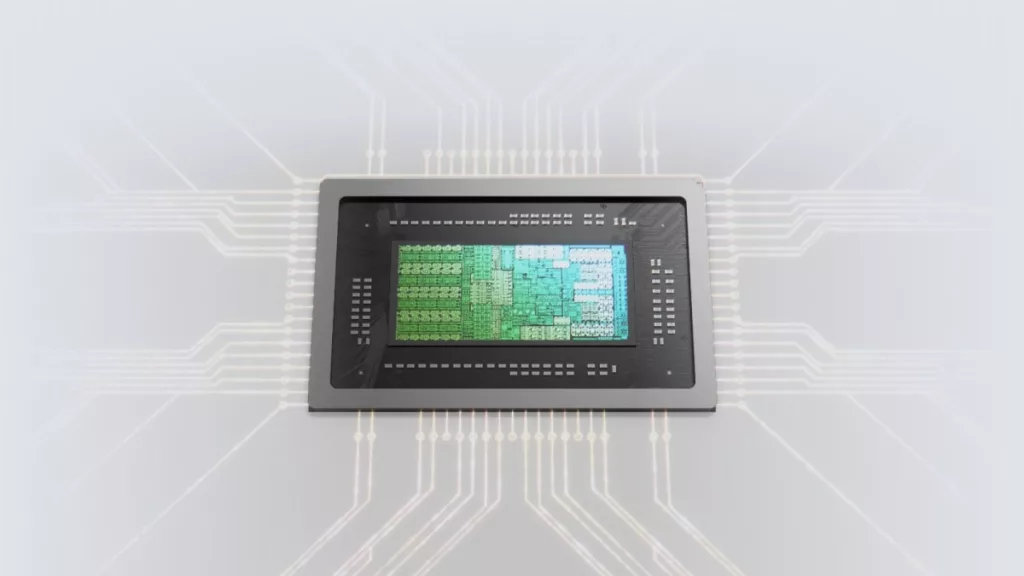
NVIDIA has at long last unveiled its ARM-based superchip, the RTX Spark, designed for AI, content creation, and gaming. NVIDIA collaborated with Mediatek to create the RTX Spark, which has been engineered for Windows laptops and compact PCs. NVIDIA partners ASUS, Dell, HP, Lenovo, and MSI are all said to begin offering products in the fall featuring the RTX Spark. Microsoft is also expected to offer Surface Pro products with the new processor, with Acer and GIGABYTE to release their own products at a later date. The following per NVIDIA (1, 2):
“The PC is being reinvented,” said Jensen Huang, founder and CEO of NVIDIA. “For forty years, you launched apps. Click. Type. With RTX Spark and Microsoft Windows, you ask — and the PC does the work. RTX Spark brings everything NVIDIA has built — CUDA, RTX, our AI platform — into a single superchip. Local agents. Frontier models. Creative workflows. RTX games. All on a laptop. This is the new PC. The personal AI computer.”
– NVIDIA
RTX Spark Features:
- NVIDIA Blackwell RTX GPU with 6,144 CUDA cores utilizing 5th gen Tensor Cores supporting FP4
- NVIDIA 20-core Grace GB10 CPU
- 600 GB/s GPU>CPU bandwidth via NVLink-C2C
- Up to 128 GB LPDDR5X memory
- “NVIDIA RTX Spark powers the world’s first Windows PCs purpose-built for personal agents, featuring 1 petaflop of AI performance.”
- Over 100 FPS @ 1440p gaming
- “Users can render ultralarge 90GB 3D scenes with OptiX and DLSS, edit 12K 4:2:2 video with the NVIDIA Blackwell decoder, run 120-billion-parameter large language models with 1 million tokens context.“
- Supports Ray Tracing, Reflex, G-Sync, DLSS 4.5 Ray Reconstruction w/ 2nd gen transformer model
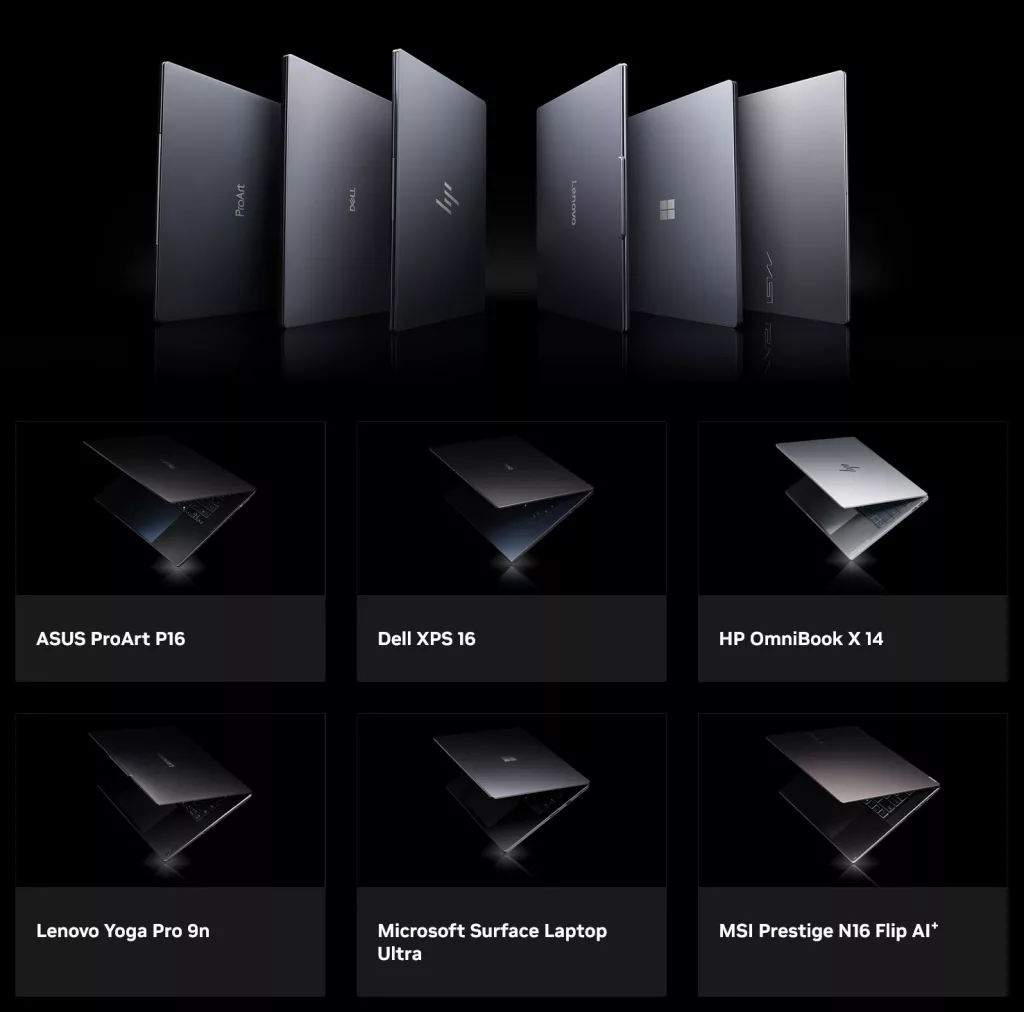
Laptops will arrive in size configurations spanning from 14-inch to 16-inch and as slim as 14mm with color-accurate tandem OLED displays that support G-Sync. Hardware manufacturers are not the only partners NVIDIA is working with to bring the RTX Spark to market. NVIDIA is technically facing an uphill path with its ARM-based solution in order to bridge the gap of the x86 Windows ecosystem via emulation for non-ARM designed apps. While it is working with Microsoft to do this, the chip manufacturer has lined up a suite of software and game developers to support the RTX Spark.
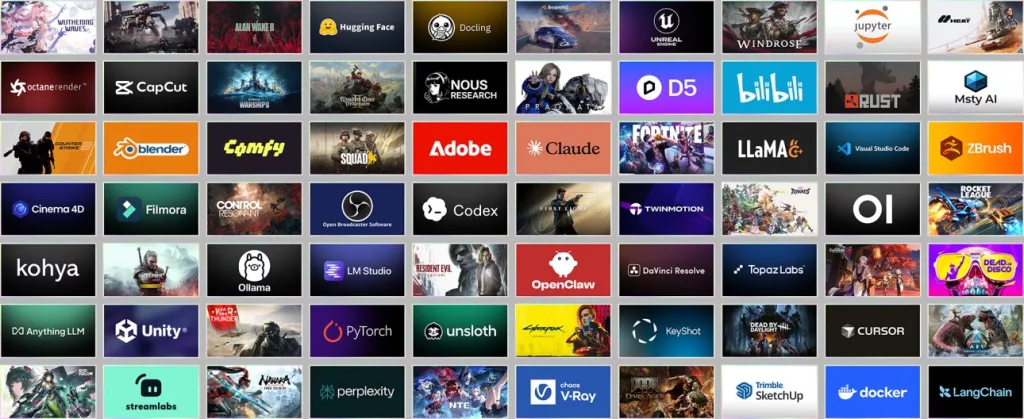
“RTX technology boosts performance, enhances image quality and adds powerful AI features in over 1,000 games and applications. Over 100 Windows software providers such as Adobe, Blackmagic Design, Blender, CapCut, ComfyUI and OTOY, and game developers such as KRAFTON, NetEase, Remedy Entertainment, Riot Games and XBOX are embracing the new RTX Spark platform.”
– NVIDIA
NVIDIA OpenShell
“We are strong supporters of deploying agents like OpenClaw securely into the Windows ecosystem,” said Vincent Koc, chief architect at the OpenClaw Foundation. “Running solutions like OpenShell and the Microsoft security primitives on RTX Spark will enable users to leverage a fully integrated stack for private, personal agents running on device.”
NVIDIA is also working with Microsoft to develop NVIDIA OpenShell, its new Windows Security Primitives platform. Designed to ensure user agents run under full user control, OpenShell offers end-to-end security capabilities for natively run agents. It will provide additional policy enforcement for the user who can define the limits of what an agent can do while intelligently routing local models per the user’s privacy policies, while also being able to mask personal information with cloud-based queries. Hermes Agent and OpenClaw are among the first developers to adopt OpenShell.
“At Nous, we expect tasks to increasingly run on device as personal agents like our Hermes Agent become more capable and ubiquitous,” said Dillon Rolnick, CEO of Nous Research. “RTX Spark and NVIDIA OpenShell give Hermes users a powerful and secure environment for agents to run and work alongside you. You realize you’re buying a full-fledged assistant, not a typical laptop.”
Discussion (19 replies)
Join Discussion →This... SOUNDS neat... but the whole constrained agent accompanied by unprecedented AI compute capability makes me question how long those constrains will last.
The only way to keep a AI properly constrained is to kill it and start it over in an increasingly shorter and shorter timeframe as compute capabilities continue to multiply.
worst kept secret ever. I find it laughable plenty of "influencers" and "content creators" claimed they "predicted" this announcement. The thing is about a year late already. Everyone and their grandmother knew it would be announced at GTC
Isn't this what the AI MAX SOC's are supposed to be good at and haven't those been around for over a year?
Yeah but Jensen will promote the hell out of these and show $$$ to game studios and application vendors. Marketing (lying through their teeth) has always been their forte, unlike AMD.
It's the same as the DGX spark as far as I can tell, just for Windows ARM.
Also, no mention of DLSS 5... interesting...
That's not a claim I'd want to stand by...
So a new sheild soon at least right?
Then again the switch 2 is really the continuation of the sheild, maybe thats why no sheild.
AMD lies without finesse. Everyone catches them lying, unlike nvidia. When Jensen lies, his fans swoon.
Sad but true.
That's funny, I always thought it was the other way around.
While I'd love to have a Shield2, the thing is my Shield TV is still rocking hard after more than a decade. Still the best android tv console and (arguably) 2nd only to the AppleTV overall.
The only fans AMD has are poor people. Anyone with money relying on AMD is just waiting for the competition to catch up and then they will switch quicker than a baby can sneeze.
If you can only afford one GPU... probably right.
If you have multiple systems it can be fun to run both!
I ran a 7900xtx for a while and was not disappointed in it... but I did switch.
I've tried AMD a few times but I always go back to nvidia, I'm very fond of my first ATI card, and ATI3d Rage Pro Turbo