
When AMD stops talking about GPUs for an entire keynote and starts talking about racks of CPUs, you know what kind of year the data center is having. At the 2026 OCP Global Summit in San Jose, the agentic AI pitch came with a very large core count attached.
AMD introduced Helion on October 12. It is an open rack blueprint built on an Open Compute Project spec design and aimed at AI agent workloads. AMD outlined two example configurations. The first is a CPU-only rack for hyperscalers, built on 6th Gen EPYC processors and scaling to 32,768 cores. It provides dedicated capacity for agent execution, with model inference handled elsewhere. The second is an all-in-one rack that combines EPYC CPU nodes, Instinct MI350P GPU nodes, and general-purpose compute for enterprises.
Both liquid- and air-cooled versions are planned. Helion also includes an integrated token router that directs agents’ model calls across frontier and open-source models. AMD says it will contribute the Helion spec to OCP. Partner configurations are slated for November 2026, with Cisco, Dell, Hon Hai, and HPE among those signed on.
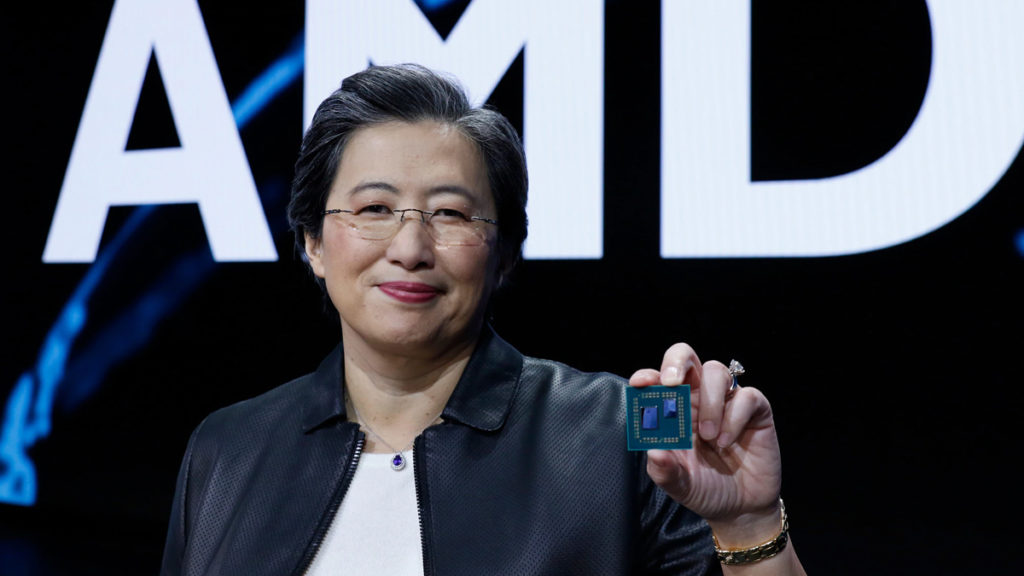
During her OCP keynote the same day, Dr. Lisa Su held up a 6th Gen EPYC chip codenamed “Verano.” AMD describes it as the first EPYC CPU with an LPDDR memory interface, arriving in 2027. Su also said the Helios GPU rack, which debuted at last year’s OCP, is now ramping production with customer deliveries underway.
This is the same core family AMD has been preparing for its Venice and Medusa platforms. Every time AMD stacks 32,768 Zen 6 cores in a rack for public consumption, the architecture looks a little more finished.
The LPDDR move on Verano is the more interesting technical story. Swapping RDIMMs for LPDDR trades serviceability and maximum capacity for power efficiency and bandwidth per watt. Those are exactly the metrics that matter when the bottleneck is the power budget of the building, not the price of the chip. Intel is making a similar bet on the GPU side this week, with LPDDR5X in place of HBM.
What’s notably missing is any mention of chips we can actually use in our own rigs. That’s fine for an OCP keynote, but it does underline where AMD’s attention is in 2026. If the CPU price increases making the rounds this week reach Ryzen, the data center will be part of the reason.
Expect Helion systems from partners starting in November, and more Verano details as 2027 approaches.
Discussion
Join Discussion →No replies yet. Be the first to reply on the forum.