
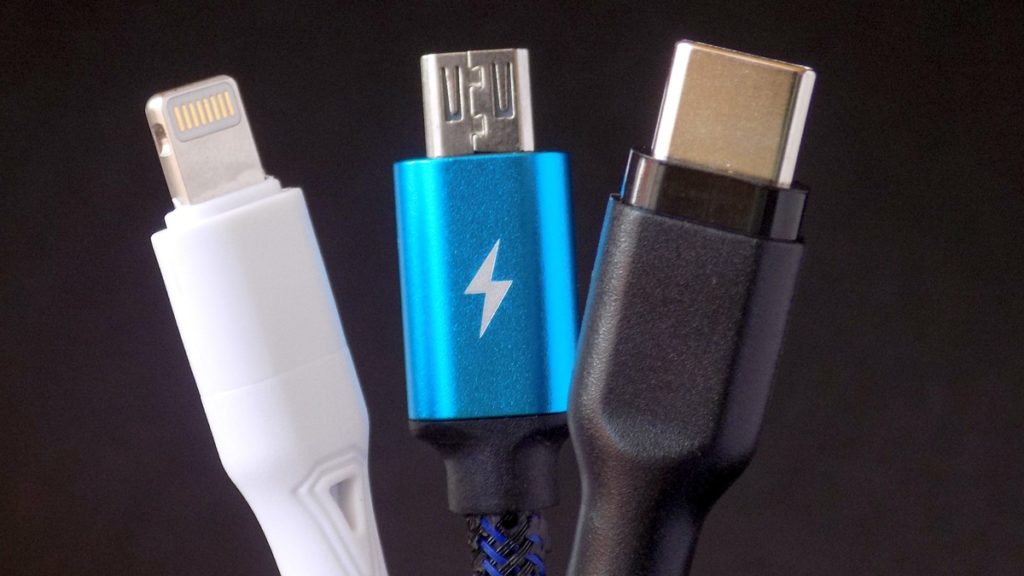
The European Parliament has issued a press release confirming that it’s settled on making a common charger mandatory for a range of mobile devices. These include mobile phones, tablets, cameras, and handheld gaming consoles, all of which must be equipped with USB-C charging ports by Autumn 2024. The EU has decided upon establishing a single charging solution for select devices in order to make products “more sustainable, to reduce electronic waste, and make consumers’ lives easier.” Apple is significantly impacted by this agreement, as its iPhones have leveraged the proprietary Lightning connector since 2012. Recent reports have suggested that Apple has already begun testing iPhones with USB-C ports.
We have a deal on the #CommonCharger! 🇪🇺
— Thierry Breton (@ThierryBreton) June 7, 2022
More savings for EU consumers & less waste for the planet:
🔌 mobile phones, tablets, cameras… will have #USBtypeC
🔌 harmonised fast-charging technology
🔌 unbundling of sale of chargers
The EU general interest has prevailed! pic.twitter.com/i2UAE7kzyI
Under the new rules, consumers will no longer need a different charging device and cable every time they purchase a new device, and can use one single charger for all of their small and medium-sized portable electronic devices. Mobile phones, tablets, e-readers, earbuds, digital cameras, headphones and headsets, handheld videogame consoles and portable speakers that are rechargeable via a wired cable will have to be equipped with a USB Type-C port, regardless of their manufacturer. Laptops will also have to be adapted to the requirements by 40 months after the entry into force.
Source: European Parliament
Discussion (19 replies)
Join Discussion →Wow! I thought I just heard the sound of some loud thunder a moment ago.
I wonder how long manufacturer's have to switch.
Honestly, I had thought this had happened long ago, and that we were just waiting for the implementation deadline to hit.
They have seemingly been talking about this for bloody ever.
That said, it is a double edged sword.
Apple are a goddamn pain in the ass with all of their proprietary connectors and other solutions, but on the flipside legislation like this can stagnate innovation and make next generation standards require a literal act of Congress (or parliament as it were).
A more vague approach, requiring the use of an open industry standard, but less specifics about exactly which one to use might be a better approach.
Yeah we are now doomed to be required to use USB-C until at least 40 years past it's useful life.
It will be like the PS/2 port that just refuses to die. Because it can't - EU says so.
I was thinking about this the other day as well.
An open standard is a must so undue costs are not forced onto everything. Apple will have to get on board or get out of town and I doubt they want to lose the EU market. If USB-C can be used without royalty issues(I have no clue) that's great. Presently it has evolved to a pretty nice standard.
Some kind of definitive process for upgrading down the road that includes notification for manufacturers and deadlines to implement. Gotta keep the playing field level for all. The process should also involve input from the industry for recommendations on moving on to the next standard.
Similar to most USB and HDMI-type ports it would be recommended to use the same form for as long as possible and require backward compatibility. I agree with @Brian_B about PS/2, we don't need things long past overdue to be abandoned but there should be a process for keeping as long as all or most agree and then moving on.
I wonder if this will just result in an "everything is USB-C" type approach like we have seen in other areas across the industry.
Just like how we kind of got to USB 3 and then the naming mostly stayed there and they just started adding stupid subspecification names that made less sense than the previous version increments.
Every future revision of USB will now be called USB-C.
USB-C 2.0
USB-C 40G
USB-C 220V
Etc. Etc.
I think you're spot on. I won't miss formats changing every year or two. That gap before 3.0 got pretty crazy between standard, micro, and mini. I think there was another one that I'm missing but not sure.
Quite frankly I'm annoyed by all the variations of connectors even just within USB. Why the F did we have like 5 different connectors doing the exact same thing? mini usb, micro usb, usb-A usb-b, micro3. It was time to standardize this. I'd also include printers.
And I hope they don't just leave a loophole where including an adaptor is enough.
I agree. I've got boxes of cables filling the closet in the cave that are from pre USB 3.0 that is just filled with crap like that (plus misc analog audio adapters/splitters/etc.) and will be getting tossed soon. I did the same at my day job about a month ago.
Certainly having a mini version made sense, for devices that were small, but why both a mini and a micro? Especially when they were so close to each other in size?
Also, what was the point of USB-B connectors? Why not just make them A, male or female on both sides? It just over-complicated things.
USB-C is really the design they should have gone with from the start, a universal (well, at least two-way) orientation connector.
The little dance of trying to insert the USB-A plug, failing, rotating it around, trying again, failing and then rotating it back and finally succeeding got old as soon as it hit the market already in 1996.
I mean, don't get me wrong It was a HUGE improvement over DB9 and DB25 serial cables, but if the members of the implementation forum or whatever they called themselves had taken even a single engineering class in design for usability, design for manufacturing or design for assembly we would have had something like USB-C from the get go in 1996.
Yeah, the mini version made some sense, for devices that phyisically didn't have the space for an USB-A connector. But the micro USB is slightly wider and slimmer than mini USB, while being 10 times more fragile and prone to contact issues. It is the worst "evolution" ever.
But USB-B? That made no sense at all. It is rarely used outside of printers, I think I've had a few early cable modems that used USB-B, but nothing else. And it is the cable that you can never find when you need one, but keeps turning up in droves when you don't need it.
There is no problem with single orientation connectors, just give a visual cue for the orientation and perhaps a physical guide.
I bet the logic behind it was that you shouldn't just blindly connect things left right and center, so they forced you to look at what you are doing :LOL:
USB-A has both of these and doesn’t prevent it me from always being wrong. Granted, they were engineered in an awful manner. The physical guide is internal to the connector, and the visual/physical cue (the USB logo) is often molded in the same color as the rest of the connector and hard to see, or omitted by various third parties.
I liked that USB A was plug and play, and compact, but DB9 and PS/2 were the better connectors in respect to usability to be honest.
Don't forget S-video!! (same exact port as PS/2)
A visual cue is only a visual cue if it is visible without having to peer down the both the connector and the plug to be sure.
And the guide only helps if you can't even insert the connector in the wrong orientation, USB-A goes in slightly the wrong way. Now USB-B is impossible to insert the wrong way due to the hole being a different shape on top and bottom, which also serves as a visual cue.
They are all actually mini-Din connectors.
But the best are Lemos, too bad they cost more than most devices that have USB ports.