
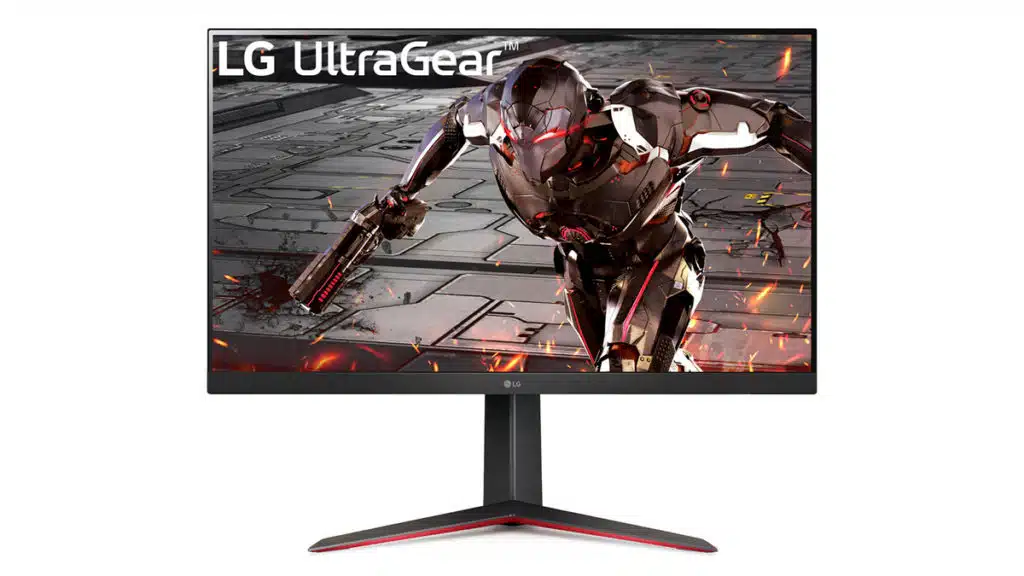
VA monitors were the most popular choice in 2022 with 51% market share, followed by IPS (43.4%), TN (5%), and OLED (0.6%), reported TrendForce today in an article about how gaming monitors have seen their first decline since 2016 due to high inflation. Only 19.8 million units were shipped in 2022, and while that marks a substantial, 13% YoY decline, TrendForce has speculated that the demand for gaming monitors should bounce back in 2023, with up to 20.8 million units (an increase of 5% YoY) projected. TrendForce believes that this recovery will be driven by factors that include higher-refresh-rate monitors.
From a TrendForce report:
TrendForce reveals that vertical alignment (VA) LCD monitors took the lion’s share of the market in 2022 at 51%. This was followed by in-plane switching (IPS) LCD monitors at 43.4%, and finally twisted nematic (TN) LCD monitors accounted for 5%. However, it’s worth noting that OLED gaming monitors have grown in popularity, taking 0.6% of the market share in 2022. Thanks to the diversification of OLED products, that market share is expected to grow to 1.6% in 2023. Furthermore, TrendForce predicts that IPS monitors may begin competing with VA monitors given that not only are IPS products increasing their market share but many IPS gaming monitors are seeing a continuous price reduction.
In 2022, 165–180Hz gaming monitors had the highest market share at 51.9%, followed by 120–160Hz monitors at 32.5%, 200Hz and above at 11.7%, and finally 100Hz at 3.9%. TrendForce predicts that the market share of 165–180Hz and 100Hz monitors will increase significantly in 2023. It is believed that 165–180Hz monitors will eventually absorb the market share of 120–160Hz monitors as the price difference between the two ranges is not large. Furthermore, it is expected that 100Hz monitors will come to mostly replace 75Hz gaming monitors, and TrendForce predicts that their market share will increase 5.1 percentage points to 9% in 2023 (the market share of 100Hz monitors mentioned in this article only accounts for gaming monitors).
Discussion (1 reply)
Join Discussion →Thanks for the article -- what I'm curious to see is when more of the "improved" IPS panels hit the market, like the 'Agile Splendor' IPS monitor here or the "IPS Black" panel monitors slowly hitting the market like this one here.
The only annoying thing about my LG OLED TV (used as a monitor) is the text fringing and occasional color mix-up due to the pixel substructure & Windows inability to process it correctly (still an issue even when using ClearType and third-party programs), and that drives me to use my Lenovo laptop for work a good deal of the time (it has an IPS panel).
Hopefully stuff like the IPS Black panels will come in 120hz+ formats, as the contrast ratios on them are already hitting at/around 2000:1 (as opposed to 700-1000:1 on "regular" IPS panels -- AutoHDR on Win11 notwithstanding), which chips away at VA's traditional advantage of better blacks/somewhat better contrast.