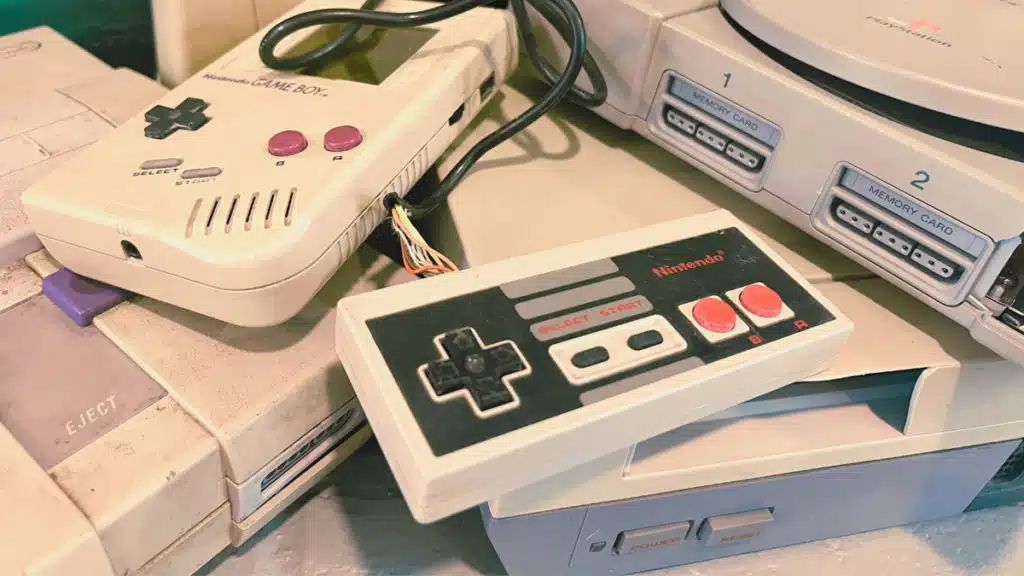
Nearly 90% of Video Games Released Before 2010 Are “Completely Unavailable,” Video Game History Foundation Finds

The FPS Review may receive a commission if you purchase something after clicking a link in this article.

Image: Video Game History Foundation

The Video Game History Foundation has published a major new study that reveals 87% of classic games released in the United States are now out of print and available only via “undesirable” means, such as piracy. “Classic” here appears to refer to any game that was released before 2010, which, relatively speaking, isn’t all that long ago. The Video Game History Foundation embarked on this study to prompt libraries and other organizations into taking the preservation of video games more seriously, but current copyright laws, which the team has described as being “outdated,” is making that difficult.

Since 2012, libraries, museums, and archives in the United States have been petitioning the Copyright Office for new exemptions that would make it easier for them to preserve games and make those games available to researchers. Each time, game industry lobbyists have opposed these new exemptions. They’ve argued that there’s already an active, growing market for classic games, something that libraries would interfere with if they got their way.

In total, our study looked at over 4,000 video games. Our team of volunteers from the Video Game History Foundation community and the University of Washington Information School spent nearly four months determining whether each game was in release, after which we double-checked their results. Our data is accurate through April 15, 2023, so if any games went in or out of print after that date, we didn’t capture it.
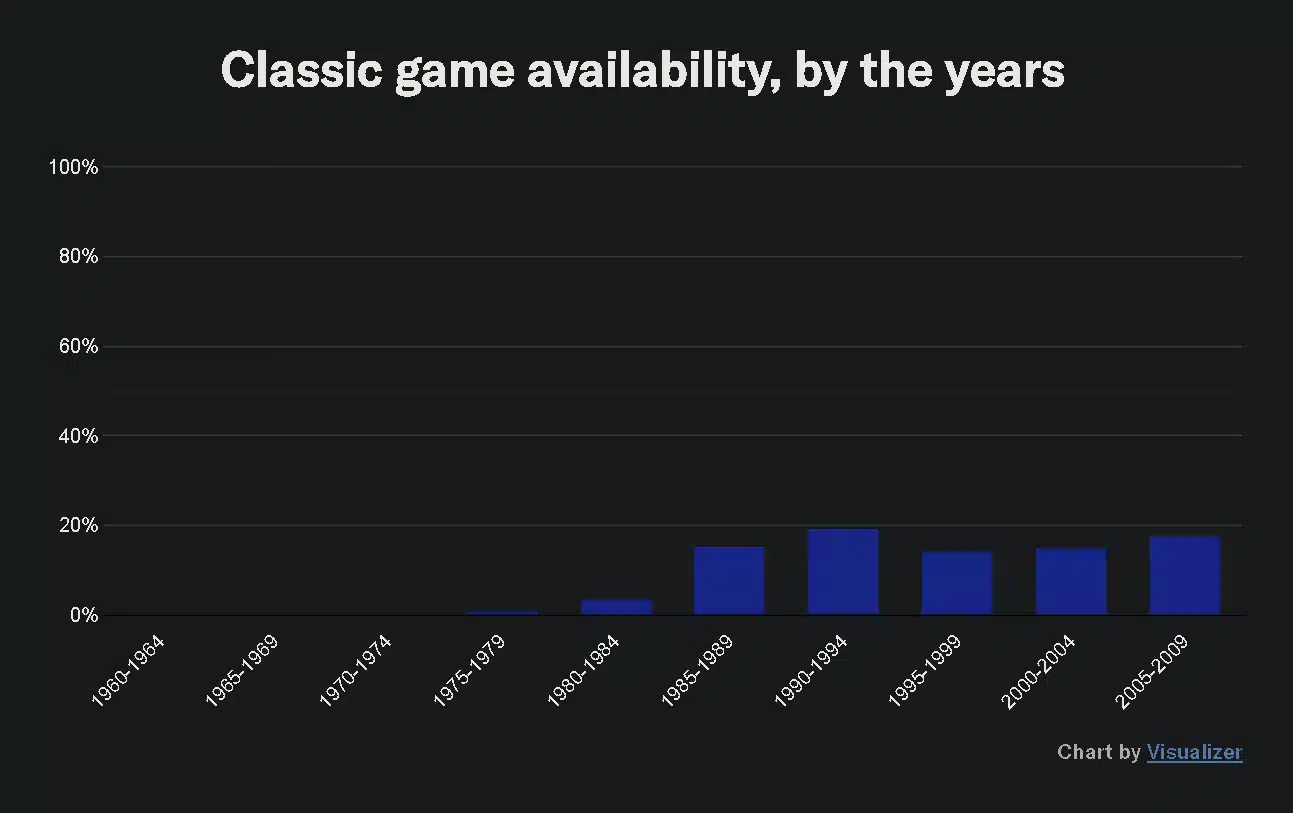
Image: Video Game History Foundation

Join the discussion in The FPS Review Forums...

Discussion (11 replies)

Join Discussion →
DrezKill
DrezKill 👍 2

Well, "unavailable" if you don't grab sh1t from the community, and don't use emulation. But in this world, software is almost always available, if you know where to look.

Skillz
Skillz 👍 1

"DrezKill, post: 73602, member: 230" wrote:

Well, "unavailable" if you don't grab sh1t from the community, and don't use emulation. But in this world, software is almost always available, if you know where to look.

Yeah, but I don't think that's the issue. Seems they may be talking about physical copies of games?

Denpepe
Denpepe 👍 1

Reprinting games when hardly noone still has the hardware to play them seems a bit silly so I'm not surprised this happens.

At least in the US there seems to be a decent second hand market for games which I'm jealous of, over here used 8 and 16 bit era games are more expensive then they were at launch.

Elf_Boy
Elf_Boy 👍 3

I see games as a cultural icon and artwork. They should be preserved.

Interesting issue copyright vs historical preservation. Should a copyright still be valid for abandonware?

Denpepe
Denpepe 👍 1

"Elf_Boy, post: 73641, member: 438" wrote:

I see games as a cultural icon and artwork. They should be preserved.


Interesting issue copyright vs historical preservation. Should a copyright still be valid for abandonware?

Copyright will eventually expire so if you are patient enough.

Brian_B

"Elf_Boy, post: 73641, member: 438" wrote:

Interesting issue copyright vs historical preservation. Should a copyright still be valid for abandonware?


So is this any different than music or literature?

You could probably say 99% of all the cassette tapes available in the 80s/90's are no longer available as well.

Copyright applies to copies/derivatives, but if you own original, physical, licensed media - you have it. And the original source does eventually fall out of copyright if it isn't refreshed or sold by the original holder.

You do have the additional layer of needing a compatible system/OS to play the media on in the case of video games, but the same could be said for music recordings -- while Vinyl may be making a bit of a resurgence, how many people still own an 8-track player, or can play wax cylinders?

This is part of the reason libraries exist - to help maintain some of this stuff for posterity.

Elf_Boy
Elf_Boy 👍 2

"Brian_B, post: 73648, member: 96" wrote:

So is this any different than music or literature?


You could probably say 99% of all the cassette tapes available in the 80s/90's are no longer available as well.


Copyright applies to copies/derivatives, but if you own original, physical, licensed media - you have it. And the original source does eventually fall out of copyright if it isn't refreshed or sold by the original holder.


You do have the additional layer of needing a compatible system/OS to play the media on in the case of video games, but the same could be said for music recordings -- while Vinyl may be making a bit of a resurgence, how many people still own an 8-track player, or can play wax cylinders?


This is part of the reason libraries exist - to help maintain some of this stuff for posterity.

**IMHO**

I dont think it is - sadly both Music and Literature, along with many other forms of Art, are much better preserves..... with the programming aspect I think it goes into knowledge and history as well as Art and Culture.

The cassette tapes and early CD's are mostly gone - the contents of those damaged and destroyed media still exist.

MadMummy76
MadMummy76 👍 1

"Elf_Boy, post: 73641, member: 438" wrote:

Interesting issue copyright vs historical preservation. Should a copyright still be valid for abandonware?


Copyright is valid, but you are allowed to circumvent DRM for personal use according to US law.

"§ 201.40 Exemptions to prohibition against circumvention" wrote:

Video games in the form of computer programs embodied in physical or downloaded formats that have been lawfully acquired as complete games, when the copyright owner or its authorized representative has ceased to provide access to an external computer server necessary to facilitate an authentication process to enable gameplay, solely for the purpose of:


(A) Permitting access to the video game to allow copying and modification of the computer program to restore access to the game for personal, local gameplay on a personal computer or video game console;


Source

Brian_B

"MadMummy76, post: 73679, member: 1298" wrote:

Copyright is valid, but you are allowed to circumvent DRM for personal use according to US law.


Source


Nice source caption!

Marees

"Brian_B, post: 73648, member: 96" wrote:

So is this any different than music or literature?


You could probably say 99% of all the cassette tapes available in the 80s/90's are no longer available as well.


Copyright applies to copies/derivatives, but if you own original, physical, licensed media - you have it. And the original source does eventually fall out of copyright if it isn't refreshed or sold by the original holder.


You do have the additional layer of needing a compatible system/OS to play the media on in the case of video games, but the same could be said for music recordings -- while Vinyl may be making a bit of a resurgence, how many people still own an 8-track player, or can play wax cylinders?


This is part of the reason libraries exist - to help maintain some of this stuff for posterity.


As another poster says, the content is still available for songs in a digital medium

Problem with Games is, it is specific to a hardware platform & needs fresh dev effort to port it over to a new platform, like what MS is trying to do.

Emulation could work but it runs into piracy issues

Niner51
Niner51 👍 1

"Elf_Boy, post: 73641, member: 438" wrote:

I see games as a cultural icon and artwork. They should be preserved.


I agree. I kept a lot of old boxes from games just to keep or display.

Tsing Mui
News poster at The FPS Review.

Recent News