
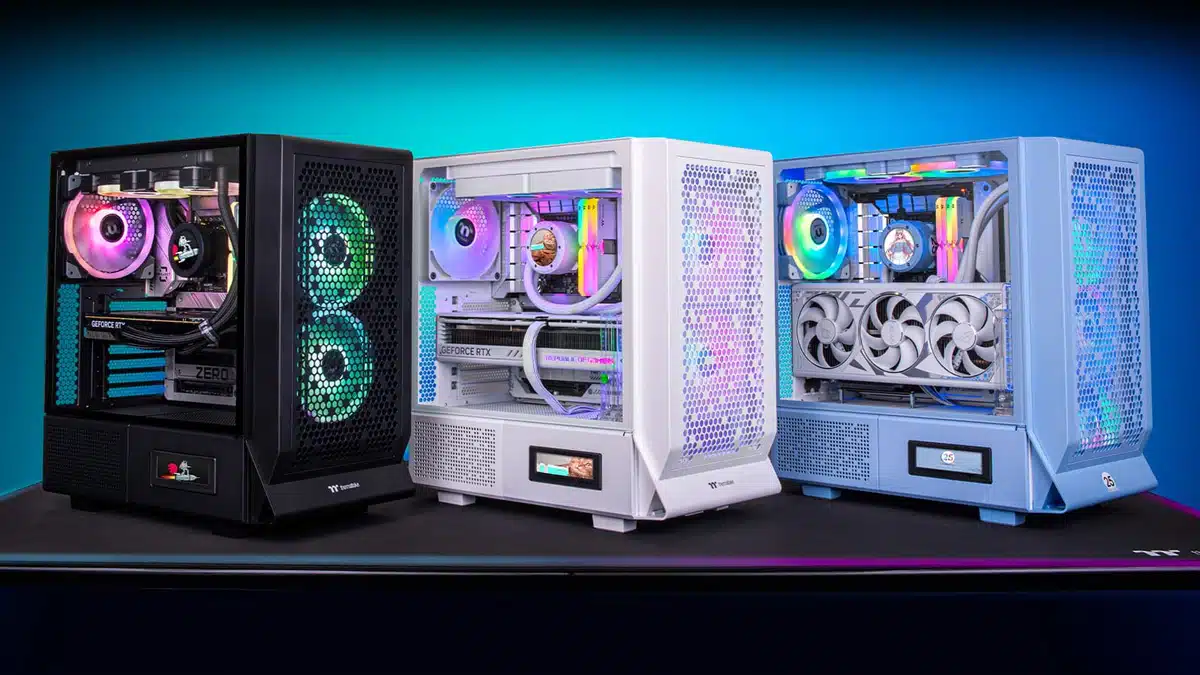
Thermaltake has launched the Ceres 330 TG ARGB Mid Tower Chassis, “the first chassis that supports a hidden-connector motherboard.” The case is compatible with two of the BTF motherboards that ASUS recently unveiled for reducing cable clutter, as well as PROJECT ZERO, a third option from MSI that similarly aims for cleaner aesthetics.
Compatibility:
Color options:
Key features:
- Over 55% of the panels are perforated for “massive airflow”
- Supports CPU coolers with a maximum height of 185 mm
- Supports up to 360 mm radiator at front, 280 mm at top
- Supports GPUs of up to 370 mm in length
- Supports PSUs of up to 220 mm in length
- 2x CT140 ARGB Sync PC Cooling Fans pre-installed at the front, 1x CT140 PC Cooling Fan pre-installed at the rear
- Support for LCD Panel Kit and 3.9-inch LCD Screen Kit
- Tempered glass side panel (4 mm)
- Rotational PCI-E slots for horizontal or vertical GPU mounting
- Removable dust filters at top, front, bottom left, and right sides
- 2x USB 3.0, 1x USB 3.2 Gen 2 Type-C, and HD Audio ports on front panel
Press release:
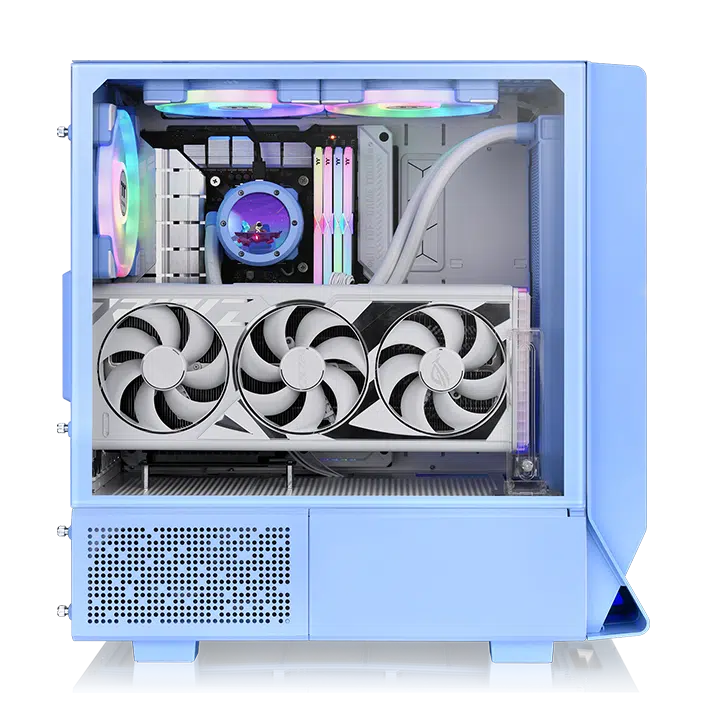
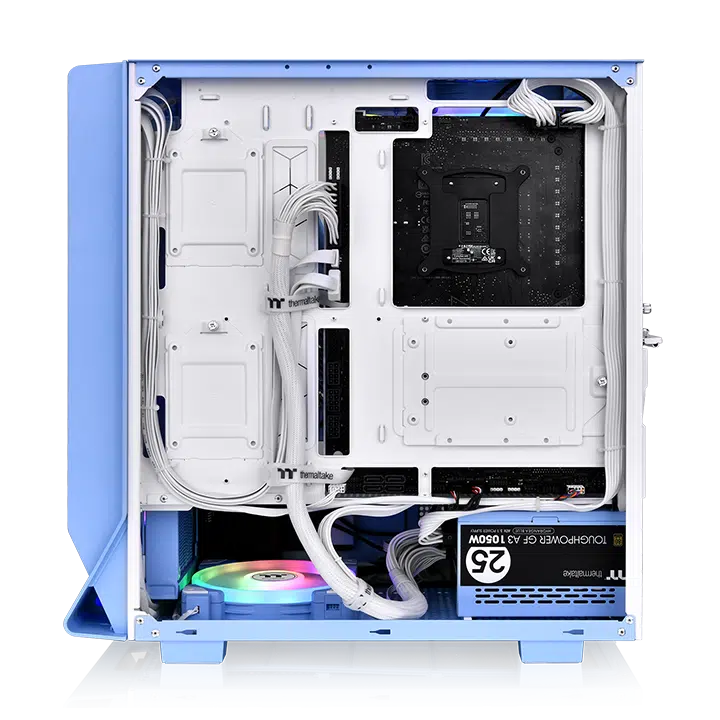
Thermaltake, a leading PC DIY brand for premium hardware solutions, is excited to launch the Ceres 330 TG ARGB Mid Tower Chassis, the first chassis that supports a hidden-connector motherboard. The Ceres 330 is a new case of the Ceres series, and it retains the series’ iconic perforated panel design to achieve optimal cooling performance. Significantly differentiated from its predecessors, the Ceres 330 has maximum motherboard installation support and is compatible with the latest hidden-connector motherboards, such as ASUS TUF GAMING Z790-BTF WIFI, ROG MAXIMUS Z790 HERO BTF, and MSI Z790 PROJECT ZERO. To enhance the aesthetics, the chassis is designed with an ultra-clean space benefited by the hidden-connector design, the Ceres 330 series unifies all components in the same color and is available in black, white, and hydrangea blue versions.
Hidden-Connector ft. ASUS & MSI
Created for next-generation motherboards, the Ceres 330 features a special design that enables support for both standard motherboards and ATX hidden-connector motherboards from ASUS and MSI. With a hidden-connector motherboard, you can easily achieve outstanding cable management by placing messy cables on the back side. Ultimately allows the front side to achieve greater airflow, with room for a large amount of air intakes and exhausts generated by the Ceres series.
Built for Massive Airflow, Supports up to a 360mm Radiator at the Front
With its 55% perforated panel design, this case can deliver exceptional cooling performance. Besides that, the Ceres 330 comes pre-installed with two powerful CT140 ARGB fans at the front and one CT140 fan at the rear, and can accommodate up to a 280/360 AIO radiator at the front, offering superior cooling solution to your high-end components.
Perfect Dust Protection
The Ceres 330 is equipped with removable filters located on the top, front, bottom, left, and right sides of the chassis, the Ceres 330 ensures perfect dust protection, ensuring all hardware operates properly.
Sleek Look: Tempered Glass Side Panel & Same Color Scheme
The Ceres 330 incorporates a 4mm tempered glass panel on the left side, you can fully display a neat inner build contributed by the hidden-connector design and show off all your RGB components vividly. Additionally, the Ceres 330 unifies the overall color from exterior to interior elements to elevate aesthetics. Now, the color of the front frame is the same as the main color of the body. Upon closer inspection, the inner accessories of the Ceres 330 Snow, grommets, and PCI slots have been changed into white as well as the screws are designed in silver, creating a pure and sleek look.
Visually Pleasing, Totally Interactive
If you would like to upgrade the appearance of the Ceres 330, the separately sold 3.9″ LCD panel kit is the perfect accessory. The LCD can present components’ real-time information, time mode, and climate mode, and even can upload any images or GIFs you like by using the TT RGB Plus 2.0 software.
The Ceres 330 is a sophisticated chassis designed to support ASUS and MSI’s new hidden-connector motherboards, engineered for massive airflow, and feature a stylish aesthetic. If you are looking for a functional chassis compatible with hidden-connector motherboards, don’t miss out on the Ceres 330 TG ARGB Mid Tower Chassis!
Source: Thermaltake
Discussion (8 replies)
Join Discussion →Not a fan of the aesthetic but I'm into the hidden power connectors.
I'll rate myself as skeptical on the 'hidden' connectors.
At a minimum, they make the case wider, and require more room to hide the extra cable length that is 'saved'.
Wide cases are "in" as putting the PSU behind the motherboard is the latest trend. So there is plenty of room.
I think I have the TG-55 version the full tower variant of this case. Plenty of room. Nice and cool.
I only got into messing with mid-tower cases in the last few years after about a decade of using HAF cases and old school towers.
Overall, mainly thanks to AIOs, I've enjoyed using them but I learned that dealing with the PSU connectors does take some forethought since once everything is installed it can become a PIA to get extra things plugged in after the fact once most the ports have been used nor are all connectors long enough to allow you to attach everything before installing it. Although I'm not a fan of the external design either I do like the removable panel that gives complete access and then being able to re-cover it. Something that I'd really like on my H7 Flow.
Cablemods to the rescue, or maybe brands will start releasing specific PSU's for this, like Corsair with their PSU's with the side connectors.
I've been tempted to give the MSI Project Zero motherboard a try, but then I'd have to get a compatible case to go along with it, so not sure it's worth it. I've gotten pretty good over the years at cable managing, so they don't really bother me as much as when I first started building. NVME's, and better cable managed fans also helped..;)
Could be, biggest issue is that most folks wind up with extra cabling that needs to be shoved 'somewhere'. Having extra SKUs for shorter cabling, or having to spend more after purchase to get it seems like it's going to make for a slow uptake.