
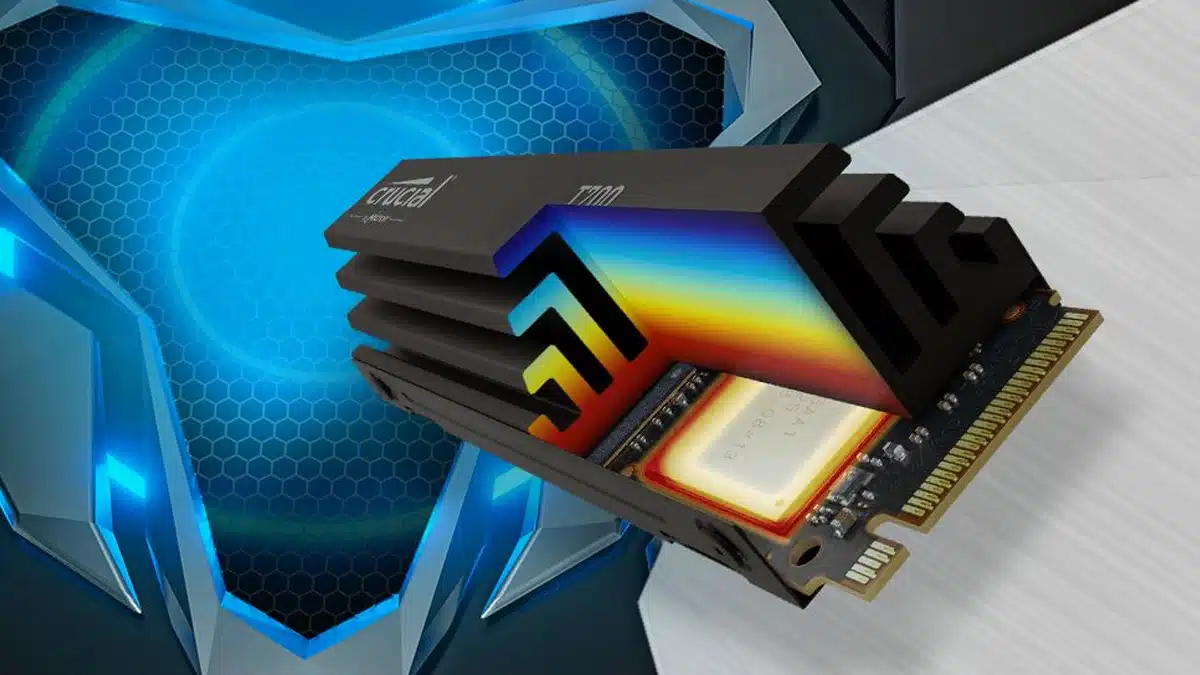
Crucial is planning to expand its lineup of PCIe 5.0 SSDs with the T705, a new lineup of super-fast storage that offers speeds of up to 14,500 MB/s, according to new specs and photos that have been shared on X. The T700, Crucial’s current lineup of PCIe Gen 5 SSDs, consists of six SKUs, three of which are available with a black heat sink.
Crucial T705 options will include white or black heat sinks:
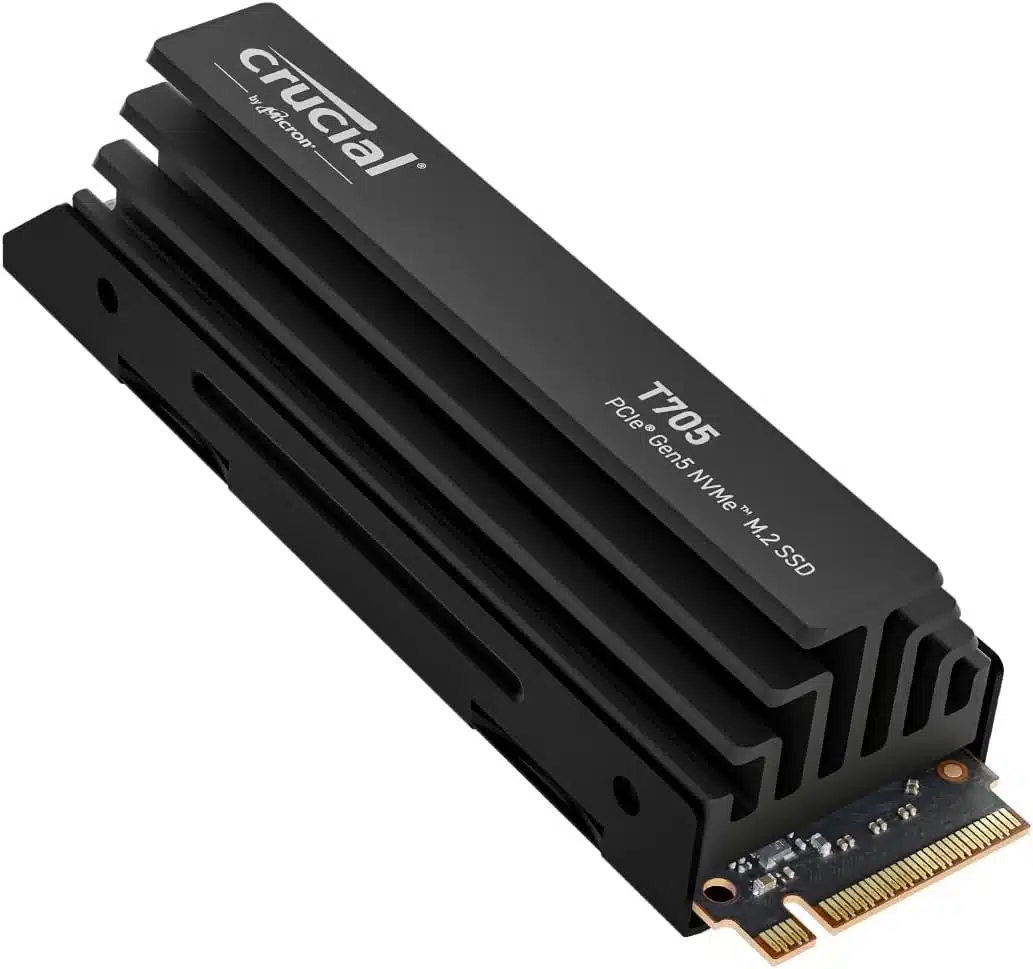
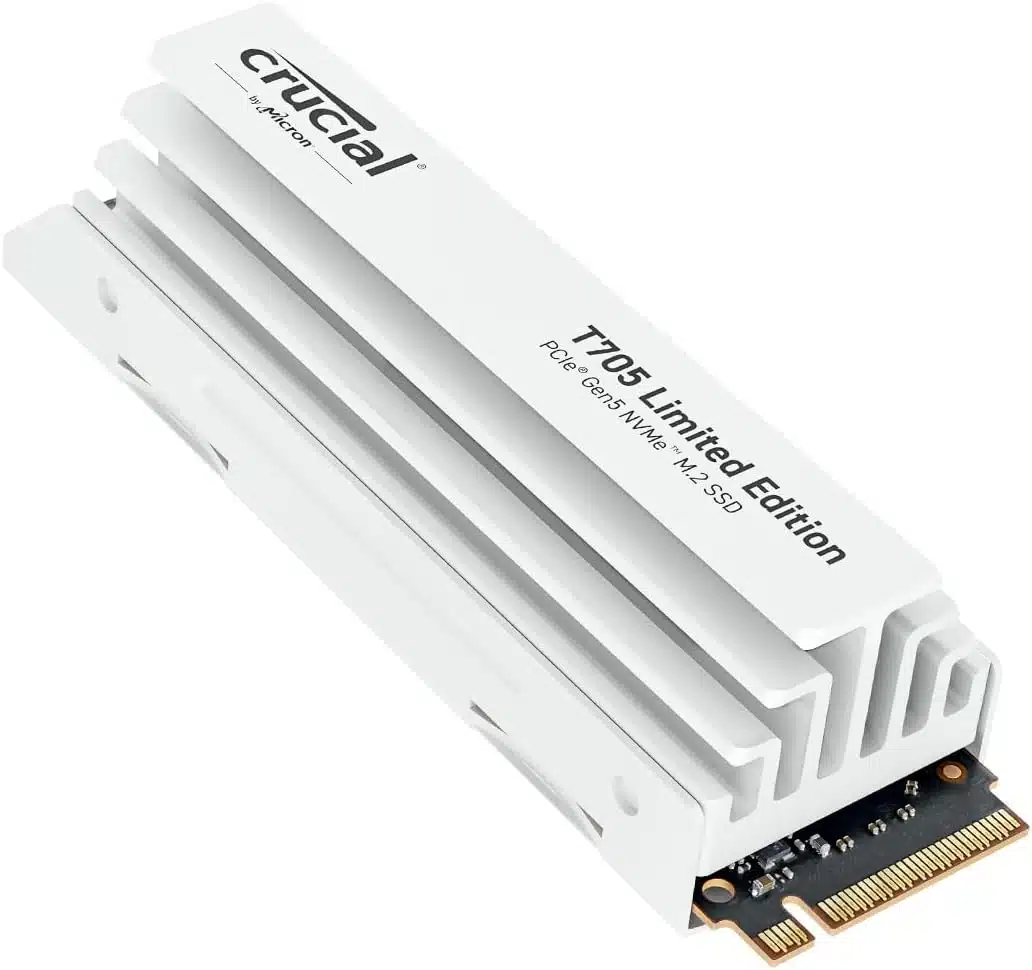
Crucial T705 series specifications:
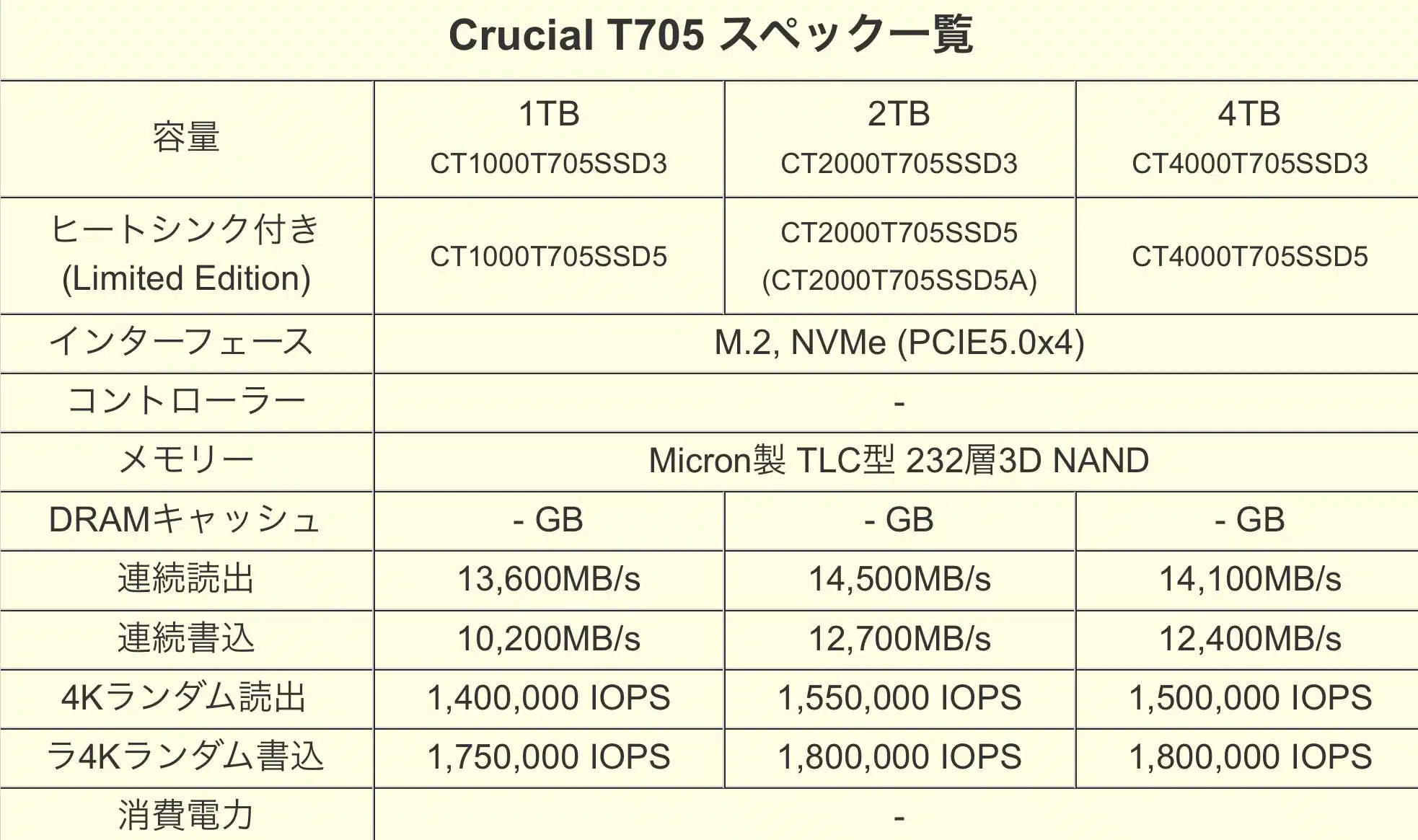
Crucial T705 vs T700 speeds:
- T705: Up to 14,500 MB/s
- T700: Up to 12,400 MB/s
Crucial on the T700’s performance:
With blistering speeds of up to 12,400/11,800MB/s sequential reads/writes (up to 1,500K IOPs random reads/writes), the Crucial T700 PCIe 5.0 NVMe SSD is nearly 2x faster than our Gen4 performance SSD4.
Render high-resolution textures up to 60% faster, load assets in seconds and get up to 99% less CPU utilization to free up your system for multitasking with Microsoft DirectStorage and GPU decompression.
Discussion (8 replies)
Join Discussion →That's nice to see a new performance frontier. :)
I wonder what kind of CPU usage happens at this speed for sustained transfers and how much it could be affecting motherboard chips/components associated with the PCIe slot?
Just clarifying, temps.
As a consumer device it isn't going to be designed for sustained maximum speeds but more burst. Though a few minutes at max throughput is easily doable loading up a large LLM for your AI engine.
Yeah, but even at bursts I'd be a little concerned about temps. I know they're making strides with the controllers and power efficiency but I'm not so sure if everything else is accounted for with some people's builds.
Waiting for liquid nitro cooling for NVMe SSDs.
This is like the difference between AMD and Intel chipsets. Intel chipsets rarely require active cooling (ITX notwithstanding), whereas the top-end AMD chipsets often do. A big part of this is the nodes used, where chipsets and other things like NICs and audio CODECs and so on aren't on the latest nodes but rather some dice roll of what's available at the time.
I don't see NVMe controllers as any different really. There's simply no need to push the controllers given how little total power usage we're talking about and what the actual consumer usecases look like. Consider also that for those doing heavier 'work', a workstation perspective in terms of component selection and cooling may be in order.
Another parallel would be video cards - the first video cards (S3, ATi, Nvidia), including the first 3D accelerators (3Dfx), used bare ceramic packaging. It took years before even a tiny heatsink and fan became necessary.
Assuming that flash storage evolves to a point where functionality needs more powerful controllers than can economically be made, we might see provisions for more than just passive heatsinks be developed. We're just very far from that today. At worst, Corsair will sell you a water block for your NVMe drive :).
For sure. I've just consistently noticed that with the 2nd rig in my signature, the NZXT H7 Flow, where I've used a cheaper motherboard and AIO that anytime transfers at max speed happen for more than 10-20 seconds I hear the AIO fans ramp up. That's a cheapo AIO, does get the job done, but has been a reliable indicator as to when the CPU is getting a bit more usage. I usually have MSI AB up and see the direct correlation when it's loading things have also done tests in just transferring files. These fast SSDs have more impact than just their own temps. With the 5800X3D it can be roughly 10-20% more depending on what's going on.