
Hardware Testing – Overclocking, Power, Temp, Fans
On this page, we are going to take a look at the default GPU clock speed of the MSI GeForce RTX 5060 8G GAMING OC. We are also going to overclock the video card and see how high the GPU frequency can be pushed with the tools provided, and compare that with the default clock. How high can it go? We’ll also look at the power draw and temperatures, and fan speed below.
Default Clock Speed
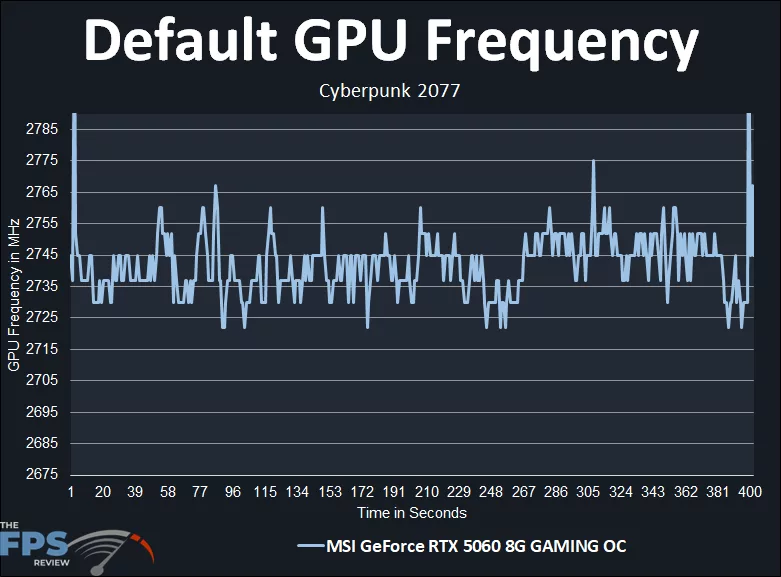
The default GPU Boost Clock of the MSI GeForce RTX 5060 8G GAMING OC is 2625MHz, which is a factory overclock compared to the NVIDIA reference spec of 2497MHz. While gaming, we experienced GPU Boost working to increase the clock speed beyond the MSI factory overclock, up from 2725MHz-2755MHz, hovering between 2735MHz-2755MHz while gaming. The exact average of the clock speed was: 2742MHz while gaming. At 2742MHz, we are therefore getting a clock speed that is 4.4% over the MSI factory overclock, and 10% over the NVIDIA reference GPU clock speed.
Overclocking
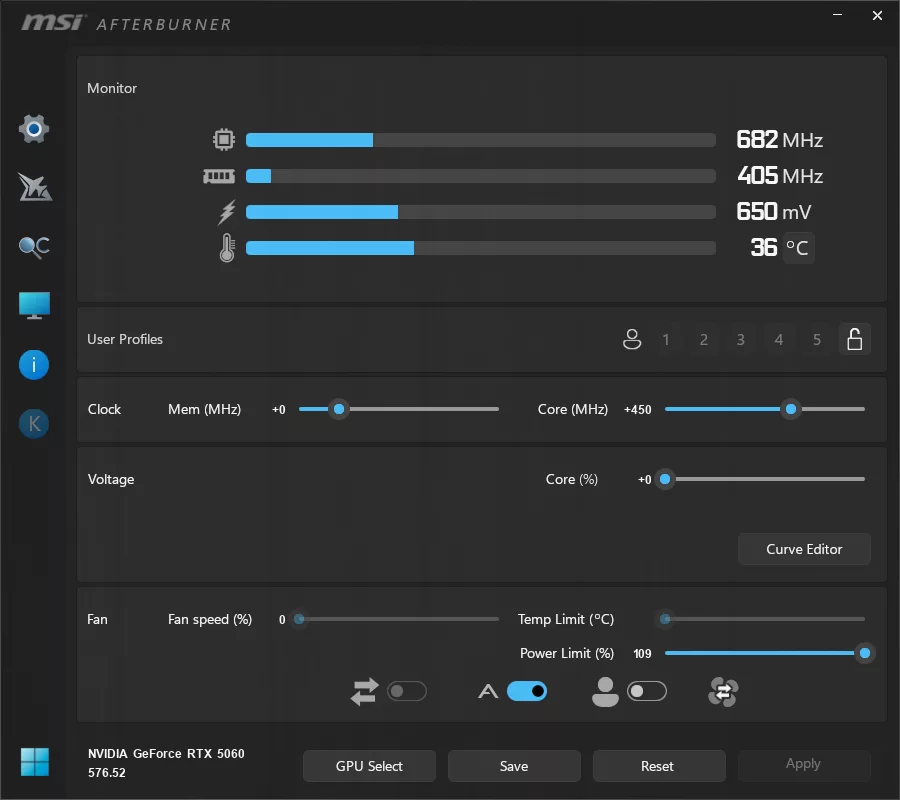
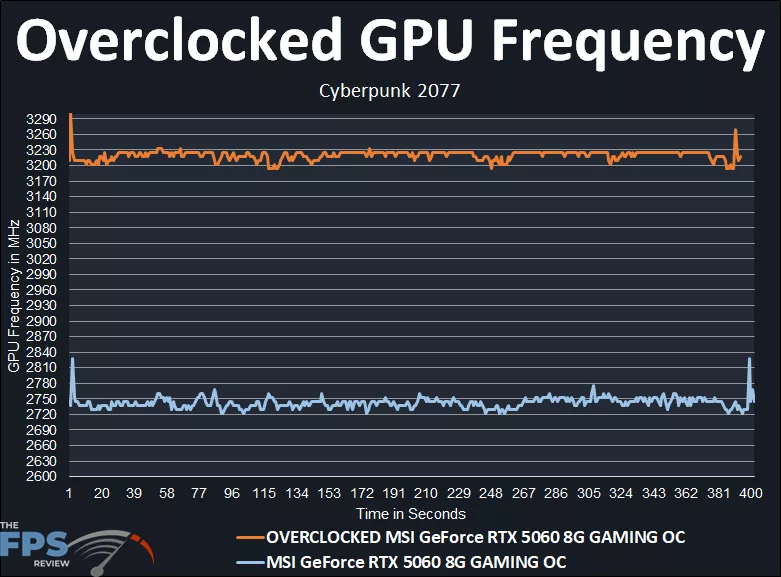
To overclock the MSI GeForce RTX 5060 8G GAMING OC, we used the latest version of MSI Afterburner, which allowed Core Voltage adjustment. On the MSI GeForce RTX 5060 8G GAMING OC, we were able to raise the Power Limit up by 9%, from 100 to 109%. In our overall overclock testing, we managed to boost the Core MHz up by +450 on the slider. Now, we did try to boost it further with Voltage, but it ended up exceeding TDP, and ultimately not improving the actual in-game clock speed. With this video card, it was best to keep the Voltage at default and just raise the frequency as high as possible, which worked really well. We also did not need to adjust fan speed; we kept it on automatic as the GPU remained very cool on automatic, and it did not hold back overclocking. The main thing that held that back would be the TDP or power limit.
In the Overclocked GPU Frequency graph, you can see that the overclock GREATLY improved the clock speed. It managed to push up the clock speed to upwards of 3.2GHz!! Yep, it jumped from around 2742MHz all the way up to 3200-3230MHz while gaming! The exact average of the overclock was: 3220MHz. At 3220MHz, our manual overclock was a 17% GPU Clock speed boost over the default factory overclocked frequency of 2742MHz that we experienced, which is an absolutely huge overclock.
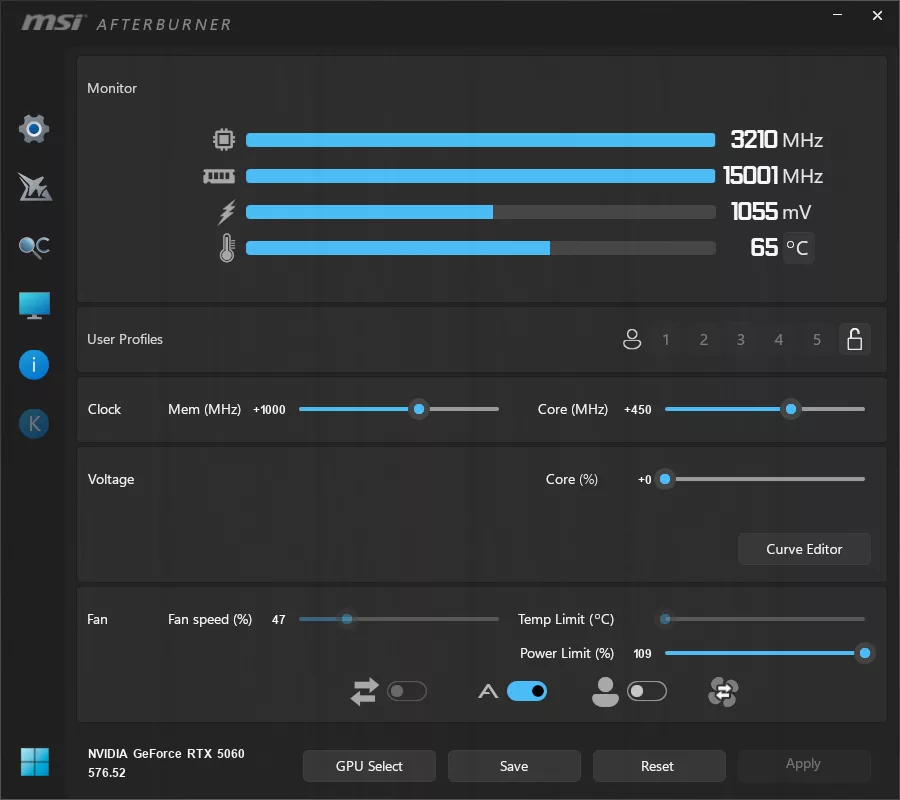
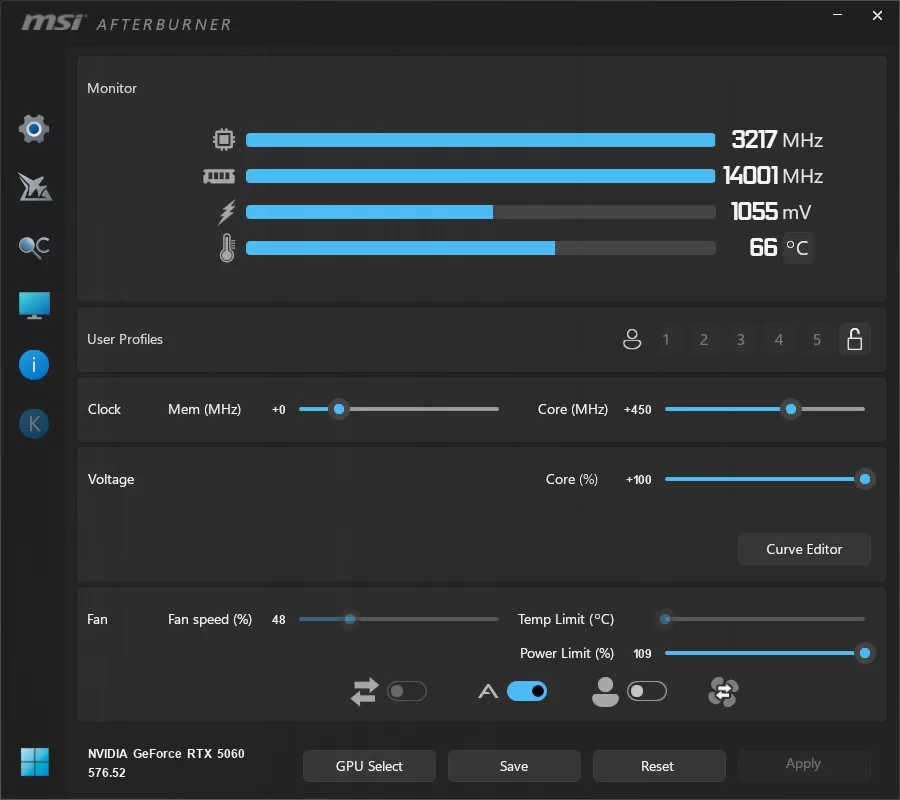
We also overclocked the memory to see how high we could push it and still retain performance with the core overclock. The memory on the MSI GeForce RTX 5060 8G GAMING OC runs at 28Gbps, and we managed to push it up +1000 on the slider. This increased the memory speed to 30Gbps, improving the bandwidth from 448GB/s to 480GB/s. We also tried bumping the Voltage in the right screenshot, and that function does work on this video card.
Power
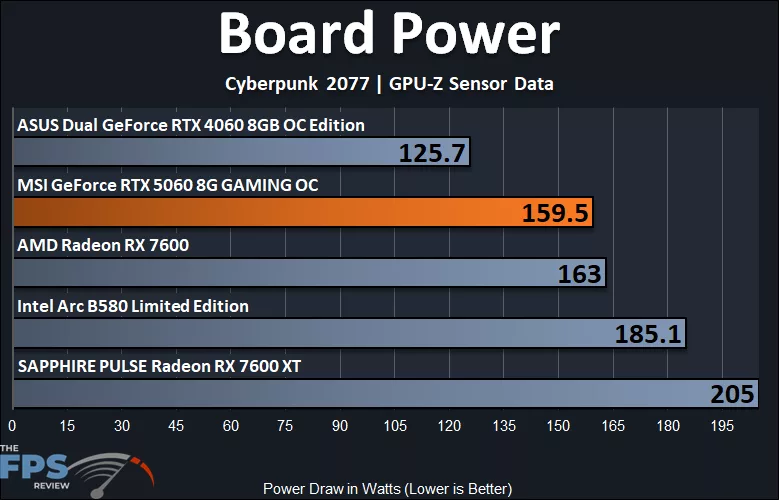
The NVIDIA GeForce RTX 4060 TDP is 145W; however, MSI states that the TDP on the MSI GeForce RTX 5060 8G GAMING OC is 155W. According to our testing, this card reached a board power of 159W, so it is in line with MSI. At 159W, the MSI GeForce RTX 5060 8G GAMING OC uses 27% more power, which is then in line with the performance uplift we experienced over the GeForce RTX 4060. This power level is less than the Radeon RX 7600 by 2%, less than the Intel Arc B580 by 14%, and less than the Radeon RX 7600 XT by 22%. The MSI GeForce RTX 5060 8G GAMING OC was a lot faster than the Radeon RX 7600 XT, so it is much more power-efficient and performance-efficient compared to the Radeon RX 7600 XT.
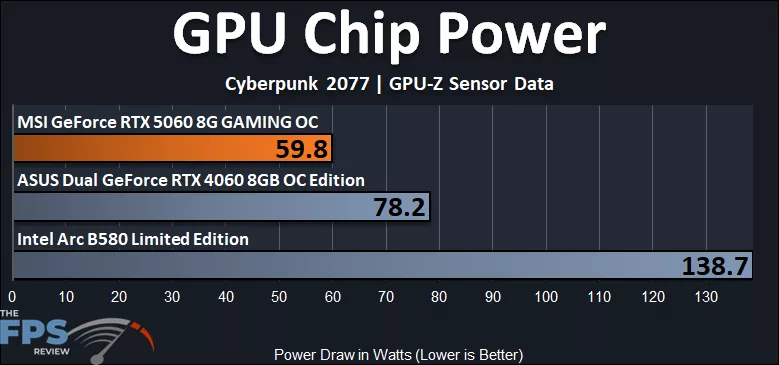
We can see where the efficiencies of the MSI GeForce RTX 5060 8G GAMING OC really come in, and it is the GPU here, the GeForce RTX 5060 is much less power hungry than the previous generation GeForce RTX 4060. The GeForce RTX 5060 uses 24% less power than the GeForce RTX 4060 GPU, and 57% less power than the Intel Arc B580 GPU.
Temperature
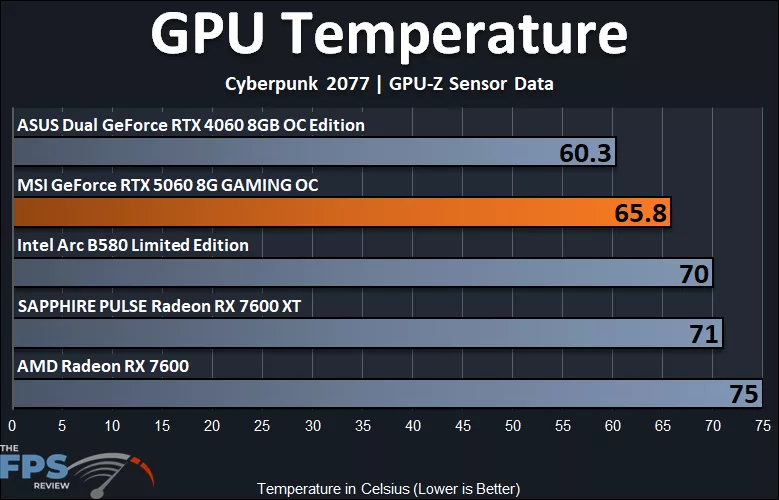
The MSI GeForce RTX 5060 8G GAMING OC stayed at a cool 65.8c peak GPU temperature while gaming. This puts it warmer than the GeForce RTX 4060, but nowhere as warm as the Intel Arc B580, or Radeon RX 7600 XT and Radeon RX 7600. The TWIN FROZR 10 thermal design is working really well here to cool this very small video card.
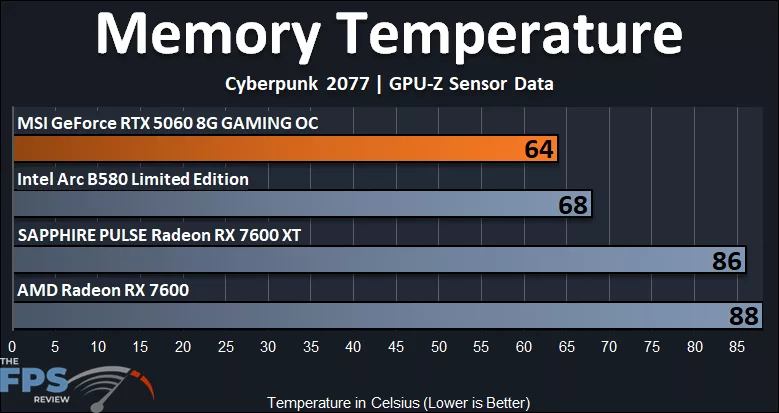
Memory temperatures were also the lowest here on this graph at just 64c, running even cooler than the GDDR6 on the rest of the cards. This shows that the contact and cooling with the VRAM modules and heatsink is very good.
Fan Speed
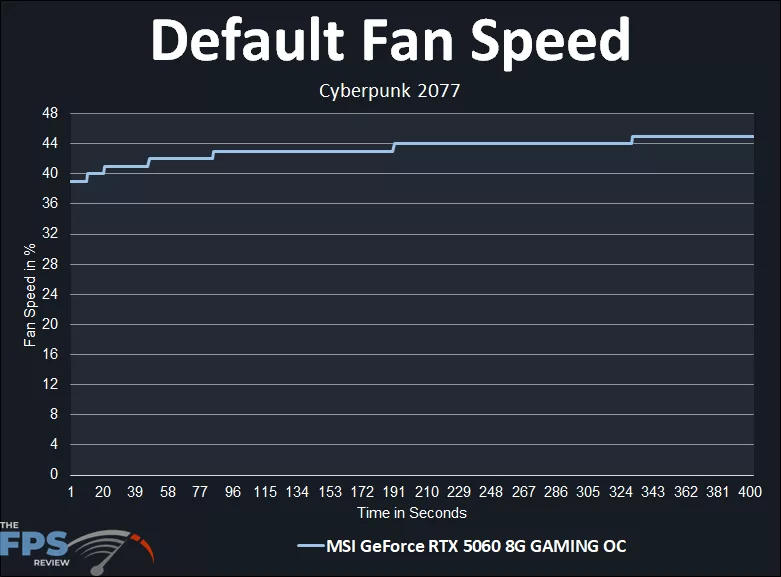
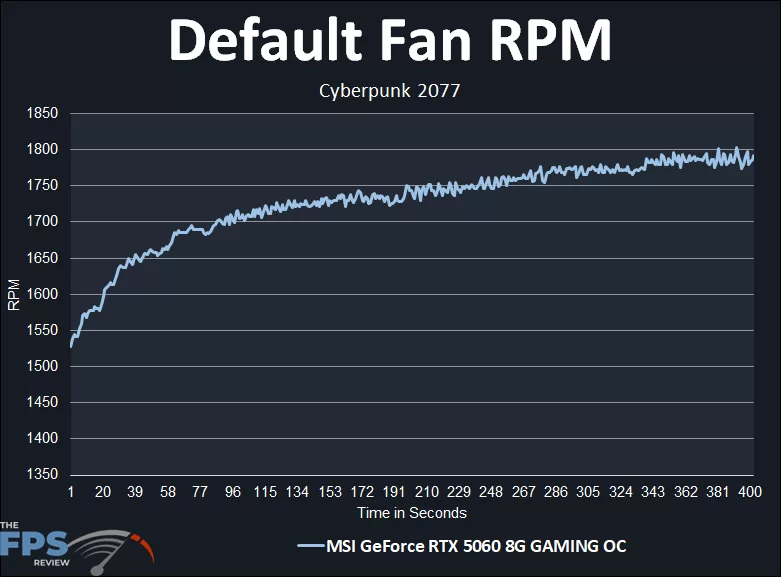
We also tested and graphed the default fan speed in percentage and the fan RPM. We can see that the percentage starts around 38%, and ramps up slowly in steps to the maximum speed just above 44%. This is a slow ramping over time, which is not abrupt. We can also see from the RPM graph that the fan speed ramps in a very smooth curve, and means there is not abrupt change in the fan speed causing noticable noise, this is a quiet fan while gaming, and doesn’t run even half of its maximum performance while gaming and doesn’t create a lot of noise in fan speed changes.
GPU-Z Screenshots
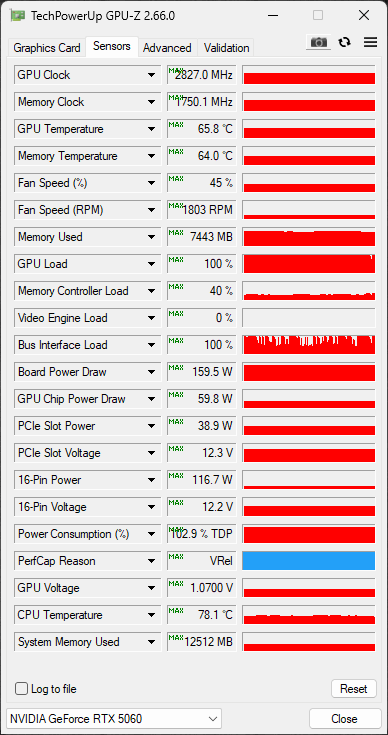
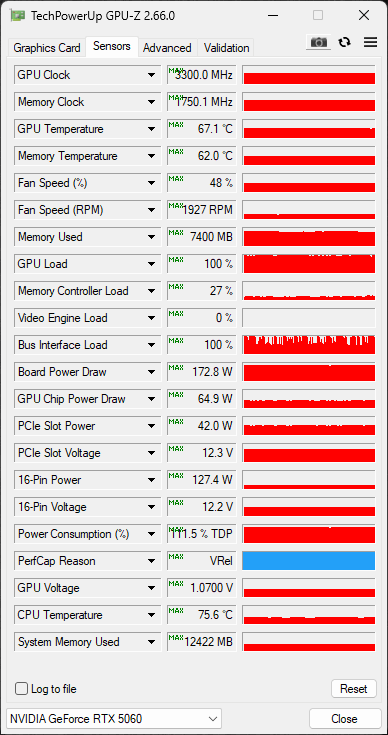
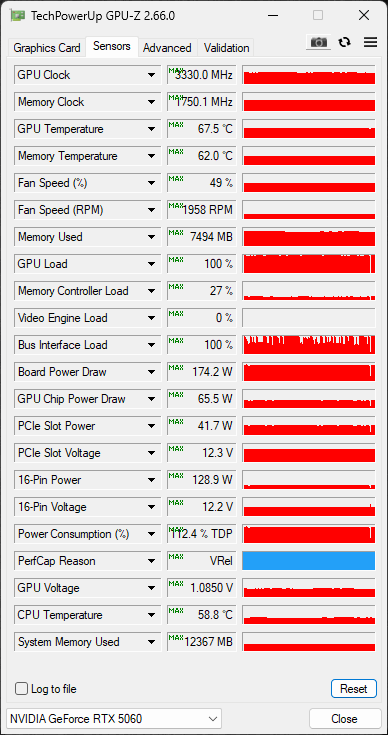
On the left, we have the default GPU-Z sensors screenshot, we can see that the fan speed hits 45% at max, and the GPU Voltage peaked at 1.0700V with 102.9% TDP. In the second (middle) screenshot, we have the MSI GeForce RTX 5060 8G GAMING OC overclocked with just the core GPU frequency. The fans automatically rose to 48% speed, and the Voltage stayed the same, with the TDP now at 111.5%. In the last screenshot on the right, we have raised the Voltage with the Voltage slider in Afterburner, and we can see that it raises it up to 1.0850V. This also increases the fan speed to 49% and the TDP to 112.4%, which does not allow us to get any more out of the GPU frequency, but it does work, and the fans still aren’t loud.
Discussion (10 replies)
Join Discussion →Remember when a new gen would trounce the previous generation next model up? Now we're just happy if it's faster.
It is at least way better compared to the 4060 than the 5070 was to the 4070.
With transformer model, it seems that 1080 max can be tested & viable at 1080p quality & 1440p balanced
However vram limit applies in following scenarios even then
[*]Open world games that use nanite like tech
[*]Older games that are 'unoptimized' & will never be optimized in future
[*]Games with adjustable texture cache pool size
[*]Games with insufficient texture
As we discussed elsewhere; at $229 (adjusted for inflation) or less I have no beef with 8GB cards. $300 is too much IMO. Better off eating instant ramen and making your own coffee i.e. cutting the budget elsewhere, until you have enough to buy a 9060XT 16GB.
Anecdotally: DLSS 4 TM immediately impressed me when using it on a 3050 6GB in Spidey Miles Morales. I was not expecting to get the level of playability and visuals it managed in combo with a 5600X3D.
The complication is that with tariffs, TSMC monopoly & shrinking node gains entry level is now $350
AMD has 9060 xt 16gb at $350 msrp
As per RGT Nvidia will have 5060 super 12gb also at $350 msrp
Although recent super rumours have not mentioned the 5060 super, so it's launch could be around Q2 2026
But the wheels of time are slowly shifting. The 9060xt 8gb is available with "rebate coupons" for $250
AMD has also launched the 9060 non-xt at $280 but whenever it is made available for wider public, I expect msrp to be $250 (with 9060xt 8gb completely disappearing from the market)
Unfortunately the times of $200 or less GPUs has permanently passed. You can probably get the 55w 7400xt but strictly only if your PSU will not support a discrete GPU
On slight tangent, I expect the 9060xt 16gb to be a long lived card as AMD is moving to 3nm with RDNA 5 as per leaks. & if you look at the proposed bus width to CU ratio then a RDNA 5 128 bit bus card would have 48 CUs. No way AMD is selling that for less than $400. So the 9060xt 16gb will have to be the 'entry level' for a long time, I think
I am not ready to buy into that definition of entry level. Feels like gaslighting straight from the IHV's propaganda machines. IMO, entry level is the following cards - RTX 5050, but it needs a $25-$30 price drop from MSRP, then it's good. Same will go for the RX 9600, if it's over $230 it's too expensive. Even if it is almost as fast as the 5060. The B570 10GB completes the entry level round up.
5060 Super will dominate sales if there are models at that price.
As mentioned, I think $229 is the acceptable price for entry level given inflation. And the 7400XT should be popular for rehabbing the glut of used 8th/9th gen office PCs into gamers.
I don't follow data on BoM or any of that jazz anymore, I'll take your word for it.
DAPUNISHER the n00b :D
Honestly, that needs to be fixed!
More like "The bull :poop: artist".
Nope still a newb. ;)
Looks like I am wrong on Lisa Su not releasing a 'budget' gpu next gen — a 3060 12gb replacement could be incoming (using cheaper & slower lpddr6 ram)
We now have the full RDNA 5 lineup
[embedded media]