
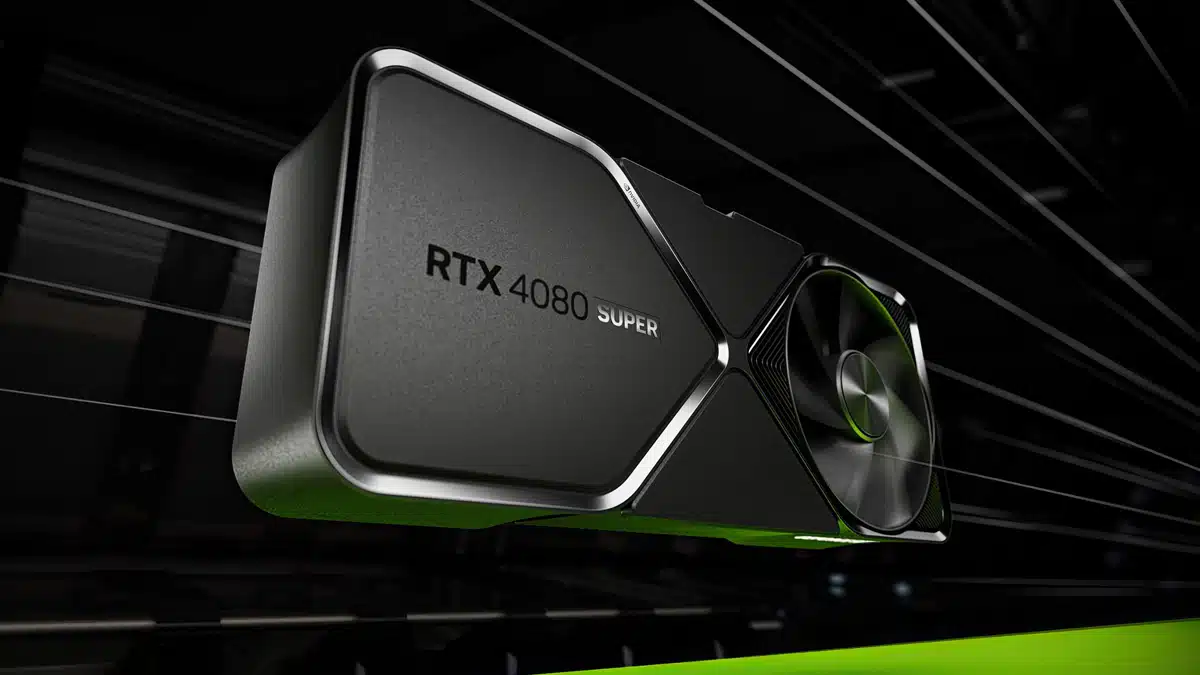
NVIDIA is reportedly cutting back production of its RTX 40 series graphics cards by as much as 50% as it prepares for the RTX 50 series. Such a move is not wholly unheard of before the release of new products but it does mean that PC owners who’ve been holding out for the lowest prices for the current ADA-based GPUs may want to make their move soon since prices could go up significantly in the coming months. Except for NVIDIA’s flagship GeForce RTX 4090, many of its current RTX 40 series lineups can be had at MSRP or less, but that may change within weeks or months.



News that NVIDIA is reportedly cutting back production for its ADA-based GPUs comes from ITHome (via its source with The Economic Times) which also told it the following as reasons for reducing current supplies.
Per ITHome (machine translated):
- “Transfer the production capacity of consumer-grade high-end graphics cards to Blackwell products.”
- “Start tightening the supply of RTX 40 series in preparation for the upcoming RTX 50 series.”
ITHome also reports during Q1 24 there were already shortages of NVIDIA’s entry-level GPUs, the GeForce RTX 4060 and RTX 4060 Ti, and that by April they and previous gen-cards such as the RTX 3050 and GTX 1650 increased in prices. Now, overseas, NVIDIA’s mid-to-high-end offerings, essentially everything from the GeForce RTX 4070 up to RTX 4090, are already reportedly seeing price increases.
Blackwell samples are shipping soon
It was also reported that NVIDIA founder and CEO Jensen Huang attended SIGGRAPH 2024 in Denver this week and announced that Blackwell GPU samples will soon be shipped out to partners. Rumors about the timing of the RTX 50 series launch have indicated either Q4 24 or, as is becoming more likely, a Q1 25 release. While the former is still possible, NVIDIA may aim for CES 25, as another rumor has suggested, and may coincide with new releases from its fellow graphics card manufacturers, AMD and Intel.
Discussion (3 replies)
Join Discussion →I mean, demand always goes down for current gen when there is a new generation right around the corner.
Who wants to buy a current GPU when it will be worth less in just a couple of months?
If you ask me, pricing should be more dynamic.
By all means sell the latest and greatest at full price at launch, but then lower the price linearly over time.
The truth is, if you buy later than launch, you get the performance you paid for for less time before there is a replacement, so it should cost less.
If I ruled the world for a day I'd structure GPU pricing like this (using NVIDIA as an example).
Upon launch a 3080 is full price. Right before the 4000 series launches, the 3080 should cost the same as the upcoming 4070 (if their performance is similar)
Between launch and the next gen launch, that price should decay linearly on an almost daily basis to reflect the percentage of time that is left before replacement.
This would be a fair pricing model that doesn't screw over people who can't rush out and buy at launch, and may help reduce the scalping problem a bit, as they never have sufficient launch quantities because everyone tries to buy at launch with the current pricing model.
With time-based linear pricing decay, the demand should be smoother and more predictable, and there will be less opportunity for scalping. There is less of a sense of "I need to rush out and get it on launch day, or at the very least launch week, or I am getting a bad deal" like we have now.
Either that, or just freaking make adequate launch quantities before launching.
This garbage is getting old.
I totally agree but unfortunately the "sellers" will often start jacking prices for anything as soon as they sense someone might be pissing in the wind.
Makes sense, they are shifting to the production of Blackwell, and will need several months for those chips to finish fabrication in time for a November launch. There might still be some 4xxx chips finishing fabrication, with new production primarily focusing on Blackwell.
It takes 3 months to FAB typical chips: [embedded media]