
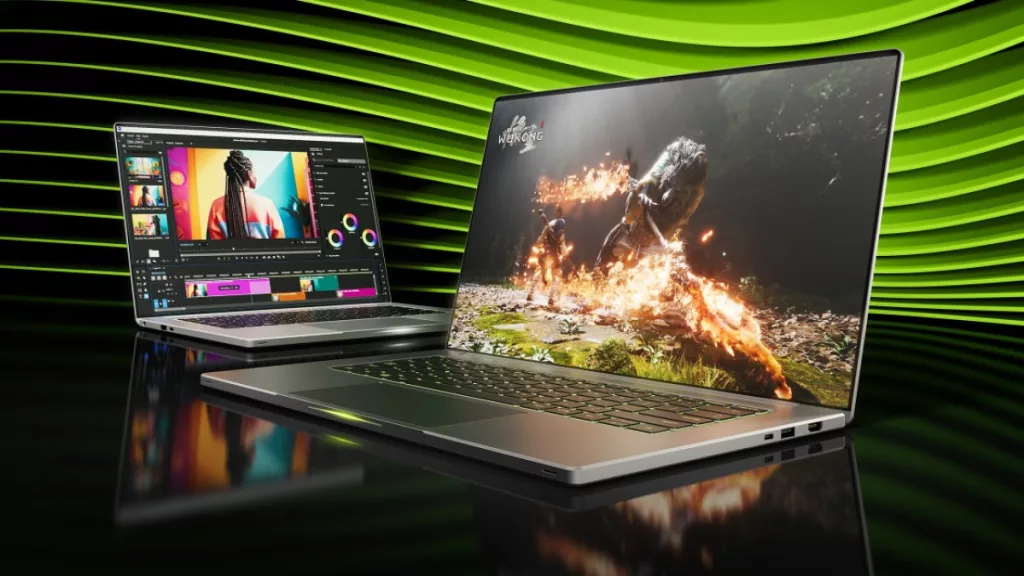
It seems that after months of silence regarding the collaboration between NVIDIA and Mediatek, we could soon see the launch of its Arm-based laptops. It’s been several years since the first rumors that NVIDIA and Mediatek were working together to develop an Arm-based SoC that could be used as a solution for multiple mobile applications ranging from laptops to gaming handhelds, and if the latest report from the Wall Street Journal (via VideoCardz) proves to be accurate, we may finally see it come to the consumer market.
“People familiar with NVIDIA’s supply chain said PC makers including Dell Technologies and Lenovo were working with the chip maker on models using the NVIDIA-Mediatek system-on-a-chip, which is built on architecture from U.K. chip designer Arm.”
– The Wall Street Journal
The report adds that the first models featuring the new SoC, which would feature an Arm-based CPU paired with NVIDIA-based RTX Grace Blackwell graphics and an NPU, will be launched in the first half of this year. There’ve already been leaks from Lenovo and Dell; it’s believed the package powering them is the N1/N1X processor, which is based on NVIDIA’s GB10 “Super Chip” found in its DGX Spark AI mini PC, which also means support for LPDDR5X memory. The scaled-down flagship N1X will supposedly feature a 48-core iGPU paired with a 20-core ARM64 CPU, which is a variation of the Cortex-X925 that is capable of up to 1,000 TOPS (FP4), but is designed for even greater power efficiency.
It remains to be seen how well these chips will run x86-based applications, as they are likely to use a version of the custom DGX Spark Linux OS that is based on Ubuntu, but given the resources of NVIDIA and Mediatek, the two could have made further modifications similar to what Steam has done with its Proton-based OS for the Steam Machine. Meanwhile, the only other major competitor in the laptop market to be using an ARM-based processor is Samsung. The electronics manufacturer continues to evolve its Snapdragon processors, which can run Windows applications and games with varying results via emulation, but overall performance is more of a case-by-case scenario than a point-and-click approach of expecting things to work as they would on an x86 system.
Discussion (19 replies)
Join Discussion →If anyone can make ARM pc gaming a reality it's nvidia, thing is they already failed twice. 3rd time the charm?
linux & not windows right ?
needs to run bazzite / pop!_os with FEX
Could be running WoA. If they want to actually sell them in any quantity they're going to have to offer it with WoA.
Linux is fine if you know how to Linux. 99.9999% of people buying laptops don't know how to Linux.
WoA
From what I know, the CPU translation with WoA is actually not bad, it's the DirectX translation that is poor, apparently because Qualcomm drivers suck. If nvidia manages to release good drivers, who knows... it just might do.
I don't expect them to be affordable at all.
Well, here you go. Optimizing Linux>Vulkan>Proton, basically following the footsteps of the Steam Machine OS.
[embedded media]
It's amazing how much Steam's work has done to potentially open up the market to a wider breadth of devices if not cost tiers.
Totally agree. I ran out of time when I was doing this post but I was thinking of including something acknowledging what it has done in expanding Linux's use but also what these laptops could also do.
For my next personal laptop I will want something portable, light, performant and with a long battery life. Doesn't need to be a gamer but being able to game on it would be nice. So far signs are pointing to a MBP of the 16 inch variety.
Steam Deck says hi. You could easily never have to fuss with Linux directly on it at all if you just wanted to use it as a handheld. Valve has done a good job with SteamOS and keeping it focused.
So I realize you are particularly aiming at laptops - just saying there's nothing, apart from Valve not making a general distribution of SteamOS, preventing a laptop from running that.
It's 90% of the way there now with Steam on Linux and Big Picture Mode with certain distros.
That's fine....for Steam. Most people aren't buying a laptop to Steam.
Can it run productivity apps, easily? Microsoft specifically since Office products and Teams are near essentials for what people do these days. Are you going to fight with having to track down specific drivers and be forced to install them in some convoluted way to get your devices to work? Follow these easy console steps to sudo your way in to getting something done.
Am I going to be able to hand one of these things to one of the 10,000 doctors I support and they'll easily be able to function with it? Or are they going to throw it in the trash in less than 5 minutes because they can't get their Dragon mic to work with dictation by simply plugging it in? Something that works on their Surface laptop.
If they're going to market something as a general use laptop to the masses it should be masses compatible. That means catering to the lowest common denominator. I don't see Linux as being that. Not in it's current state.
That's a fair statement I don't think the first blush should be for the masses. If they are smart they will get with someone that can make a board for the soc solution then sell it to their laptop owners to swap out. Fractal or something I think is the maker name... here I come google...
Framework.com If Framework released a laptop and for current customers board that people could tinker with this with for not an obscene price I'd be tempted to see if my company wanted to play with one.
You have a good point about Microsoft products in particular, but... most popular Linux distros have open source apps that do everything that Office supplies. It just lacks the licensing for full cross-compatibility. Often available to be pre-installed - Mint, for example, can be installed with the full LibreOffice suite from the distro installation.
Most drivers and stuff are pretty easy any more too - APT, YUM, and other package managers are way better than Windows Update, Windows Store, Xbox Update, Office 360 Update, and whatever else Microsoft has all kludged together to keep their ecosystem patched. You can run it CLI, there are many GUIs, and you are able to drop down to as much, or little, detail as you want to know.
If you need Teams... well, you need Teams. But if you just need "A good word processor" - well, there's a ton out there other than Word that are mostly as good.
Sure, you can still find distros where you have to hand-cobble together things. But many modern distros are slick, polished, and ready for prime time. SteamOS is just one good example - it doesn't try to be a Jack-of-all-Trades, it just tries to be a good gaming interface, and it does that extremely well.
But, to actually answer your question - SteamOS can drop to a Linux Desktop and yes, you can run productivity apps, easily, even on a Steam Deck.... It has a Flatpak-based Discovery Software Center and it's one-click install for any app there.... and if you actually needed Teams, it's possible to run that through the Web, but I'll admit that isn't as easy or convenient as a native application.
Open source will not cut it for productivity apps. You need to natively run office from MS. It's manageable, gives easy backup (one drive) and multiple device continuity for documents. All of that is important in an enterprise space.
when you start running equivelant software MS makes updates that break it then it's a game between the app makers.
I've tried too many times jumping to linux, but I always go back. I'm just too deep into MS infrastructure.
years ago, back when nvidia linux drivers rocked and AMD sucked, I did a 30day challenge installing ubuntu (back when ubuntu was cool) on my main rig. It wasn't a bad experience, but I saw little reason to keep it and went back to windows 7. Every time I make the switch, I see no reason to stay.
That's how they hook you.