
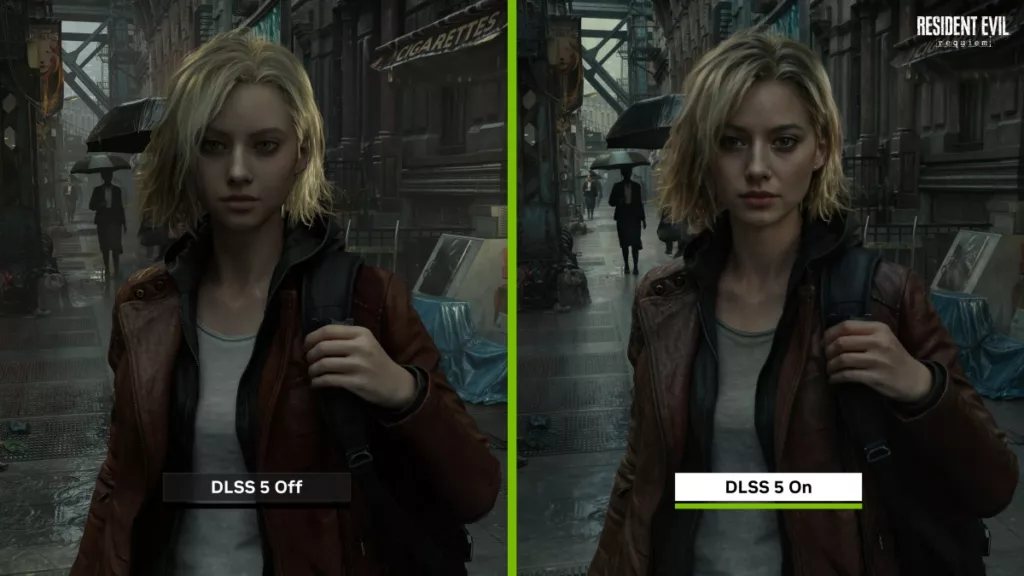
Resident Evil Requiem has been in players’ hands for nearly a month now, and with review embargo data, post-launch benchmarks, and community performance reports all settled, it is worth stepping back and delivering a clear picture of how this game runs on the PC you actually have.
The game launched February 27 on PC via Steam and the Epic Games Store, powered by Capcom’s RE Engine with a full DirectX 12 Ultimate implementation requiring Windows 11. Minimum spec calls for 16GB of RAM, which is a hard floor. Capcom’s PC optimization record has been strong lately, and Requiem delivers on that tradition: without ray tracing or path tracing enabled, the game runs exceptionally well across a wide range of hardware.
DSOGaming’s performance analysis found that an RTX 2080 Ti could maintain over 60 FPS at max settings in rasterized mode at 1080p, which is genuinely good scalability from a game that looks as sharp as Requiem does in its base presentation. The RTX 5090 cleared 120 FPS at native 4K ultra settings without ray tracing. Once you enable path tracing, however, the picture changes dramatically. Path tracing at native 4K drops even an RTX 5090 to the mid-20s at max settings. With DLSS 4.5 Performance mode on an RTX 5080, DSOGaming measured around 50 FPS average at 4K with path tracing active, which forms a workable baseline for Frame Generation to build on.
One performance quirk worth flagging: both DSOGaming and WCCFTech documented a frame rate drop tied to rapid camera movement in specific areas. It appears to be a bug rather than intended behavior, and Capcom has not yet confirmed a patch for it. Outside of that specific issue, the game compiles shaders on first launch and runs without meaningful in-game stutter once through that process.
An important note for AMD users: path tracing in Resident Evil Requiem is NVIDIA-exclusive. When path tracing is enabled, the game forces NVIDIA DLSS 4.5 and Ray Reconstruction automatically. AMD GPUs are locked to rasterized and ray-traced modes, with FSR 4.0 available for upscaling. Intel Arc users have no FSR or DLSS integration in Requiem at all, and Pearl Abyss’s separate game Crimson Desert similarly launched without Intel Arc support, which represents a concerning pattern for Team Blue’s growing player base.
For enthusiasts, the sweet spot in Requiem appears to be ray tracing enabled, High or Ultra settings, with DLSS/FSR upscaling in Quality mode and 4x Frame Generation active if your GPU supports it. That configuration hits high frame rates on mid-range to high-end hardware while keeping the visual quality well above the base rasterized preset.
Discussion
Join Discussion →No replies yet. Be the first to reply on the forum.