
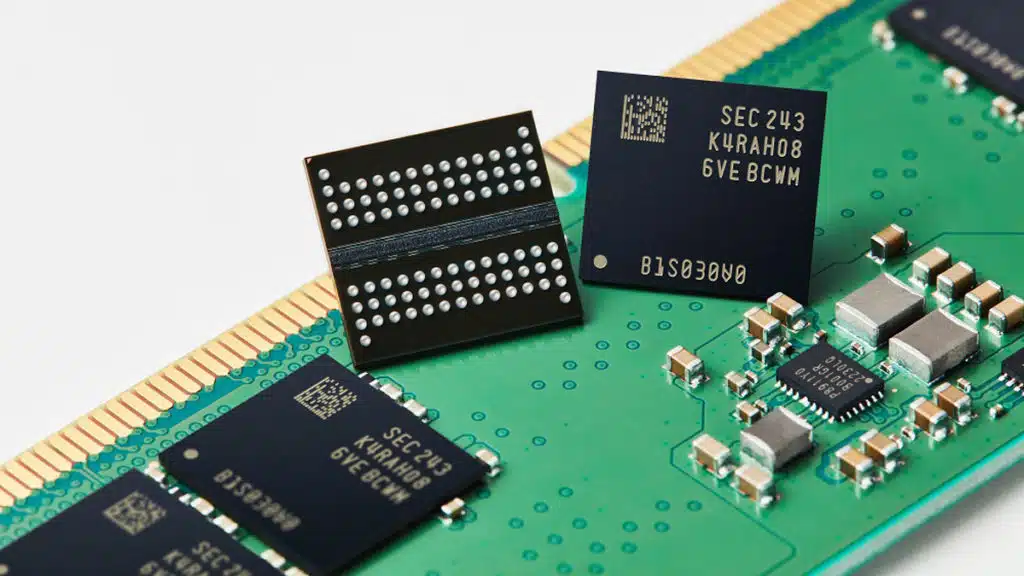
Sometimes schadenfreude has educational value. A video circulating on Chinese social media this week shows a memory vendor in Shenzhen’s Huaqiangbei electronics market standing in front of a warehouse stacked high with DDR5 modules, delivering a despairing monologue: “Brothers, memory prices have taken a massive dive. We’re stuck with it, stuck with it. We’re doomed, we’re screwed. Is there still any chance for the price to go back up?” (Ed: Do you realize this was posted on April 1?)
Over the past several months, the structural memory shortage driven by AI demand and HBM reallocation has pushed DDR5 prices up dramatically at the contract level. Retail buyers and gray-market speculators (scalpers) in China responded the way speculators always do: they front-loaded purchases, betting prices would continue to climb. For a while, they were right. But the retail and spot market is not the same as the contract market, and a correction has been building.
TrendForce adds context: the sharpest price declines are concentrated in the secondary market, covering spot-traded, pulled-down, and recycled modules, not original IC-based product. The structural contract pricing that governs what OEMs and system builders actually pay, which we’ll get to in a moment, is still projected to rise 58 to 63% in Q2. These two data points are not contradictory. The gray market corrects faster because it is thinner and more speculative. Once the panic-buying-driven premium evaporates, the speculators who bought near the peak get stuck holding the bag.
Moving back to the side of the memory market that’s still headed to the moon, Trendforce also released its weekly pricing survey, projecting that conventional DRAM contract prices will rise another 58% to 63% quarter-over-quarter in Q2 2026, while NAND Flash contract prices are set to climb 70% to 75% QoQ. If those numbers feel familiar, that is because Q1 already delivered a record 90% to 95% jump in DRAM contracts.
North American cloud service providers are accelerating AI inference deployments at scale and have locked in long-term purchase agreements with suppliers, giving them priority allocation over everyone else. High-capacity RDIMMs for AI servers have become the primary procurement target at Samsung, SK Hynix, and Micron, and those companies have little incentive to redirect supply downmarket when hyperscaler contracts offer superior margins.
Where does this leave us? Our wager is on we’re cooked and we’ll see continued price hikes for a bit longer. Let us know if you agree or disagree in the forums.
Discussion (1 reply)
Join Discussion →Lets hope the issue spreads. :)