
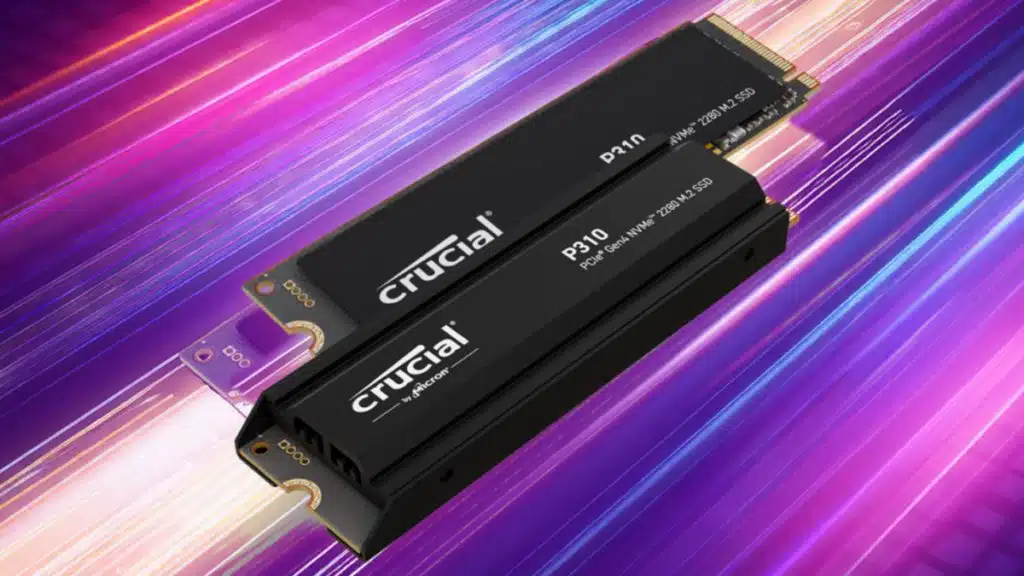
Recent consumer purchasing trends are painting an interesting picture as gamers adapt as best they can during the current DRAM/NAND shortage. For anyone asleep at the wheel, the PC enthusiast sector saw significant price hikes in memory last summer. Since then, NAND chips have also been added to the mix, and so SSD prices have also risen, leaving consumers with tougher choices. Whether buying a complete PC, upgrading older systems, or building from scratch, folks are at a crossroads about what compromises they are willing to make amid the current chip shortages.
Lexar Europe General Manager Grace Su spoke with Digital Foundry on the topic of current market trends regarding memory and storage purchases, where an interesting pattern has emerged. According to Su, Lexar has seen that consumers have, for the most part, shown no interest in buying SSDs with 512 GB or less storage capacity but are willing to compromise with smaller configured RAM kits. Furthermore, unsurprisingly, Gen4 drives have become a staple as Gen5 drives’ prices see greater increases. Gen3 SSDs were not tracked, but shouldn’t be completely written off since they still offer competitive performance for most users. An almost laughable option, as shared by Su, is that it appears some would rather hold onto their hard drives rather than switch over to an SSD with 512 GB or less of storage. Meanwhile, 1TB and 2TB drives are the most widely bought.
In terms of memory kit purchasing trends, specific kit sizes were not mentioned, but it’s assumed that 16 GB kits are believed to be the current top seller. Most users can still get by with minimal to non-existent performance loss when gaming with 16 GB of DDR4 or DDR5 memory. For some time, 32 GB was a more optimal path, but thanks to the current shortage, prices for those kits have become much less attractive, and anything higher is now more of an extravagant luxury, with folks eyeing 128/256 GB at nearly unreachable costs.
So, to sum it up, current trends are that most users are not willing to buy storage drives with less than 512 GB but will compromise with less RAM.
Discussion (7 replies)
Join Discussion →Unsurprising. The system has a fallback for not enough ram, but there is no fallback for too little storage...
I'd love to see priorities by budget tier.
My expertise says gamers will just start buying consoles instead of building expensive PCs until prices come way down.
or they just wont upgrade to a new platform requiring new RAM.
GPU - Covered by selling kids into indentured service for a couple of years
RAM and Storage - Spouse will offer a kidney
The rest can be put on plastic.
GPU - feet pics online
Ram - solo videos
Cpu and mobo - car wash fund raiser.
Storage - only fans.
I have a plan... but it might take a while.. 300lb 50+ men are not in demand for those. ;)
-OTOH you can corner whatever market there is for that demographic.
1 million customers split one way is certainly better than 100 million customers split 1 million ways...
I think you mean... OTOF. ;)