
DLSS 5 has been hogging the spotlight since it arrived in NBA 2K27. NVIDIA’s latest developer drop has a quieter update that’s likely to matter more for the games you’ll actually play this fall.
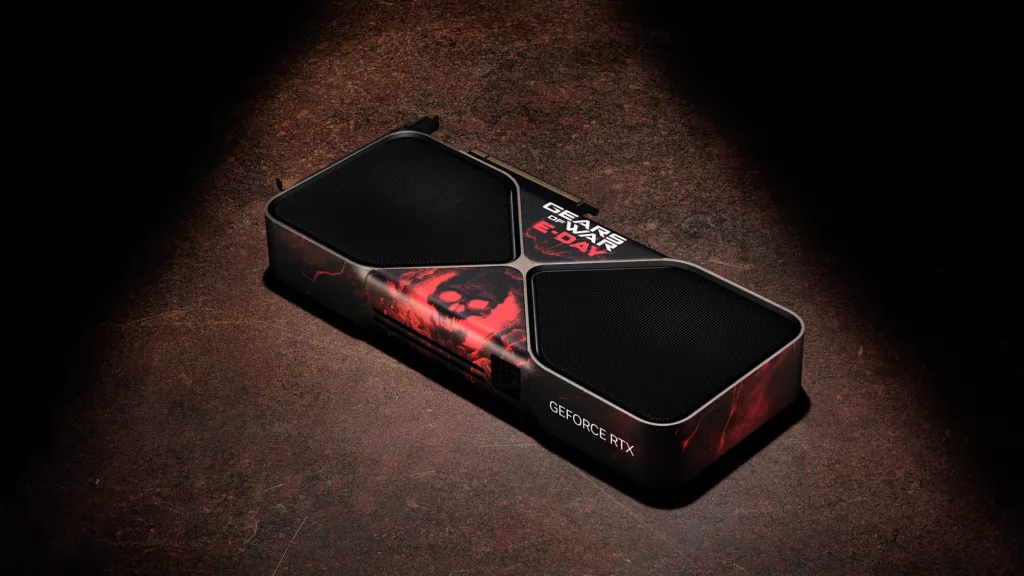
In its September 22 developer blog, NVIDIA announced RTX Mega Geometry SDK 2.0, which adds streaming of continuous level-of-detail clusters for high-density meshes. It’s demonstrated in a new textured glTF version of the Zorah asset, and the SDK is on GitHub. NVIDIA says Mega Geometry is coming soon to Gears of War: E-Day, promising higher frame rates and image quality on GeForce cards. It also sat down with The Coalition’s Kate Rayner and Mike Perzel to talk through the game’s Mega Geometry and DLSS integration.
RTX Kit itself moves to version 2026.3:
- RTX Neural Texture Compression 0.10 beta adds support for the DirectX 12 Agility SDK preview with Linear Algebra. That enables Tensor Core acceleration for neural texture decompression directly in DirectX shaders, and adds Windows ARM64 support.
- RTX Dynamic Illumination 3.1 adds DLSS Ray Reconstruction integration and ReSTIR PT improvements.
- RTX Character Rendering 1.4 improves far-field hair sampling and energy conservation.
- RTX Neural Shading 1.4 and RTX Texture Filtering 1.3 update toolchains. Texture Filtering adds Collaborative Texture Filtering and ARM64 support.
On the DLSS 5 side, NVIDIA spells out the developer controls. Studios can choose among several models and mix them across scenes, gameplay and cutscenes. They can adjust Structure Intensity and Tone Intensity, use semantic AI masking, and apply engine-level masks to props like glassware, water droplets and foliage. NVIDIA describes the model as deterministic, one-frame-in and one-frame-out, running locally on a single RTX 50 GPU at up to 4K. It also notes that richer input such as path-traced lighting yields dramatically more accurate results. NVIDIA ACE picks up Nemotron Speech 3.5 Streaming and Qwen3 TTS, and its in-game inferencing SDK adds an RTX Spark developer preview and Gemma4.
That’s a lot of knobs, and they arrive after users already built workarounds. DLSS 5 Autopilot lets players tune the neural rendering to cut its performance and power hit. For context on E-Day, its PC requirements start at an RTX 2060.
With VRAM tight and memory pricing ugly, anything that shrinks texture footprints without a quality hit helps every GeForce tier, not just RTX 50. Mega Geometry in a marquee Xbox-published PC release is the other big deal. When E-Day ships with it, we’ll finally see whether cluster streaming delivers outside a tech demo.
Discussion
Join Discussion →No replies yet. Be the first to reply on the forum.