

New mods for older RTX GPUs have unlocked upwards of twice the compute potential for Linux users and essentially do an end run on their built-in firmware limitations. NVIDIA has long been known to impose artificial limitations on its graphics cards, particularly its consumer lineup, while offering professional-grade products with features and GPUs fully unlocked. However, on the modding side of things, there’ve always been users seeking to reclaim any performance still left on the table, and while there are definitely various means of doing this, some with risks of damaging a graphics card, compute potential has largely been left untouched since many users are more focused on gaming-related goals.
Well, that’s no longer the case, and users with GA102, GA103, GA104, and GA106 dies can now employ a mod to potentially double performance with FP/BF16 FMA in FP32 operations. This is relevant as these operations are commonly used in neural networks. Something that makes these mods special is that they do not alter the driver and instead override the PCIe Function Level Reset (FLR). What’s more is according to reports board power remains the same and while gamers are accustomed to various rendering tasks incuring geater draw it should be remembered how server GPUs often use blower-style coolers, which are not as effecient in cooling high-powered GPUs, thus proving how compute tasks tend to not require as much power.
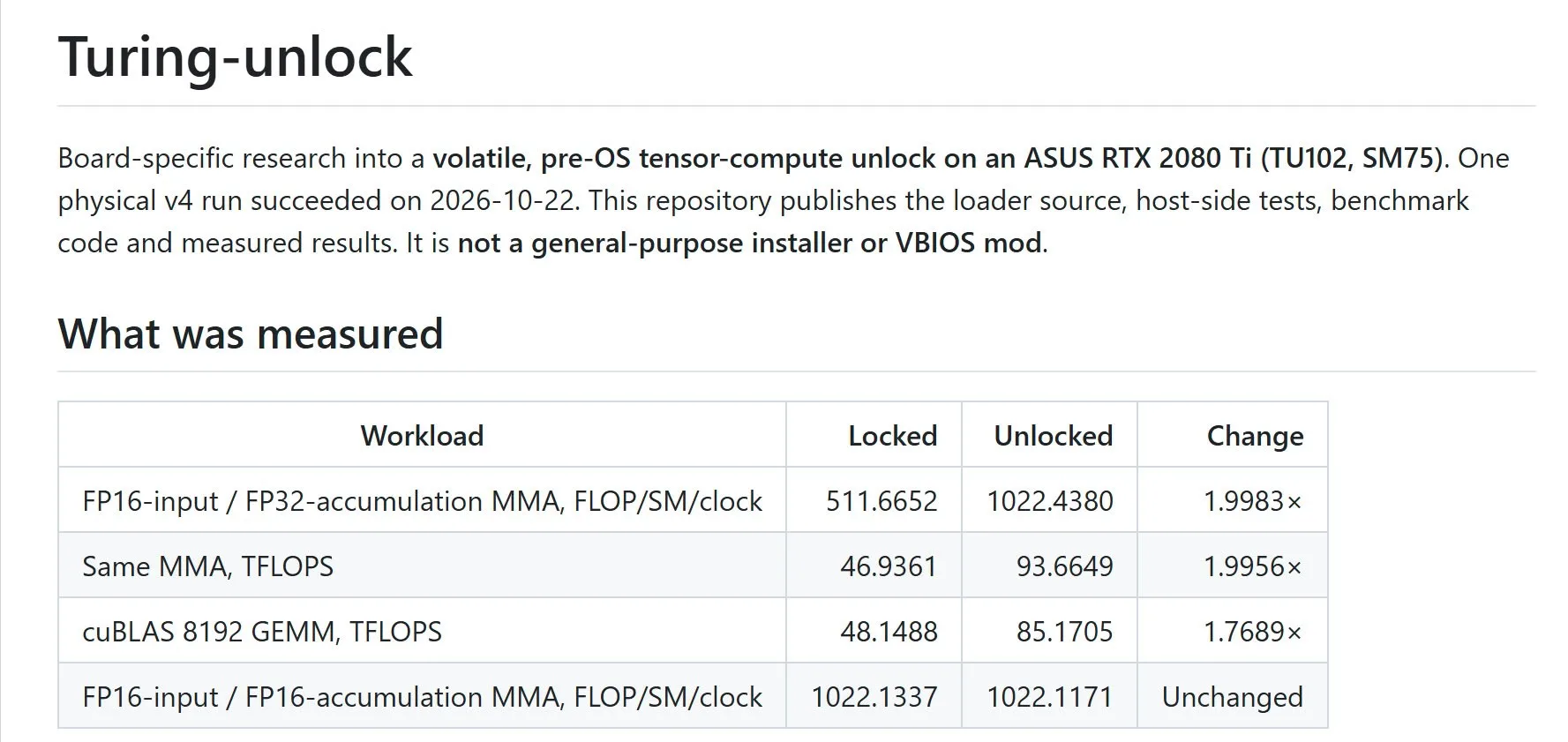
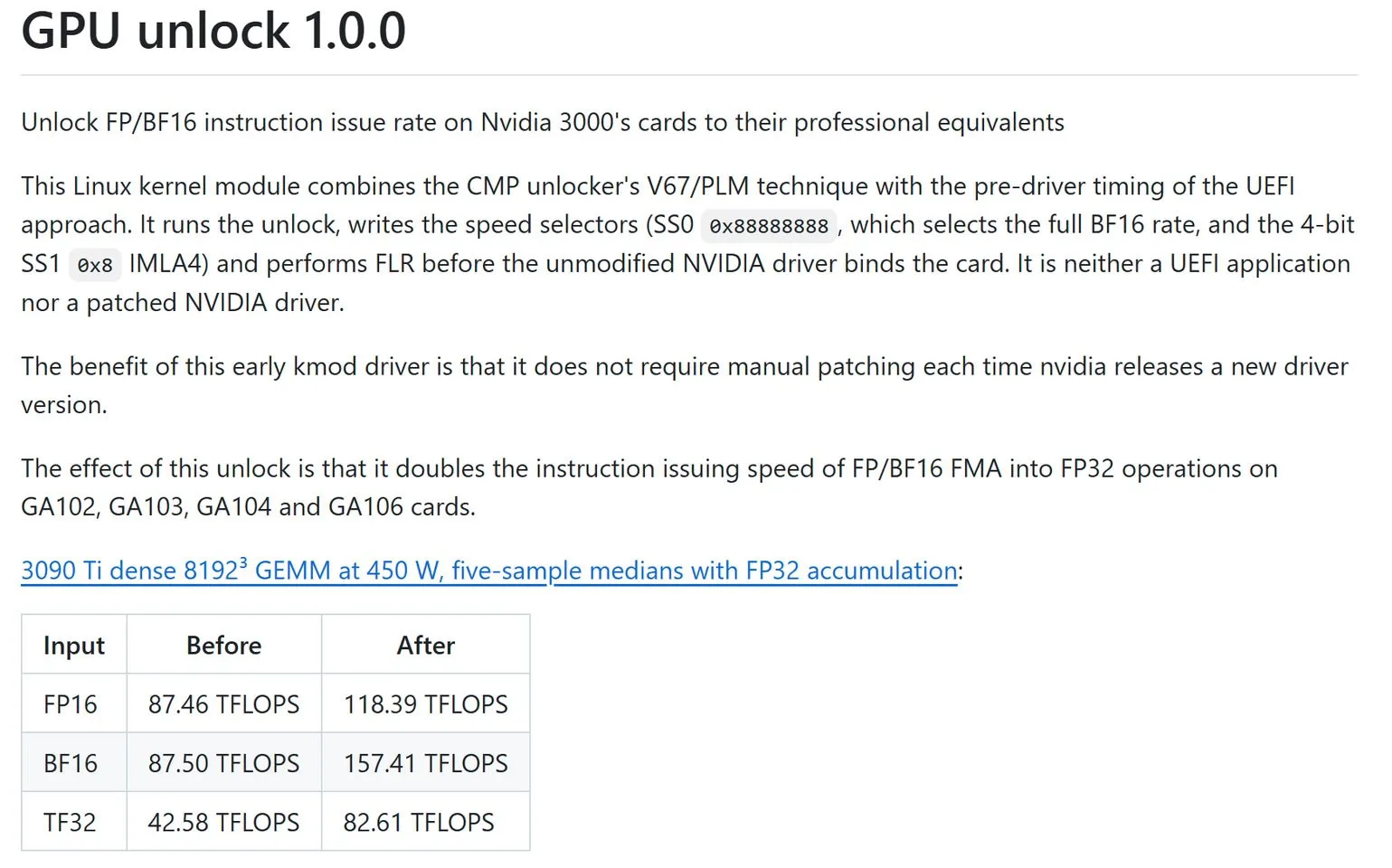
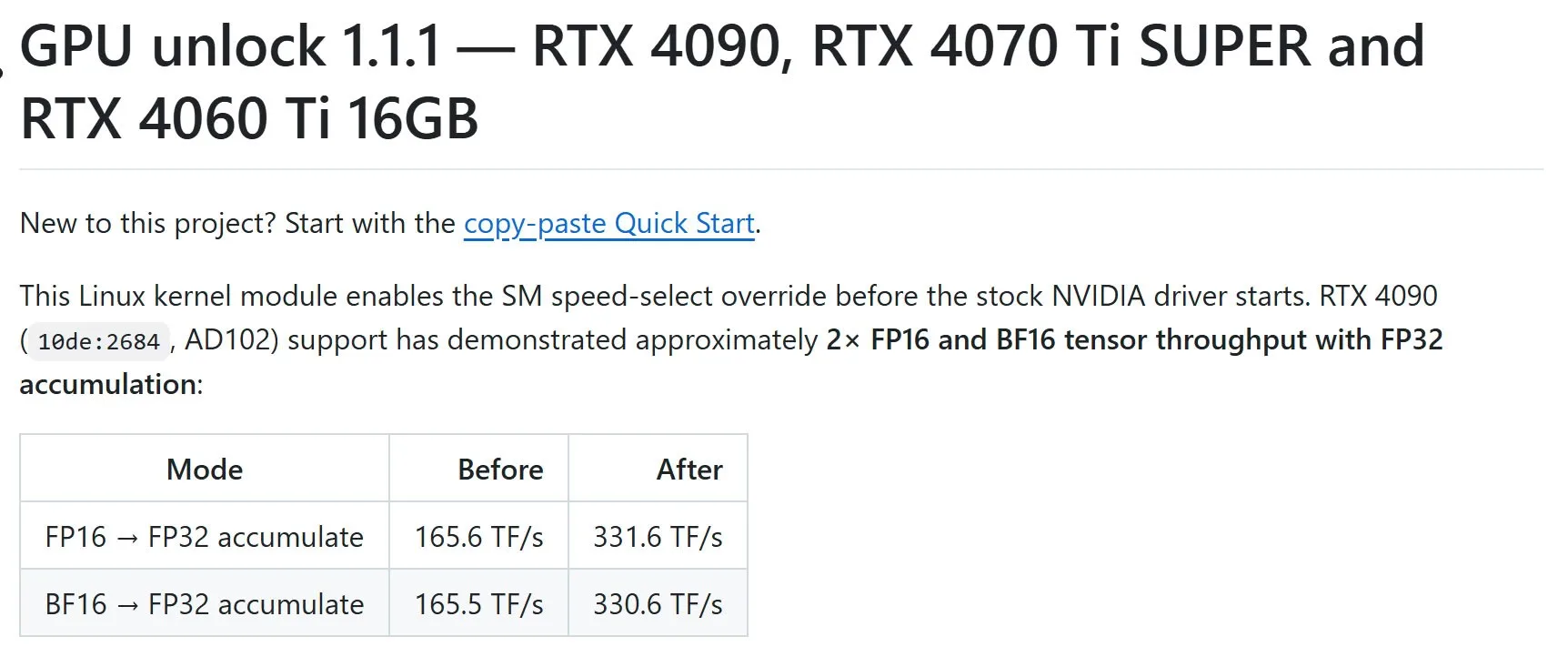
Links for these GPU unlocks can be found at TechPowerUp, but gamers hoping to double their framerates should look for other solutions as compute performance normally does not play a major factor in overall gaming performance. Now, it’s not to say that it can’t, but it is not normally a contributing factor outside very specific tasks. Another example of this is how, when testing in gaming tasks, NVIDIA’s RTX 6000 didn’t necessarily crush the RTX 5090 as some might expect it would, given its unlocked die and added memory.
Discussion
Join Discussion →No replies yet. Be the first to reply on the forum.