
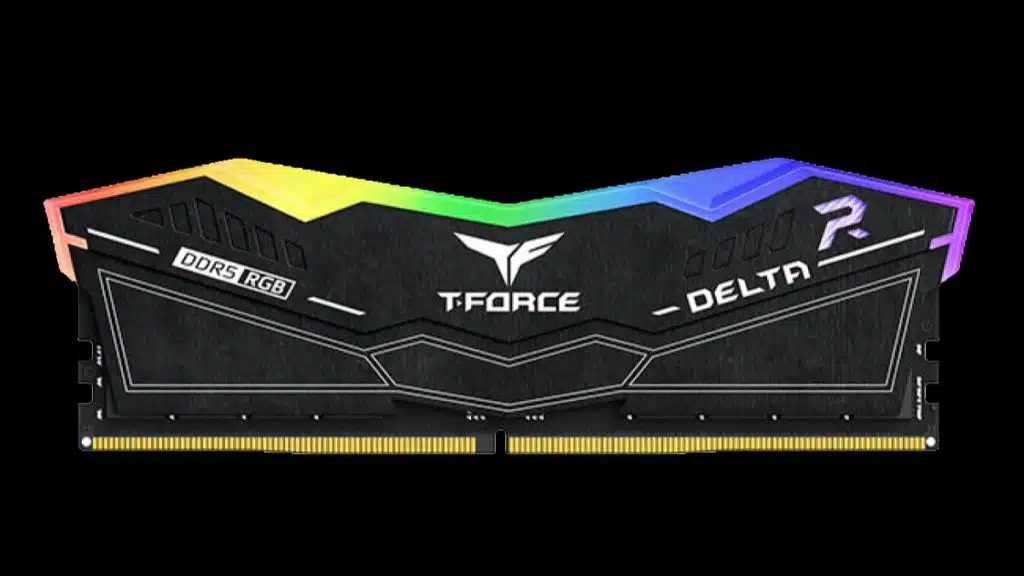
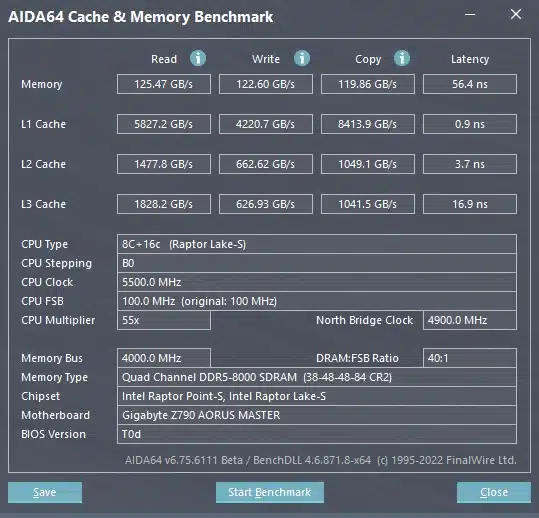
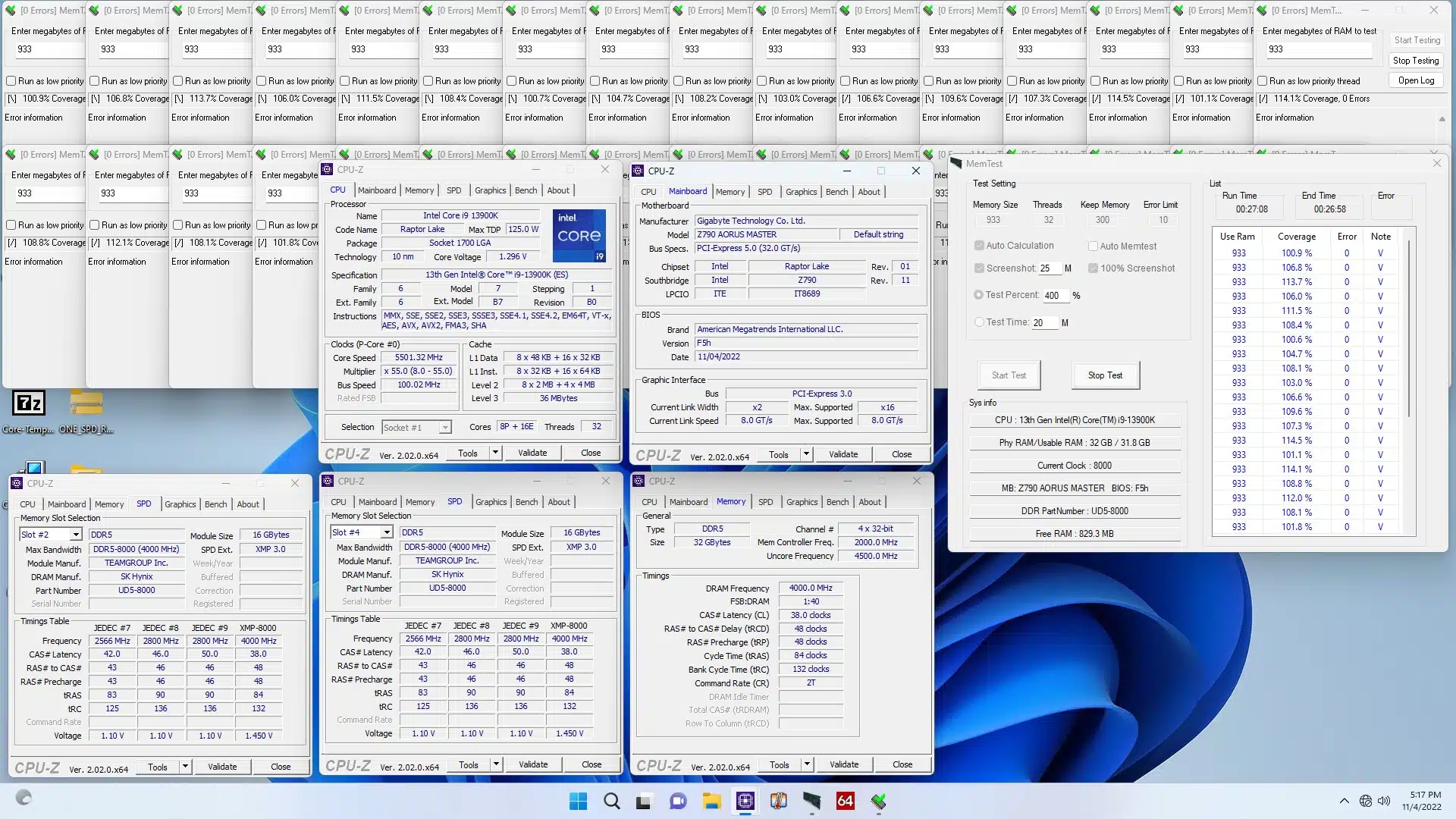
GIGABYTE and TEAMGROUP have announced that they have achieved XMP DDR5-8000 on Z790 AORUS XTREME and Z790 AORUS MASTER motherboards. AIDA64 and CPUz results show that an Intel Core i9 13900K 8C/16T Raptor Lake-S CPU running at 5.5 GHz was used. Reported memory transfer speeds were 125.47 GB/s (Read), 122.60 GB/s (Write), and 119.86 GB/s (Copy), with a latency of 56.4 ms. Timings for the SK Hynix A modules were 38-48-48-84 at 1.45v.

It’s always been challenging to constantly exceed the high-frequency record of memory, and stable motherboards and high-performance memories make a perfect team to accomplish this difficult task. To provide superior performance and user experience, GIGABYTE has been working closely with TEAMGROUP on the record-breaking performance from DDR5-7600, DDR-7800, to XMP DDR5 8000. The detailed memory information is listed in the memory support list of the motherboard, users can check on the site for the best performance matrix on the Z790 platform.
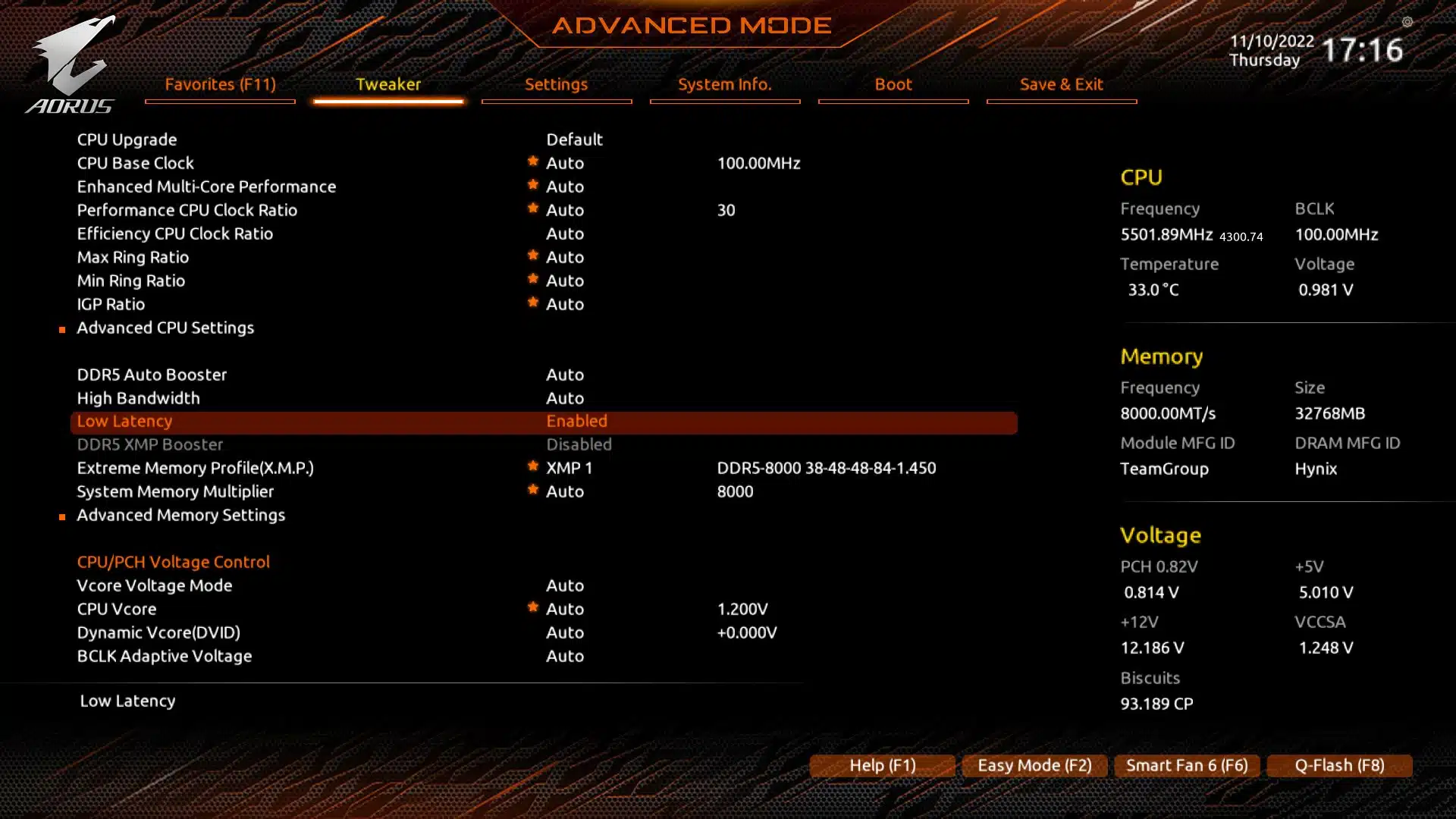
“Meanwhile, GIGABYTE’s exclusive Low Latency and High Bandwidth features can further raise total bandwidth while reducing latency on XMP memories to provide superior memory performance without changing the memory clock. Enhanced with the new generation Shielded Memory Routing and low signal-loss PCB design, the internal and external signal loss or interference are effectively reduced to ensure blasting-fast DDR5 memory speed and lead to the breakthrough performance of XMP DDR5-8000 with T-FORCE DELTA RGB DDR5.“
GIGABYTE and TEAMGROUP have each been working to push the limits of what users can expect from DDR5 memory out of the box. GIGABYTE recently announced it managed even higher speeds with overclocked memory on its Z790 AORUS TACHYON motherboard where it achieved XMP DDR5-8333 and DDR5-9300, with air cooling. While DDR5 may still be in its early stages of adoption, and still quite expensive, it clearly has a growing potential for the fastest, most stable, speeds seen yet for off-the-shelf memory.
Discussion (6 replies)
Join Discussion →So, an important bit - this is DDR5-8000 on four-DIMM Z790 motherboards.
8000MT/s is still a stretch for current DDR5 ICs, and will require higher voltages than JEDEC spec while having worse first-word latency than ICs that don't clock as high - and AMD Zen 4 CPUs seem to be stuck at 6400MT/s at the very max with the best results seen at 6200MT/s due to how AMD set up the memory controller at release.
Still, with better memory ICs and lots of BIOS tuning, it looks like DDR5-8000 is about to be well within reach of more pedestrian setups and on its way to becoming affordable.
I admit I'm still pretty torn about what my next build will be. I keep telling myself to be patient and wait until around Feb. when it's rumored that AMD will unveil its next batch of X3D processors but meanwhile I like a number of things about Z790/13900K. I'll have no desire to push to 8000 but 7200-7800 sounds promising.
I'd wait. I came from a 9900K and was ready for an upgrade; but your 5800X3D isn't going to slow you down for gaming, and the platform upgrade cost is intense.
And really, kind of want to see what the next gen has to offer. AMD has their expected 3D V-cache version of Zen 4, but until we know more about the available SKUs (they stopped at a single eight-core with Zen 3) as well as the impacts / advantages, it's hard to say whether the AM5 is worth committing to at this time. It's clear that they're going to need an improved I/O die to make the most out of DDR5, which while not a big deal for gaming with 3D V-cache, can certainly limit productivity scaling.
Right now... all the boards are expensive, and are overbuilt in ways that increase cost but offer little performance benefit over more pedestrian boards (talking Z790 and X670E). As a personal example, I grabbed a fairly expensive Z690 board for my 12700K - Gigabyte's Z690 Aero D - as it had all the features I was looking for. Unfortunately, it was plagued by a problem that made it unusable, and as a replacement I wound up with MSI's Z690 ACE, technically a higher-performance board - but with fewer of the features I actually care about (it lacked the 10Gbit networking of the Gigabyte board), and it was nearly 50% more.
But that's me. I don't think my requirements are that crazy, but to get the features I want that have nothing to do with processor / system performance the cost is either very high (over US$400), or crazy - US$800+. Stuff like ASUS' Maximus Z690 Extreme that @Dan_D is running, MSI's Godlike (even more expensive) or ASRock's Z690 Aqua OC, the only board that has my exact desired featureset for LGA1700, Z690 or Z790 - and it's on sale for >US$800.
It's the 4930K that I'm replacing. Still pretty solid but seeing some lag here and there these days.
Yeah, I'm not looking forward to the prices no matter which direction I go. I already let the wife know that I'm planning to do it this summer and thinking around $1K-$2K. Unlike most of the last 10 years, this is going to be a mostly from-the-ground-up build (sans GPU since I'll keep a 3090 Ti in it) which will hurt the wallet but is meant to last a very long time.
Yea upgrading that CPU should unlock some serious performance in your 3090ti. I remember when I upgraded my 2700k?? to a 9900k cpu. Night and day.
I'm definitely lucky to have the two rigs to bounce between but it really blows my mind seeing the difference. The 5800X3D will plow through many things in the 70-100+ range while the same games with the same settings, will hover around 60 FPS on the 4930K rig. It's been awesome for the last decade but time to move on (from the cave). I still have my 3090 Suprim (just couldn't find it in myself to try and sell because it really is an amazing card) and will probably re-purpose this rig to another room with it and hook it up to the CRG9 for those days I want to game in 32:9 on that computer desk I got last spring. I've already been looking forward to how nice that'll be.