
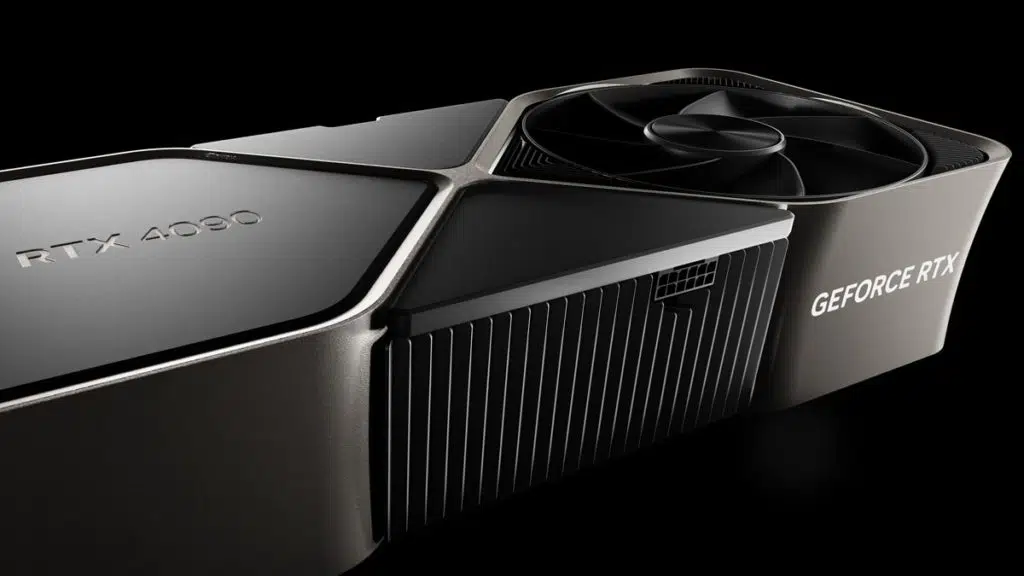
A GeForce RTX 4090 user has decided to sue NVIDIA after paying $1,599.99 for the flagship graphics card from Best Buy and later discovering that its 16-pin power adapter had melted, according to a new case spotted on legal resource Justia (Genova v. NVIDIA Corporation) that lists Lucas Genova as the plaintiff.
Filed in a California federal court on November 11, the lawsuit alleges that NVIDIA “marketed and sold the RTX 4090 with a defective and dangerous power cable plug and socket, which has rendered consumers’ cards inoperable and poses a serious electrical and fire hazard for each and every purchaser,” according to filings seen by Tom’s Hardware, which noted that the class action lawsuit appears to be brought on behalf of Genova himself and anyone else who purchased a GeForce RTX 4090.
User feedback and photographs that stem from the “16 Pins Adapter Megathread” on r/NVIDIA can be found in the document to support Genova’s claims. The thread, which has received over 3,200 comments thus far, lists 26 “confirmed” cases of power adapter problems that involve various custom GeForce RTX 4090 graphics cards from the likes of ASUS, GIGABYTE, MSI, and ZOTAC. A link to an incident dated November 13 shows a GeForce RTX 4090 Founders Edition with its adapter burned.
From a Tom’s Hardware report:
The lawsuit states that Genova is suing Nvidia for unjust enrichment, breach of warranty, fraud, and violations of New York’s General Business Law.
The complaint narrates that the plaintiff purchased a GeForce RTX 4090 from Best Buy for $1,599.99. He is reportedly “experienced in the installation of computer componentry like graphics cards” and installed the graphics card following best practices. After installation, Genova eventually discovered that his 16-pin power adapter had melted.
The lawsuit says that “thus, Plaintiff and class members have been hit with a costly double-whammy: a premium purchase price (the MSRP is $1,599) for a dangerous product that should not have been sold in its current state.”
Discussion (19 replies)
Join Discussion →I wish them luck. Nvidia needs to be held accountable. Only way to do that is hit them in the wallet.
Doesn't look like Nvidia is the bad guy in this as much as people want them to be. For the last month there have only been a couple reports of this and none of the tech sites were able to reproduce the melting. Gamers Nexus released their video today of their testing and basically found out its user error. Not seating the connector fully and having the cable pulled taught is what was causing it.
[embedded media]
Its a bad plug used too high in its supposed rating. Steve didn't prove much of anything, only that yes you can make it burn, same as anything. I have a harder time believing that buyers of these cards, which are most likely older, experienced computer people will plug and bend something so poorly as to make it burn, and if its that easy to do, and it looks plugged in fine, then, again, its a bad desing. Nvidia needs to pull the plug on this plug.
That has NEVER happened.
All these lawsuits are a waste of time and money.
It's always the same, settle out of court, nvidia admints no wrong doing, lawyers get millions and users get pennies.
Rinse and repeat.
Well, it's a new plug - and it's even more of a PITA to use. But the idea that users are infallible just doesn't fly.
Users break stuff all the time.
The main problem isn't the plug itself, IMO, but that the cards are all so tall that the condensed cables are difficult to route. That's not a new problem, but it is one that needs to be addressed, either by relocating the socket on the card or by providing more options for cable routing. 90 and 180 degree adapter would be my preferred option, as I use three 180 degree eight-pin adapters for my 3080 12GB - which absolutely can pull 450W.
It's bad design because it's easy to not plug it in completely.
I really hope they come up with something better for next time, as much as I hate changing standards. Best would be going back to standard. Or making just a solid 90° converter, one end is 12 pin, other end is 4x8, all in one piece.
A lawsuit is not always about the money, though but instead, that bad press could lead to bringing in GLOBAL higher authorities eyes into the situation, which could lead into an anti-trust investigation, bring unnecessary worry to their investors due to its future reputation, etc.
This whole plug issue has an Apple's you are holding it wrong flavor. Its really simple and all self evident really. Its a bad plug, its a bad plug in general, its a dangerous plug when used at or near its rated limits. Its not really a discussion, I find it fascinating, and frustrating that people think it is. Don't get me wrong, I am absolutely certain anyone with a brain at Nvidia knows they screwed up, most likely some in there raised they red flag before this thing was decided upon, I would bet my left nut that they had beefier designs, bigger plugs that were rejected, somebody pushed for the smallest possible, they didn't want to look ridiculous with either a huge plug, or tons of the already available 8 pin or some such. That is all that happened. Hopefully this fiasco means the death of this standard, no one smart enough should adopt it knowing the risks.
That's not really a problem. The whole 12VHPWR standard is designed to handle well over 600W at 12V. May even be as high as 1200W transient loads.
I bet it wouldn't melt at 10W
I bet someone will figure out how to do it ;)
Never try to make something idiot proof. They keep making better idiots.
Just remember to give them Gatorade because, you know, its got electrolytes. :cool:
Truer words have never been spoken.
Again, that has NEVER happened. Besides, there might not even be a case if GN investigation is true.