
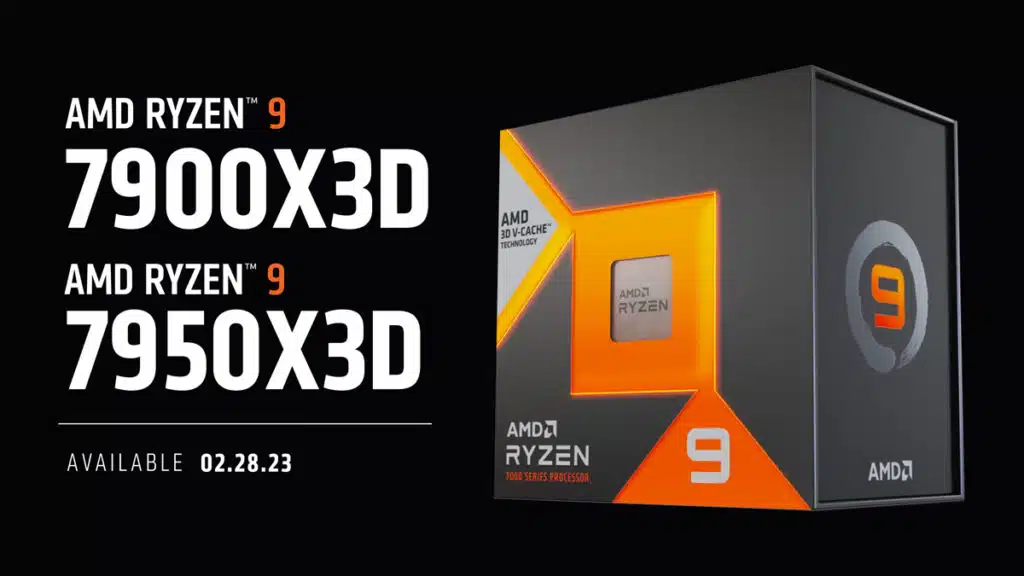
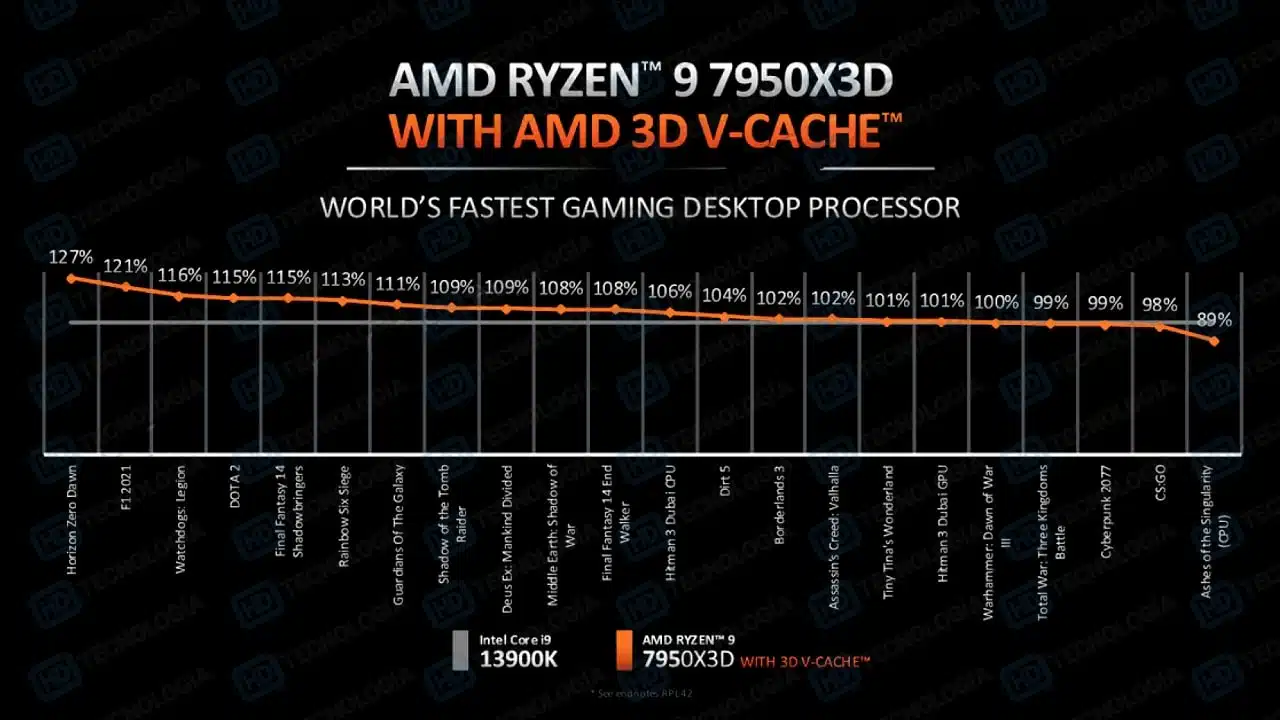
Official slides and review guides for the AMD Ryzen 9 7950X3D have leaked out, offering an early glimpse at how red team’s flagship Ryzen 7000 Series CPU with 3D V-Cache compares with the 13th Gen Intel Core i9-13900K. If AMD’s own testing is to be believed, the new processor is around 6% faster than the standard Raptor Lake flagship and up to 16% faster than the Ryzen 9 7950X, offering up to 27% better performance in the 1080p resolution versus Intel’s chip in select games that include Horizon Zero Dawn under certain configurations. The AMD Ryzen 9 7950X3D ($699) will be available alongside the Ryzen 9 7900X3D ($599) next week on Tuesday, February 28, 2023.
From an HD-Tecnologia report:
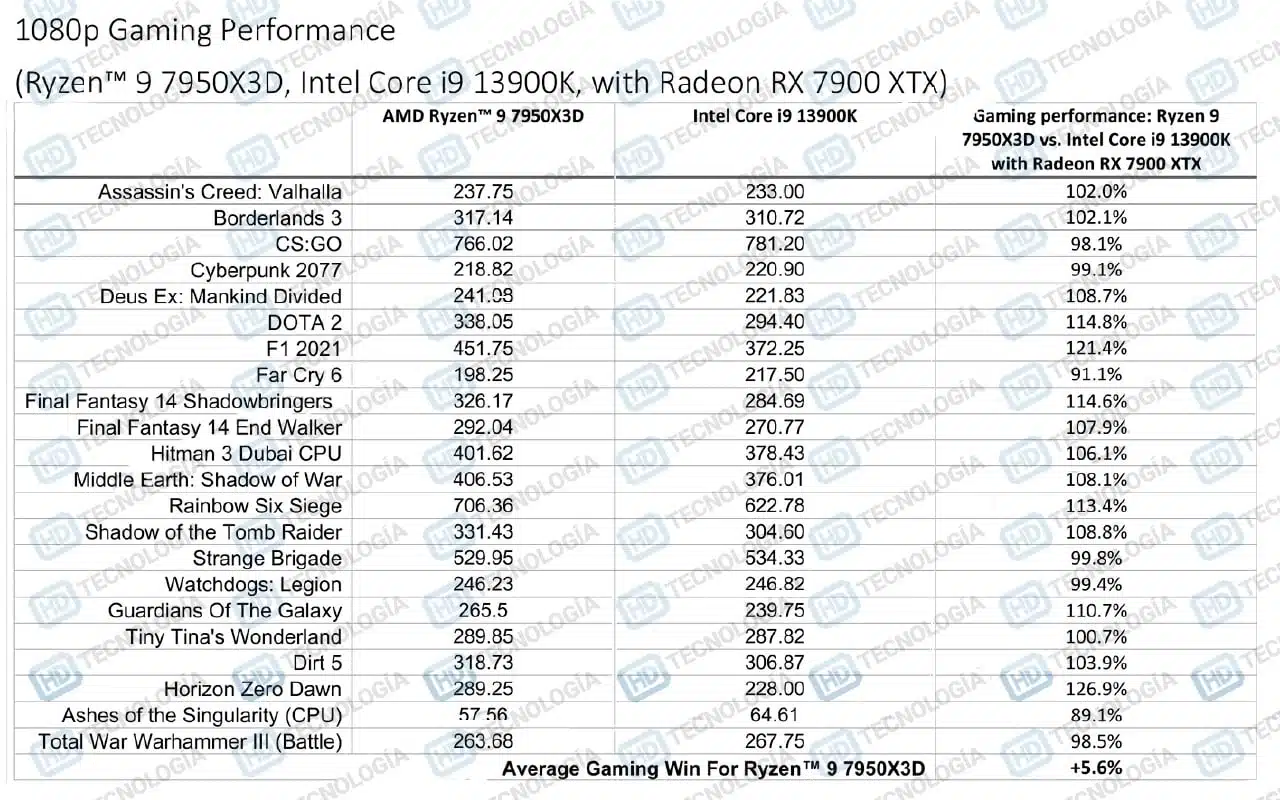
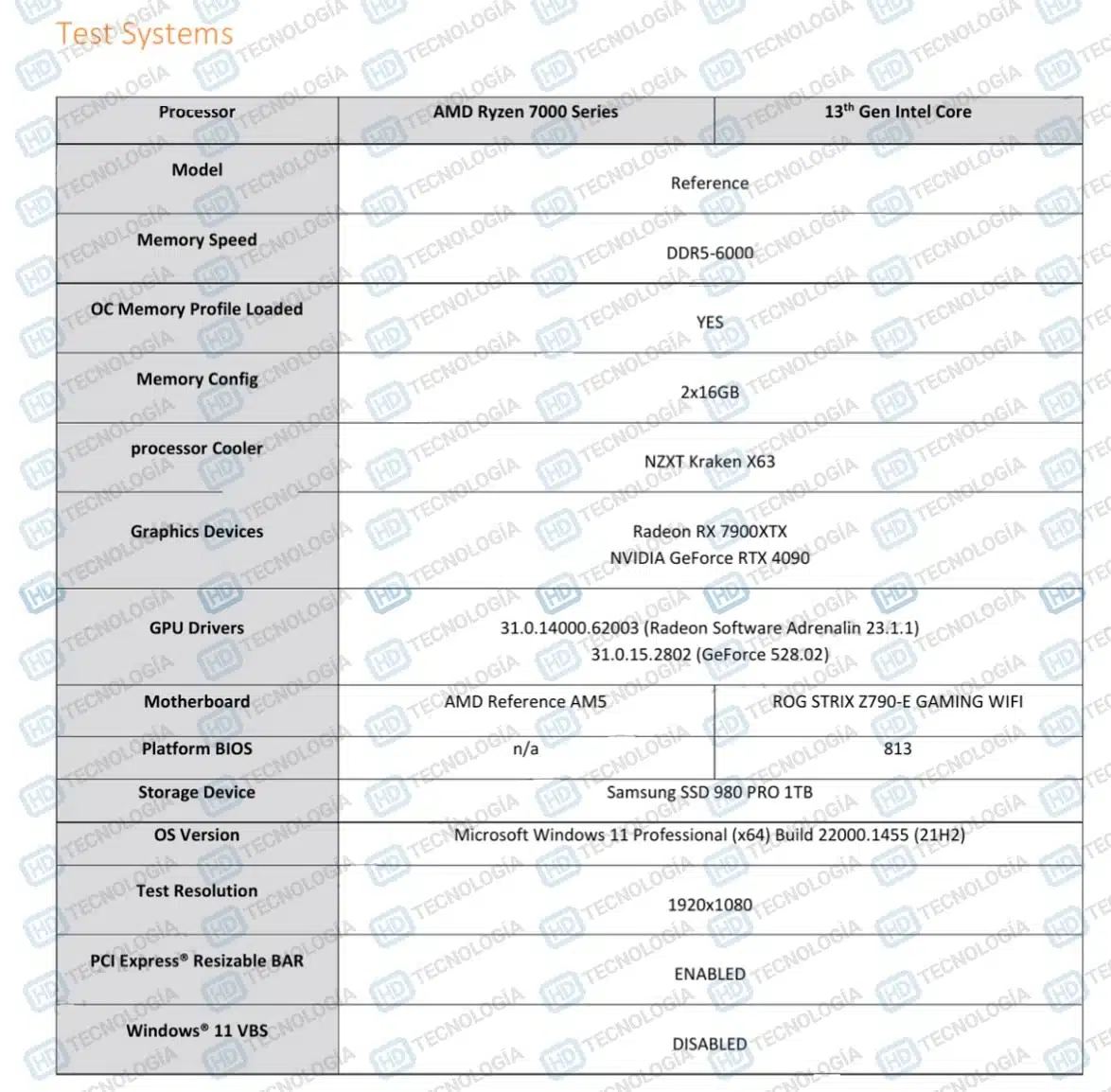
With the Radeon RX 7900 XT, the Ryzen 9 7950X3D is 5.6% faster than the i9-13900K across 22 games which you can see in detail in the table. The differences reach up to 26.9% in Horizon Zero Down, while in games like Far Cry 6 the Intel processor is notably superior.
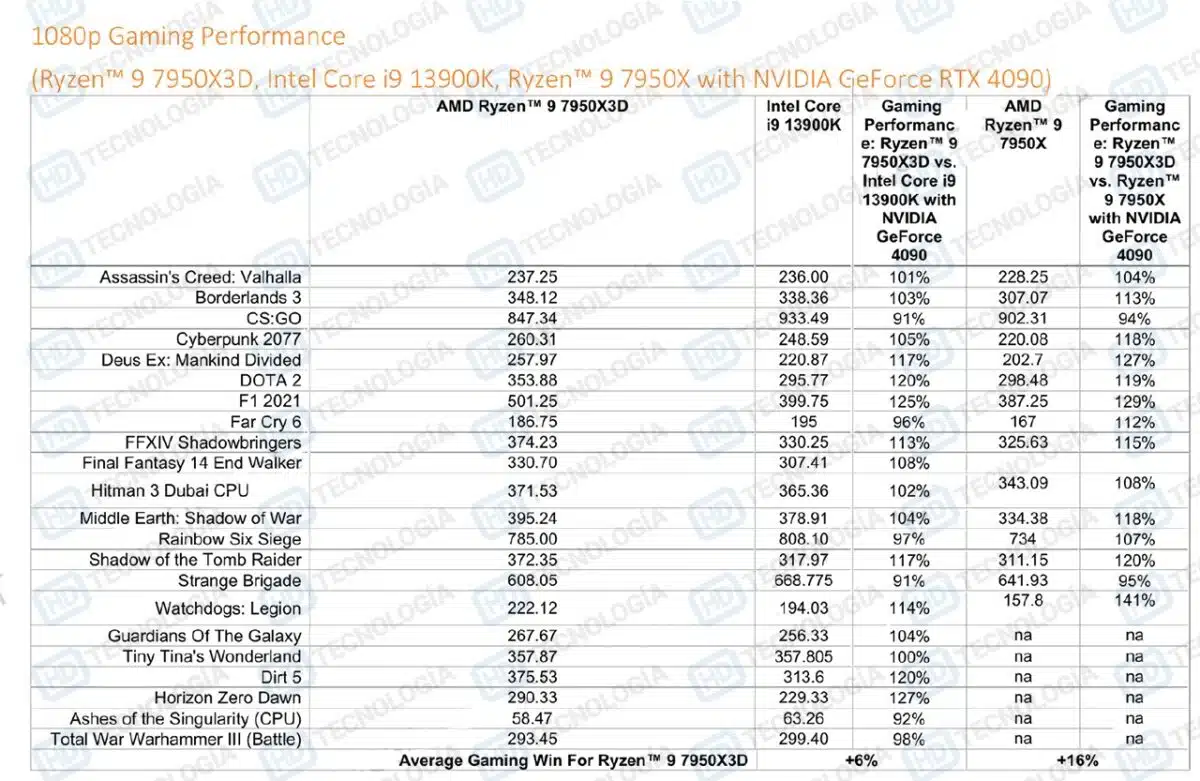
Replacing the GPU with an RTX 4090, the Ryzen 9 7950X3D is 6% faster than the i9-13900K and up to 16% faster than the Ryzen 9 7950X, showing the huge difference of this 3D cache even at lower clocks.
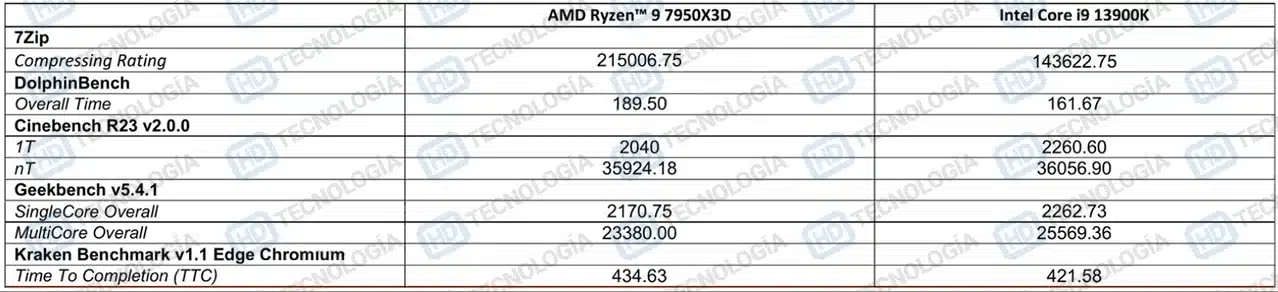
Regarding Multicore performance, AMD included a large number of tests where Intel comes out on top in almost all of them. In the most popular ones like Cinebench R23 and Geekbench 5.4 the blue processor is also superior, costing $90 less, being a better option if you care about multi-core performance. If you only plan to play, with a high-end graphics card, the Ryzen 9 7950X3D may be the best option, although for its price neither the 7950X3D nor the 13900K are usually worth it if it is only for gaming when with an i5 or a Ryzen 5 it is usually more that enough.
Discussion (19 replies)
Join Discussion →People are probably going to make a big deal about how Intel leads it in CSGO...
...but then you look at the details, and it is like 766 vs 781 fps :p
Yeah, CS:GO benchmarks need to go away. They're pointless.
I'd argue it might be time for yet another generational leap. You know, like one of those counter strike does every 6-8 years or so, moving from three generations old graphics, to two generations old graphics.
For that to happen wouldn't we need a new source engine and wasn't that made with half life... HL3 CONFIRMED . Again...
People still play CS:GO, and there are actually 500Hz monitors available...
...none of which is for me or most of us I gather, but there's still an audience. I just look at it as the way Quake 3 Arena was used as a benchmark for a decade after mostly just to show how far we've come.
At this point I dont want hl3
It's interesting to do a mental comparison between hl2 and Hogwarts. Both are great games but pure look the graphics advancement is amazing.
It would have been nice if they had just concluded the story arc. Even a HL2 Episode 3 that wrapped things up would have been enough. No need for a HL3. But 16 years later on, I don't know if I care anymore.
Not sure if a new engine is needed.
They could just use the existing engine and add more detailed models and better textures.
The whole point of CS:GO is to remain relatively low tech so that it has mass appeal even among those who play on potato machines, so they would unlikely be shooting for the latest and greatest RT based immersive environments.
Updating it from its current ~2007 standards to what, like 2014 standards is maybe what we would be talking about.
No need for any new features in the engine to do that.
Besides, even if they wanted to add a sprinkling of RT, the source engine was designed to be modular, so it probably wouldn't be an overwhelming task to add the capability to that to the rendering module. Still, that would probably cost more in developer time than it is worth to them, unless the engine were also to be used for something else.
I think it is very unfortunate the source engine was not kept up to date. As an engine I like it way better than the engines that have taken the lead today. Unreal Engine is annoying. I would have loved to see what an up to date Source engine could do.
But Valve realized they could make more money as a sore front for others products than making their own products, so it didn't make sense for them to do that.
I never saw the point of CS:GO since it added nothing over CS:S. It's literally the same game.
I know most of you here are AMD junkies, but I'm honestly getting tired of these "dumb" comparisons as well. They throw this one game in that one manufacturer does better in which is usually useless (like CSGO). I don't build my PC's to run benchmarks on an outdated game, or even any benchmarks at all.
My perspective is a little different.
Most of my gaming is in gorgeous large open environment single player shooters these days. I play them at 4k, with the settings as high as I can get them for maximum eye candy, provided they don't prevent me from attaining a minimum frame rate of 60fps.
Because of this, the CPU is mostly irrelevant. Yest, I can't use anything TOO old (this is why my x79 system finally had to go in 2019) but in general, I am always going to be GPU limited before I am CPU limited, and because of this any reasonably modern enthusiast CPU will work for me.
So while I prefer AMD on the grounds of it bringing me warm fuzzies, really, either brand will work for me, so I generally don't buy CPU's for their gaming performance. I buy them for everything else I do, as for my gaming, they generally won't make a difference.
CPU actually matters a lot for large open-world games, data asset streaming as the world loads in, NPC movement and interaction, level of detail constantly changing, AI, and compression/decompression.
Fair, but I guess my point is I don't need it to perform beyond the ~60fps level in most cases.
As such my "old" Zen2 based Threadripper provides plenty of performance for all the games I play at the settings I play them despite not having the latest and greatest high clocks and newest architetures. And in most cases the crazy 24C/48T is of little real world benefit in games.
One thing I just thought about and found interesting though, is I wonder if DLSS3 Frame generation aids in both CPU limited situations as well as GPU limited ones.
If a higher framerate requires more CPU processing power, and the frame generation results in fewere frames needing to be rendered at the same frame rate, one would think it probably does, right?
Yes, that's called a CPU bottleneck, the very thing Frame Generation can provide an advantage. Now while this will improve the framerate, it won't improve the frametime, latency, and input. Therefore the experience is a unique one when Frame Generation is used. While the perceived sense of the game by your eyes is faster, the user input and interaction feel the same and don't change, and can even feel worse as the frametime increases