
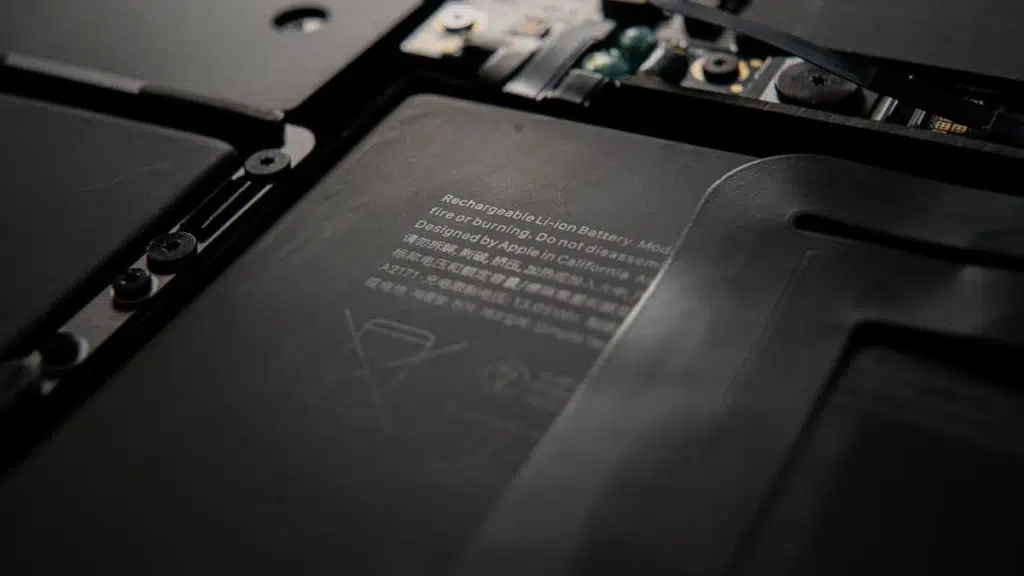
The EU has been zeroing in on regulations for batteries in mobile devices for some time. Throughout 2022 European regulators made proposals ranging from the banning of glued batteries to requiring manufacturers to include batteries that could hold a full charge for up to five years. Now the former, will in essence become law by 2027 as part of a much broader piece of legislation that was just passed. At that time the new regulations will roll out in phases through 2030. As the EU passes this new legislation it is expected that some manufacturers will apply for extensions as the deadline nears in order to prepare, TechPowerUp has said that various news outlets are already reporting this.
This week the EU Parliament passed, nearly unanimously with 587 for and 9 nine against, new rules regarding the design, production, and waste disposal, of all types of batteries sold in the EU. This includes batteries for vehicles, mobile devices, and industrial use. The new regulations will also place requirements on how much recoverable materials are used in new batteries and suggest that the EU may ban non-rechargeable batteries altogether sometime after 2030.
“For the first time, we have circular economy legislation that covers the entire life cycle of a product – this approach is good for both the environment and the economy. We agreed on measures that greatly benefit consumers: batteries will be well-functioning, safer and easier to remove. Our overall aim is to build a stronger EU recycling industry, particularly for lithium, and a competitive industrial sector as a whole, which is crucial in the coming decades for our continent’s energy transition and strategic autonomy. These measures could become a benchmark for the entire global battery market.”
-Achille Variati
Per EU Press release (via PC Magazine):
On Friday, Parliament and Council reached a provisional agreement to overhaul EU rules on batteries and take into account technological developments and future challenges.
The agreed rules will cover the entire battery life cycle, from design to end-of-life and apply to all types of batteries sold in the EU: portable batteries, SLI batteries (supplying power for starting, lighting or ignition of vehicles), light means of transport (LMT) batteries (providing power for the traction to wheeled vehicles such as electric scooters and bikes), electric vehicle (EV) batteries and industrial batteries.
Batteries to be easier to remove and replace, consumers better informed
Negotiators agreed on stronger requirements to make batteries more sustainable, performant and durable. According to the deal, a carbon footprint declaration and label will be obligatory for EV batteries, LMT batteries and rechargeable industrial batteries with a capacity above 2kWh.
Three and a half years after the entry into force of the legislation, portable batteries in appliances must be designed so that consumers can easily remove and replace them themselves.
To better inform consumers, batteries will carry labels and QR codes with information related to their capacity, performance, durability, chemical composition, as well as the “separate collection” symbol. LMT batteries, industrial batteries with a capacity above 2 kWh and EV batteries will also be required to have a “digital battery passport” including information on the battery model as well as information specific to the individual battery and its use.
Introduction of due diligence policy for the battery industry
According to the deal, all economic operators placing batteries on the EU market, except for SMEs, will be required to develop and implement a so-called “due diligence policy”, consistent with international standards, to address the social and environmental risks linked to sourcing, processing and trading raw materials and secondary raw materials.
Other measures foreseen by the regulation:
- Collection targets are set at 45% by 2023, 63% by 2027 and 73% by 2030 for portable batteries, and at 51% by 2028 and 61% by 2031 for LMT batteries;
- Minimum levels of recovered cobalt (16%), lead (85%), lithium (6%) and nickel (6%) from manufacturing and consumer waste must be reused in new batteries;
- All waste LMT, EV, SLI and industrial batteries must be collected, free of charge for end-users, regardless of their nature, chemical composition, condition, brand or origin;
- By 31 December 2030, the Commission will assess whether to phase out the use of non-rechargeable portable batteries of general use.
Discussion (19 replies)
Join Discussion →I'm all for user-replaceable batteries, but I'm all against regulation that dictates design.
If people really wanted user-replaceable batteries, that's what they would have purchased... manufacturers just make what sells.
IF you think manufacturers don't manipulate the market and collude to maximize profits... you're delusional.
That's really naive. Most users are uninformed, they don't know what they want, and usually what they want is not even what they need.
Manufacturers will lie to the users that you can't have water resistance with user replaceable batteries and or headphone jacks.
So then did the users really want non-replacable batteries? And proprietary wireless earphones costing hundreds instead of a wired one for $10?
No they bought into a lie that benefits the manufacturer.
Without legislation it is inevitable that the manufacturers will try to exploit users every which way possible.
This however is a bad idea. There are several use cases rechargable batteries are just not suitable for. Like a remote. Why would I buy rechargable batteries for it at 10x the cost when a normal battery lasts 10+ years in it? Outlasting the usefulness of the device in many cases.
I guess color me deluded, as I could not disagree more.
The only reason glued-in batteries became a thing is because Apple did it - the iPhone sold like crazy, and every other designer hopped on the me-too wagon for smart phones. Apple did it because it made manufacturing easier - the first iPhone wasn't water proof or anything, it just made it easier build (which allowed them to get a larger margin - they certainly didn't pass along those manufacturing savings)
There was no collusion - companies just followed the market. Granted, I think they followed the wrong thing - but it was still a case of the manufacturers just following the market there. No collusion to it, I can't imagine Apple colluding with any other manufacturer out there -- they very much march to the beat of their own drum, often to their own detriment.
Apple did it under the pretence that you can't have water resistance otherwise, who do you think I was referring to? That wasn't a hypothetical scenario I was describing, that was history.
The other manufacturers saw that apple could get away with it so they followed suit. The users need the government to keep the manufacturers in check, and often that is not even enough due to the insane amount manufacturers spend on lobbyists spreading FUD.
Collusion is often unspoken, based on mutual understanding and not rocking the boat.
It was all about profiting on people not buying new batteries and getting a new phone and the absurd markup on making consumers pay them to replace batteries
There is no innovation in how poorly designed phones are now to repair much less replace the battery
Only there as a roadblock for $$$
Pretty much all Apple design is about making it as hard as possible to have the end user do anything without Apple being involved directly
As much as I like user-replaceable batteries, regulation is the wrong way to get them.
Don't go forgiving the poor means because you agree with the end - it will come back around to bite you on something you don't agree with.
Theres regulation and then theres stupid regulations. Laws and regulations are the basis of successful societies. Stupidity, inaction in the face of clear 'bad regulation' and too much corruption are the issues. Regulation for replaceable batteries are long long overdue. I would go one further and certain formats should be standardized and made like aa and such for long term applications ( not saying cylindrical just do size standards)
We had them, until the mid 2010s most phones had user replacable batteries, the manufacturers took it away lead by apple to make the phones more throw away. How would you get them to offer it again if not through regulation?
The manufacturers took it away because people stopped buying them, not because Apple made them do it.
"Stopped buying them" that's such a disingenuous statement. How could you even suggest that when the choice was between the latest and greatest phone without replaceable battery and bottom shelf budget phones with much less features and slow rickety CPUs, that did have it?
As a side note proving that it wasn't a cost issue either when cheap phones had no problems offering it.
What's next? You'll say that phones got rid of sdcards slots also because users said: We don't want easy expandability, we'd rather buy a new phone when the space runs out?
How can one buy phones with replaceable batteries when it is not available in the latest models?
There was no cross-over period where they offered the most desirable models both with replaceable and soldered in battery.
Instead taking away user replaceable batteries was lauded as a premium feature, which conveniently enabled them to get rid of removable back covers also. Which until then allowed easier service and component replacement. But of course we can't have that, expandability, repairability and longevity are not on the menu, god forbid someone miss a product cycle and use the last model for two cycles! You are just supposed to buy product, and get excited for next product.
I never get angry over forum posts, but I swear this type of rhetoric is actually upsetting me.
Blackberry made smart phones in the late 00's/early 10's with SD Cards and exchangeable batteries - no one bought them. They started out the 00's as the king of the hill. They ended up becoming insignificant.
It's not like all the phone companies banded together and said "We are going to do this to screw over consumers - come on guys!".
They all said "Hold crap Apple is selling a sh*tload of phones and they did this, so we're going to copy it so we can continue to try to sell phones"
It all revolved around what people were buying. Yeah, the average consumer is an idiot - but they have cash and are putting it where they want it, so the market evolved to meet their demands.
If everyone started actually screaming for replaceable batteries, phones would come back out with them. But every time one does, it doesn't sell - you could say because they are sucky phones that try it - and it may well be - but it's also because consumers just don't prioritize a replaceable battery as a must-have feature.
Face it, folks like us are in the minority and our niche market isn't big enough to cater to.
Pushing regulation to require it - it's going to be a mistake. If you want better battery life in a phone with a sealed battery because you are afraid your battery is going to die while you need to use it, get a power bank - that's the same size and capacity as that spare battery you were going to carry around anyway. If you are wanting a replaceable battery because you are afraid the company is out to make you buy a new phone rather than replace an older battery -- well, you can already do that on every phone I know of (although it isn't necessarily easy and may require third parties), and you should be looking at supporting right-to-repair legistlation instead of this.
Problem is, as mentioned, the changes to make phones into disposable, fashionable item was coupled with the better cpu, with more memory, with better screens, with better cameras on and on and on. There was no real customer choice between. Black berry, nokia, htc, others fell behind in all kinds of ways.
Exactly. I used to only buy phones with replaceable batteries, until they no longer became available. The last phone I actually paid money for (Galaxy Note 4) had a replaceable battery. My current phone (Galaxy A32) was given to me for free by T-Mobile cuz they took over the Sprint network and shut it down, and my Sprint-based Note 4 wasn't gonna work on the T-Mobile network. It does NOT have a replaceable battery. I'm not in the habit of complaining about free phones though.
I still only use phones with MicroSD slots. I will never ever buy a phone that does NOT have such a slot. I really f*cking wish replaceable batteries would come back though. Say what you want about regulation, but at least EU customers are getting their replaceable batteries back.