
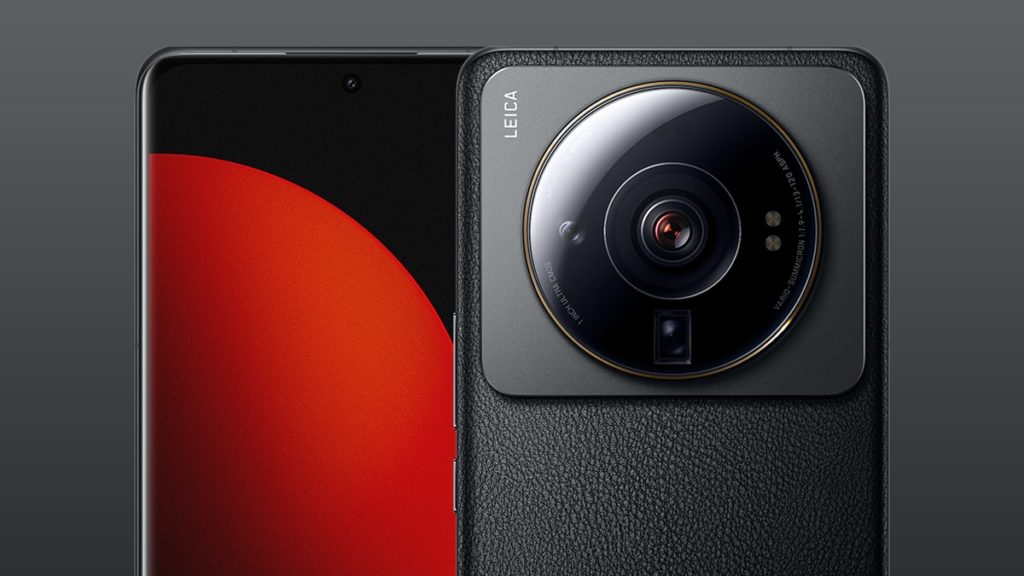
Xiaomi has announced the 12S Ultra, a new flagship smartphone that is sure to draw tremendous interest from photographers. Among the highlights of the Chinese manufacturer’s latest premium handset is its professional wide-angle camera system co-engineered with Leica, which leverages Sony’s IMX989—a relatively massive 1-inch sensor that implements a Quad-Bayer pixel array with individual pixel sizes reaching 3.2 μm after pixel binning. Xiaomi says that the hardware allows for reduced noise, extended dynamic range, and increased light captured, enabling better photos in low-light conditions. Other specifications of the Xiaomi 12S Ultra include two proprietary Xiaomi Surge chips, a 6.73-inch AMOLED screen from Samsung with Dolby Vision support, and up to 12 GB of memory. The phone will be released alongside the 12S Pro, 12S, and 12 Pro Dimensity Edition in China on July 6th.
This is #Xiaomi12SUltra, our top imaging flagship smartphone. #Xiaomi12SSeriesLaunch pic.twitter.com/QUDC2mmSFc
— Xiaomi (@Xiaomi) July 4, 2022
Xiaomi 12S and Xiaomi 12S Pro feature Sony’s IMX707 as their primary sensor, which incorporates both a large sensor size and large pixels, at 1/1.28” and 2.44μm after pixel binning. With the support of Xiaomi AI Image Solution and Xiaomi ProFocus, these sensors achieve fast startup, capture, and continuous capturing. These devices support an industry-leading 30fps ultra-fast burst mode, and exceptional low-light photography capabilities. Further, they also implement All-scene snapshot in their cameras, making it easier to capture the decisive moment.
Xiaomi 12S Series “co-engineered with Leica” has also been designed to be more photographer-friendly in post-production. The entire series supports 10-bit RAW format calibrated by Adobe Labs, with color correction metadata embedded in the files. When using Adobe Lightroom to open photos shot on Xiaomi 12S Series, Adobe Camera RAW software will automatically optimize photos based on metadata, providing professional photographers with a good starting point for post-production.
Source: Xiaomi
Discussion (5 replies)
Join Discussion →Oh my what a big camera you have.
So much better to spy on you with, my dear.
Seriously, anyone who buys a Chinese branded phone is a damn fool.
I think the interesting thing here is the flipping 1 inch sensor. (You know why DSLR's or whatever they are called now are so much better than a smart phone can ever be.)
It is. I mean, it's not getting close to real cameras yet, but it is certainly getting bigger:
Phone sensor sizes are measured differently than big camera sensors. I think the 1" is the diagonal length (not sure) whereas the 35mm is the length of the side, so there is still a ways to go for phone sensors to compete with camera sensors. This appears to represent ~half of the sensor area as a crop factor DSLR sensor like Nikons DX, and the DX is already at a huge disadvantage when compared to a 35mm "full frame" camera. But still, this is huge for a phone.
It is also going to require a weird lens to get the light on that sensor at such close distances as inside of a phone case. I'm having a difficult time picturing it right now.
Will probably need some sort of periscope configuration.
It will be one hell of a camera bump!