
Antec DF800 FLUX Features and Specifications
Case Front and Right Side
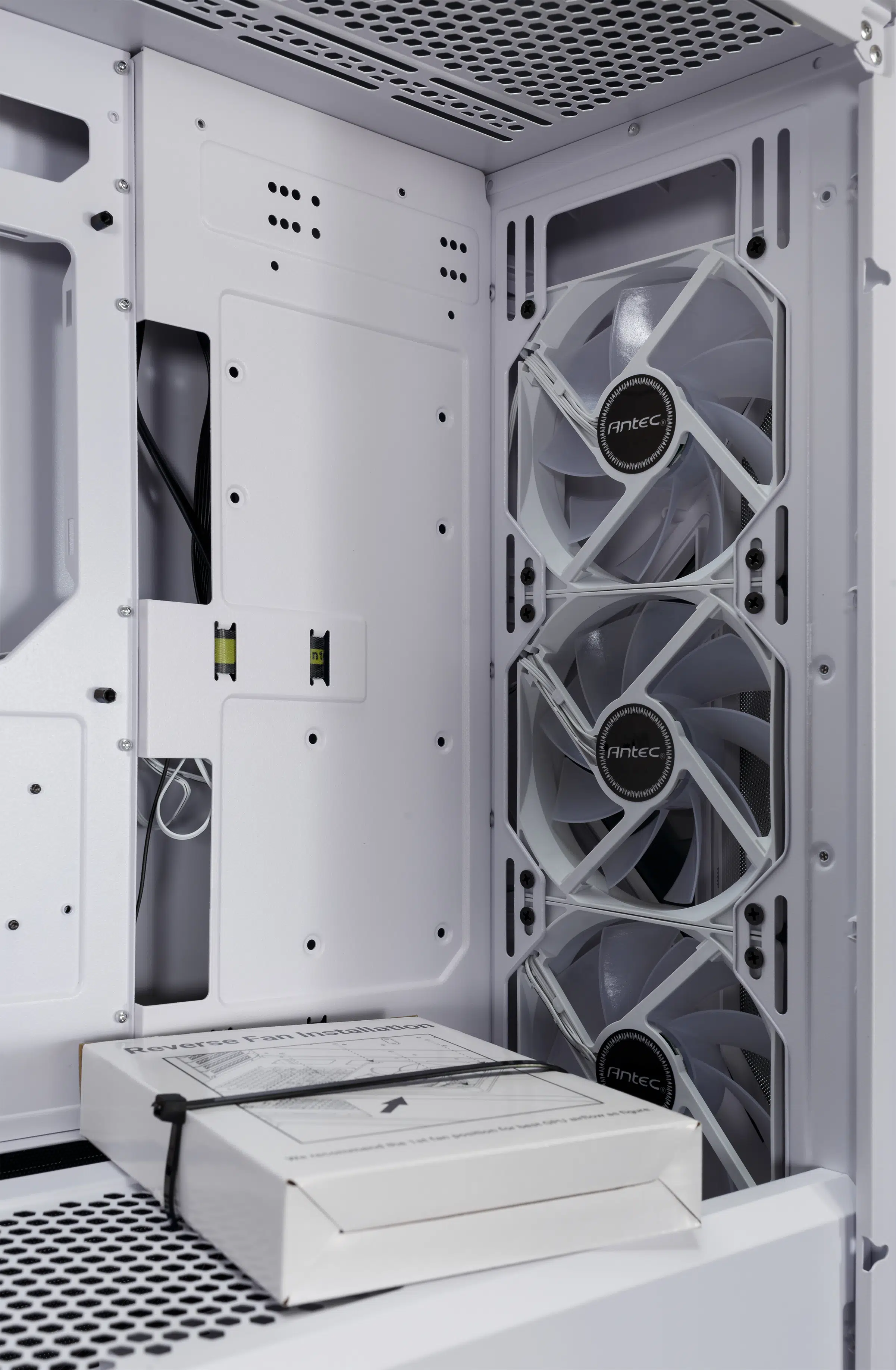
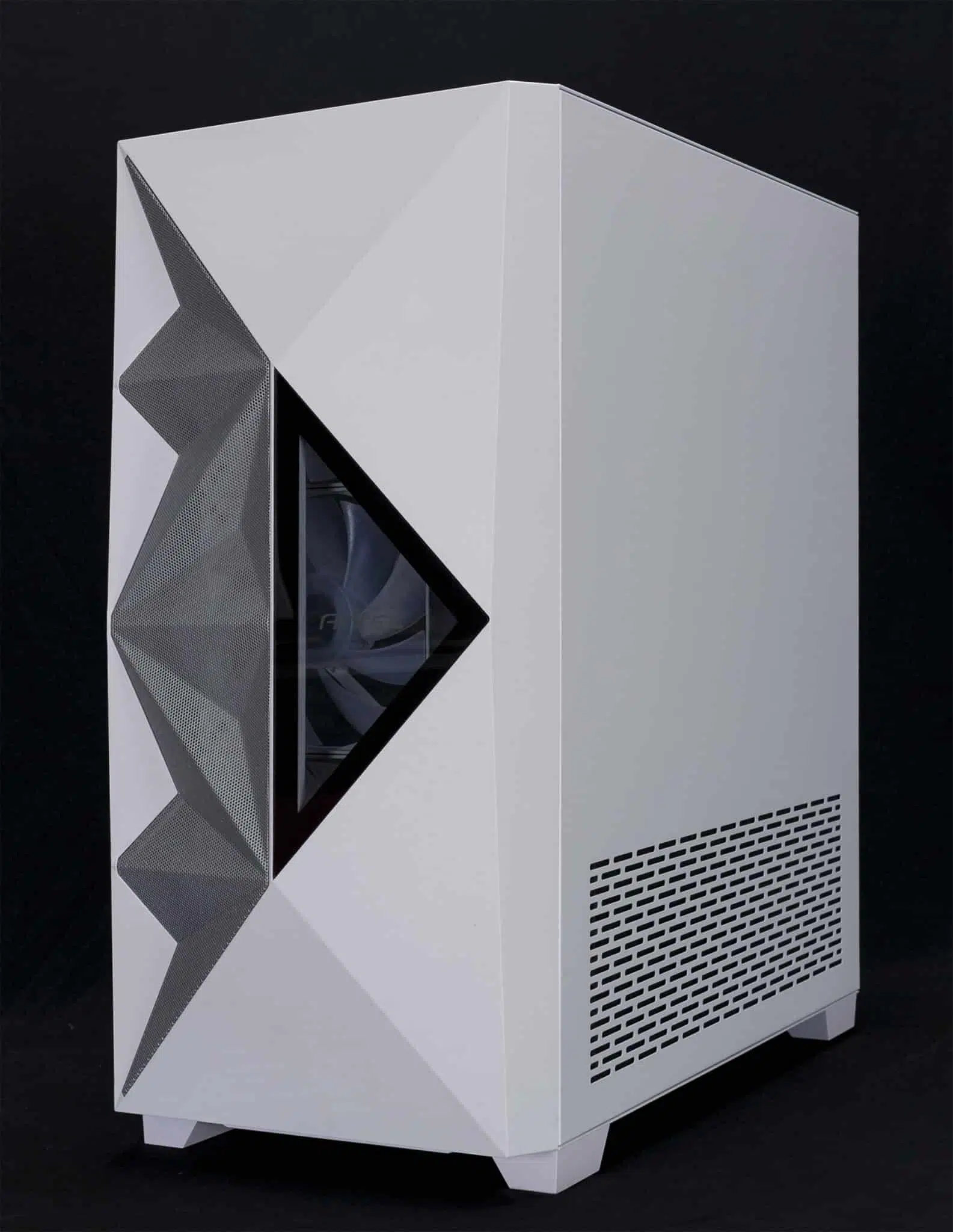
As noted above, the case front panel of the DF800 FLUX isn’t designed to be easily removable. Since Antec ships the DF800 FLUX with three fans this won’t be an issue unless changes need to be made. Note that the front fan positions are configured to accept a pair of 140mm fans as well as 280mm radiators in addition to the three 120mm fans and potentially a 360mm radiator.
Unusual for a case in this class, Antec has fit the DF800 FLUX with an intake vent along the lower quarter of the panel and includes a magnetic mesh filter. This vent allows for up to two fans mounted on top of the PSU shroud to pull in cool air.
Case Rear
The DF800 FLUX supports a 120mm rear fan for exhaust behind the CPU, which can be shifted up or down to better align with air coolers or a preferred airflow path.
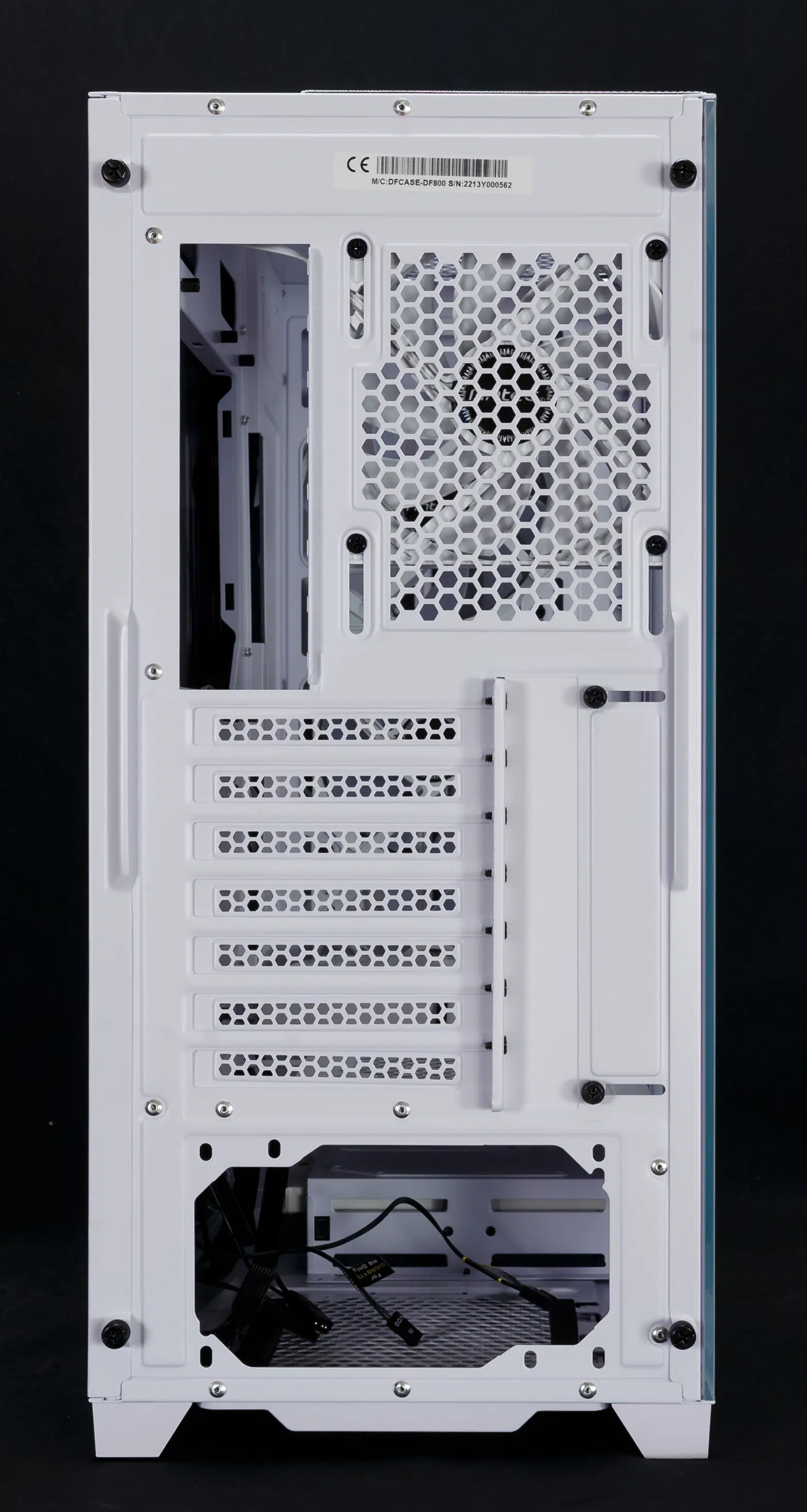
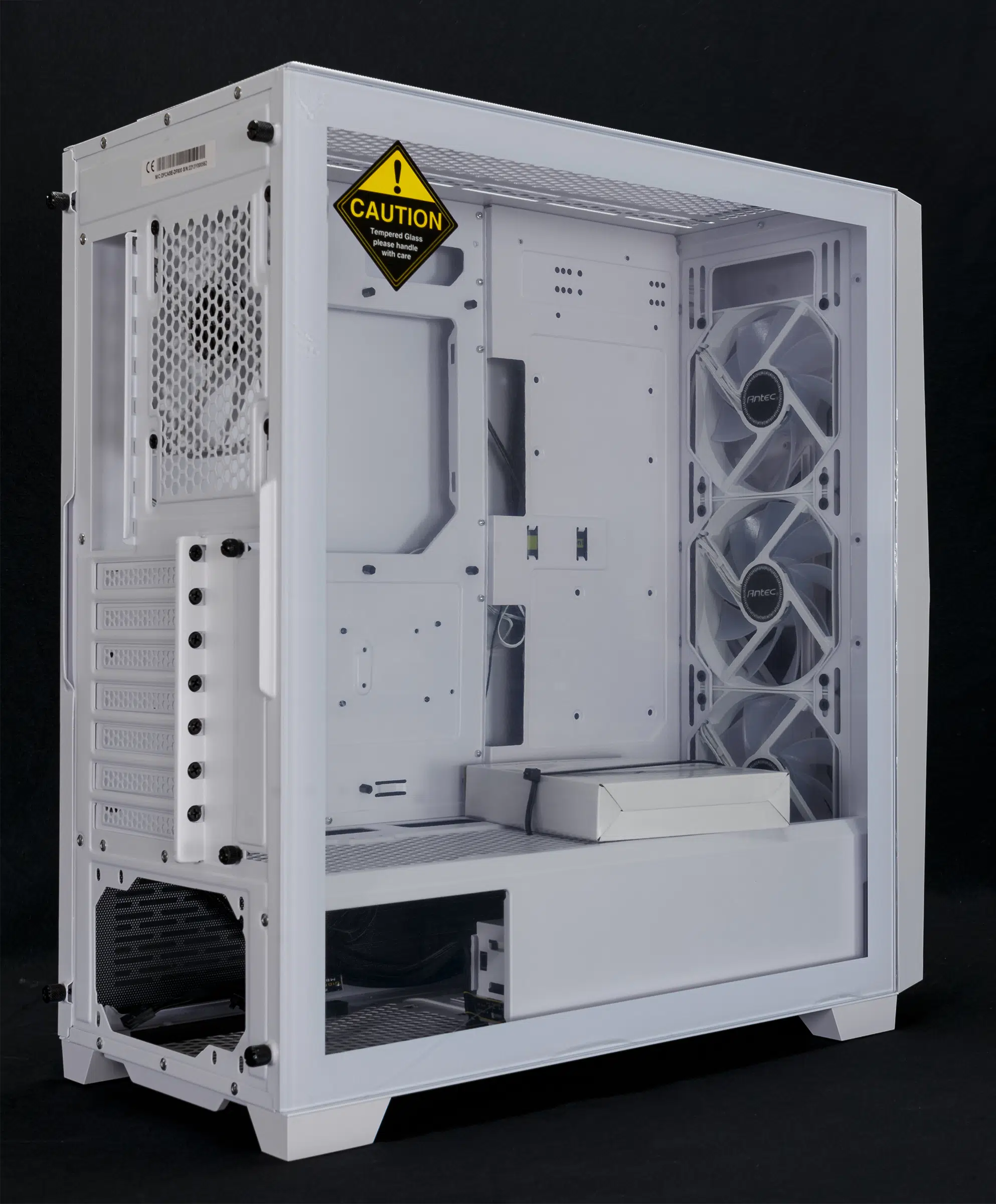
The seven expansion slot covers are reusable and secured by a sliding panel. This may assist in keeping expansion cards safe when moving a system build inside the DF800 FLUX but otherwise seems to get in the way, and its use precludes the inclusion of vertical slot positions.
The PSU mount is fixed, but it does support mounting PSUs with the PSU fan facing up or down, and a set of rubber rails are included to rest the PSU on.
Tempered Glass Panel
The tempered glass panel is attached using captive thumbscrews. It rests on a shelf of sorts that is situated along the bottom edge, which makes removal and replacement fairly easy so long as positive control over the panel is maintained, since the panel is only secured by the thumbscrews and two pegs along the front edge.
Note that the panel has a protective film on the inside and outside, with the inside film not being visibly marked. In the photo below and all photos were taken at the time of unboxing, this film is in place and shows a tint and blurs the details inside the case somewhat.
Top Panel, I/O, and RGB Control
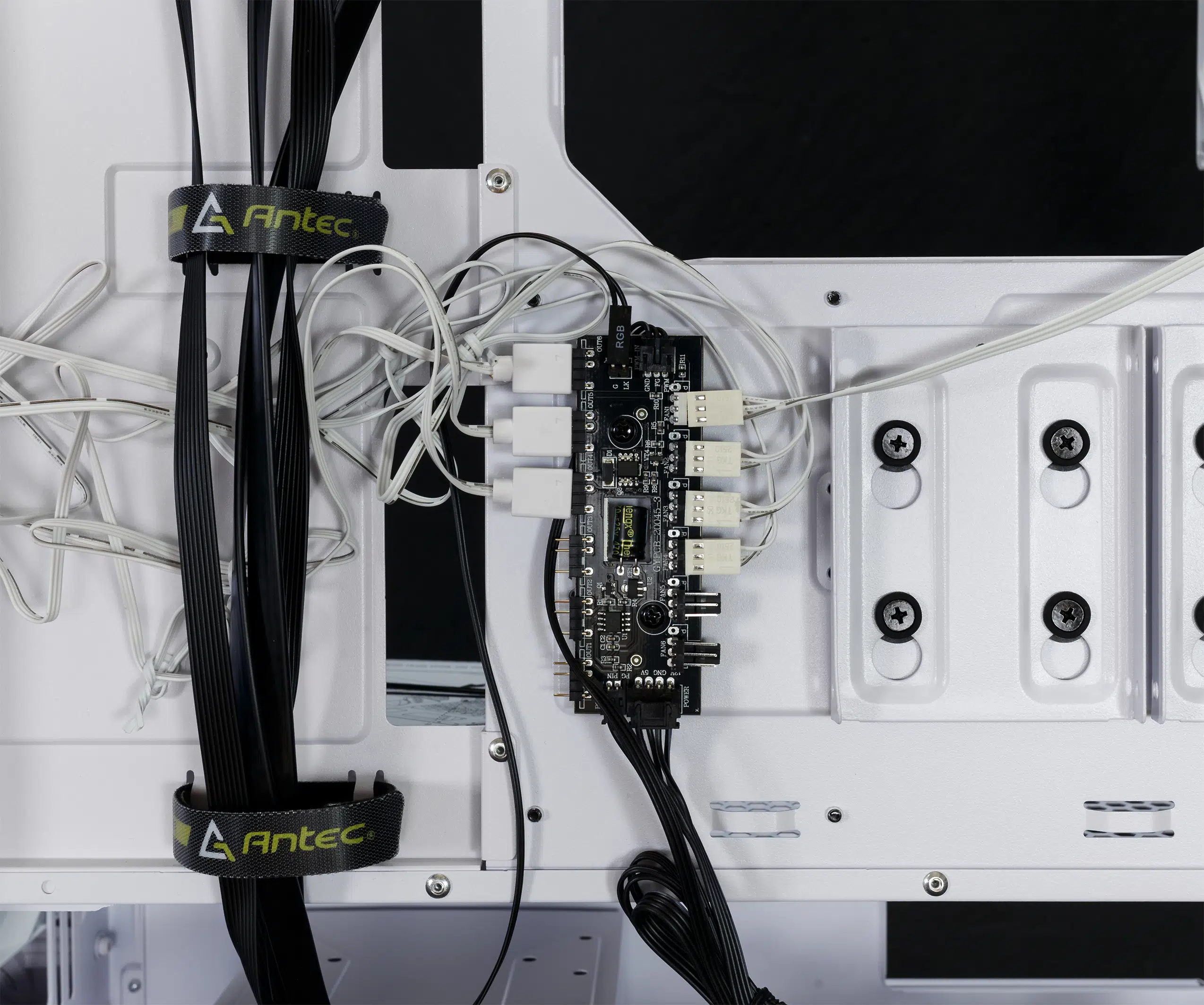
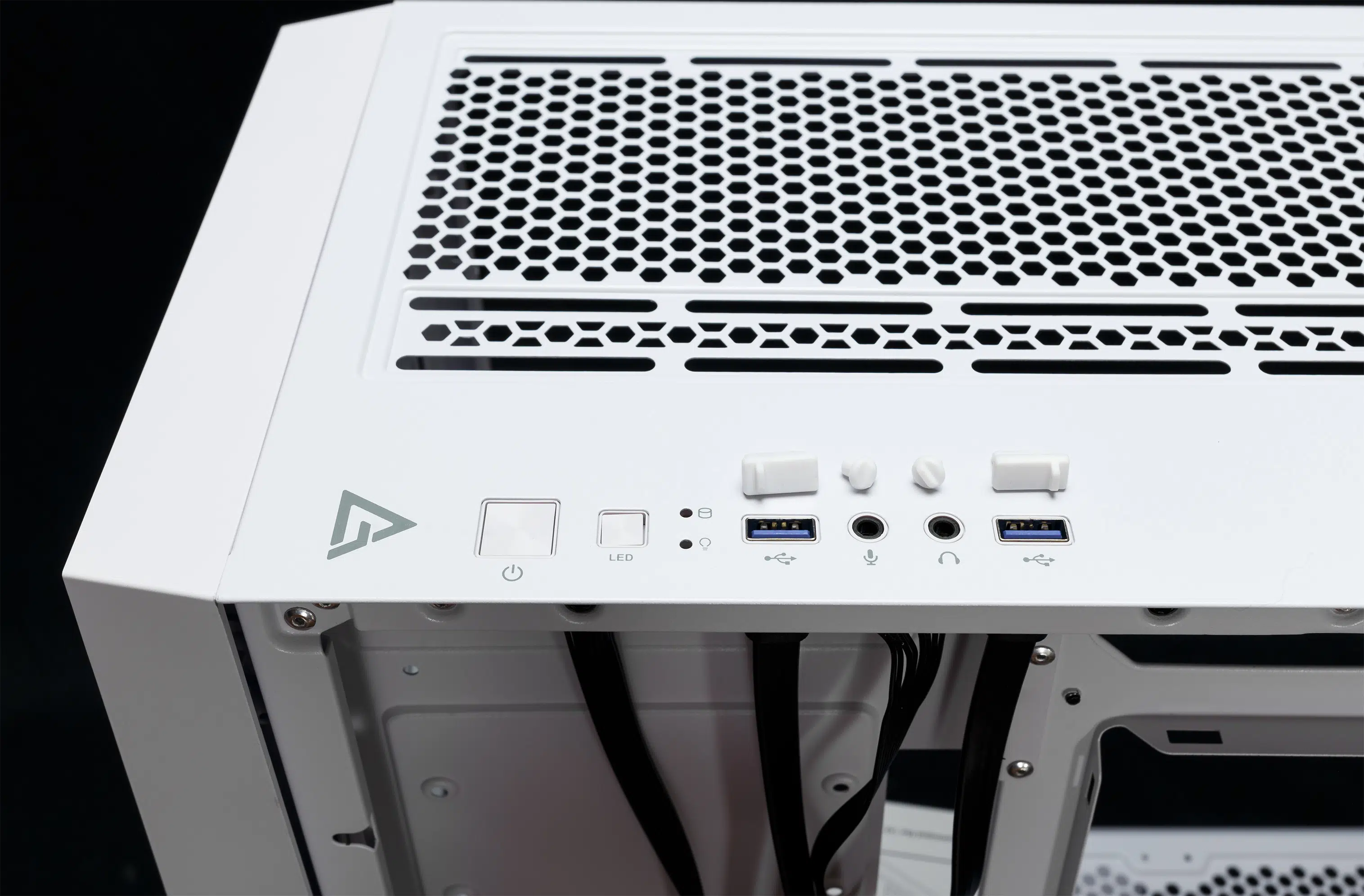
The top I/O includes the usual suspects but has a button for LED control rather than a reset button, which is run to Antec’s included LED and PWM fan controller. Otherwise, a pair of USB A ports and a USB C port along with separate headphones and microphone jacks are presented.
For the LED control button, as this uses the same two-pin connector that reset header pins use on the motherboard, users can route the button to the reset header in order to use it as a reset button. If using a motherboard’s built-in RGB control like we are for this review, the LED control becomes somewhat superfluous.
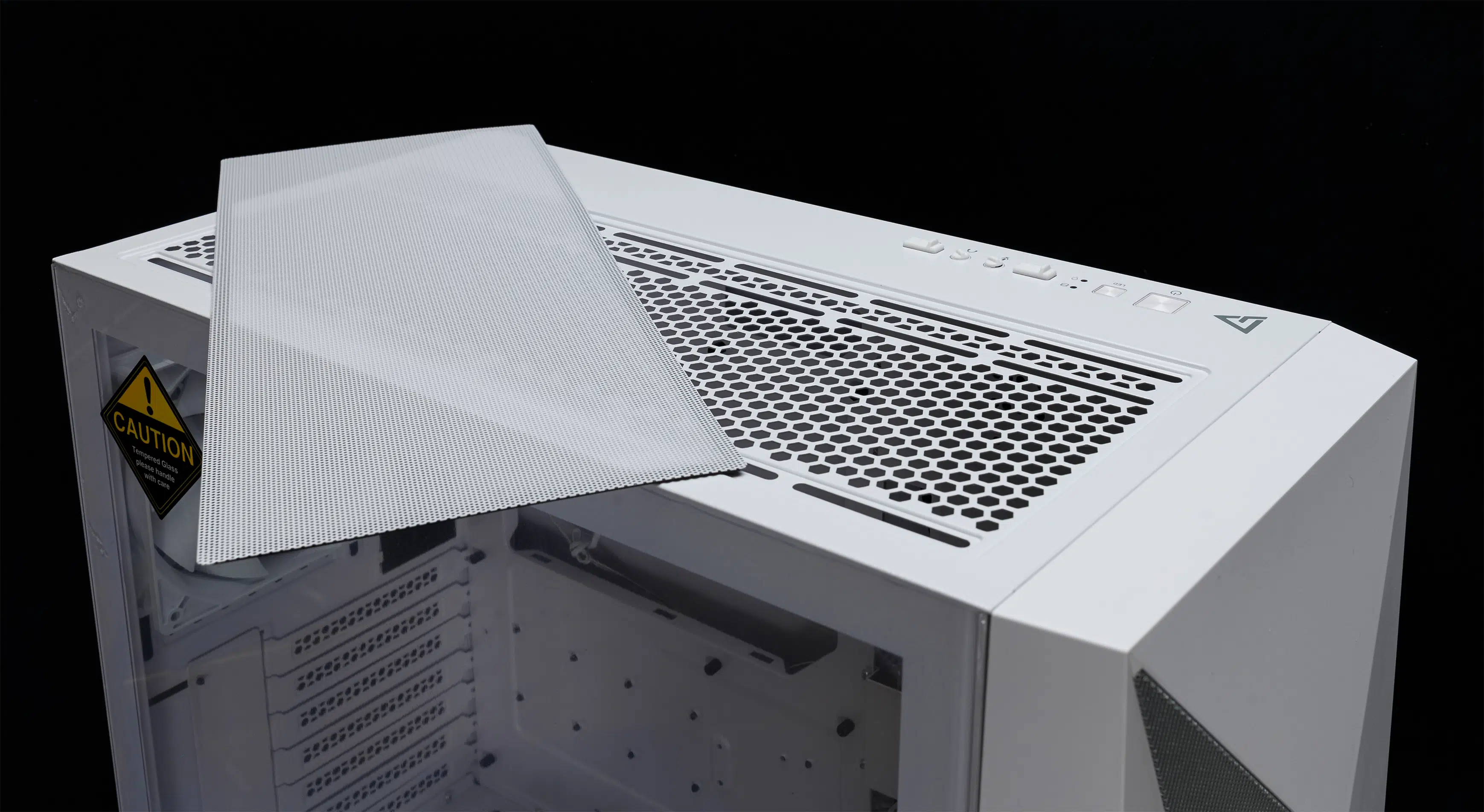
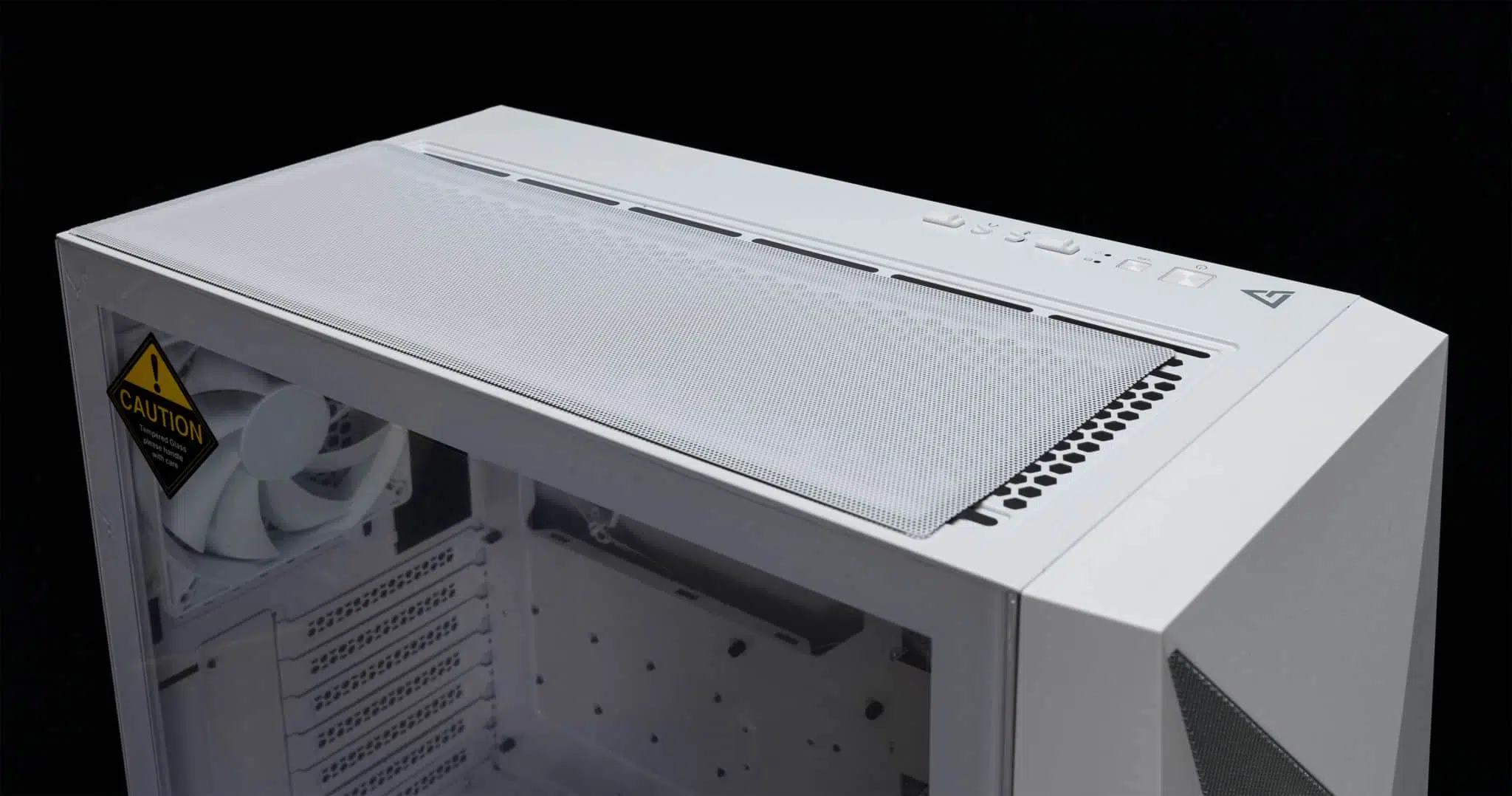
Antec has included dust plugs for the top I/O, similar to the plugs used for DisplayPort and HDMI on video cards. This isn’t usually necessary in our view, but as the ports are mounted on the top of the chassis, the plugs should keep dust out along with the top magnetic filter.
Motherboard Compartment
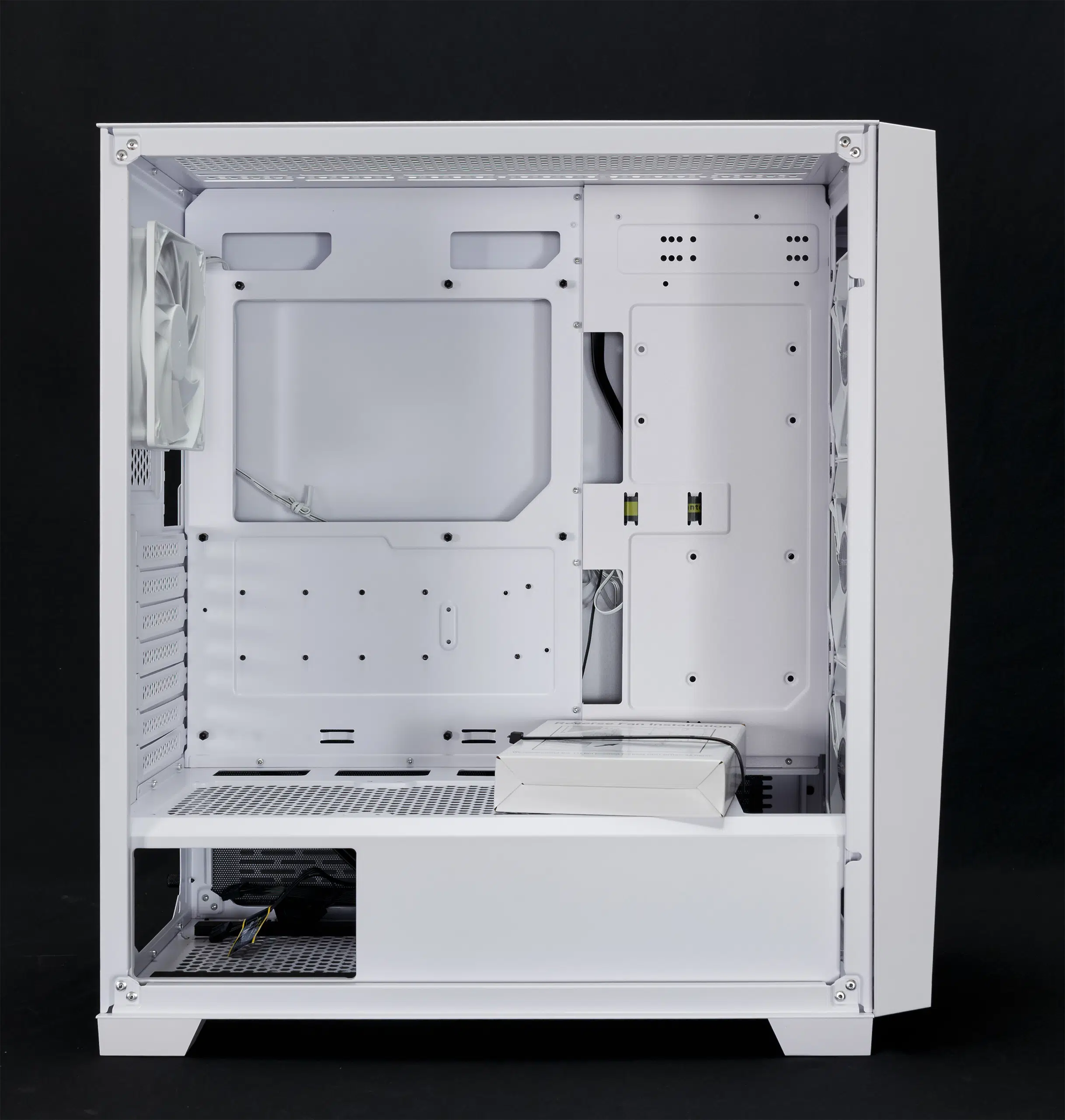
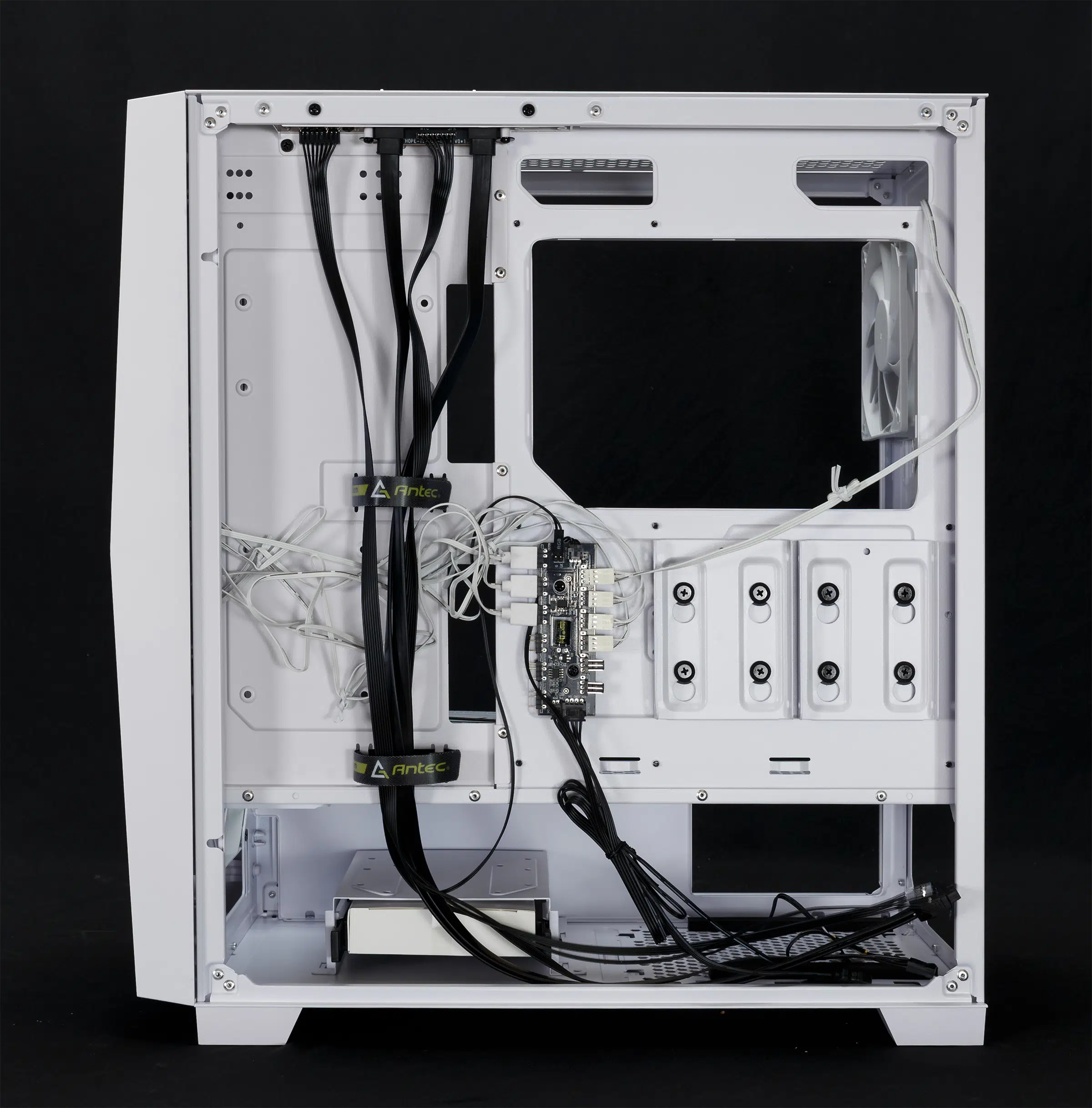
Motherboard support ranges from ITX to ATX and includes pre-installed supports. Importantly, larger EATX boards, meaning boards of a depth greater than 9.6″ (244mm) will not fit due to the raised panel in front of the motherboard tray. This does however allow for slightly greater space for cable routing at the expense of motherboard flexibility.
Power Supply Compartment and Case Bottom
Antec has built the DF800 FLUX with a full-length shroud for the PSU and bottom drive cage that has cutouts for cable routing, viewing the PSU, and for fans and radiators mounted in the front of the case. There are also two positions for fans to be mounted as intakes of sorts, which then draw air through the PSU compartment and vents on the right case panel.
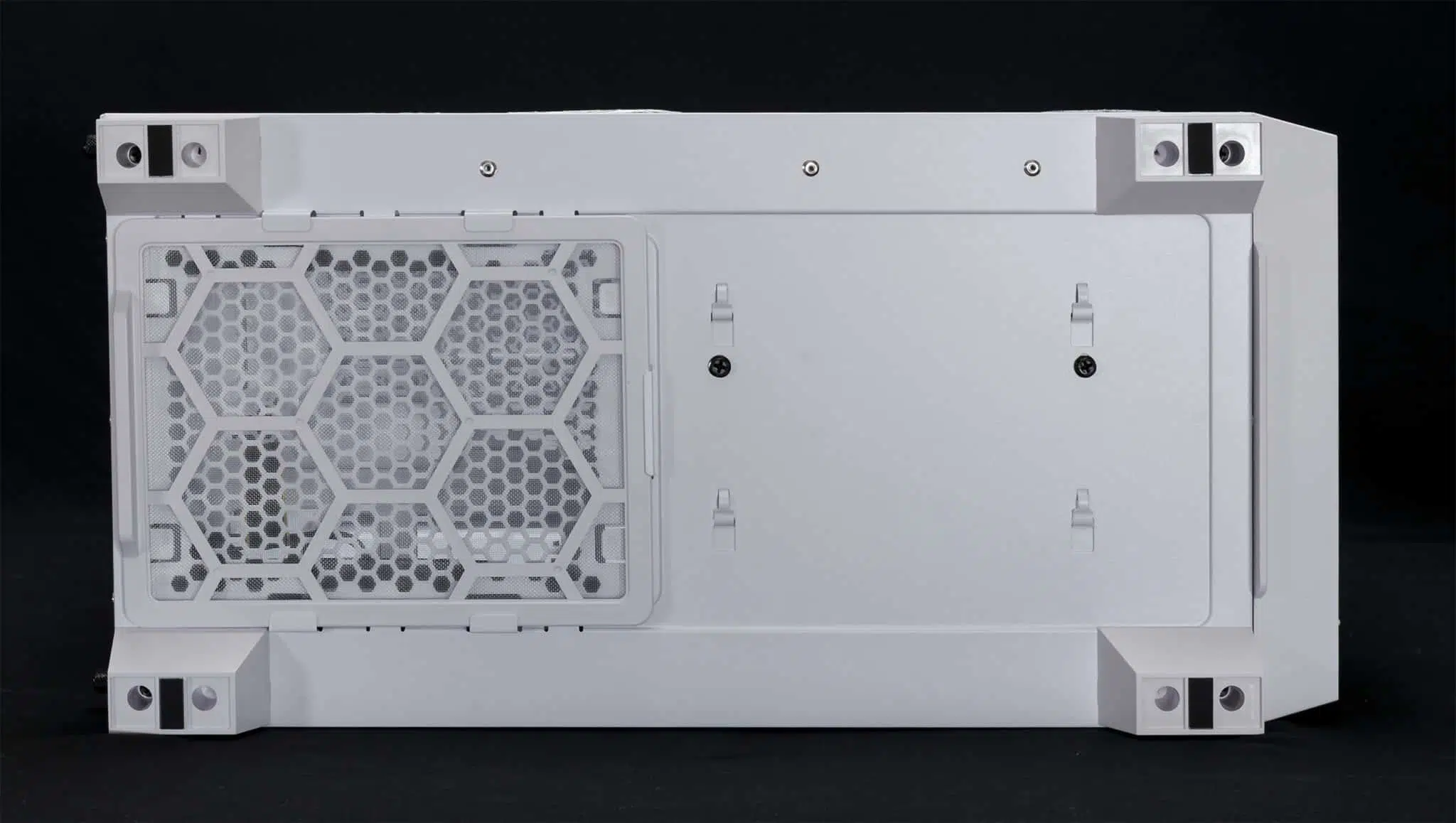
Antec has equipped the DF800 FLUX with a filter for the power supply intake. Also visible are the tabs and screws that anchor the bottom drive cage.
Specifications
| Color | White, also available in black |
| Materials | Steel, Plastic, 4mm Tempered Glass |
| Dimensions L x W x H (mm) | 479mm x 220mm x 488mm |
| Maximum CPU Cooler Height | 205mm |
| Maximum GPU Length | 405mm |
| Total Expansion Slots | 7 |
| Motherboard Size Support | ATX, Micro-ATX, Mini-ITX |
| Input / Output Panel | 2 x USB 3.0 Type A, 3.5mm audio combo jack |
| Power Supply Support | ATX, up to 220mm |
| Internal 3.5″ / 2.5” Mounts | Three 3.5″, 2 2.5″ |
| Internal 2.5″ Mounts | Three 2.5″ only |
| Included Fans | 3 x 120mm PWM ARGB fans front, 1 x 120mm PWM fan rear, 1 x 120mm PWM reverse flow fan for PSU shroud |
| Front Fan Positions | 3 x 120mm / 2 x 140mm |
| Top Fan Positions | 3 x 120mm / 2 x 140mm |
| Rear Fan Position | 1 x 120mm |
| Power Supply Shroud | 2 x 120mm |
| Radiator Support | Top: up to 280mm or 360mm Front: up to 280mm or 360mm (installation of fans inside of front panel limits radiator thickness to 30mm, otherwise 55mm |
| Filters | Bottom for PSU Top covering all airflow cutouts Right-hand side for PSU compartment intake |
| Warranty | Two Years |
Discussion (8 replies)
Join Discussion →But can it fit a STRIX 4090? ;)
It actually should, fitting GPUs up to 405mm in length, where the Strix 4090 is at 358mm. Height should be okay too, but one won't have much room for that PCIe power connector and may wish to consider CableMod's right-angle adapter.
I like Antec. This should pop up on sale for under a hundy at some point. I don't really care about glass or LED disco lights, so if they offer a cheaper version omitting those that would be cool (not one listed on their site tho).
What I don't like is no dust filter for the front 3 intake fans. It has a bottome, side and top filter, but not on the front, where the primary intake is. Dust filters are a must for me and really cuts down on the cat hair intake.
The subtraction of glass should cut the price a bit, though I don't expect there to be much savings from dropping the RGB fans. You can just choose to not turn them on if you like, as they're the 5v kind that can be run from a motherboard header.
Only thing I could think of was the limited intake up front; a front filter is going to cause further restriction and potentially increase fan noise, or otherwise potentially limit cooling.
Yeah I mean when done right they can make a huge difference without impeding airflow. But all too frequently not. My P100 has a nice front filter, easy to pop off and clean. It doesn't eliminate dust intake but it helps a lot... and I have 3 cats so it gets cleaned frequently
They were my go to brand for power supplies, and cases back in the day. They seemed to fade away, but I'm glad to see them coming back into the market again. As far as this case goes, it's a nice case, but the only thing that sets it apart from other cases is the front. The overall case seems like just about any other mid tower out there.
Not much anyone can do. This configuration has become a standard of sorts, and is really the limit of performance while keeping the system compact as well as using the most accessible components.
Most innovation is being focused on either larger or smaller systems. Many higher-end boards are EATX now, and even some more mid-range boards. On the other end, if one is willing to put up with a few compromises, ITX delivers quite a wallop in a small package. But that's just considering 'features' and 'specifications'; cooling is an entirely different matter!
You're probably right there. It's kind of up to the end user to make it their own.