
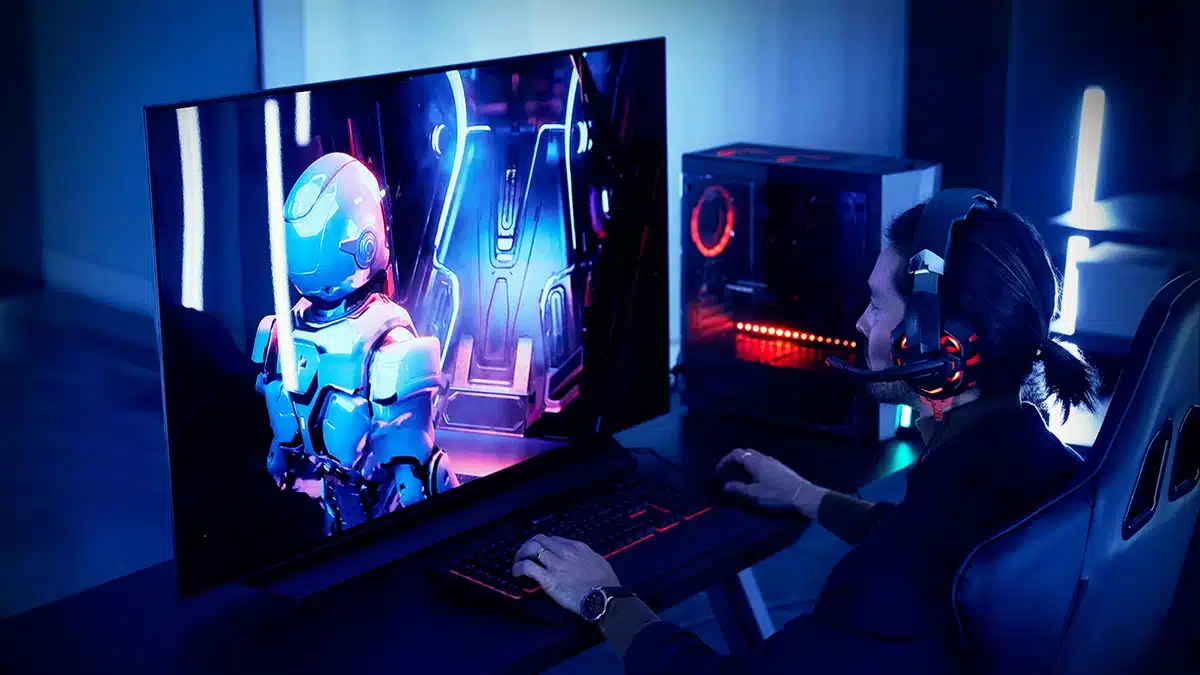
Is it already time to upgrade that LG OLED TV?
Thanks to a slip-up from AMD, home theater enthusiasts have learned that LG’s 2024 lineup of OLED TVs will comprise the B4, C4, and G4 models, and not only that, some of these TVs will introduce a 144 Hz refresh rate, which, while not incredible in itself, represents a welcome improvement over the specifications of the previous (120 Hz) models.
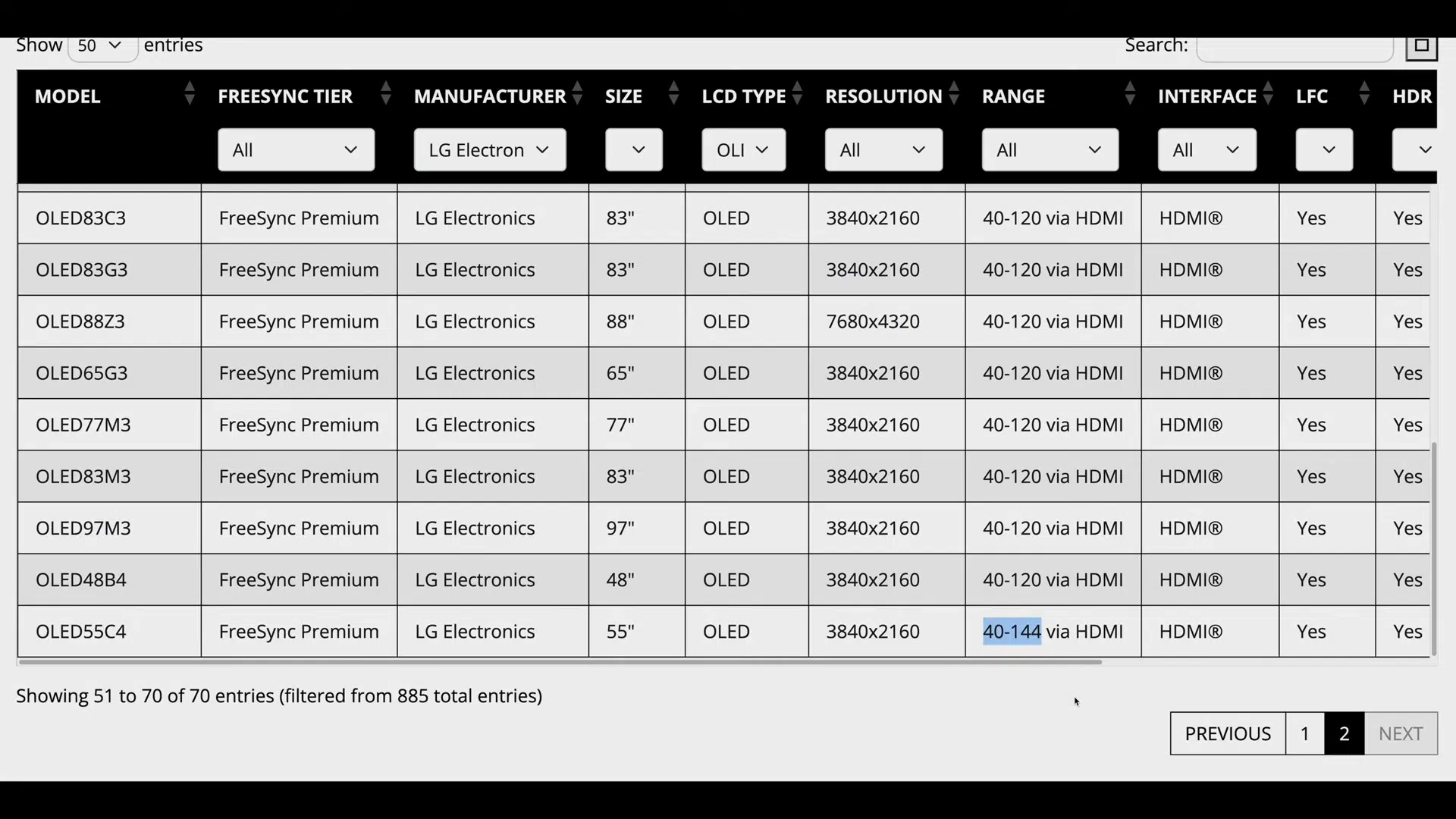
As shown in a recent video from the HDTVTest channel, the leak stems from AMD’s listing of FreeSync TVs, which was apparently updated, albeit briefly, with some of the specs for LG’s next OLED models.
Those would include the OLED55C4, which was listed with support for a refresh rate of up to 144 Hz via HDMI.
Additionally, FlatpanelsHD has shared leaked images of the 55-inch LG C4 and 77-inch LG G4 OLED TVs that were found on Korea’s safetykorea.kr certification database, although there doesn’t seem to be any major design changes here, including the usual silver stand.
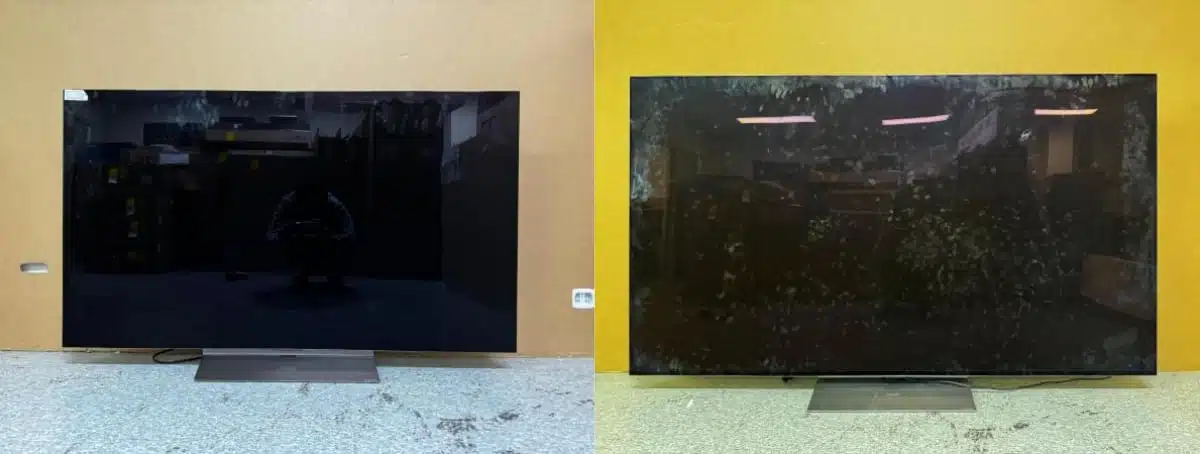
The publication speculates that the G4, one of LG’s more premium OLED offerings, will feature a panel that offers not only higher brightness, but also less reflections:
…the MLA OLED panel will once again be reserved for the G4 range and not make it to C4. Besides higher brightness and better efficiency, MLA OLED has a different anti-reflective coating, which seems to be observable in the photos.
LG appears to have all of its OLED TVs on sale as part of its Cyber Monday promotions, including the LG OLED Flex, a TV that’s ideal for customers who can’t decide whether they like a curved or flat screen better.
Discussion (19 replies)
Join Discussion →The current ones are 120Hz so … not a huge leap. My old one is 60Hz and I won’t lie, I’ve been eyeballing a new one for a while. But it still works and I barely watch TV or use it any more …
I have, supposed, 120hz tv/monitors, at 4k they only do 60hz (in part due to the hdmi level of the monitor I think).
I would be happy to get 144 to work with the FreeSync.
For a tv, whats the point? No point at all , no point in 15years either.
Now to buy said tv to use as a monitor for a pc, I guess that helps.
Some people like that "soap opera effect" that the higher refresh rate produces. I can't stand it.
Otherwise, PS5 and Xbox both support VRR. It can be useful there.
If my TV ever dies, I guess I will look at some Oled, I think more than anything I would look for good color, contrasts and black specially.
I want a C2 or maybe C3 at some point around the 40 inch size range to be my new main monitor. But that will wait until other goals are reached.
I know it's trendy in displays to want "all the hertz" but I am perfectly happy with 120hz. Heck, I'd be perfectly happy with 90hz.
I still maintain that 60fpps is an acceptable minimum, at least for single player titles, and I really see no reason to ever exceed 120hz, even if you are the worlds biggest "esports" fan.
More than just raw refresh rate, whats important IMHO, are low input lag and VRR, and they already do that, so...
I just made that transition to a 42" C3 and while it has some minor annoyances associated with having a TV as a monitor, overall I am very happy with it. Text clarity could be better. (The WRGB subpixel layout really messes with that) so it is not necessarily the worlds best productivity screen, but for entertainment purposes (gaming, film tv etc.) I don't think there is anything better out there.
It makes absolutely no sense that neither AMD nor Nvidia don't use CEC and other HDMI features to turn TV's on and off like they do with monitors.
I have to say it boggles my mind that my good friends who live in a million dollar house think a good tv is just the biggest one for the dollar...
Funny you say this - my next door neighbor just had his 87" TV custom delivered. He was talking about how it was so much better than the OLEDs because the sales guy said you needed too much bandwidth on the internet to make it look good.
I just kept my mouth shut. The dude hates my dogs, so I hate him.
Fuggin idiots. Well.. at least in that area of expertise.
I love my C2. It's basically my reference for when I want to see all that a game has to offer. The extra Hz could be nice but I find it difficult to tell the difference once it gets much higher than 100-110. I had a crapola MSI 200 Hz 21:9 1080p display that I accidentally destroyed (dropped something big and heavy on) but before that happened I did a test and hooked up the 4090 rig to it just to hammer some FPS to it and I really had a hard time perceiving the difference with those extra frames above 120.
Other than software and available ports, considering the panel only, what is the main/real differences between a TV and Monitor?
I dont know enough about the insides of the tech to say which leaves me curious. My understanding is that software in the TV for image clarity is what causes the severe input lag - thus game mode turns it off.
What causes text to be less sharp? Other than Chroma - that I know.
Thanks
You're thinking of "motion interpolation" that is often known by names such as Samsung AutoMotion and LG TruMotion. That's not the actual refresh rate of the panel, that's a feature that inserts fake frames in between every real frame.
Software is the difference. The panels are basically the same, it's how the software deals with what you are putting in to it and how the manufacturer wants the image displayed. Monitors have to be more sharp for text, which is why movies generally look like poo on them. TV's are softened a lot more, otherwise, again, movies would look like poo.
The subpixel layout has a large effect on this. TVs tend to have non-ideal subpixel layouts.