
We dropped by ADATA’s booth at Computex 2024 to check out their new wares that will be hitting the market in the near future. The quick summary includes a new handheld gaming console, a handful of cases, a new generation of AIO CPU coolers and PSUs upgraded to include ATX 3.1 support.
ADATA XPG NIA Handheld Gaming Console
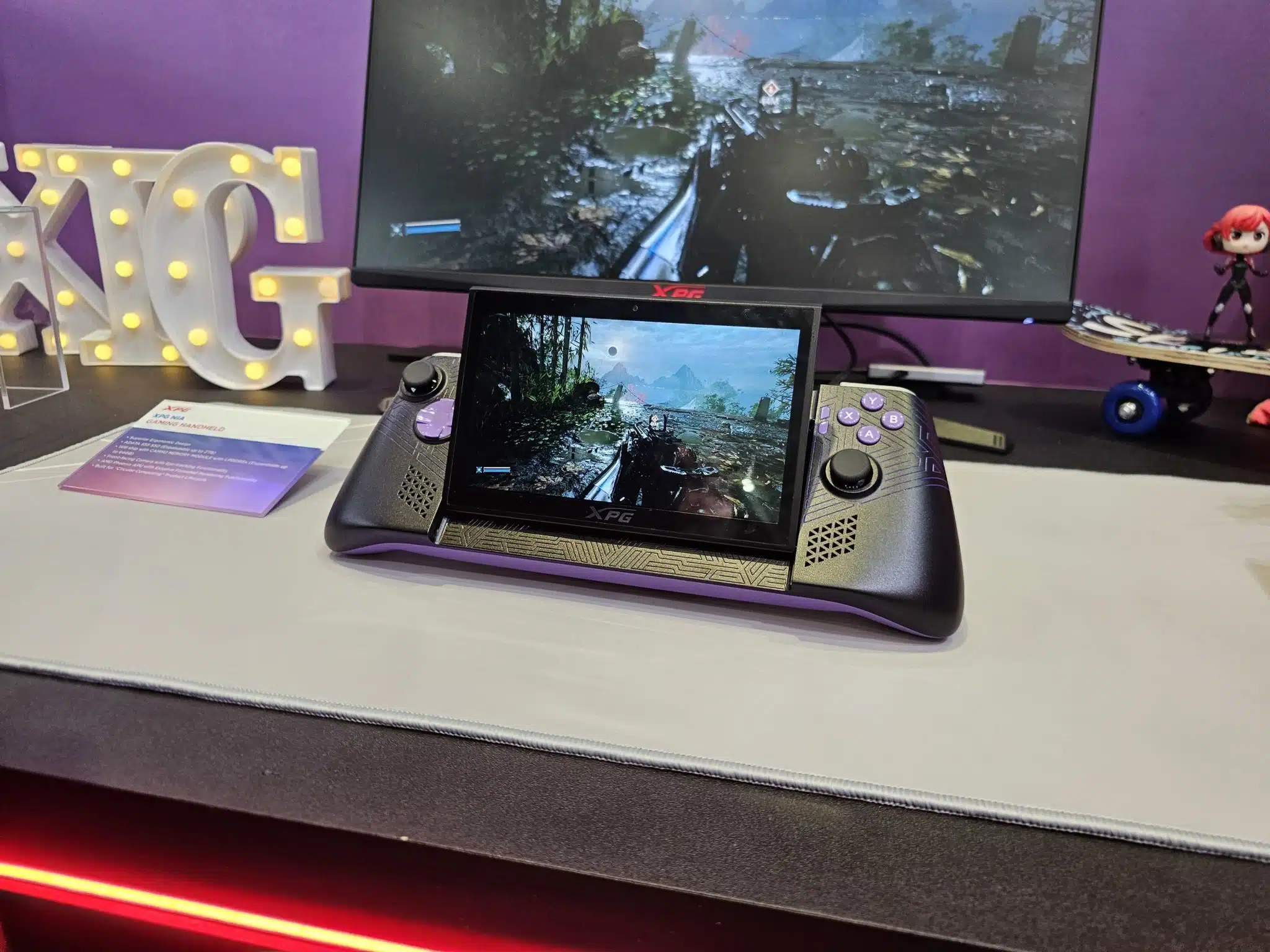
ADATA was showing off a working prototype of the XPG NIA Gaming Console which they hope to differentiate from the gaggle of consoles that have hit the market recently (Steamdeck, ROG Ally Series, ZOTAC Zone) by improving on the ergonomics, upgrade and customization options. Looking at the competition, everyone has the same AMD Phoenix APU that’s running on a decent looking screen with specifications that are adequate to get the gaming job done.
On the ergonomics front, ADATA is going with a sliding screen that allows for better hand and arm angles at various positions. The console is also a bit larger than its competition in both the size and weight area, however, ADATA focused on balancing it so it feels comfortable to hold. Based on holding it for a few minutes, it felt smaller and lighter than you’d think it does.
On the upgrade front, ADATA is using a CAMM2 memory module that will allow it to be upgraded to higher memory capacities in the future should the need arise. The SSD planned to be included is of the 2230 size flavor at the moment (aka small), however, they indicated that they’re seeing if a 2280 (normal size) can make it into the final build configuration.
For customization, ADATA will release 3D print schematics that will allow you to re-do the shell or other components of the case.
They are expecting an early 2025 release with pricing in the $500-600 ballpark which will make it one to keep our eyes on, probably around CES time next year.
ADATA Cases
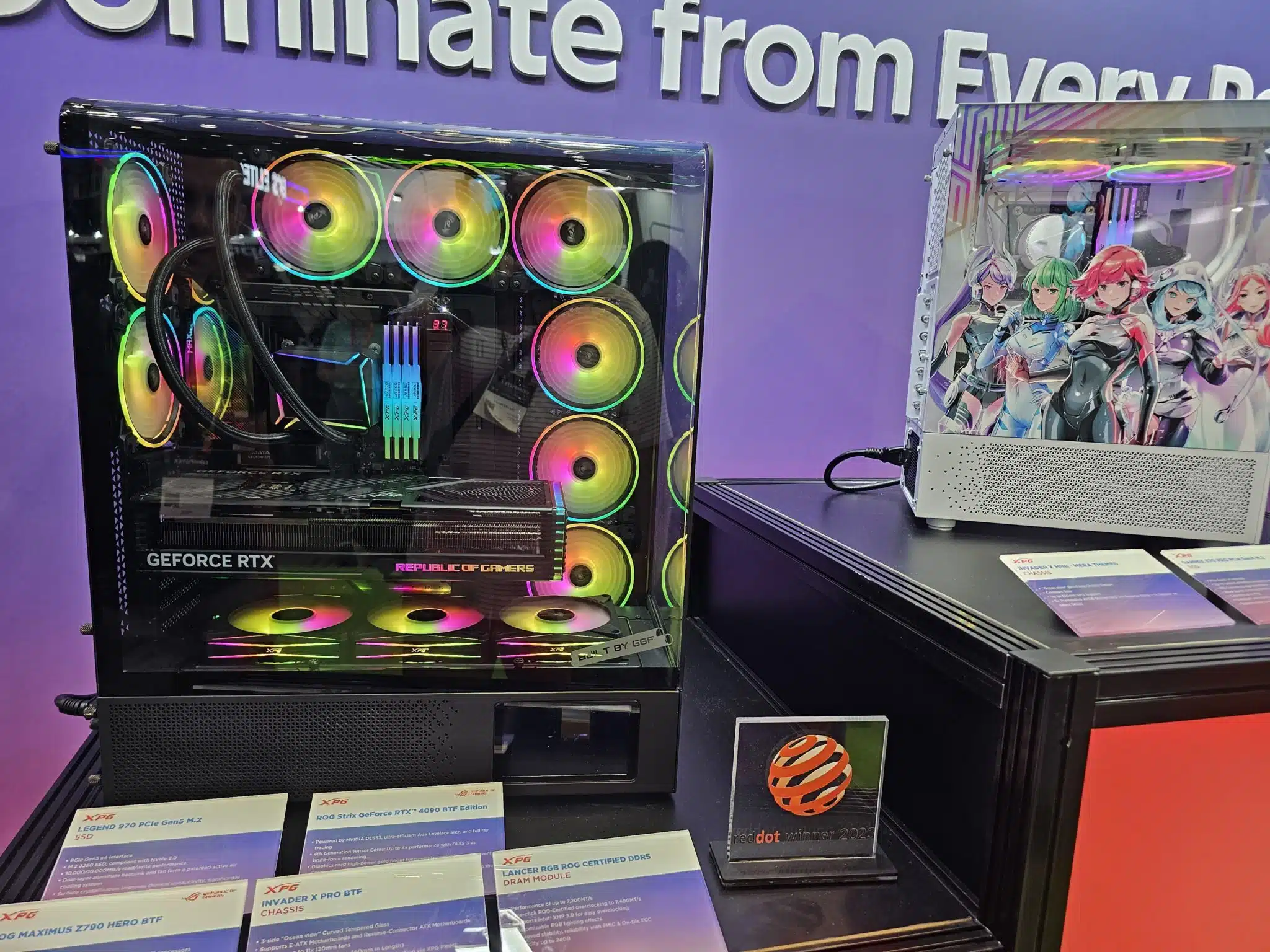
ADATA went all in with a couple of BTF form factor cases. The first is the Invader X Pro BTF which is a curved glass case that has room for more fans than we have fingers available for counting. The curved glass provides a panoramic view of your RGB-inspired rig without wires getting in the way of the bling.
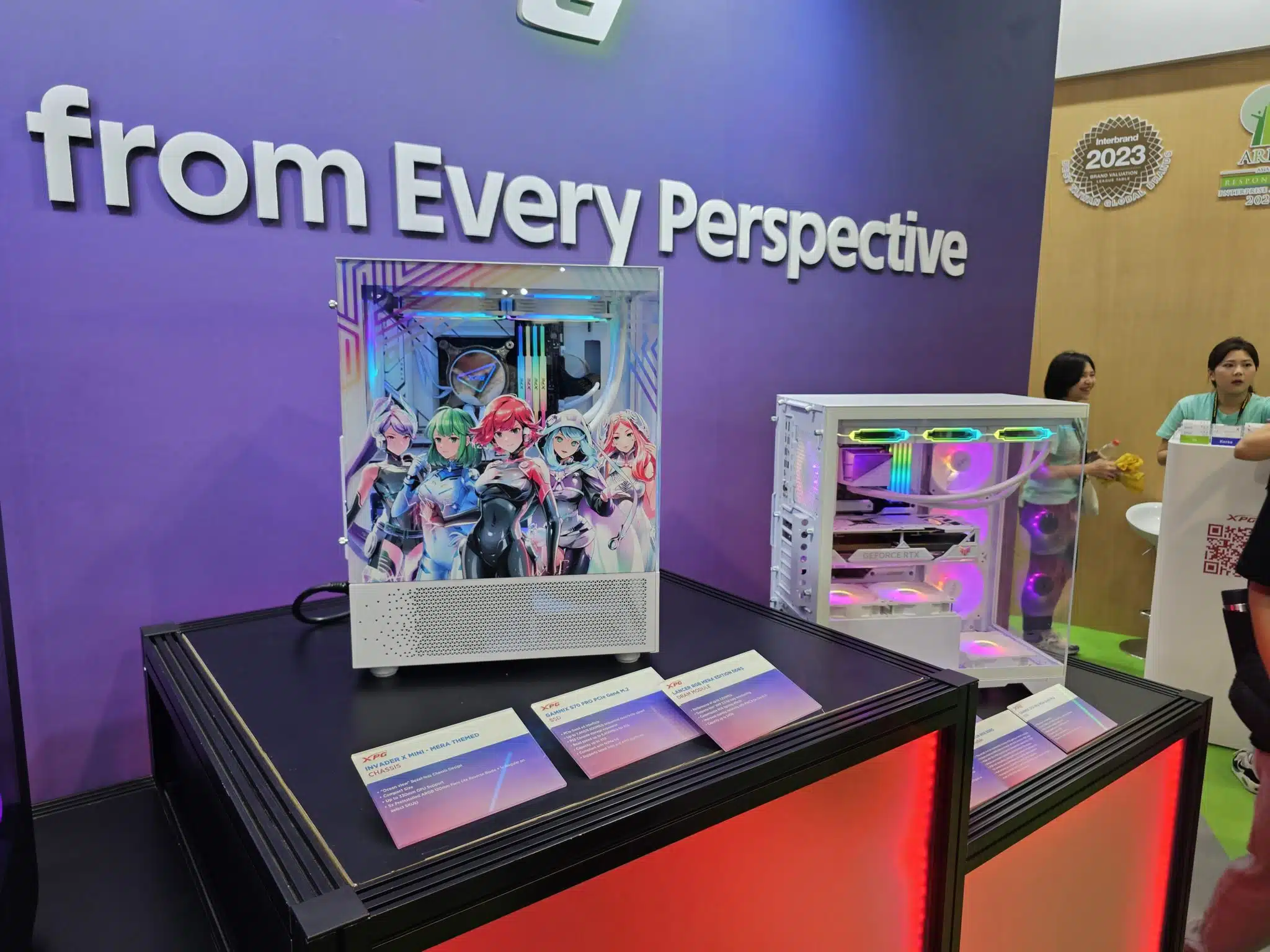
The middle case is the Invader X Mini (not a BTF case), but aimed at being more compact. It is decked out in a MERA theme that won’t be part of the standard case offering.
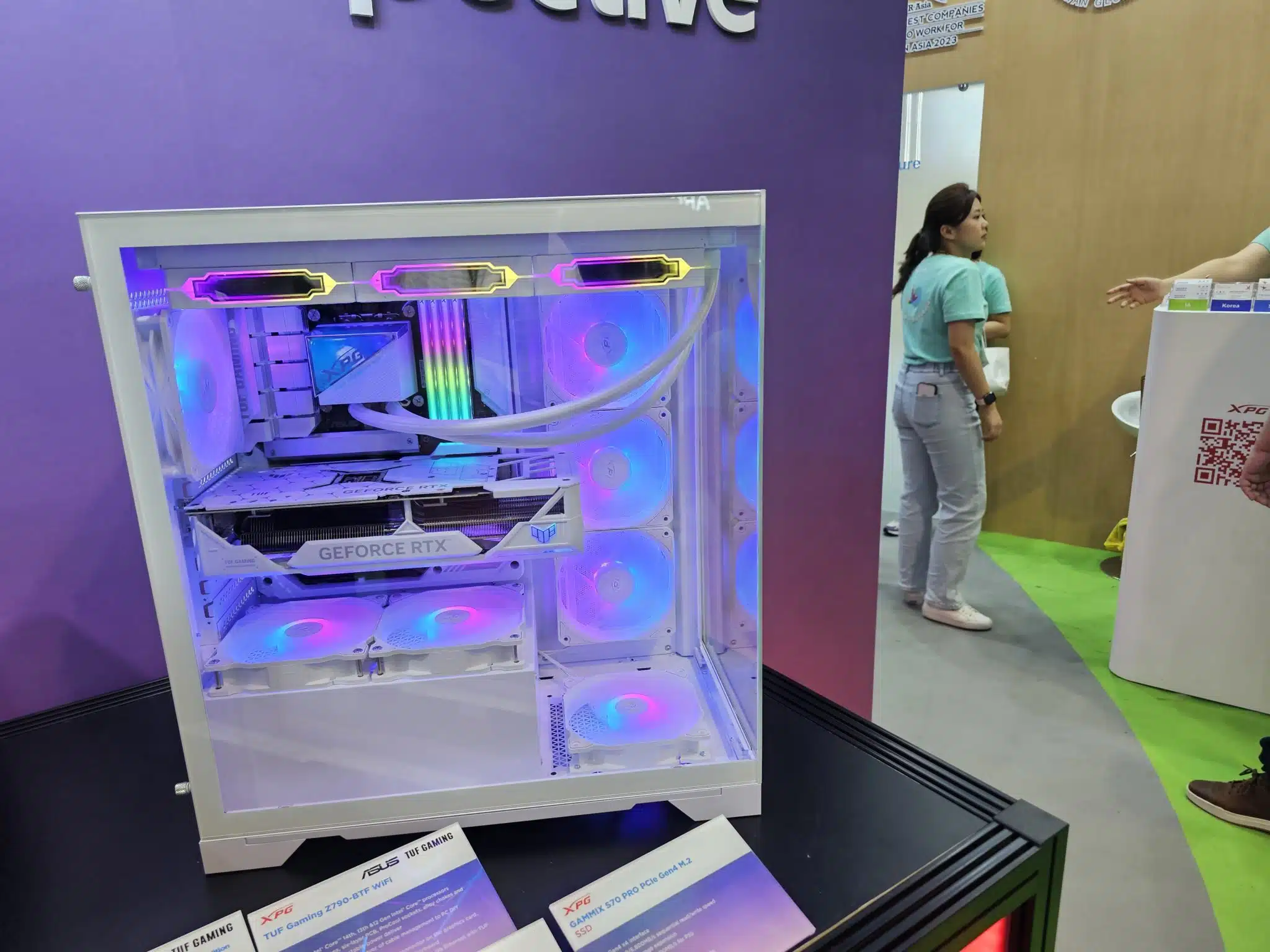
Finally we have the Invader X BTF (non-Pro) which omits the curved glass and some the size of the Pro version of the case. Per ADATA, all of the back connector standards should work in the case.
ADATA Levante II and Connectable Fans
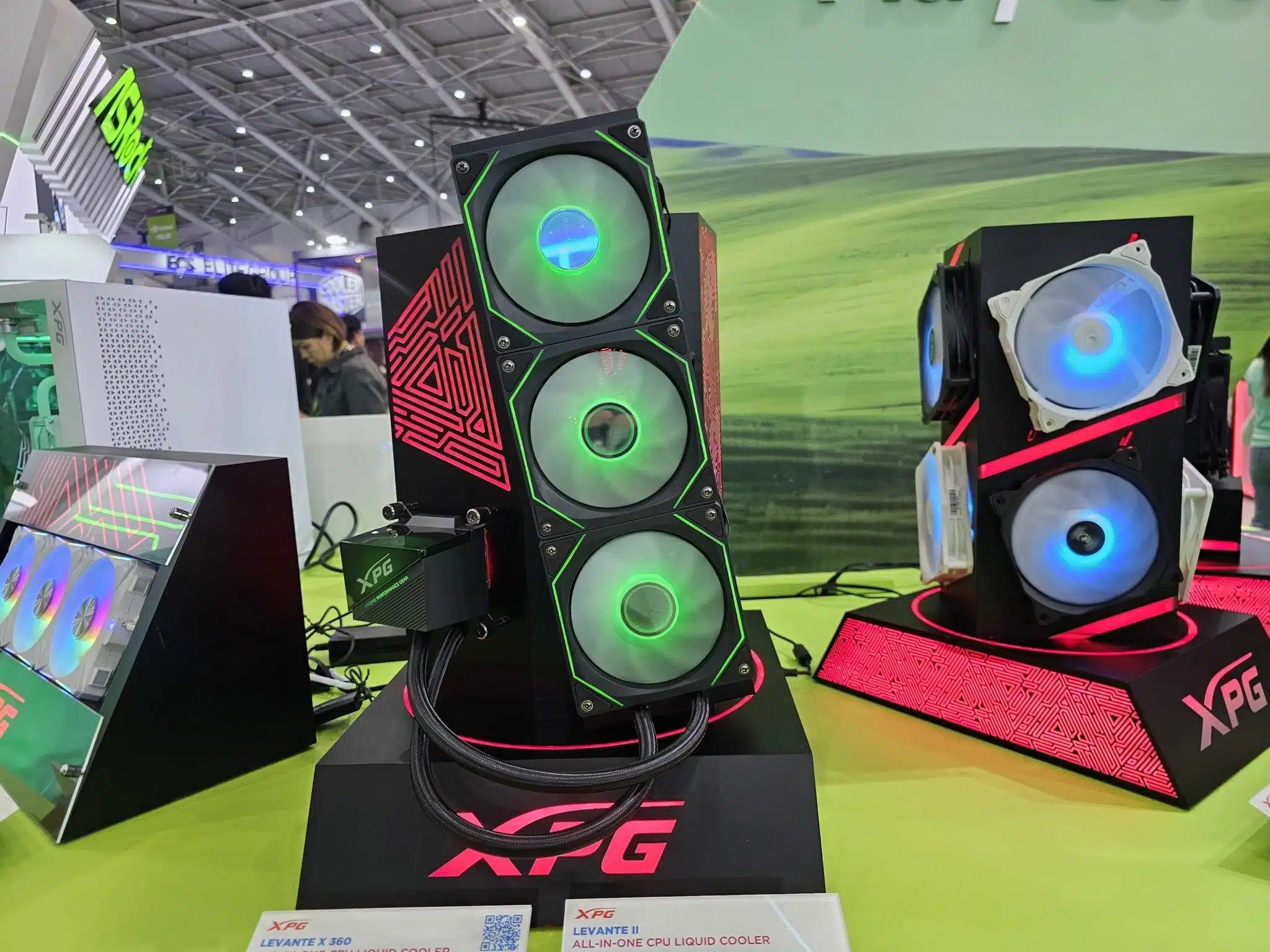
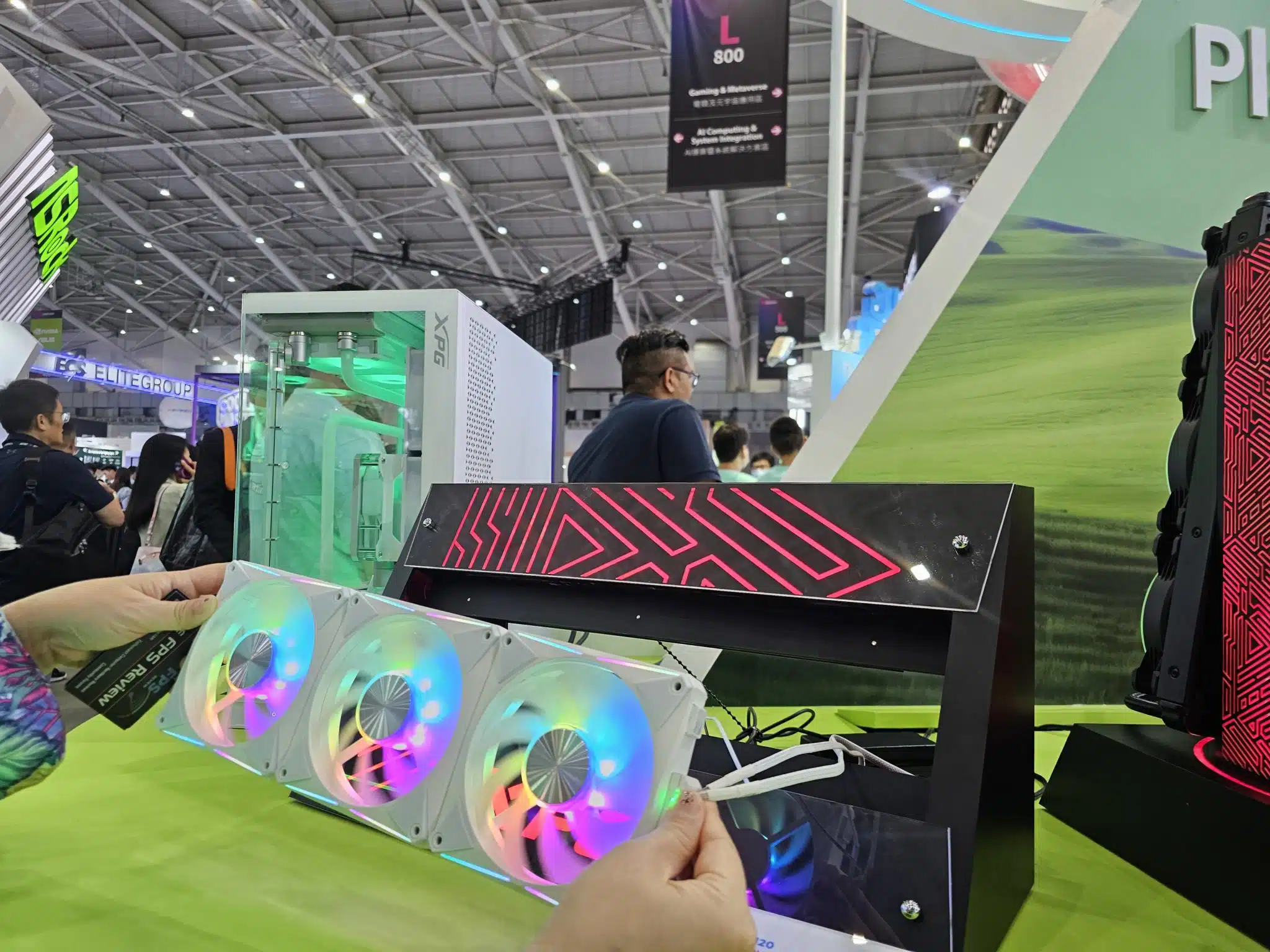
On the cooling front, ADATA was showing off its XPG Levante II AIO CPU Cooler that will be hitting the market in the coming months. The AIO is the successor to the XPG Levante that we looked at a few years back and ADATA was quick to note that it will be its first non-Asetek design. They also had their rendition of quick connect/snap together fans that will be available later this year.
ADATA Power Supplies
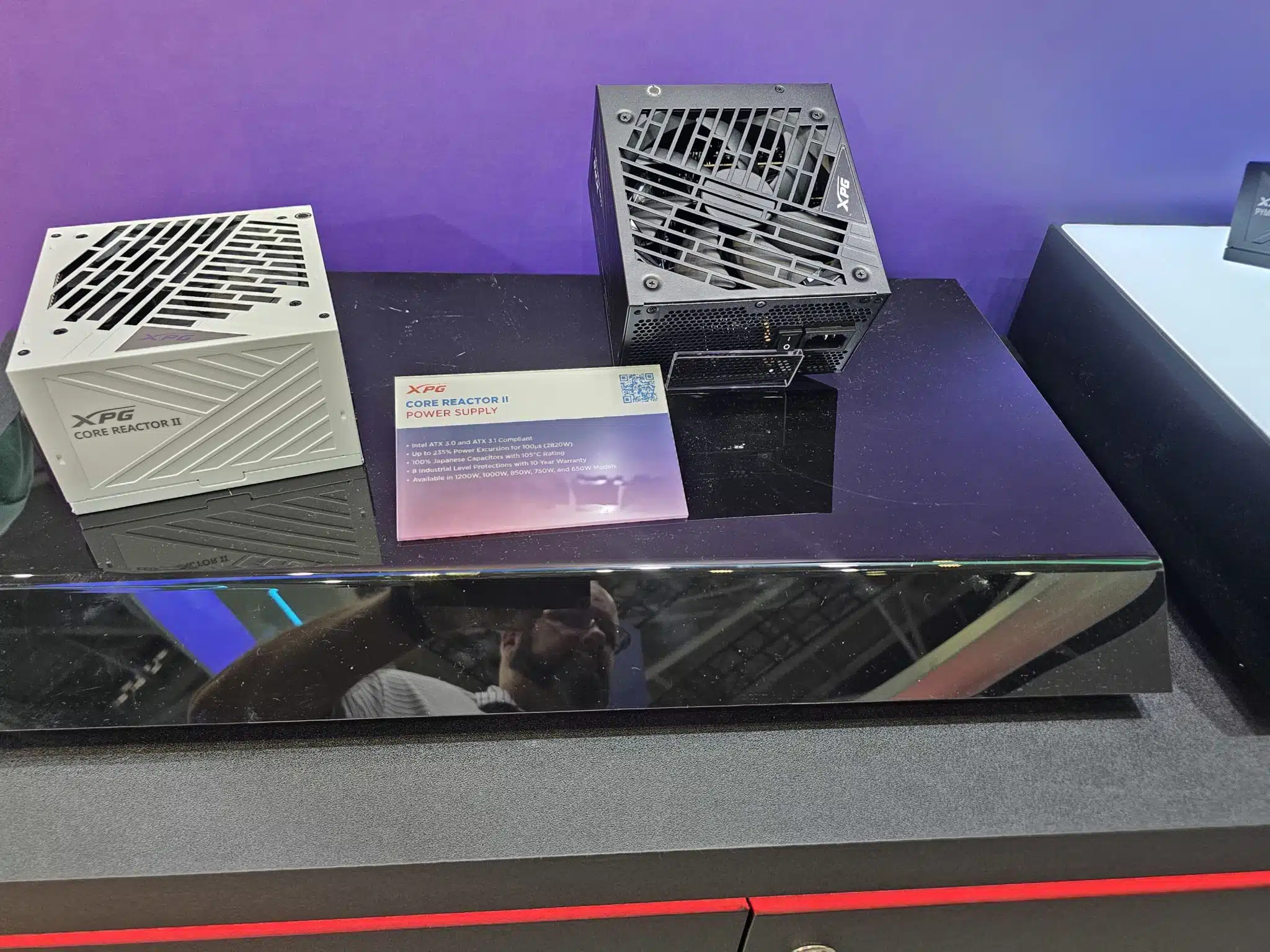
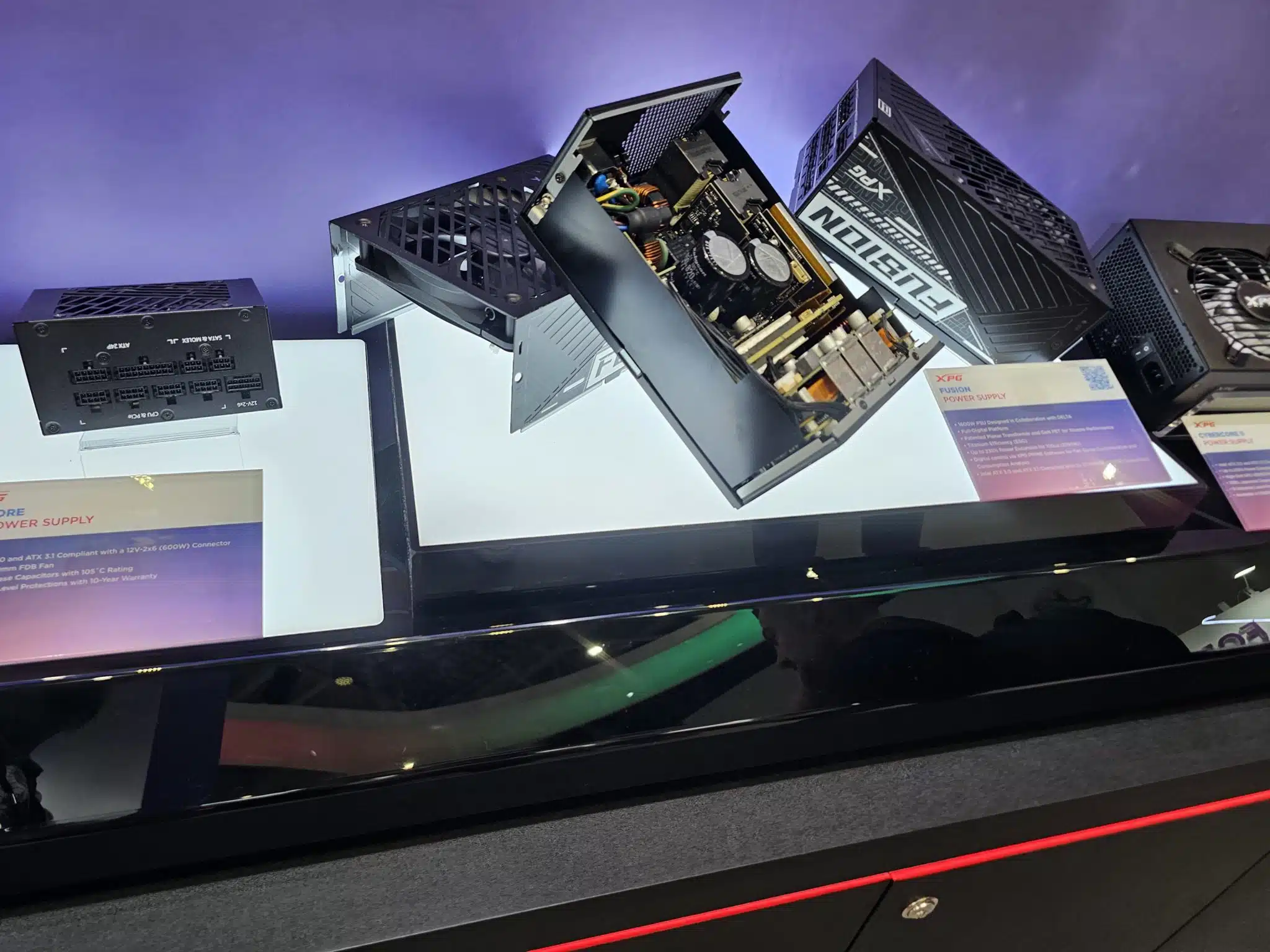
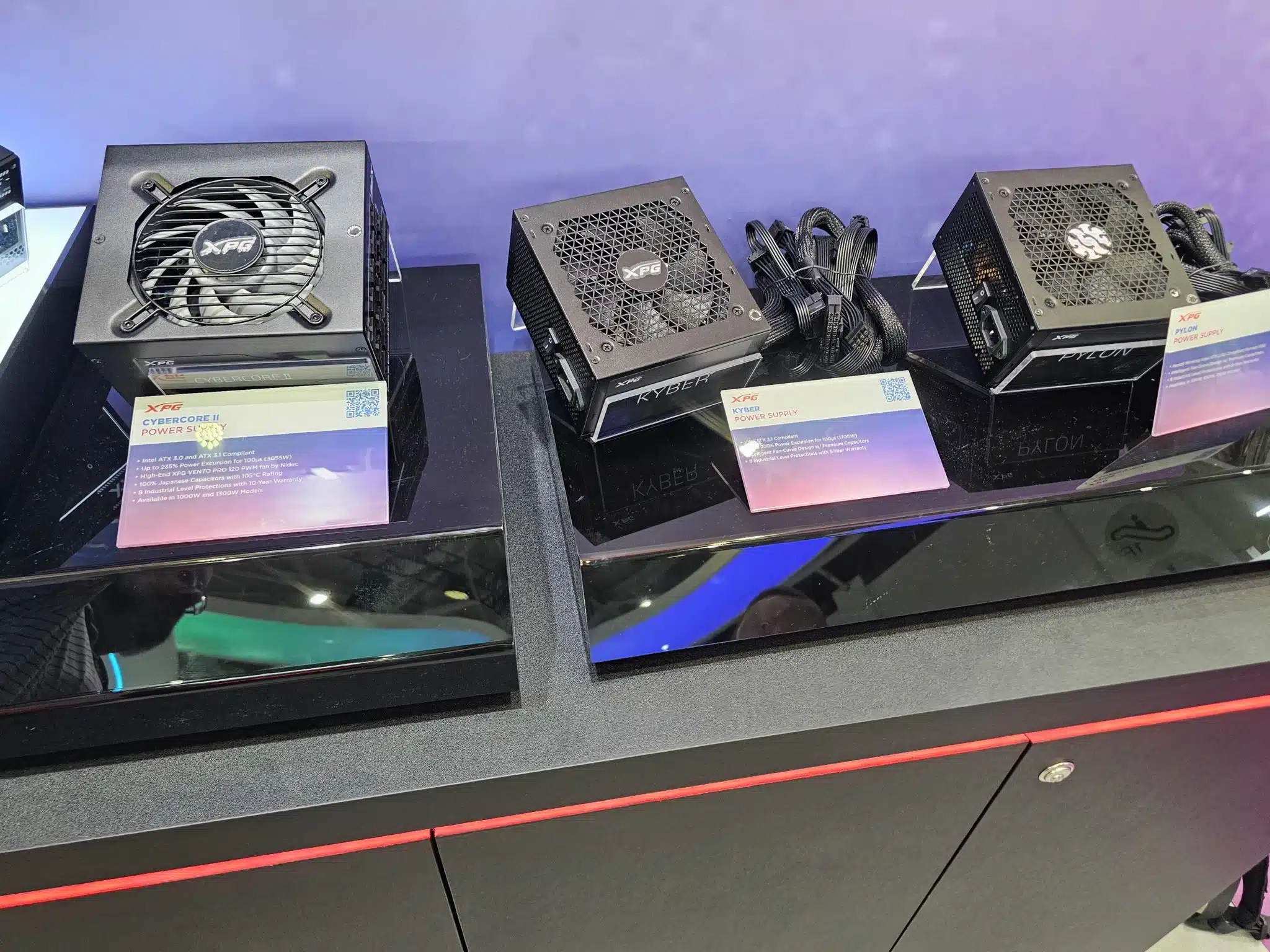
On the power supply front ADATA is refreshing its line of power supplies from ATX 3.0 to ATX 3.1 compatibility for its CORE REACTOR II, CYBERCORE II, KYBER, FUSION and PYLON families. As with the last few times we saw it, the FUSION 1600W supply is a completely digital unit that can be monitored and adjusted via software.
Discussion (4 replies)
Join Discussion →This is surprising to see them join this list as they have been around a while, but not a huge gaming company in my eyes.
I like how it (handheld) has an upgradeable memory option. Overall a snazzy-looking design to boot plus that sliding screen seems nice.
I'm surprised to see them joining the BTF case design as well. Seems like this is starting to gain some traction. Only time will tell if it really takes off.
I agree, I usually think of memory or storage when it comes to them and tend to forget all the other things they make.
I really like the cable plug ins behind the motherboard, not only for looks, but just makes everything easier and cleaner. My Z790 Project Zero is very nice for that reason.
The BTF graphics card design is a plus as well, but not sure if that will take off as well.
Their XPG brand is certainly focused on gaming, but I would say it has a much better presence outside the US, especially over the course of recent history. They do seem intent on making a larger US push now...
BTF/Project Zero/etc is very much a chicken or egg sort of thing - the average home user isn't going to be interested in an ecosystem with 2 motherboards, 2 GPUs and 3 cases to chose from with an uncertain upgrade path down the road. Now, system builders that sell "custom" systems could do very well with this - a differentiating feature of no wires and consumers that aren't as worried about swapping components as frequently.
For cases that are wide enough, it's really not that hard to add the back of board support - the case just needs to have a couple inches of room under the motherboard to do the plumbing - which is accomplished usually by putting the board up on a platform instead of more flush with the back of the case.
Right now, all of these back of board kits have largely sold as combos to "reduce consumer confusion about compatibility" which also puts the brakes on things a bit...