
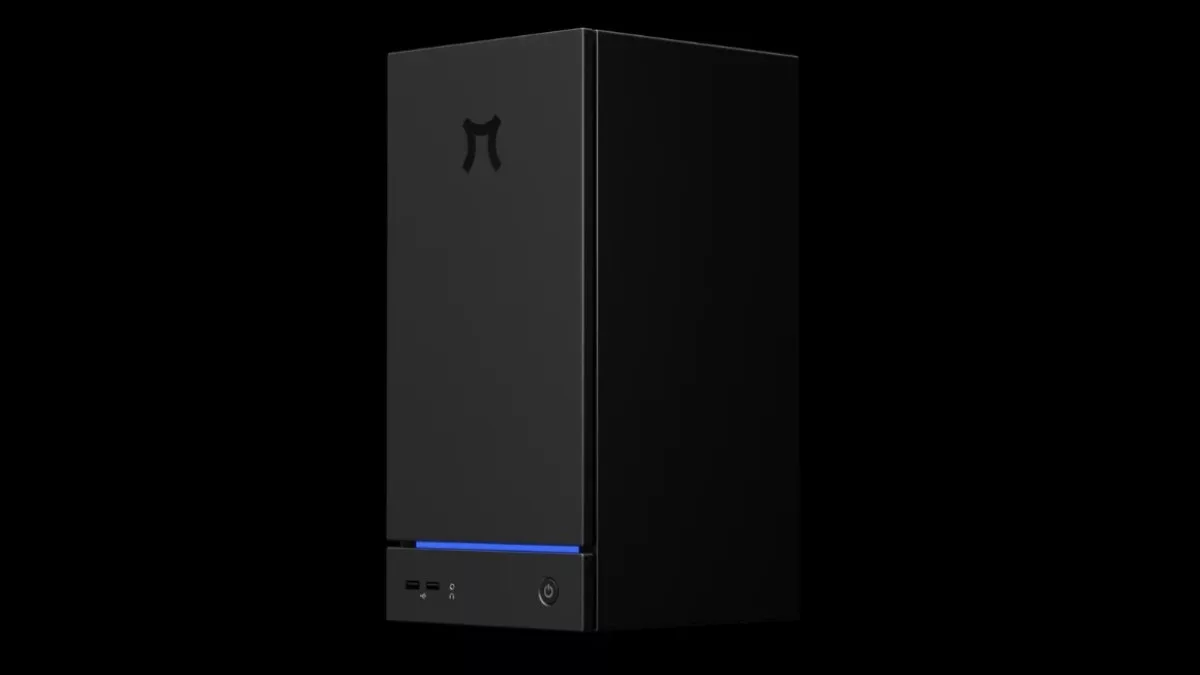
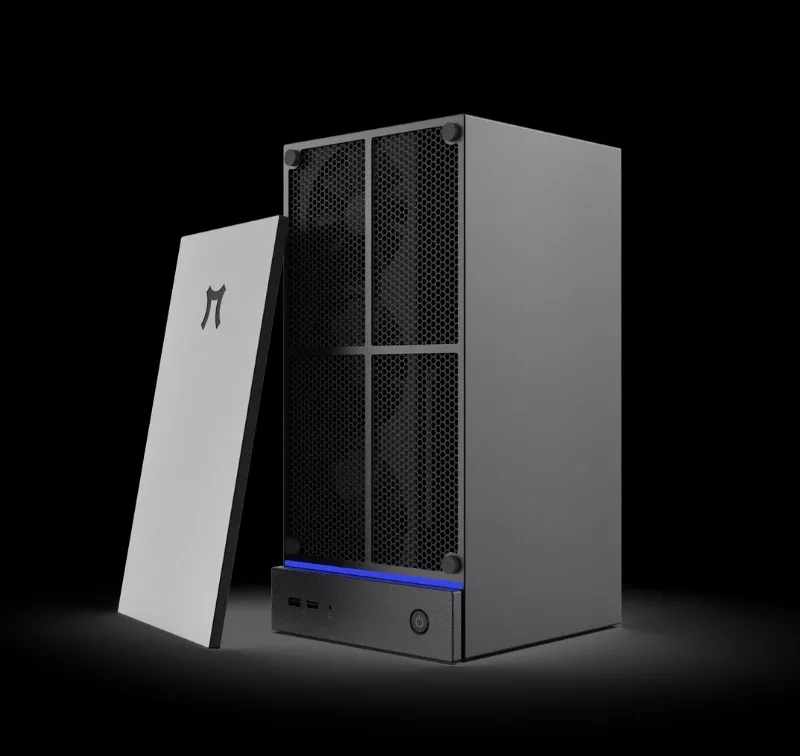
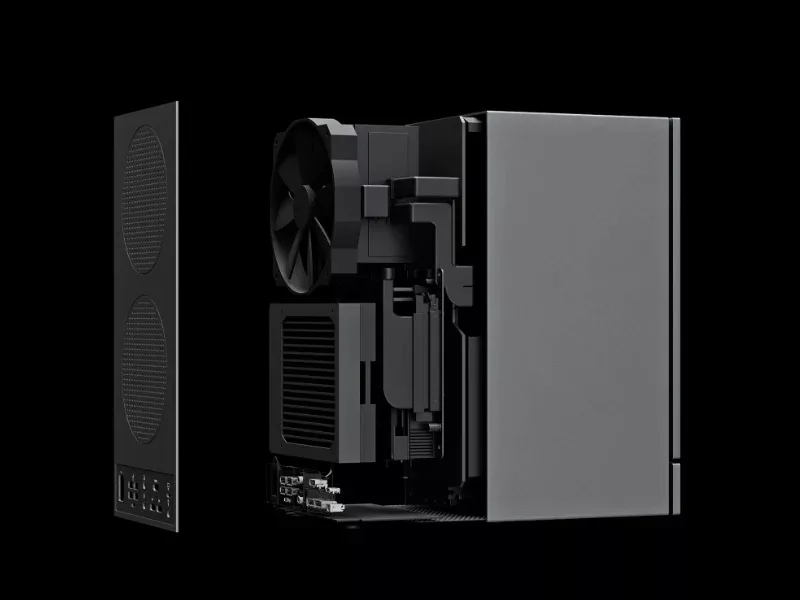
Pimax has unveiled its Spation mini-PC, and while it’s designed for VR gaming, it checks many of the right boxes for anyone considering a prebuilt PC gaming system. Since the launch of Steam Machine earlier this summer, many PC boutique sellers and DIYers have been showing off their attempts to outdo Valve’s PC gaming box, which launched with underwhelming specs and a somewhat overwhelming price tag due to current NAND/DRAM supply constraints. Now, while Pimax has yet to reveal the costs for its Spation systems, which is touts as a PC with a console footprint, the specs on paper, as well as images of its internal setup, are definitely in the right direction for someone looking at a prebuilt system.
Spation Specifications
- CPU: AMD Ryzen 7 9800X3D (or equiv.)
- GPU: AMD RX 9070 XT or Nvidia RTX 5070 Ti
- Memory: 32GB DDR5-6000 (16GB × 2)
- Storage: 1TB M.2 NVMe SSD (PCIe 5.0 × 4)
- Power Supply: 1000W SFX
- Wi-Fi: Wi-Fi 7
- Bluetooth: BLE 5.4
- Wired Networking: 2.5G Ethernet
- Video Output: 2 × DisplayPort 2.1 + 1 × HDMI 2.1 + 1 × USB-C DisplayPort 1.4a
- USB: 1 × USB4 (Type-C) + 6 × USB 3.2 Gen 2 (Type-A)
- Operating System: Supports Windows and SteamOS (not pre-installed)
- DIY Configuration: Available — Pimax supplies the chassis; customer supplies storage and GPU
The biggest shortcoming of the Pimax Spation is its single storage option, and while it is PCIe 5.0, it is limited to a 1 TB capacity, but it has said there is room to add more. Beyond that, however, the Spation has appropriately paired the AMD Ryzen 7 9800X3D with 32GB DDR-6000 for optimal performance and hasn’t cut corners on the power by offering a 1000W PSU, although it’s unknown what efficiency rating the unit has. Don’t want to purchase a complete prebuilt; well, Pimax is aware that PC enthusiasts normally want a more direct hand in building their setups and is offering a DIY kit as well. Pimax will sell the chassis for those who want to source their own storage and GPUs as well. It doesn’t stop with Windows or SteamOS (not pre-installed but compatible), as the manufacturer’s Pimax Play software client is also making its way to Linux. Meanwhile, Pimax isn’t satisfied with just launching a potential Steam Machine alternative, as it is also launching a wireless VR headset of its own with the Crystal Pro (via NotebookCheck), which will go for between $1,399 and $1,899 depending on if one just wants the headset and battery or the complete package.

Discussion
Join Discussion →No replies yet. Be the first to reply on the forum.