
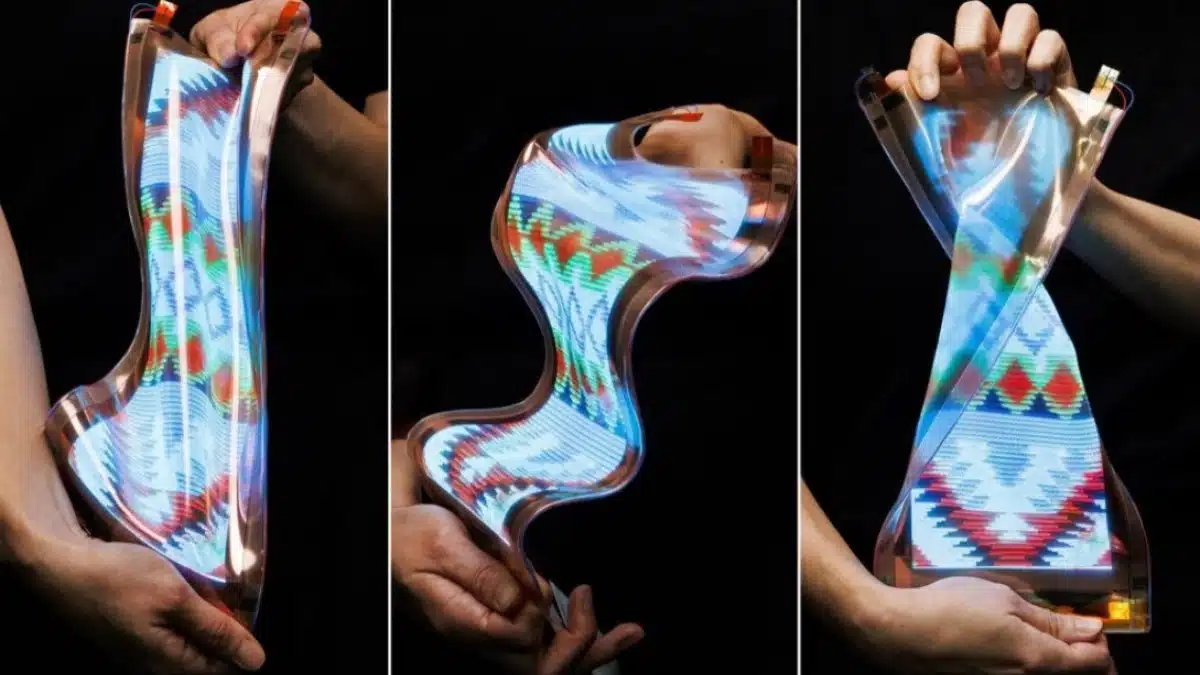
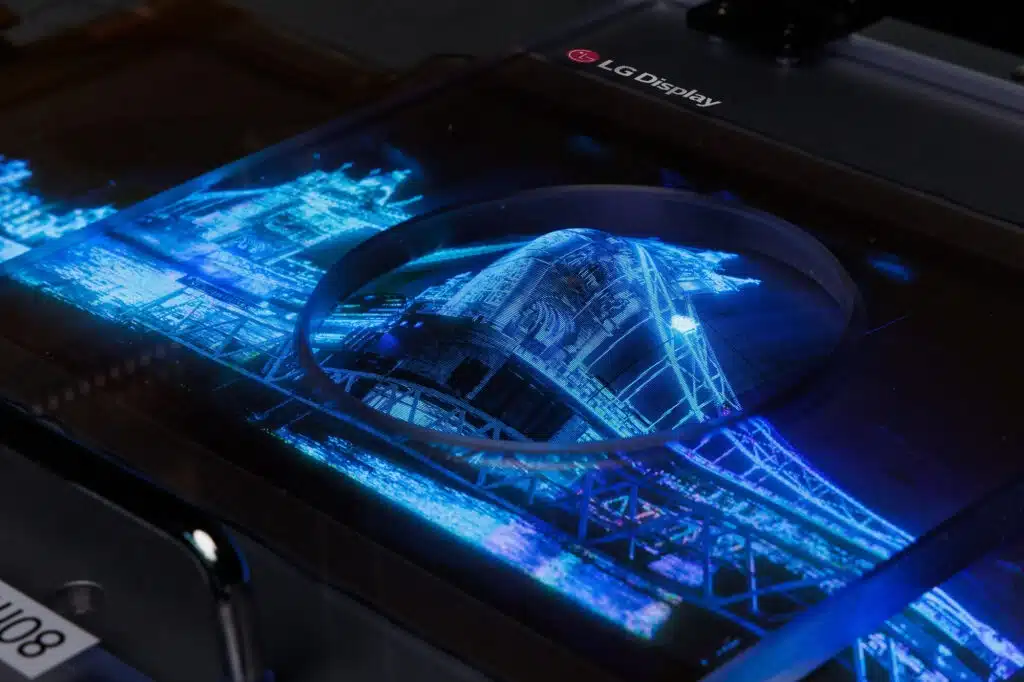
LG has developed a display that can be stretched by up to 50% over its original size, over and over up to 10,000 times. The micro-LED RGB display is 12 inches long, can be stretched to 18 inches, and has a resolution of 100ppi (roughly translates to ~850×850 per PPI calculator). LG has developed an expandable screen that has a light source of up to 40μm (micrometers) as part of a government-led initiative begun in 2020 to develop stretchable displays. The new display is said to maintain its image quality in extreme temperatures and can resist impact damage. LG is the lead company among 19 others who are jointly performing R&D and has now secured its place as the core company to provide materials, parts, and equipment.
“ We will work to build a sustainable future display ecosystem through close cooperation between domestic industry, academia, and research institutes .
Sooyoung Yoon, LG Display CTO and Vice President
”
LG’s earlier prototype from 2022 had an elongation ratio of up to 20%. While a notable achievement the newer iteration has more than doubled that, thus allowing for more diverse applications ranging from clothing to other irregular surfaces. Specialized silicone material substrates are enabling a new type of free-form display to be developed.
Per Press Release (machine translated):
- “Stretchable displays are not only thin and light, but can also be adhered to irregularly curved surfaces such as clothing and skin, so they are expected to be widely applied in various industries such as fashion, wearables, and mobility in the future.”
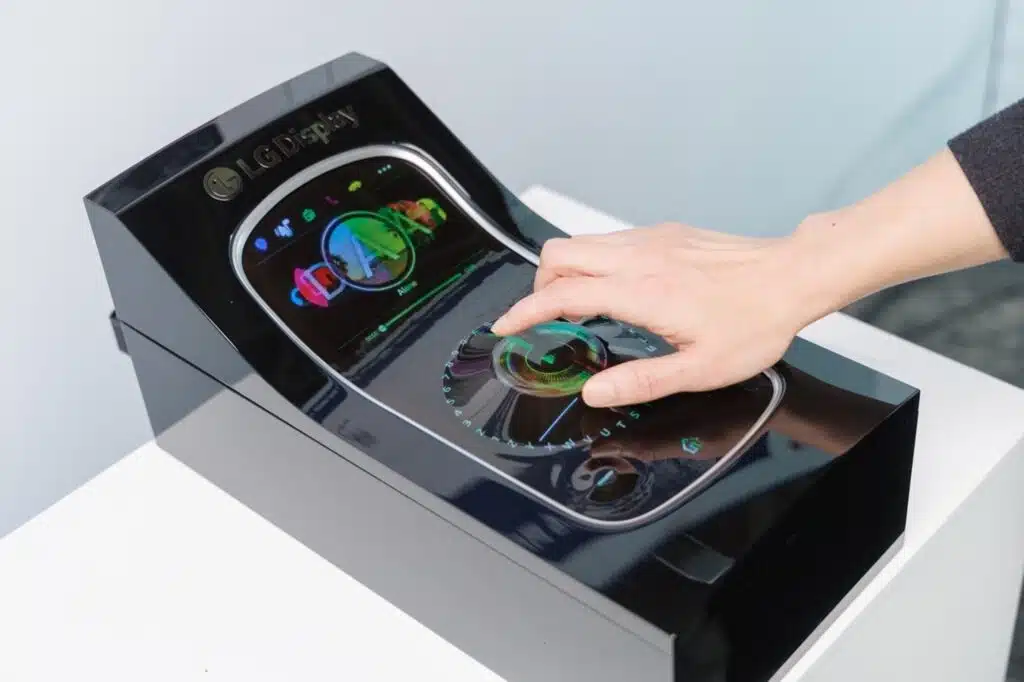
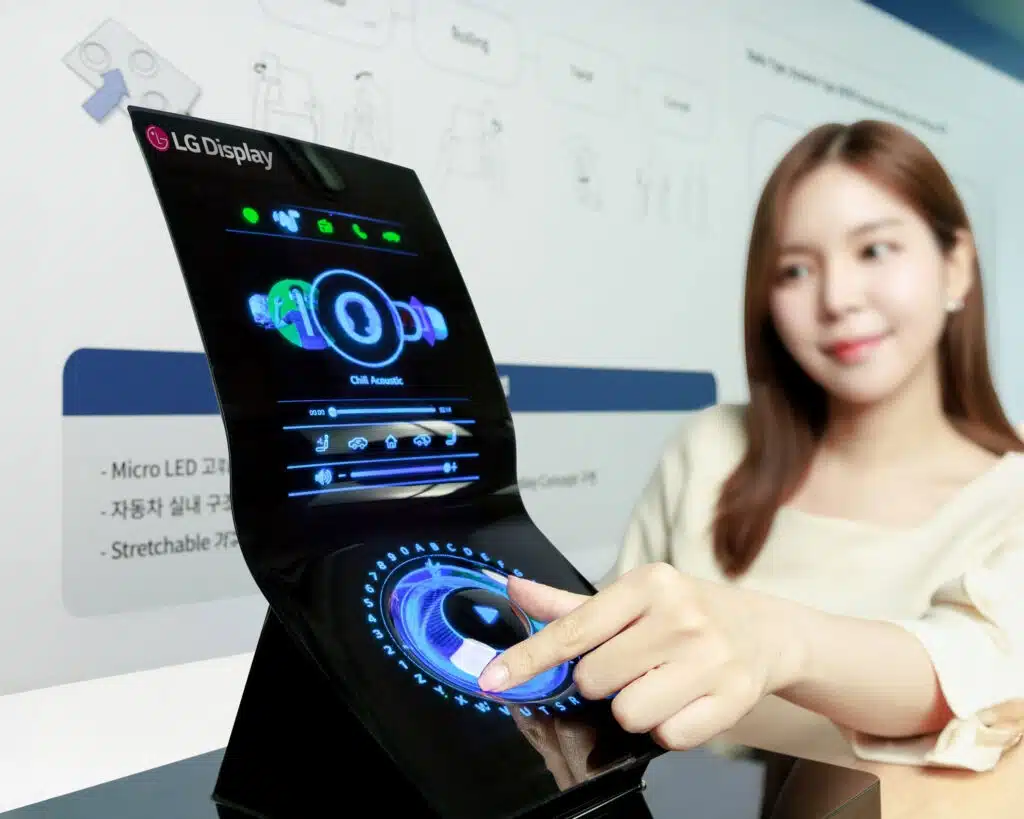
- “On this day, LG Display also exhibited a number of concepts utilizing stretchable displays, including a vehicle display with a convex screen that can be operated by hand, and a wearable display that is attached to a firefighter’s firefighting suit to provide real-time information.”
- “By applying new technologies such as improving the characteristics of special silicone material substrates used in contact lenses and developing new wiring design structures, flexibility was improved, exceeding the original national project goal of 20 % elongation”
Discussion (3 replies)
Join Discussion →But ... why?
You KNOW someone is going to make a sex doll with this stuff. Put some servo's in it so within a range the doll can change it's looks and dimensions... Heck concievably with semi rigid surfaces and such you could do all sorts of stuff with this.
Just waiting in some poor sod to ingest some of one of these displays. lol.
Looks useful for putting a display into/on any surface - kinda like Star Trek :)
With some creativity and imagination this could be pretty exciting.
Of course, not just for Sex Dolls but Sex does sell.
Sadly I am thinking 5-10 years before it hits the street, if not longer.