
The Radeon RX 9000 Series, a new generation of GPUs based on the RDNA 4 architecture, wasn’t discussed at AMD’s press event at CES 2025 on Monday because the company wasn’t given enough time to introduce them properly, according to new statements derived from a roundtable interview with David McAfee, AMD’s corporate vice president and general manager of its Client Channel Business, and Frank Azor, the chief architect of gaming solutions and gaming marketing at AMD.
“We tried to include RDNA 4, we really did,” Azor revealed before going on to say that doing so would have “fed the narrative that we didn’t care about graphics, because we had 45 minutes and we had to rush through.”
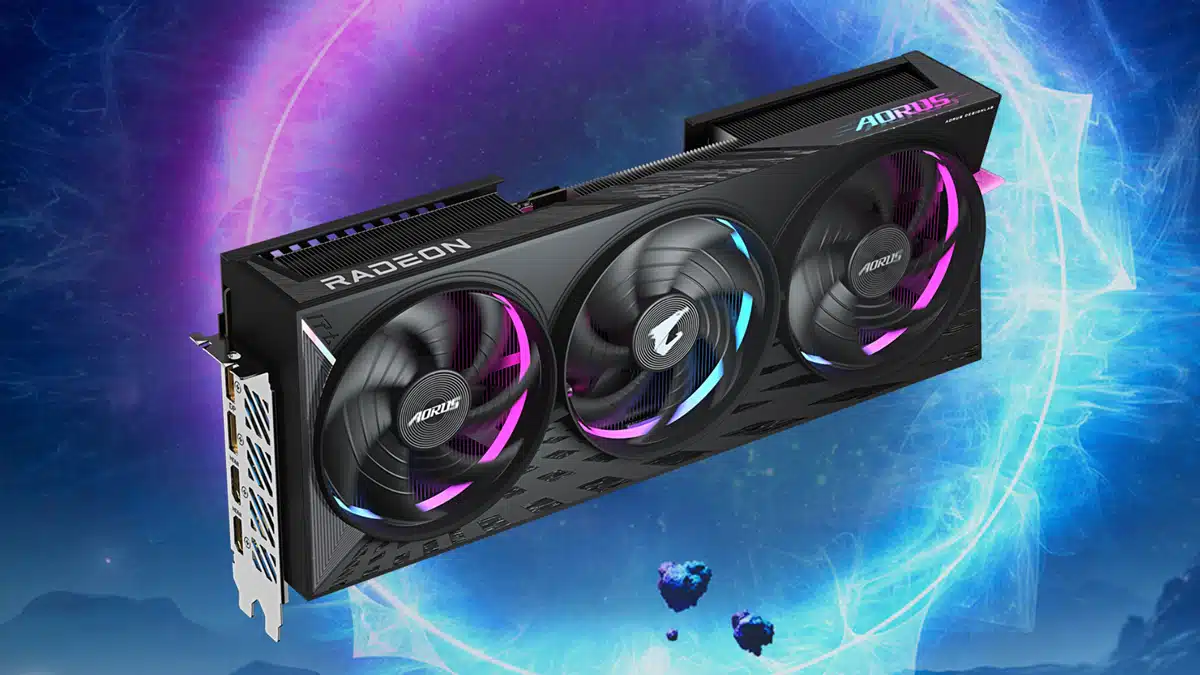
An early look at some of the Radeon RX 9000 Series graphics cards that have been developed come by way of GIGABYTE, which has already listed three models on its website: the AORUS Radeon RX 9070 XT ELITE, Radeon RX 9070 XT GAMING OC, and Radeon RX 9070 GAMING OC.
David McAfee: From a timeline standpoint, it’ll be a little bit later this quarter that we actually begin to roll out RDNA 4 graphics cards. But you know, our focus as we get into this generation is to deliver a really, really compelling value to the end user, with great price-performance.
Lean into all aspects of design efficiency, which is about making it simpler, more cost-effective, more power-effective, to really optimize from silicon all the way through board design so that we can hit the key features that those gamers who are playing enthusiast-class games care about at a price point that they’re going to be really excited to see.
And so I think that we believed, as we built this press conference with the strict time limits, spending five minutes on RDNA 4 was not going to be enough to do it justice. We’ll move it to a separate set of content that comes a little bit later this quarter. Frank, anything to add?
Frank Azor: We covered everything… There were certain things that we adopted in the press release and we didn’t put into the press conference, like the Z2 [handheld gaming] processor, for example. We tried to include RDNA 4, we really did.
It was going to feed the narrative that we didn’t care about graphics, because we had 45 minutes and we had to rush through. You have to introduce the architecture, all the deltas, all the ray tracing performance, or machine learning performance. Do the positioning of the cards, do FSR [FidelityFX Super Resolution]. Give you a whole overview around FSR, the ISP partners, what’s different about FSR. Show you how FSR works normally. We’d spend 45 minutes to an hour doing that… We started with all this content, and then you’re like, getting it down to the five-minute budget that we had for this.
Discussion (8 replies)
Join Discussion →No no we didn't NOT say anything because we were waiting on Nvidia first I promise. We weren't waiting on them to give some idea of performance to price before we change our pricing targets.
MF no we can't change the names again... Just... put the bigger card in the lower rev model. We need to compete!
I think this is more likely. Sat down with them today for a briefing and they really didn't have anything else they "could" say about the 9070 / 9950X3D than was in the press deck that Brent wrote up for the initial announcement.
NVIDIA is also playing coy with launch dates for 5070 Ti/5070 (I believe Jan 30 is the on sale date for the higher ones) - they're probably doing some waiting on each other to tip their hand on performance numbers.
Yep, we've seen this poker game before. Just waiting for someone to say "call".
Now if Intel comes in with a 350 dollar 24 gig card that can deliver upper mid tier performance just out of left field it would pounce on a hungry market.
Yep, just so they can price 2-7% lower for a 5-15% lesser product in each tier (minus top, perhaps top 2 tiers in which AMD simply has no product) and get the sales of people in need of an upgrade but just cant find an Nvidia product at the tier they need.
Hope I am wrong though.
No one is interested in competing strongly in value. Maybe no one can?
I have hard time believing this, my proof is consoles, but whatever, I guess dgpu are soooo special, they have to be priced in multiples of console prices or be a junky low end.
Never know, Intel could possibly make a card like that using GDDR6. Might be closer to $375-400 but even then, that's not horrible and I wouldn't be surprised if we see something like that after Battlemage.
As far as value goes, I think it does happen but consumers really have to do their homework to find it. Something I've mentioned multiple times with the 40 series is how the 4070 Ti Super really went unnoticed by many. This card launched at $799 MSRP, and could easily be had for that including some OC models, and very few talked about it. It was merely a cutdown 4080 and I saw prices drop to $749. That's the same I paid for an Asus OC Edition 1080 Ti seven years ago but this card would run circles around it plus all the NV bells and whistles. Those days are gone now that inventory is drying up for the high-end 40 series but it was something I tracked since it was released. AMD has had its share a mid-tier cards as well in recent years that do well. On more than a few occasions, the Arc 770 dropped to ~$300 range. For mid-to-low tiers value can be found but it takes research. High-end halo stuff, nope, we're screwed.
4070 Ti Super was/is the sweet spot for price/performance. Nearly 4080 performance, 16GB VRAM, dual encoders, for hundreds less than the 4080.
Two weeks ago MC had them on sale for $720.