
Block diagrams rumored to be for AMD’s upcoming UDNA GPUs indicate some very interesting changes ahead, including a new flagship design. Perhaps one of the funnest moments during a generational release happens towards the end of the cycle when rumors about the next begin to ramp up. For those on the hunt for what’s next, it’s akin to looking forward to a potential long-desired birthday or holiday gift. Well, AMD fans, those holding onto hopes for a new top-tier consumer GPU, which AMD intentionally skipped with the Radeon 9000 series, may have reason to celebrate with UDNA (also known as RDNA 5).
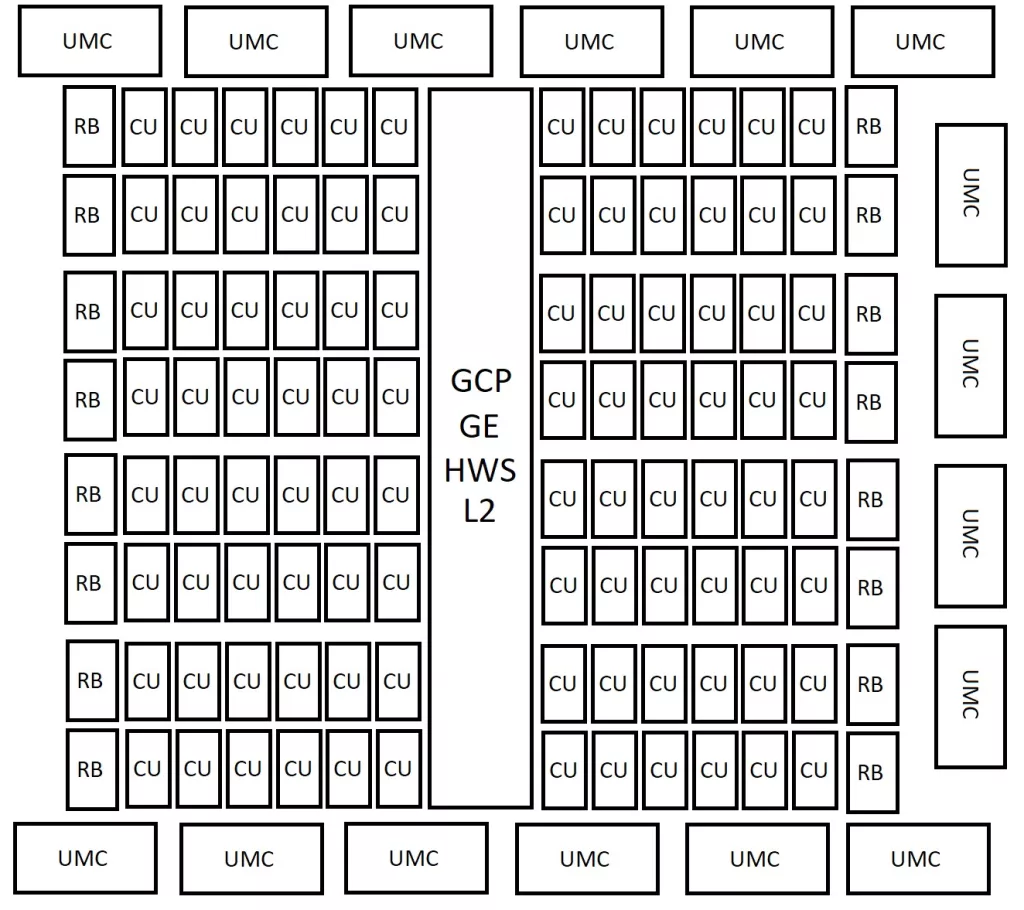
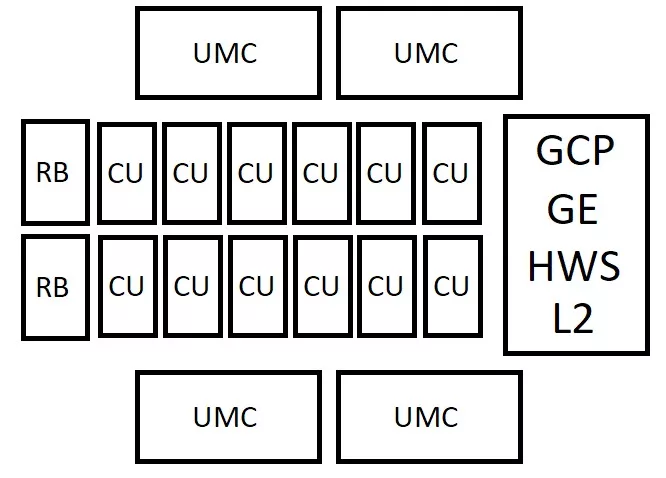
Well-known hardware information leaker Kepler has posted block diagrams for four different GPU designs on the Anandtech Forums (via Wccftech). At the top of the potential GPU stack is a product seemingly intended to compete with NVIDIA’s GB202 (RTX 5090) die. It has 96 compute units split into 8 shader arrays, with each array containing 16 shader engines and each engine with 6 CUs. This GPU also has 16 unified memory controllers, each 32-bit, leading to a 512-bit bus, but could be 384-bit if 16-bit memory is used. It’s suggested that this silicon could feature up to 128 MB Infinity Cache as well, but this may change if AMD alters the design currently used in RDNA 4. Max VRAM size could be up to 32 GB.
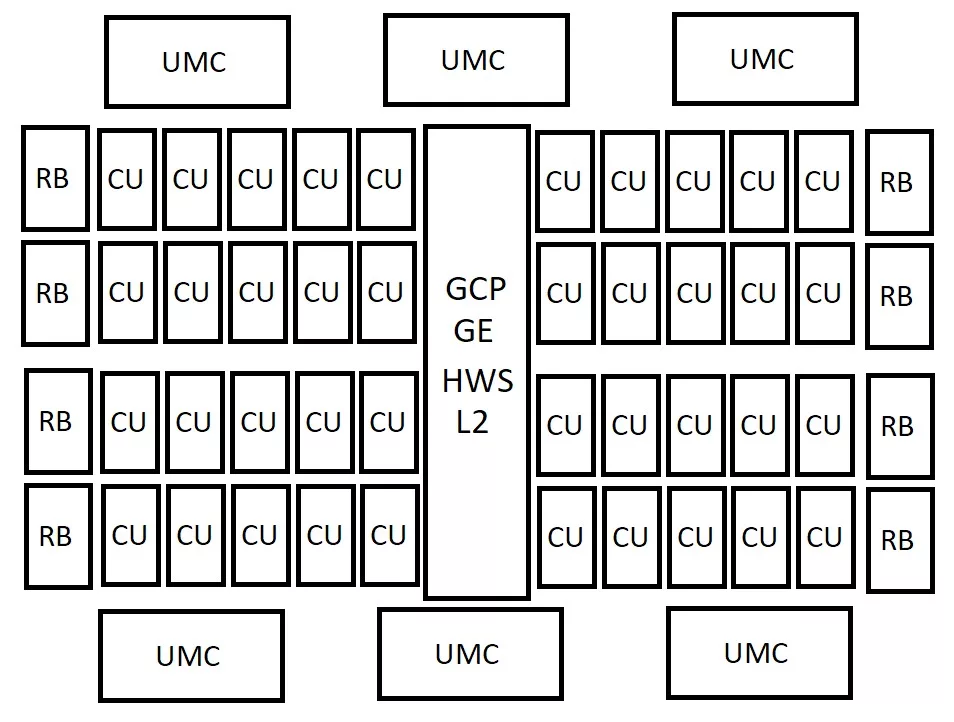
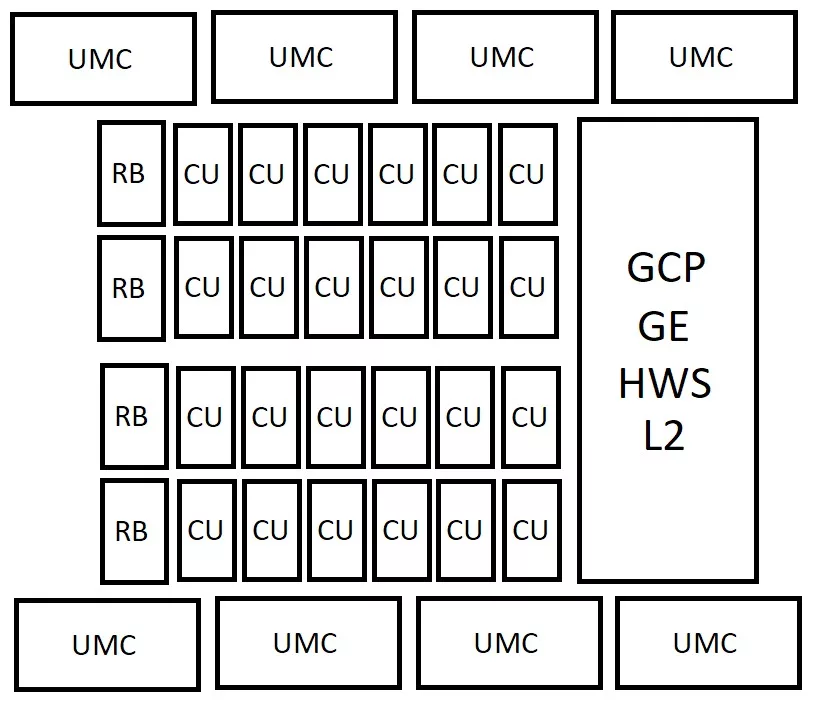
Next up are what could be considered a mid-range layout and then something that could be configured as needed to offer a budget range or potential mobile GPU offerings. As far as mobile dGPU offerings, AMD has primarily relied on its APUs featuring iGPU graphics, so it would be interesting to see if it is considering a mobile discrete option given the success of its APUs on many fronts. There is a possibility the low-end design could be integrated into an APU package.
Meanwhile, AMD has held its own in trading blows with NVIDIA at the mid-range tier level and still competes well at the budget level with Team Green and Intel. According to the design layouts, the mid-range GPU would feature 40 CUs split among 8 shader engines, each with 5 CUs arranged into 4 arrays. Memory configuration for this die includes 6 unified memory controllers on a 192-bit bus (12 GB VRAM) and possibly 48 MB of Infinity Cache. If 32-bit memory is used, VRAM could be 24 GB. Next down the line is what appears to be a budget-oriented die with 24 CUs and 8 memory controllers on what could be either a 256-bit bus (if using 32-bit memory/16 GB) or a 128-bit bus (if using 16-bit memory/8 GB). Lastly is a design feature just 12 CUs spread across 2 shader arrays. Memory for this die could be either 128-bit or 64-bit. Infinity Cache for both is said to be 32 MB.
Discussion (19 replies)
Join Discussion →Please note: Kepler suggests that current WGP (2 CUs) could be merged to a single CU (Effectively CU reduces by half)
it looks like that the RDNA 4 lineup may indeed feature four configurations according to Chiphell forum member ZhangZhonghao, who has been very accurate with his past leaks. He alleges that the top-most die would be very large, followed by a mid-tier, a small-tier and a tiny-tier SKU.
Kepler in AnandTech forum has now posted new information, well, essentially block diagrams of at least four RDNA 5 / UDNA SKUs atAnandtech Forums.
Potential AMD RDNA 5 / UDNA GPU Configurations (via Kepler_L2):
GPU Die
Navi 5X
Navi 5X
Navi 5X
Navi 5X
[/TR]
Positioning
Flagship-Tier
Mid-Tier
Low-Tier
Entry-Tier
[/TR]
Max Compute Units
96 CUs (
40 CUs
24 CUs
12 CUs
[/TR]
Max Memory Bus
512-384 bit
384-192 bit
256-128 bit
128-64 bit
[/TR]
Max VRAM Capacity
24-32 GB
12-24 GB
8-16 GB
8-16 GB
[/TR]
[/TABLE]
https://wccftech.com/possible-amd-rdna-5-udna-gpu-sku-configs-point-to-96-40-24-12-cu-dies/
I'm still wait and see. Right now all of the high end card news lately has ended up being an new AI Compute unit with a profit margin that I can't even imagine.
I don't doubt AMD is probably working on something like this. What I doubt is that it will perform as well as anything NVIDIA currently has or will have at the time of release. AMD has been well behind NVIDIA for several product generations now.
Ehhhh... I mean at the tiers they have chosen to compete at they've been great. But they haven't competed at anything approaching high end last gen at all.
At the risk of repeating previous escapades, being behind in RT and upscaling is truly 'behind' for AMD. Outside of a hard budget, most folks would spend another 10% just to get those features locked in.
Now there's nothing stopping AMD from supercharging their RT hardware, but getting FSR4 widely adopted is on the political side where they've regularly faltered. And they're still not 'there yet' in terms of creativity support, which may be much of the same thing.
Am I the only one who still wants better raster performance, no RT, and no frame generation?
We're well beyond that being a reality. Everything is moving towards ray tracing, upscaling and frame generation.
I'm OK with it.
Call me when they release something that causes Nvidia to lose market share.
They may not want to (get involved In a market share war with the Goliath)
We're rapidly moving towards a raytracing only future, and honestly I think engines are going to be a lot better for it.
If you dig into the Unreal source code, the overhead for supporting so many different permutations of features is huge. Non-Lumen Vs Lumen, HWRT Vs SWRT options for both, old fashioned shadow maps Vs virtual shadow maps Vs Megalights, etc. Hell, they still support baked lighting (and added baked lighting support to World Partition not too long ago, I think 5.4? 5.5?). There's a mountain of cruft, and something needs to give.
As of UE5.6 they're turning on hardware raytracing by default in new projects, and recommending to use it on console (even targeting base PS5/Xbox). I fully expect that Unreal 6 will be fully HWRT only, and to see them delete support for a bunch of their legacy rendering modes. That way they can clean up their code, let their engineers focus on making the RT code paths better, and simplify their code dramatically.
Probably!
RT replaces the massive accumulation of hacks that raster requires to do lighting, while doing it essentially perfectly versus the mess that is raster.
Frame generation has it's uses, and while not free, it is very cheap versus the end result.
The one you didn't mention, upscaling (DLSS/FSR/XeSS), is huge. The gain is tremendous in terms of performance, but also in terms of displacing AA techniques like TAA that degrade image quality.
Yeah, Intel was once a Goliath compared to their CPU market share, too. (Well technically Intel is still a Goliath, just a not as big as it was ~7 years ago)
I mean this. but lets be real honest here. AMD took a gamble with went with a new direction for CPU design and scaling and it worked for them. They did it on their own. Now Intel is trying to play catchup. Everyone is bemoaning Intel but they are still a powerhouse in the datacenter and in consumer space to be honest. They will do just fine long term unless they make some tragically bad decisions.
I agree with you. Most of the games I play are older and don’t support any of this anyway
I won’t deny frame generation can give you better frame rates - but I don’t use it when it’s an option as the tradeoff in image quality (typically in the guise of random weird glitches or smearing) usually isn’t worth it.
As far as RT being better for lighting. Sure. But that isn’t exactly earth shattering to me, and it tends to be something I can barely notice in still screen shots, not while I’m playing
Maybe I’m just yelling get off my lawn. But I’m ok with that. RT performance and Frame Gen features are not something I consider when looking to make a purchase.
Another thing to consider is that we've more or lest hit 'peak raster'. Screaming MORE DOTS at the display doesn't really do anything anymore, right?
I mean, there will be improvements. But going to RT means lowering the shader load at the same time for newer games.
And we're not really pushing resolutions and refresh rates on the monitor side that hard for the average user. 4k has been the 'high end' target for a decade, and the only real reason to go higher is for pixel density on larger displays, and the only reason that is needed is due to awkward sub-pixel configurations on the likes of OLED panels (or if you're special, like Apple).