
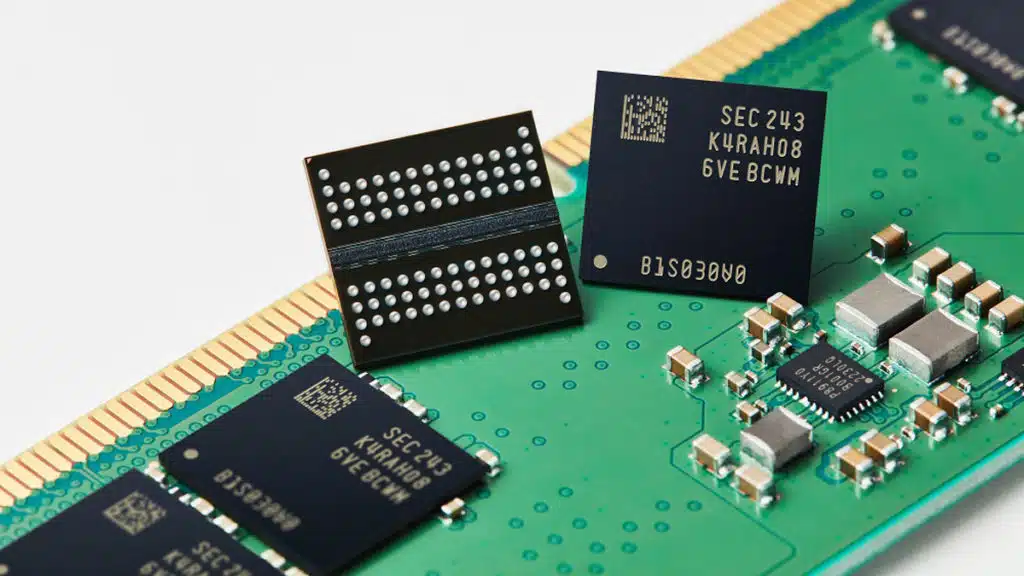
It looks as if 2026 will be a very interesting year when it comes to seeing how manufacturers of electronic devices cope with rising memory costs. While a recent report detailed 171% YoY contract price increases, more than a few consumers can point to memory kits that have nearly tripled in price since the end of summer, and at this point, most PC enthusiasts are already acknowledging they will hold off on doing upgrades for now. However, this is just the tip of the iceberg when it comes to what will be in store, and even the full ramifications are yet to be known.
According to a new report by Trendforce, Dell will be raising prices by ~10-15% effective in the coming weeks. Lenovo has already been giving notice to its customers to expect price increases in 2026, and that current pricing is only valid until January 1, 2026. According to TechPowerUp, OEM suppliers such as HP, LG, and Samsung are each reportedly looking into “price adjustments” for 2026 as well.
It was recently confirmed by Tom’s Hardware that AMD will be raising prices on its graphics cards to AIB partners by $10 per 8 GB of memory. The price increases are said to involve the current Radeon RX 9000 series only. Meanwhile, it’s been rumored that the ongoing wave of memory cost increases has led to NVIDIA potentially delaying its RTX 50 series refresh, aka SUPER, launch. OneXPlayer also hit the pause button in launching its APEX premium gaming handheld, which features an AMD Ryzen AI Max Pro 385/Max+ 395 APU.
“APEX sales are temporarily paused as we complete inventory reconciliation and confirm new pricing with our memory and SSD suppliers (due to ongoing cost increases). This process may take a few days. We will notify everyone as soon as sales reopen.”
-OneXPlayer
OneXplayer had previously said it would need to increase the price of the APEX gaming handheld by $200, but added in its latest statement that the current orders would be fulfilled. However, it reinforced the need to research options with memory and storage suppliers.
“At the same time, we need a bit more time to communicate with our memory and SSD suppliers, as the prices of these components continue to rise. These discussions are essential to properly prepare for the next phase of sales.”
-OneXPlayer
CES 26
CES 26 is happening right around the corner in Las Vegas from January 6-9, where everything from new televisions, computers, CPUs, GPUs, PC components and peripherals to appliances, and more will be on display by major manufacturers. While it’s not uncommon for things shown at the event not to have prices included, it’s probably a safe bet that whatever they were originally going to be is now up in the air for anything that utilizes memory or storage technology. From what you can hold in your hand to mount on a wall, have in your kitchen, or is perhaps used in the automotive industry, to washing laundry, playing games, or performing daily tasks, the effects of these shortages and price hikes will be felt across many industries in the coming year.
Discussion (18 replies)
Join Discussion →Shock and amazement.. everything gets more expensive. More people are unemployed. And corporate profits skyrocket.
Meh, I'm not as concerned, RAM is not a necessity. I can go longer without buying RAM than they can go without selling.
Might be worth selling some of that old ddr4 lying around or even ddr3 maybe.
[embedded media]
It's a shame as it's ruining a great hobby.
Yeah between supply chain stuff, covid, scalpers, and now this, seems like there's always going to be something from now on.
I feel like we just need a good recession to reset the sort of weird zombie mode the US economy has been in since Covid and come closer to a fresh start.
Everything was fine, prices were relatively stable until RTX came and nvidia suddenly started doubling prices every generation while at the same time showing the lowest raw performance increases between generations. But they "invented" DLSS to mask the lack of difference. DLSS and framegen are the worst things that happened to gaming since I've been playing games.
I.... do not disagree with this actually.
I still can't believe the crowd that says "DLSS has better image quality than original". I mean, you are entitled to your opinion... you can think it looks better but... I think it's objectively wrong that a inferred or artificially generated facsimile or enhancement of an image can have greater fidelity than the original source.
...all it takes is to turn off DLSS in say CP2077 for a few seconds to see how it should look. Granted it will be unplayable, but I firmly believe the same or very close visuals could've been achieved with true optimization and using traditional lighting methods instead of computation expensive RT.
Arguably games that are coming out now don't look better than the best looking games of the pre-RTX/DLSS era.
Thinking about this from another perspective.
While I totally agree with the end result of what you are saying... the cause I think I disagree on. Or maybe not disagree, really... just needs more context.
RTX was the leading indicator that nVidia was shifting direction as a company. They were pivoting from a Graphics-first company to an AI Compute-first company. RTX is just some way for nVidia to turn their new AI/Compute oriented business and bridge it to their older Graphics-oriented clients.
Graphics isn't their main priority any longer. I really think they are only still in the business for two reasons: primarily, nostaliga. It was what they started doing and their image/business reputation was built up around it over decades, and I think that makes them a bit hesitant to drop it entirely. And second, it still makes a bit of money, and they have proven that they can just keep ratcheting the margin up and people keep paying. I don't think they have found the ceiling yet, and honestly, even if they do, I don't think it would hurt them at all to start pushing this ceiling since graphics sales are now dwarfed, and anything they don't sell on the graphics front ~would~ sell on the data center front, and probably for even higher margins.
I honestly would not be shocked to see rasterization performance increases completely stop. I think nVidia is rapidly heading to a future where AI/RTX just does everything, including emulate rasterization in AI compute hardware. I don't know technically how that would occur, but sure seems like it's pretty darn close to doing that already.
Data Center sales are 10x what gaming/graphics sales are today for nVidia, and that's the sector that, somehow beyond all my belief, is still growing. I don't see how that stays sustainable, we are already seeing major constraints on infrastructure - there aren't enough Power Plants to run all the cards that have been sold to date, but orders keep stacking up and growth still somehow is still occuring -- maybe by virtue of replacing existing, less efficiency hardware? Maybe it's just sitting in crates in a warehouse? I don't know. And I don't know how it keeps on the current trajectory, or even a positive trajectory, for much longer.
But that's why graphics today are so expensive. RTX isn't exactly the reason, but it is a symptom of the reason.
Well Josh from PC perspective also has the idea that the gaming side draws in people that later in life are acustomed to the brand and want to stick with it in their proffesional work as that is what they are used to.
And while raster seems to be on the backburner for Nvidia there is still AMD and intel who will gladly take the market share if Nvidia drops the ball or quits the market.
Hmmm…I have a matched set (4x2 gb) of Corsair DDR3….why….I could be rich!
[embedded media]
I'm sure they would... but to your first point... people are brainwashed into Think Green, and tend to not even consider alternatives. It's crazy.
How many times have we all heard "but AMD drivers" or started comparing cards solely on the merit of their upscaler or inclusion of some proprietary technology that's only supported in a handful of titles.
I was an Nvidia user since my MX200 days then used both Nvidia and ATI back in the day. Swore off AMD cards after having terrible driver issues with them, and now I have two machines here running them (7800XT and a 6750XT) with no issues. Nvidia has shown regular consumers don't matter to them much anymore.
Matter, probably yes in a world where there is unlimited fabrication capacity.