
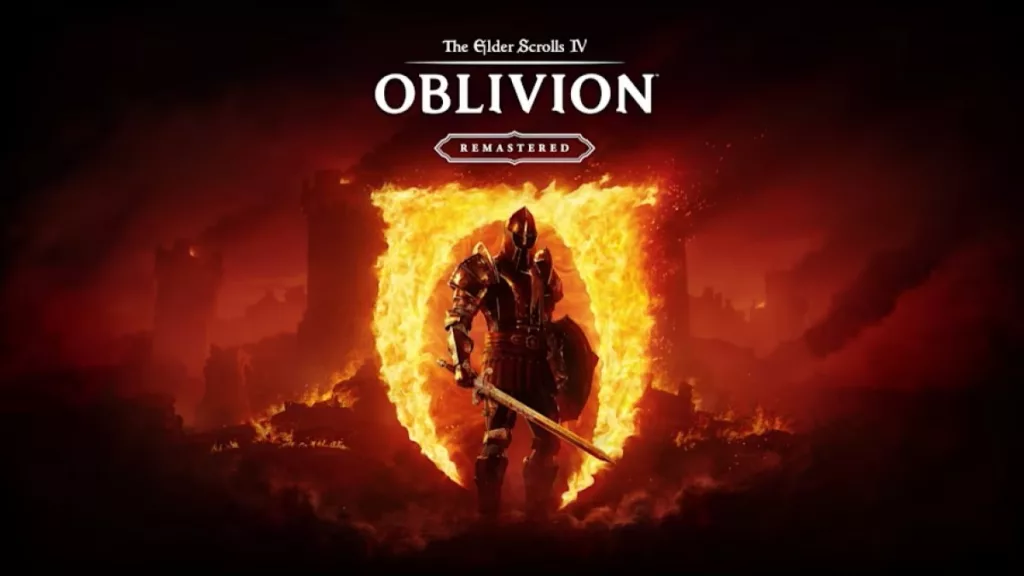
The Elder Scrolls IV: Oblivion Remastered joined a list of other games using Unreal Engine 5, which were noted for optimization issues. Bethesda Game Studios released the nearly twenty-year-old game which are said to have combined elements of its original engine with UE5. In addition the game features Lumen ray tracing effects and between all three of these, the game, well, is noted as having some issues. However, the game has also received praise from players and media outlets alike for its improved visuals. Meanwhile the developers have received critisim for not fixing many bugs found in the original game and have not updated it since launching last April.
Per DSOG:
“And time for our No.1. The worst-optimized PC game of 2025 is Oblivion Remastered. Virtuos released the game and then basically abandoned it. They haven’t released a single update since April. As such, the game still runs exactly the same as it did at launch. Oblivion Remastered still has some of the worst stutters we’ve ever seen in a PC game. In fact, it has both shader-compilation stutters and traversal stutters. And then we have lots of other bugs and visual glitches. This is really disappointing because the visual upgrade is amazing. The game looks great, but the huge technical problems ruin the experience. And sadly, it seems like the devs will never fix them. It’s a real shame, because Oblivion deserves much better.”
Unreal Engine 5, and its previous generations have often been noted for stuttering issues experienced during game play. There are many, many, and it needs to be said again, many reasons this can happen but one of the more common culprits is shader compilation. The Elder Scrolls IV: Oblivion Remastered is among a number of games which does this when the game is first launched but unfortunately the combination of old and new engines working together to provide modern visuals doesn’t help things. Turning off Lumen can help but then you lose out on a major upgrade point intended with the remaster.
For those not afraid of some NVIDIA RTX 50 series silicon magic sauce, users can enable DLSS and frame gen for a smoother, but still not perfect, gameplay experience. Brute force with fast memory and storage can also help when used with a powerfull processor as well but ultimately, it would be nice if the devs tuned things just a bit instead.
On a side note UE5 has continued to be upgraded with versions 5.6 and 5.7, featuring many new improvements and upgrades.
Discussion (8 replies)
Join Discussion →Given how people piled on borderlands 4 I'm surprised they did not win (not that I necesarily agree with those people)
Been playing Oblivion (@4k native), not so deep in as yet, no sign of troubles, stutters or problems - though, I do have a decent toy to play it on.
Only thing not fully maxed in settings is the RT - think I will check that out now though. See what it does to my FPS.
What adrenaline has to say:
Full lumen - maxed out doesnt seem to change anything in how the game feels - dropped in a HDR mod too.
IMO for a single player RPG any FPS over 30 is good and over 60 is great - so long as no stutters, tears, or other distractions which I am not seeing.
Even with the 'feel' being the same it has affected the FPS some.
Still native 4k, no frame gen, no upscale.
So on all my builds I'm running max (RT lumen included). The only things turned off are the usual post crap. For a while I was trying DLAA, forced via NV Profile Inspector, and the opening dungeon stuff was well into the 90-100 FPS zone but once I reached the surface I saw both rigs hitting 40-50 FPS in different spots. This also aligns with at least one pro review I read at one point which spoke how this game could pull a 5090 down.
Also had MFG set to 3x, this is what I normally use all the time these days when able.
So next step was to set to DLSS to Ultra High Quality in NVPI, 77% instead of High Quality (either 60% or 66% I don't remember which). This isn't a preset available in games but you can find in the drop-down box in NVPI. This combined with 3x MFG produced 110+ FPS. However extremely noticeable traversal stutters happen here. Try running for long distances above ground and they occur semi-regularly about every 5-10 seconds. This is the most noticeable scenarios to produce them and its pretty bad.
However, limiting FPS to anything between 70-90 really cuts down on this. I believe the original engine just can't deal with 100+ FPS. Ultimately I have all my rigs set to 70 FPS for this game and TDP/temps are insanely low while rendering is very smooth. System TDP on the 9800X3D/5090 rig rarely exceeds 330W.
From the 5800X3D/5090 to 9800X3D/5090 @ 4K and then the Ultra 275HK/5090 Mobile in my laptop @2500x1600, all three rigs performed similarly with these settings.
Very interesting.
Maybe the difference in the driver/hardware we are rendering with? The 7900xtx is supposed to be a beast with pure rastor, right?
Once I get my new router tomorrow (if on time) I'll test on my Corsair a1600 (6800hs + 6800m w/12gb vram).
My Asus laptop, with its shared memory and Intel Arc iGPU - pretty sure will choke a bit but we will see.
Oblivion Remastered Mod Built Using Claude AI Boosts FPS By Over 40% And Drastically Reduces Stuttering Without Sacrificing Visual Quality
Sebastian Castellanos Oct 18, 2026 at 10:24am EDT
many of the identified problems stemmed from inefficient CPU utilization. For example, the game was reportedly rebuilding its sun and moon lighting systems every frame, even when nothing had changed. Other bottlenecks included redundant memory allocations, DirectX 12 command preparation largely confined to a single thread, and expensive world-streaming operations that could stall entire frames.
The mod tackles these issues through improved multithreading, more efficient memory management, and better distribution of expensive operations across multiple frames. Crucially, these changes reportedly preserve the original graphics quality, including complex Nanite Virtualized Geometry, Lumen ray-traced lighting, Virtual Shadow Maps, high draw distances, and other visual settings.
The developer has published the v1.0.0 beta release, alongside its source code and reproducible benchmarking tools. Installation involves extracting the supplied files into the game's directory.
News Source: r/ChatGPT subreddit
[URL unfurl="true"]https://wccftech.com/oblivion-remastered-mod-built-using-claude-ai-boosts-fps-by-over-40-and-drastically-reduces-stuttering-without-sacrificing-visual-quality/[/URL]
Interesting. Let's see how many things it breaks that it never meant to touch.
Also infinitely more likely to have embedded functions you never expected!