
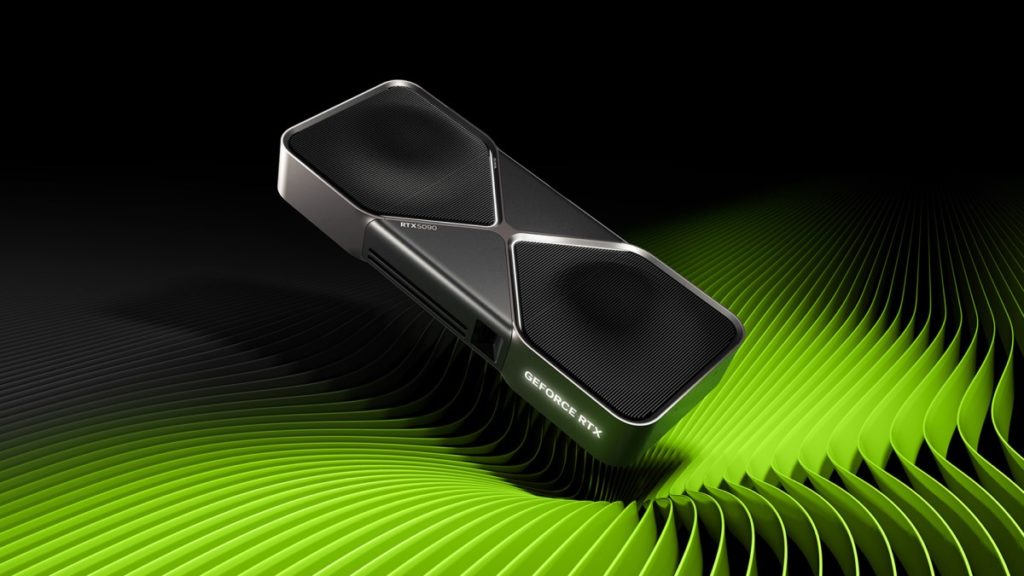
It’s possible that we might not see an RTX 50 series refresh anytime soon, thanks to the current memory chip supply shortage. More than a few were surprised at the absence of an RTX 50 SUPER series announcement at CES, but according to some industry insiders (via VideoCardz), things may be worse than expected. It seems that the AI monster, which NVIDIA helped create, has come hunting for the memory of its unreleased GPUs, and if true, the ongoing sentiment that the company, which once focused its resources on PC enthusiast hardware, is a step closer to abandoning them. A post, machine translated, on Board Channels is the basis for this latest speculation on what is happening with the GeForce RTX 50 SUPERs.
“There were earlier leaks saying that for the RTX 50 SUPER series, NVIDIA had already confirmed and informed AIC partners that the release would be delayed indefinitely. CES further supports this. There was no RTX 50 SUPER-related product showcase from NVIDIA. NVIDIA CEO Jensen Huang’s keynote also did not reveal or announce any new GPU products or related information.
The absence of a new-generation NVIDIA graphics card may disappoint some hardware enthusiasts, but this decision is not completely unexpected. The post suggests NVIDIA is mainly considering these factors:
- Overseas demand for compute GPUs is surging, so more capacity is being reserved for compute GPU production, where profits are higher.
- The rise in memory-related products may be a long-cycle issue. VRAM chips are not only expensive, but the cost also affects the global consumer GPU market share.
- The most important point: there is currently no news of any new-generation AMD consumer GPU products launching in 2026. The current RTX 50 series can remain competitive for a long time, so releasing the SUPER refresh is less necessary.”
The current RTX 50 series is not immune to VRAM price increases
While many media outlets are content to report on the ongoing demand for current RTX 50 series graphics cards, most are overlooking a major point. That is, NVIDIA is still restricted to VRAM pricing as listed per its supplier contracts, and once those have expired, it will have to renegotiate them per current market conditions. That being said, it won’t matter if the RTX 50 SUPERs are released or not because the current product stack will then have its prices adjusted according to the new VRAM costs. This could mean we’ll see a $1,500 GeForce RTX 5070 or $1,000 RTX 5060.
As mentioned above, there’s no pressure on NVIDIA to produce new products right now as AMD hasn’t indicated it will be revealing anything new until at least 2027, and Intel has yet to formally announce its Big Battlemage B770 as well.
So many rumors, and none of them are good
The following is a breakdown, including details from one of our recent posts, from bad to worse.
- NVIDIA may be considering the option to cease providing its partners with VRAM. AIB partners would then need to procure VRAM via their own channels, which could lead to some issues affecting prices pluys smaller companies might not be able to compete with larger companies whose orders wipe out supply.
- Some current RTX 50 series could have reduced production. This was already suspected to happen with lower-tier cards due to rising VRAM costs, but as pointed out by the above quote from Board Channels, NVIDIA may also choose to focus its resources on compute-GPUs for their greater profitability. It was just last weekend that one overseas computer part seller reported that their supplier is already limiting which GPUs it can order and that it could not obtain any of the top-tier RTX 50 series (5070 Ti, 5080, or 5090).
- RTX 50 SUPER memory upgrades could be too costly, right now. Back to the topic, as some rumors indicated the possibility of upping memory for the RTX 5070 Ti/5080, which use the same GPU die, to 24 GB GDDR7 and the 5070 to 18 GB, presumably using the newly available 3 GB modules. However, these premium modules are likely to come with a premium price, which would push these SUPERs beyond an acceptable pricepoint for consumers. Another roadblock for this launch, again mentioned already, is that NVIDIA could be eying the golden AI egg rather than less profitable enthusiast parts.
- As reported this week, one other option NVIDIA could be looking into is reviving older GPU dies while pairing them with newer AI hardware and features. If NVIDIA were able engineer this feat while keeping in-house costs down, it might be able to create a stop-gap band-aid for consumers seeking some sort of upgrade path. However, there are plenty of unknowns with this approach, ranging from pricing and how much more powerful these older dies could be with newer AI magic sauce.
So, unless NVIDIA CEO Jensen Huang can pull a rabbit out of a hat, things are not looking for an RTX 50 SUPER launch anytime soon. However, even if it does happen, scalpers are likely already preparing to swipe said magic hat to resell for profits of their own.
Discussion (19 replies)
Join Discussion →Sad times.
Unfortunately, it makes sense. Prices are surely skyrocketing soon thanks to memory shortages. This was the perfect window for the supers to be released if not for the current situation. We may not even see RTX60 series until late 27 at best.
Yeah, it wouldn't surprise me to see Super get passed over this time around. RTX 5 series cards are still plenty powerful, their chip cuts don't really leave a lot of room for compute improvements, and there is no universe consumer cards are getting higher RAM variants right now.
Not the worst thing in the world if no refresh leads to slowing sales, which leads to discounts and dropping prices.
Frankly I think we would be better served with lower prices for existing performance over 5% more performance for the same (or more) money right now.
Sad part is that unless ram prices go down, which is not happening anytime soon, we'll have the worst scenario; no improvement with price increases. At some point, NVIDIA is going to have to raise prices on the current product stack because it can't obtain VRAM for them indefinitely at whatever they've been paying. I'm amazed nobody else is talking about this while downplaying the importance of what has led to why these may not get launched.
I think the greater risk is Nvidia abandoning the end user market and stopping driver development cold and only developing for cloud solutions.
I agree.
By the time AMD is ready, who knows how high VRAM costs will be, and now that NV has their fingers into Intel, the likelyhood they'll ever make something that can compete is getting closer to nill.
May not be this year or next, but it sure feels like the writing on the wall is getting closer and closer.
Nah, consumer is a "small" chunk of their revenue, but that small chunk is still like ~4B dollars or something a quarter.
All these guys know the AI thing is going to cool,.alternate chip designs or AI algos.are.going to reduce compute requirements, etc.
They're going to keep gaming fridged for sure, but not trashed.
I hope you are correct. But lets be honest. Lets say they bottom out gaming production, keep making drivers and trickle out product as they see fit. Gamers will still buy whatever they make when/if they decide to open the taps again.
Hell if I could get a 5090 right now for 2-300 above MSRP I would. (Meaning 2200-2300)
Pretty much what I paid for my first one when I got it as part of a boutique PC that became my launch point for getting into AM5. That rig was maybe $100-200 over the parts it had, which also included 9800X3D, 32 GB DDR5 6000 MT/s. A month or so later managed to trade in an EVGA 3090 Ti to Newegg and paid under MSRP (~$1900)for a 2nd. I do count myself lucky in both instances.
I see the end of gaming GPUs.
Why spend time and resource when you simply cant keep up with AI demand.
A couple billion is pocket change to a Trillion dollar company.
Memory is all going AI, which further complicates the issue. No DDR sticks, no nvme, no VRAM. So might as well buy a PlayStation before they cost 1000 dollars too.
It was fun while it lasted, but nvidia has moved on.
I say this regretably, because I review video cards. Probably have seen my last new GPU until 2027......if then.......(this opinion is solely my own and not affiliated with FPSReview in any form. )
That's pretty much what I'm thinking is happening as well. I wish it were not the case, but too many factors are pointing in that direction, and that's why I went all in with the current flagship offerings. Ought to be good enough for more than a few years to come, and by then, I'm pretty sure my gaming interests will wane further as my age sets in more.
I really don't see the end of gaming GPUs. The revenue is 'small' by comparison, but Nvidia's costs to keep it going are relatively small, too.
Note also that 'desktop' computing includes content creation stuff, for which the gaming GPUs also excel, and a market where Nvidia has a commanding lead just due to driver integrations.
Imagine AMD giving up on Radeon just because their desktop marketshare has been pummeled almost to irrelevance... AMD isn't giving up the fight.
Instead, while we're certainly in an AI-bubble driven DRAM drought for a year or so, I see AMD and Nvidia both looking for more fab partners. If/when Intel gets their manufacturing house in order, we could easily see Intel fabbing dies for either or both companies, and obviously Samsung is likely to make a return at least on the Nvidia side.
And maybe the spin up of PRC DDR5 production will help alleviate some of the global DRAM demand; if it checks out, it will have no end of customer orders domestically at least.
The real future of desktop gaming will be SOC solutions from Apple and AMD.
When the AI market cools it will be interesting if we end up with a supply glut and cratering prices too.
One can dream.
I ain't gonna lie, that's definitely going to be part of it. I'd only contest 'how much'. SoCs are expensive, especially if you want to invest in both GPU horsepower and memory bandwidth.
It's definitely a dream!
Unfortunately, DRAM manufacturers are a cartel - and have been found guilty of such repeatedly. GPU prices might stagnate a bit, but I don't think that producers are in a hurry to get DRAM back to where it was before and the effect of this demand spike is going to have a long economic tai..