
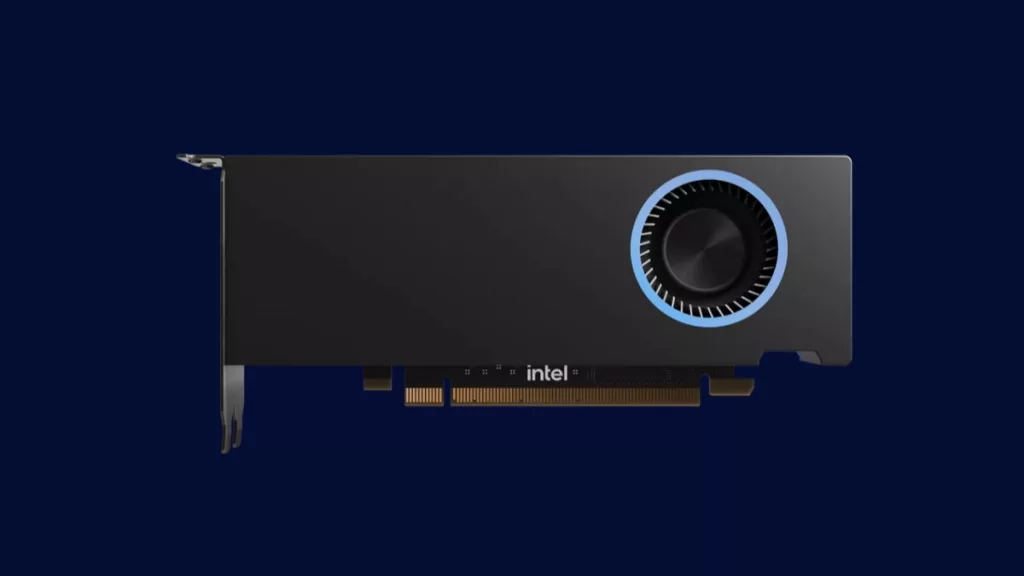
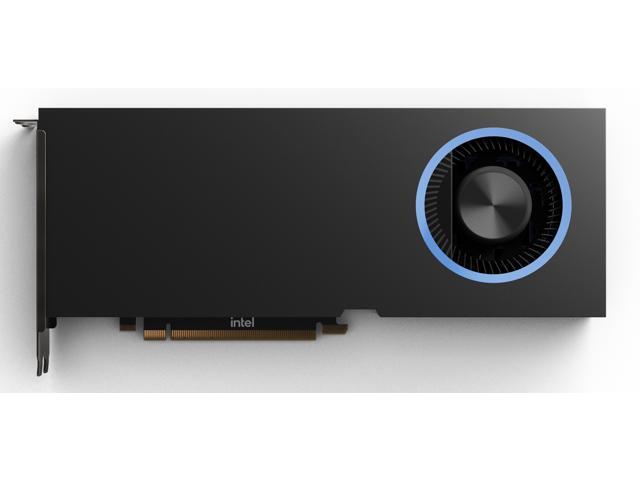
Intel’s recent Big Battlemage GPU launch has now been tested in a handful of games, where it is essentially trading blows with NVIDIA’s mid-tier offering. Now, while Intel’s drivers do enable the Arc Pro B70 to play games, it should first be understood that the card, with a BMG-31 GPU paired with 32 GB of GDDR6 memory, was purposely designed for productivity and AI workloads, not gaming. However, since Intel has, at least for now, abandoned the consumer market, folks are eager to see how the workstation card performs in games in the absence of any new consumer-grade GPUs.
Despite being launched in March, the availability of Intel’s latest dGPU remains scarce, but one site has managed to test a partner card, namely the GUNNIR Intel Arc Pro B70 TF 32G. This card features a blower-style design similar to the Intel reference design and so would be unlikely to hit higher clock speeds normally seen with the two or three-fan designs commonly used in gaming cards.
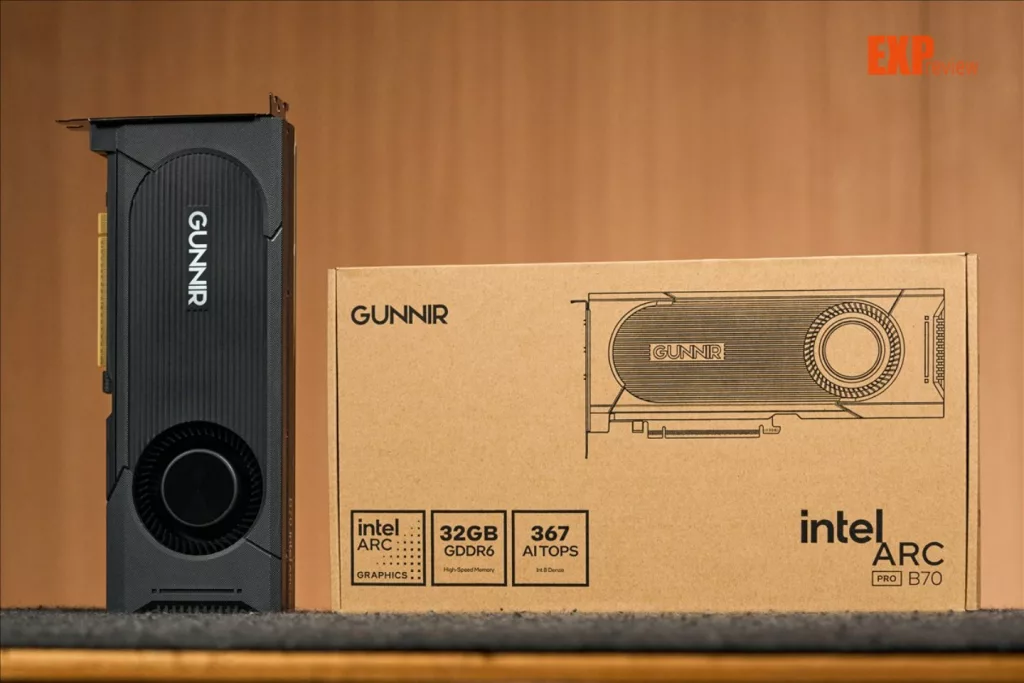
- Model: GUNNIR Intel Arc Pro B70 TF 32G
- GPU: BMG-G31
- Manufacturing process: TSMC N5
- Xe-core count: 32
- Core frequency: 2600MHz
- Video memory type: GDDR6
- Video memory capacity: 32GB
- Memory bus width: 256-bit
- Video memory speed: 19Gbps
- PCIe interface: PCIe 5.0 x16
- Video interface: DisplayPort 2.1 x3, HDMI 2.1 x1
- Power interface: 8-pin x2
- TBP: 290W
- Size: 267 x 111.1 x 37.3mm

Synthetic testing per Expreview (via VideoCardz) shows the GUNNIR Intel Arc Pro B70 TF 32G outperforming the Arc B580 by 45.8% in 3DMark, with similar gains in Steel Nomad ranging from 36.4% to 51.7%. When compared to the NVIDIA GeForce RTX 5060 Ti featuring 16 GB GDDR7 memory on a 128-bit bus, 4,608 CUDA Cores running at ~2,572 MHz, things take a very different turn. On average gains narrow to around 2.9% with some ranging between 1% and 6.8%.
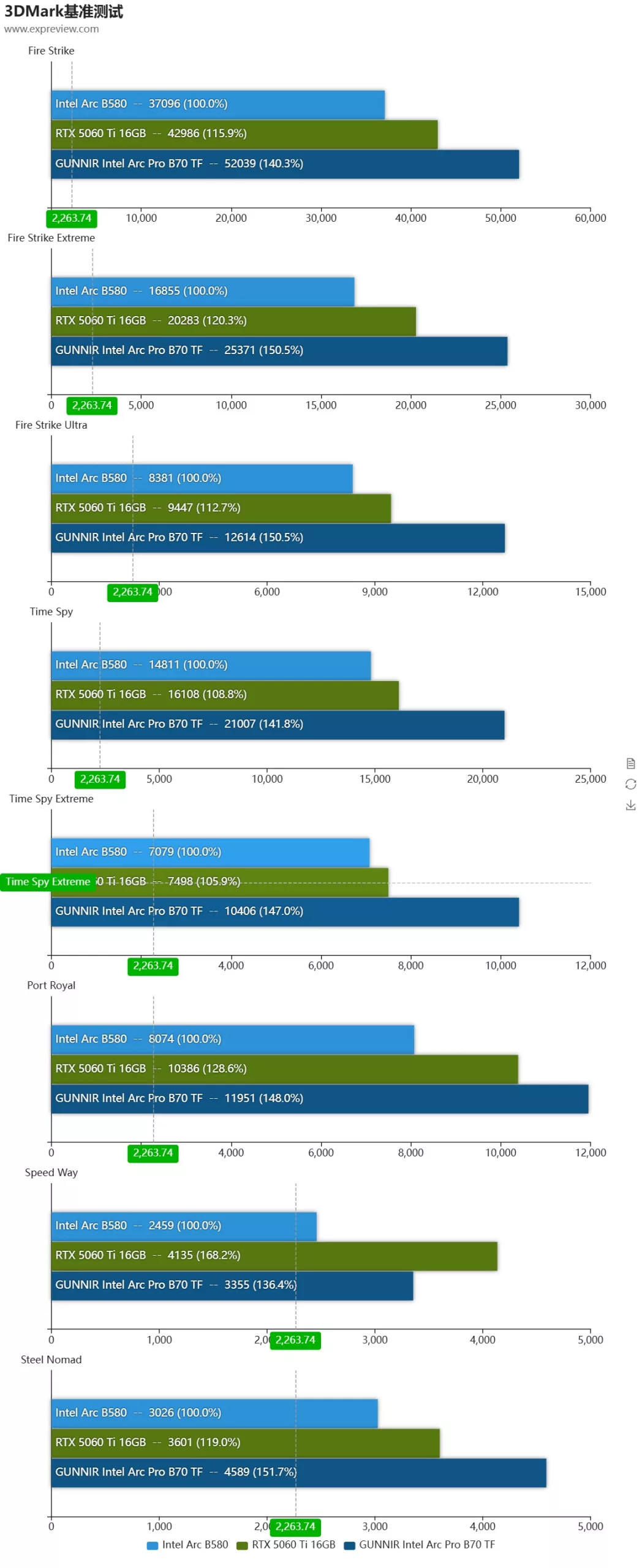
Ultimately, while this is purely synthetic testing of a benchmark used by PC enthusiasts for gaming focus, it shouldn’t come as a surprise that this $950 GPU made for AI workloads is trading blows with one that has a $430 MSRP, although good luck finding one at MSRP.
Discussion (12 replies)
Join Discussion →Yeah no wonder this thing was dead in the water.
Only way it has a chance of making money for Intel, especially in this environment, is by riding the AI hype train.
it's anyone guess how this would perform with drivers optimized for gaming.
I think intel made the right choice. At least AI can justify the pricing.
Were it not for their self inflicted castration in consumer and server CPUs, they would've had the money to fight their competitors with dual GPU cards or bigger dies fabbed in their own fabs for maximum profitability. Imagine the clocks they could've achieved with their traditional DTCO synergy between their design teams and process engineering teams.
Sadly, price aside, the message I am getting is Intel was making good progress in improving their GPU's. With 16/24gb of vram the price would go down some.
Within the next generation or three I think they could have climbed up to the near top tier space. Maybe not the Big Green money sucking machines, but near enough.
Then again one wonders if the Green team is going to keep up with halo products, and when Red team will again. I like my 7900xtx - I can play just about anything in 4k native at an fps that works for me (more rpg less Shooter so 60-165 fps works perfectly) just as long as I dont turn on RT. I am hoping the next gen AMD GPU has significant RT improvements. I expect team Blue to have been improved too. Oh well.
-The 9070xt performs identically to a 5070ti in "standard" RT games.
The future is now in that regard.
It's why NV has started pushing Path Tracing so hard, it's their next big software differentiator.
Dual GPU cards? it's not 2020 anymore multigpu is dead and buried.
Except for Intel commercial cards like these. I seem to remember us running some stories on them back in the fall or last summer but there are some partner cards running 2x GPUs, but they are not gaming cards.
[URL unfurl="true"]https://www.maxsun.com/products/intel-arc-pro-b60-dual-48g-turbo[/URL]
Shouldn't be a big deal to get at least 50% uplift from the 2nd GPU since DX12 natively supports multi-GPU rendering, even with different vendor cards.
Isn't that the minimum of what we hoped SLI would do back when it was a thing?
SLI had microstuttering issues. I think (not sure though) that DX12 solves that.
Not for gaming.
Requires developer support, no one is doing it, no one will do.