
The back half of April delivered a dense week of hardware reviews, with GPU coverage ranging from SFF-ready mid-to-high-end cards all the way up to a $4,500 liquid-metal monster. There’s also a case to be made that the most interesting product reviewed this week isn’t a GPU or a motherboard at all: it’s a $25 power cable that might save your graphics card’s life. Add in a fresh take on the Antec x Noctua collaboration that’s been making the rounds since March, a rare cable-free GPU ecosystem from Sapphire, and two flagship motherboards, and there’s no shortage of material to dig into.
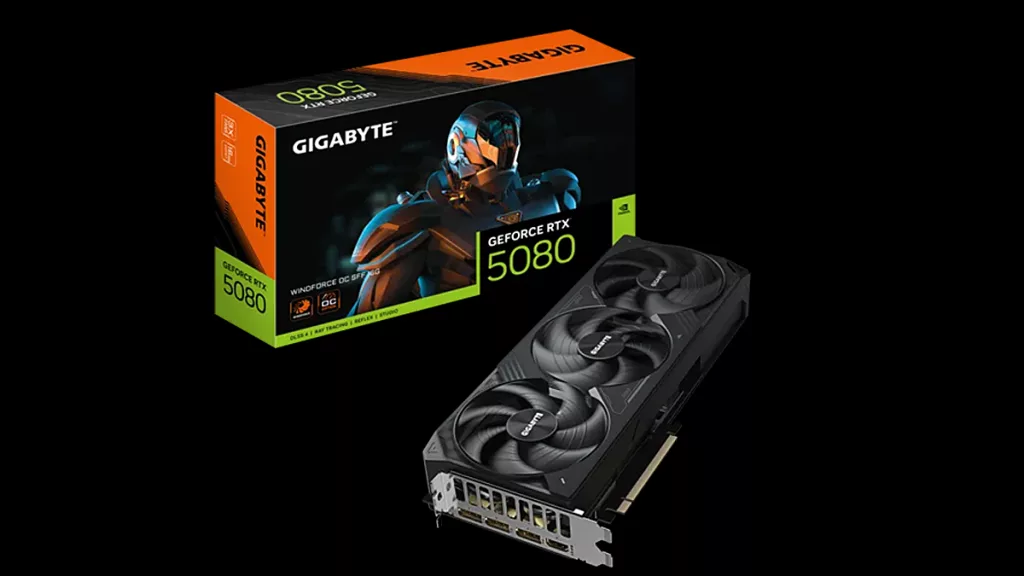
Gigabyte GeForce RTX 5080 WINDFORCE SFF 16G
Written reviews:
- The FPS Review: https://www.thefpsreview.com/2026/04/27/gigabyte-geforce-rtx-5080-windforce-sff-16g-video-card-review/
Consensus summary: This one is ours, so no consensus to draw (Ed: Amirite?). The review covers Gigabyte’s reference-clocked entry in NVIDIA’s SFF-Ready Enthusiast program, a card that maxes out at 304mm length and 50mm depth to meet the spec. Performance lands where you’d expect a stock-clocked RTX 5080 to land: squarely in the top tier for 4K gaming, with the Blackwell architecture’s DLSS 4 and Multi Frame Generation doing their usual heavy lifting. The real story is the form factor promise: builders can now trust the SFF-Ready label as a compatibility guarantee rather than a “probably fits” guess.
FPS Review take: We put this one through its paces ourselves, and if you’re building in a compact chassis or planning a Steam Machine-style living room rig, this card deserves a look. The SFF-Ready program is quietly becoming one of the more useful things NVIDIA has done for the small-form-factor community in years.

ASUS GeForce RTX 5090 Matrix Platinum
Written Reviews:
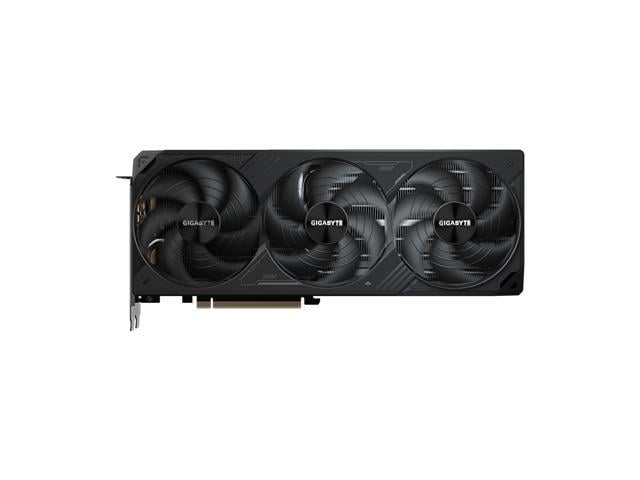
Consensus summary: TechPowerUp found the Matrix Platinum to be exactly what it claims: the most extreme air-cooled RTX 5090 money can buy, and a genuine 9-10% performance uplift over the Founders Edition thanks to a 13% factory overclock and the quad-fan vapor-chamber cooler keeping clocks from dropping under sustained load. The BTF dual-power delivery is the headline feature: connect both the standard 16-pin and an ASUS BTF motherboard connector and the card automatically unlocks an 800W mode. Limited to 1,000 units worldwide and priced at $4,000 MSRP (currently selling for $4,500), this is unambiguously a collector’s card for people who have already decided they want the best RTX 5090 that exists. The MSI Lightning Z, which runs at 1,000W, edges it out by a slim 1% margin at maximum power; otherwise the Matrix is the performance leader.
FPS Review take: There’s a certain delight to reviewing a GPU that costs more than most complete gaming rigs, but ASUS celebrating 30 years of graphics card production with a limited-run 800W quad-fan monster is exactly the kind of thing enthusiast hardware culture exists for. Most of us will never own one, but we absolutely want to read the benchmarks.
ASUS GeForce RTX 5080 Noctua OC
Written Reviews:
- Igor’s Lab: https://www.igorslab.de/en/asus-geforce-rtx-5080-noctua-oc-review-even-after-nearly-a-year-its-hard-to-imagine-it-getting-much-quieter/
- TweakTown: https://www.tweaktown.com/reviews/11303/asus-geforce-rtx-5080-noctua-oc-edition-the-silent-giant/index.html
- Tom’s Hardware: https://www.tomshardware.com/pc-components/gpus/asus-geforce-rtx-5080-noctua-edition-review/
- PC Gamer: https://www.pcgamer.com/hardware/graphics-cards/asus-geforce-rtx-5080-noctua-oc-edition-review/
Consensus summary: The consensus across all four outlets is consistent: the ASUS x Noctua RTX 5080 is the quietest air-cooled GPU any of them have ever tested, full stop. Tom’s Hardware measured only a 0.3 dBA rise above their 32.6 dBA noise floor under full gaming load, which is effectively silent. Igor’s Lab, publishing his exhaustive deep-dive on April 30 nearly a year after the card launched, found its sustained clock performance under thermal load to be the real advantage over reference designs: the three full-size NF-A12x25 G2 fans and the vapor chamber keep the GB203 running at peak clocks for longer. The consistent gripe across all reviewers is size: 385mm long, four slots wide, and heavy enough to require a support bracket in most builds. At $1,699 it’s a steep premium over the $999 MSRP of a standard RTX 5080, but as Tom’s Hardware noted, if you want this card you already know you want it and value comparisons don’t really apply.
FPS Review take: The Noctua brand’s expanding hardware collaboration portfolio has been a recurring theme in our news coverage this week, between this GPU review, the Antec Flux Pro case below, and Noctua dropping free 3D CAD models for their entire fan lineup just this week. If you’re building the quietest possible high-end system and money isn’t the primary constraint, this card and the Antec case later in this article would be a good combination.
Corsair ThermalProtect 12V-2×6 Cable
Written Reviews:
- Igor’s Lab: https://www.igorslab.de/en/corsair-thermalprotect-cable-for-graphics-cards-a-review-balancing-12v-2×6-cable-protection-promises-and-the-harsh-reality/
- Overclocking.com: https://en.overclocking.com/test-corsair-thermalprotect-pcie-5-1-600w-12v-2×6-cable/
Consensus summary: Launched April 28 at $24.99, the ThermalProtect is a 12V-2×6 GPU power cable with an integrated thermal sensor housed in a cable comb 30mm from the connector. If temperatures at the connector exceed a threshold, the cable triggers a GPU shutdown before melt damage occurs. Igor’s Lab, who has covered the 12VHPWR and 12V-2×6 connector melting problem more thoroughly than almost anyone, characterizes it as a meaningful but imperfect solution: the physics of thermal resistance mean the sensor responds to a temperature that has already built up at the connector, rather than catching a problem in the act of developing. His review is characteristically thorough, running the numbers on heat transfer rates and flagging that worst-case scenarios (a connector that has already been partially damaged, or a cable seated at a bad angle) may develop dangerous temperatures faster than the sensor can trigger. Overclocking.com found it to work as advertised in their testing. At $24.99 it’s priced accessibly, and Corsair is notably positioning it as compatible with any native 12V-2×6 PSU, not just their own.
FPS Review take: The 12V-2×6 connector saga has produced melt reports on RTX 5090s, RTX 4090s, and even Radeon RX 9070 XTs in our news coverage over the past year, so a $25 cable that at minimum gives you a thermal safety net is worth knowing about. Igor’s assessment that it’s a bandage rather than a cure is worth reading in full before buying, but for RTX 5090 owners in particular, the peace of mind might be worth the price of admission.
Sapphire NITRO+ PhantomLink RX 9070 XT + X870EA Ecosystem
Written Reviews:
- Guru3D: https://www.guru3d.com/review/sapphire-phantomlink-x870ea-and-rx-9070-xt-review/
- eTeknix: https://www.eteknix.com/sapphire-x870e-nitro-9070-xt-phantomlink-review/
- OC3D: https://overclock3d.net/reviews/gpu_displays/sapphire-nitro-rx-9070-xt-phantomlink-review/
- Club386: https://www.club386.com/sapphire-nitro-rx-9070-xt-phantomlink-edition-review/
Consensus summary: All four reviewers agree on what the PhantomLink actually is: a Sapphire-licensed implementation of the GC-HPWR BTF connector (the same standard ASUS uses) that routes GPU power through the motherboard, eliminating the visible PCIe power cable between PSU and GPU. The RX 9070 XT itself is the familiar RDNA 4 flagship, well-regarded since its launch a year ago, with Sapphire’s custom PCB bumping the boost clock to 3,060 MHz and using a thick three-slot cooler with tri-fan and graphene thermal pad. GPU performance is within a hair of other premium NITRO+ 9070 XTs, as you’d expect. The debate is whether the ecosystem premium is worth it: the PhantomLink Polar Edition (white) GPU runs $999 and the matching X870EA motherboard is $419, versus buying a standard NITRO+ and a competing X870E board for considerably less. Club386 notes that if you don’t have a PhantomLink or BTF motherboard, the connector is simply removable and the card becomes a standard NITRO+. The proprietary-ecosystem angle drew skepticism in forum discussions, though Guru3D points out that BTF as a concept is gaining enough traction that this may not remain a niche feature for long.
FPS Review take: The PhantomLink ecosystem is aesthetically compelling and the underlying hardware is genuinely premium, but the $1,400-plus combined entry cost for GPU and matching motherboard is a tough sell when the stock NITRO+ 9070 XT is already one of the better AMD cards on the market at a lower price. Worth watching as BTF adoption grows, though.
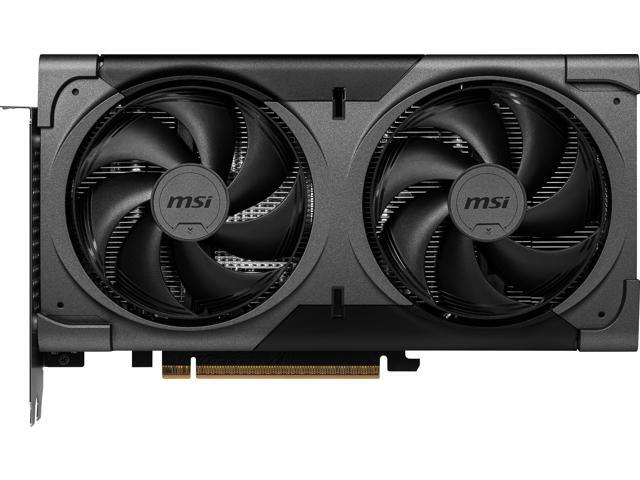
MSI GeForce RTX 5060 Ti 16G VENTUS 2X OC PLUS
Written Reviews:
- TweakTown: https://www.tweaktown.com/reviews/11444/msi-geforce-rtx-5060-ti-16g-ventus-2x-oc-plus/index.html
Consensus summary: TweakTown’s review of this compact, lightweight VENTUS variant arrives nearly a year after the RTX 5060 Ti’s initial launch, and their framing reflects the current market reality: this is an excellent 1440p card that happens to be selling well above its original $429 MSRP due to the ongoing DRAM shortage and general GPU pricing pressure. The 4% advantage over the reference-spec VENTUS card from the OC bump is modest, and the card’s sub-300mm length and dual-fan design make it one of the better choices for smaller cases. DLSS 4 and the 16GB GDDR7 buffer are what justify this card at 1440p; without DLSS the generational rasterization improvement over the RTX 4060 Ti is limited. TweakTown’s bottom line is that it remains one of the best value 1440p cards available, with the caveat that “value” has a different meaning in mid-2026 than it did at launch.
FPS Review take: The RTX 5060 Ti 16G has been a quiet workhorse for 1440p gaming since launch and the VENTUS OC PLUS variant’s SFF-friendly dimensions make it an interesting companion to the Gigabyte SFF ecosystem we reviewed this week. If you can find it close to MSRP, it still earns its recommendation; if you’re being asked $550-plus for a 5060 Ti, that calculus changes fast.
Gigabyte X870E Aorus Xtreme X3D AI Top Motherboard
Written Reviews:
- Tom’s Hardware: https://www.tomshardware.com/pc-components/motherboards/gigabyte-x870e-aorus-xtreme-x3d-ai-top-motherboard-review
- Club386: https://www.club386.com/gigabyte-x870e-aorus-xtreme-x3d-ai-top-review/
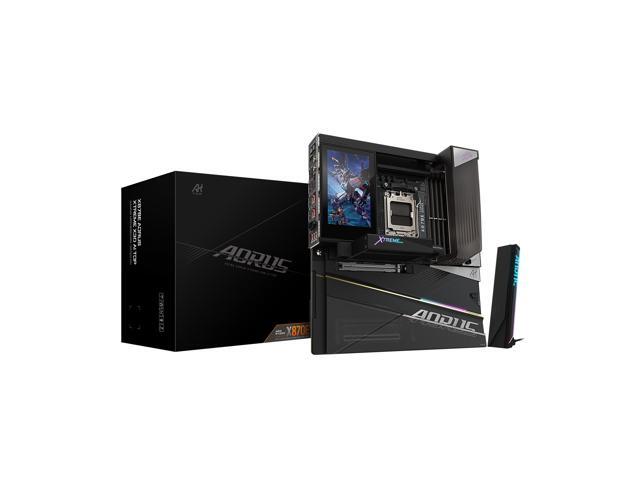
Consensus summary: Both outlets land in the same place: this is one of the better flagship AM5 boards on the market, priced at $999 in the US, with five M.2 slots (two PCIe 5.0), dual 10GbE, Wi-Fi 7, a 24+2+2 phase VRM with 110A SPS MOSFETs, and Gigabyte’s X3D Turbo Mode 2.0 for squeezing extra performance from 3D V-Cache chips. Tom’s Hardware measured it posting some of the best non-9800X3D Cyberpunk 2077 frame rates they’ve seen, attributing it to the board’s tendency to run memory at higher effective bandwidth by default. Club386 called it “resolutely premium in every way.” The main competition at this price point comes from ASUS’s ROG Crosshair X870E Dark Hero and the MSI MEG X870E Ace Max, both of which push the $1,200-plus range and come with larger integrated displays and additional PCIe 5.0 M.2 slots, making the Xtreme X3D AI Top a relative value play in truly rarefied air.
FPS Review take: For anyone running a Ryzen 9 9950X3D2 or an X3D chip and wanting a board that’s not priced into the four-figure absurdity zone of full flagships, the Xtreme X3D AI Top makes a compelling case. Our Intel Core Ultra 7 270K Plus vs Core Ultra 9 285K review from last week provides useful cross-platform framing if you’re deciding between platforms right now.
MSI MPG 271QR QD-OLED X50
Written Reviews:
- TechPowerUp: https://www.techpowerup.com/review/msi-mpg-271qr-qd-oled-x50/
- TFT Central: https://tftcentral.co.uk/reviews/msi-mpg-271qr-x50
Consensus summary: Both TechPowerUp and TFT Central reviewed what is currently the fastest QD-OLED monitor available: a 26.5-inch 1440p panel running Samsung’s third-gen QD-OLED substrate at 500Hz, paired with DisplayPort 2.1a UHBR20, G-SYNC Compatible certification, and, unusually for an OLED monitor, a USB-C port with 98W power delivery. TechPowerUp measured average on-display input lag of around 1.45ms, which is exceptional, with HDR brightness peaking over 1,000 cd/m² and SDR above 300 cd/m² after tuning. The distinctive feature in this wave of 500Hz QD-OLEDs is that USB-C port: most competing 500Hz OLEDs don’t have it at all, making the MPG 271QR an obvious choice for anyone wanting a single-cable connection from a laptop or handheld PC. MSRP is $900, it has dropped closer to $650-700 through deals since launch. The only consistent note of hesitation is the 26.5-inch size, which some competitive players feel is slightly too large for true close-range esports use.
FPS Review take: The 500Hz 1440p QD-OLED monitor market has matured quickly and the MPG 271QR’s USB-C power delivery genuinely differentiates it from a crowded field of otherwise similar panels. If you’re gaming from a Steam Deck or ROG Ally at a desk and want a single cable to rule them all, this one’s worth the premium.
Antec Flux Pro Noctua Edition Case
- Written Reviews:
- Hardware Asylum: https://www.hardwareasylum.com/reviews/cases/noctua_flux-pro
- Gamers Nexus: https://gamersnexus.net/cases/noctua-case-review-benchmarks-thermals-noise-cable-management-antec-flux-pro-noctua-edition
- TweakTown: https://www.tweaktown.com/reviews/11374/antec-flux-pro-noctua-edition-full-tower-chassis/index.html
- PC Gamer: https://www.pcgamer.com/hardware/pc-cases/antec-flux-pro-noctua-edition-review/ Guru3D: https://www.guru3d.com/review/antec-flux-pro-noctua-edition-chassis-review/
- KitGuru: https://www.kitguru.net/components/cases/james-dawson/antec-flux-pro-noctua-edition-pc-case-review/
Video Reviews:
- Gamers Nexus: https://gamersnexus.net/cases/noctua-case-review-benchmarks-thermals-noise-cable-management-antec-flux-pro-noctua-edition
Consensus summary: The Antec Flux Pro was already one of the strongest high-airflow full-tower options on the market before Noctua got involved. The Noctua Edition swaps the stock fans for six G2-series units (four NF-A14x25 and two NF-A12x25), replaces the fan hub with Noctua’s NA-FH1, and adds brown accents, walnut wood trim, and silicone grommets throughout. Gamers Nexus delivered the definitive technical verdict in March: the Noctua Edition drops noise levels up to 8 dB(A) compared to the standard Flux Pro at equivalent cooling performance, and their fan tester confirmed the G2 fans move meaningfully more air per decibel than the Antec originals. The consensus snag is price: $399.90 for a case during a period of economic uncertainty and inflated hardware costs is a tough ask, even with $200+ worth of Noctua fans bundled in. Hardware Asylum’s fresh April 28 review adds the perspective that this chassis bridges the gap between a factory product and a thoughtful case mod — Noctua’s involvement isn’t cosmetic.
FPS Review take: Dennis covered the Noctua CAD file release just this week, which is a nice reminder of how seriously Noctua takes the ecosystem angle. The Flux Pro Noctua Edition is a genuinely premium product with the benchmarks to back it up; whether $400 for a case fits your build budget is a separate conversation, but if it does, you’re unlikely to regret it.
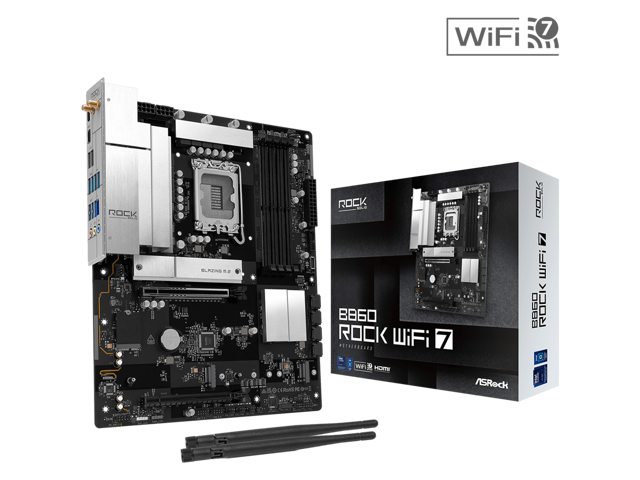
ASRock B860 Rock WiFi 7 Motherboard
Written Reviews:
Consensus summary: FunkyKit’s May 1 review covers ASRock’s mid-range Intel B860 entry, a board targeting builders who want a capable Intel 800-series platform without flagship price tags. The B860 chipset supports Intel Core Ultra 200-series processors (Arrow Lake) with PCIe 5.0 for the primary M.2 slot, Wi-Fi 7, and 2.5GbE networking. ASRock’s Rock series has consistently punched above its price class in build quality and feature density, and the B860 Rock WiFi 7 carries that tradition. Single review so far, so this is a watch-this-space entry; expect more coverage as the B860 ecosystem fills out (Ed: Or not, with Nova Lake incoming).
FPS Review take: Intel had a strong Q1 2026 earnings surprise, as we covered last week, and the mid-range B860 segment is where most builders actually live. A solid, no-nonsense Intel board from ASRock at an accessible price point is exactly what that platform needs right now.
Discussion (1 reply)
Join Discussion →Still loving these roundup articles.