
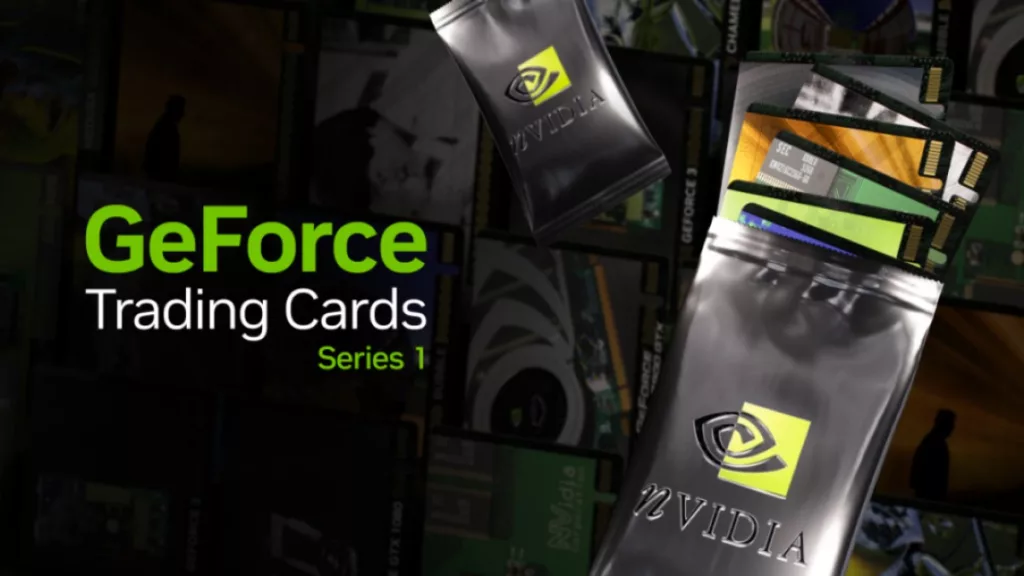
NVIDIA is launching not one, two, or three but, wait for it, fourteen new trading cards to celebrate those times when it was known for releasing graphics cards. The PC community is somewhat known for its nostalgic tendencies as well as historical preservation efforts, so kidding aside kind of makes sense that NVIDIA has chosen to offer its own means of honoring the past.
“Maybe it started with the first graphics card installed in a new desktop; a weekend LAN; a favorite arena shooter; a tech demo running on repeat; or perhaps a stunning new game that made an upgrade well and truly worthwhile.”
– NVIDIA
Well, thankfully, the age of the NFT has come and gone, and instead we can see a return of a more conventional collectible with NVIDIA’s GeForce Trading cards. Series 1 will be given away via NVIDIA’s social channels, select RTX giveaway events, at summer gaming shows such as the Bilibili World 2026, QuakeCon 2026, gamescom 2026, and other public events. Those wanting to pick up a pack can get them at NVIDIA’s booths as well as at its partners’ booths. Cards will depict significant moments such as the first GeForce GPU, other early releases and demos, and other NVIDIA milestones.
- NV1: The blueprint. Launched in 1995, NV1 was NVIDIA’s first mainstream multimedia processor, combining support for joystick, audio, VGA, 2D and 3D. It marked an early starting point for the company’s work in PC graphics.
- GeForce 256: The world’s first GPU. Introduced in 1999, GeForce 256 helped define the GPU by bringing transform, lighting and rendering onto a single chip, shifting more graphics work from the CPU to dedicated graphics hardware.
- GeForce 3: The first GPU with Programmable Shaders. Powered by the nFiniteFX Engine, GeForce 3 helped bring programmable vertex and pixel shaders to GeForce gamers, giving developers more control over lighting, materials, surfaces and real-time visual effects.
- GeForce 7800 GTX: Full-Throttle Graphics. A flagship from the mid-2000s PC gaming boom, GeForce 7800 GTX represented the GeForce 7 Series era, with advances including CineFX 4.0, Shader Model 3.0 support and high dynamic range rendering.
- GeForce 10 Series: 10: Gaming Perfected. Powered by the Pascal architecture, GeForce GTX 1080 became a memorable enthusiast upgrade, bringing a major leap in performance and efficiency to high-resolution gaming and VR experiences.
- Bubble, Chameleon and Medusa: Classic real-time demos. NVIDIA demos have long shown what new GeForce hardware could render in real time, from reflective environments to programmable shader effects and detailed character showcases.
- The Way It’s Meant To Be Played: A GeForce gaming signature. Series 1 nods to the long-running NVIDIA gaming program through cards inspired by Unreal Tournament 2004 and Borderlands, two PC favorites from different eras of GeForce gaming.
- GeForce RTX 2080 Ti Cyberpunk 2077 Edition: Night City goes #RTXON. This special-edition design connects the RTX era with Night City, cybernetic style and one of PC gaming’s most recognizable visual worlds.
- Checklist card: A nod to collector culture. A simple tracker for fans who want to follow the Series 1 lineup and the history each card represents.
Of course, most PC enthusiasts would probably prefer to see actual GPU releases, and the recent resurgence of rumors and model listings surrounding its refresh lineup, aka SUPER, launch has stoked renewed hopes that perhaps new graphics, not trading, cards might be on the way. Perhaps there’ll be a SUPER trading card on the way as well.
Wherever fans find GeForce Trading Cards Series 1, the path to a pack starts with a simple question: Which GeForce graphics card and game started it all for you?”
– NVIDIA
Discussion (3 replies)
Join Discussion →It has that April fools flavor.
As a free chachi item at trade shows and events... I bet it's cheaper than giving away their tech rulers. So why not?
I'd prefer more of their tech rulers.
-Yeah I was wondering what day it was for a moment...