
Conclusion
The AMD Ryzen 7 7700X3D was announced at Computex 2026, in the summertime, and was launched in July 2026. It was unexpected, as the Ryzen 7 7700X3D is based on AMD’s previous Zen 4 architecture, with the Ryzen 7000 series of AM5 CPUs. We are currently in AMD’s Zen 5 era, with the AMD Ryzen 9000 series of CPUs. However, the AM5 platform is shaping up to be a solid platform, with longevity in play. It isn’t uncommon for AMD to backtrack and fill out previous generations with more SKUs. The Ryzen 7 7700X3D, ultimately, is just a down-clocked Ryzen 7 7800X3D, providing X3D performance at a lower price point for gamers.
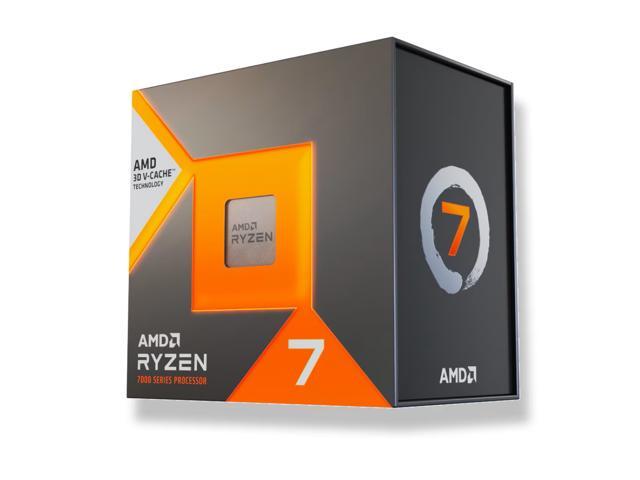
The AMD Ryzen 7 7700X3D is an 8-core/16-thread CPU with Zen 4 architecture and 96MB of AMD 3D V-Cache to allow a great gameplay experience. The base clock is set at 4GHz, and the Turbo Boost frequency is set at 4.5GHz. This is a downclock compared to the Ryzen 7 7800X3D, which has a base clock of 4.2GHz and a Turbo Boost frequency of 5GHz. Otherwise, the two CPUs are exactly the same. The Ryzen 7 7700X3D has a TDP of 120W and a PPT of 162W, the same as the Ryzen 7 7800X3D. Due to the lower core clock spec, the MSRP is lower at $329 MSRP compared to the launch price of the Ryzen 7 7800X3D at $449 MSRP. This is a pretty substantial 27% decrease in pricing, considering the very small performance difference that we experienced.
Final Points
Truly, looking at the performance difference between the AMD Ryzen 7 7700X3D and Ryzen 7 7800X3D is quite small. In non-gaming workloads, multi-core performance is about 5-7% slower, depending on the application. When looking at single-core performance its also about 5-7% slower. When it comes to gaming, it does depend on the game and game quality settings. We saw average FPS differences as low as 1% or less. However, there were some larger differences that averaged out to around to 4% to 7% at the highest. However, where the difference was more pronounced was in the 1% Lows. The Ryzen 7 7700X3D was between 4% and 8% at the highest, but there were also some just 1% differences. The end result is that, practically, there is no gameplay difference or anything you’ll notice while actually playing games. Especially in GPU-limited scenarios, where you will mostly be playing anyway with higher game settings and resolutions.
The AMD Ryzen 7 7700X3D operated as expected in frequency while gaming or running full-load all-core testing. The Ryzen 7 7700X3D boosted to the 4.55GHz while gaming, but generally hovers around 4.45GHz. What was really interesting was the Wattage while gaming. The Ryzen 7 7700X3D operated at about 65W-70W while gaming, a full 10W+ less than the Ryzen 7 7800X3D. It also ran at a very cool temperature. The Ryzen 7 7700X3D would make an excellent gaming CPU for a tight, small form-factor computer that demands low power and quiet cooling.
Looking strictly at the launch MSRP of the Ryzen 7 7800X3D at $449, and the launch MSRP of the Ryzen 7 7700X3D, the value becomes apparent. On MSRP, there is a 27% price difference, yet in our performance testing, the difference was only about 7%. That’s a huge price reduction for a very small amount of performance lost. Looking online, here in the summer of 2026 (considering the price apocalypse), prices will vary with current availability. At one place, the MSRP prices are true, but at another, the two CPUs are only $45 apart. Therefore, it is going to depened by retailer, and the current phase of the hardware apocalypse is affecting pricing. That said, the Ryzen 7 7700X3D will still be the cheaper option, and if you need to save every buck, it is a clear winner. The performance upgrade to the Ryzen 7 7800X3D doesn’t make much sense if there is even a $50 difference. So there you go, the Ryzen 7 7700X3D is a solid option for an enthusiast gaming experience on a budget in 2026.



Discussion (1 reply)
Join Discussion →Reminds me a lot of the 5700X3D vs. 5800X3D when it comes to perf/value.