
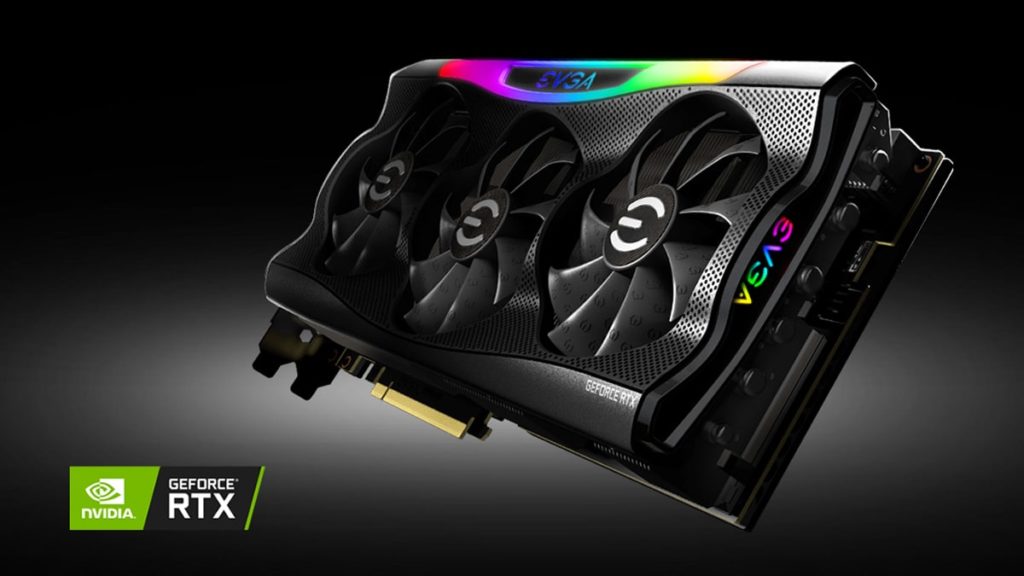
An ex-EVGA product manager has made some interesting claims about NVIDIA’s requirements for its business partners regarding pricing and the subsequent availability of GPUs for graphics cards. EVGA was well known for its superb customer service, whether you needed something repaired or replaced, and for its ordering programs, which included reservation queues and trade-up offers, at a time when scalping peaked during the crypto-mining-fueled era of the RTX 30 series. The PC component manufacturer bowed out of the GPU market in 2022 after announcing it would no longer partner with NVIDIA due to disrespectful treatment by Team Green. While many fans of the company had hoped it would change directions to AMD, that never happened, and EVGA has since faded into the shadows. Brendon Ray Hedrick, a former product manager who worked for EVGA from 2016-2019, has posted a link on its Reddit page telling of his experiences during that time.
Ray, as Brendon states he went by due to many often misspelling his first name, is not wielding a torch and pouring gasoline across many bridges in his account of what happened during his time at EVGA. In fact, quite the opposite, in giving praise to the company and the opportunities it presented him with and how its teams really believed in supporting customers, not to mention getting to work with Vince Lucido (K|NGP|N), JayzTwoCents, and Steve Burke (Gamers Nexus), to name a few folks in the tech community. However, a darker side of the industry is covered when he shares details regarding the launch of NVIDIA’s Pascal Founders Edition cards in 2016. Essentially NVIDIA had become a competitor to its AIB partners.
“NVIDIA had sold its own cards before, but this was when the tension became clear to me: the company supplying our GPUs was also making a prominent pitch to sell finished cards directly to our customers.”
– Brendon Ray Hedrick
As disturbing as it might be for your primary component (GPU) supplier to also become a fellow competitor things seeming only got worse from there. According to Ray, NVIDIA had stipulations for its partners that they must sell some of its products at NVIDIA’s MSRP or else risk not receiving its full order of GPUs.
“As I understood the arrangement, we were required to offer a model at NVIDIA’s advertised starting price. If we did not, NVIDIA could reduce our allocation of GPUs, and it could be difficult to tell whether a reduction was a response to our pricing. We needed to keep a loss leader—a card we sold at a loss—to keep NVIDIA happy and protect our access to the chips.”
– – Brendon Ray Hedrick
Now, on the surface, this could be perceived as a win-win for consumers, especially in light of current pricing for graphics cards, except there can be more to it than that. EVGA was a company well known for its higher-end designs, which meant that it, in essence, was footing the bill for premium parts while having to sell cards at a loss to appease NVIDIA’s requirements. These days customers take for granted, or simply do not know, that aftermarket cards cost more than a Founders Edition, and hope the manufacturer is truly offering a superior product. Meanwhile, even at the launch of the RTX 50 series in January 2025, folks would be hard-pressed to find any partner cards priced at NVIDIA’s MSRP. To be fair, there were a few, but those prices ceased to be within mere months of launch and have not been seen since. NVIDIA’s store page largely remains sold out but has supplied its Founders Edition to Best Buy on occasion. It also recently made the news for selling a limited number of its cards at various tech events, but otherwise, there’s really no option for customers to get any of its RTX cards at MSRP, and so the pressure put on companies like EVGA was just the nail in the coffin for their demise.
“I remember the loss leaders being sold out almost continuously. The cards closest to the price customers had been promised were the hardest to find, leaving the more expensive models to carry the sale.”
EVGA’s strategy to be compliant was no doubt similar to many others: meet the requirements by selling some cards at a loss but then having to price other models even higher to help absorb the losses. Some companies might also use less advanced engineering in their products and remove premium features such as RGB, but in the end only a few such products ever made their way to market, thus showing it was preferable to roll the dice with NVIDIA’s GPU supply constraints rather than risk loss-leader sales and further raising other products’ prices. This may all seem a moot point, but all should be aware that graphics card manufacturers are facing more challenges thanks to the ongoing memory shortage, which has driven GDDR costs to new heights. The latest rumors are that NVIDIA may be considering selling its GPUs without memory kits. If this pans out to be true, it means its partners will be left to fend for themselves in obtaining required memory from VRAM manufacturers, and smaller graphics card manufacturers may not be able to compete for those orders with the larger companies whose deep pockets may allow them to sell at a lower price point.
Discussion
Join Discussion →No replies yet. Be the first to reply on the forum.