

Introduction
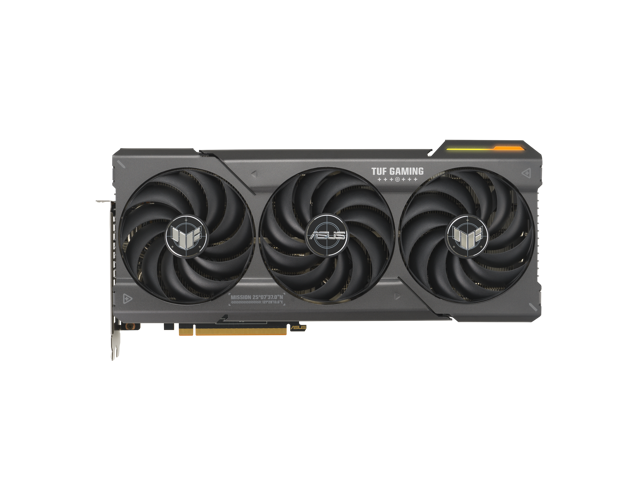
In today’s review, we will be looking at the brand new ASUS TUF Gaming Radeon RX 7800 XT OC Edition Video Card, with 16GB of GDDR6 model TUF-RX7800XT-O16G-GAMING. This ASUS TUF edition of the Radeon RX 7800 XT offers a robust custom build optimized for lower temperatures and durability inside and out with a factory overclock and triple axial-fan cooling design based on AMD RDNA 3 GPU architecture. The ASUS estore pricing is $529.99 for the ASUS TUF Gaming Radeon RX 7800 XT OC Edition 16GB GDDR6, but be sure to check out our pricing widget below for the best pricing available.
At Gamescom 2023, AMD announced the AMD Radeon RX 7800 XT and Radeon RX 7700 XT video cards, based on the RDNA 3 architecture, to fulfill the Radeon RX 7000 lineup. The Radeon RX 7800 XT has an MSRP of $499, and the Radeon RX 7700 XT has an MSRP of $449. We published the specs announcement on August 25th, read that for the full press presentation and information about these new video cards, and also check out our full Radeon RX 7800 XT made-by-AMD reference video card review.

The Radeon RX 7800 XT has 60 Compute Units, 3840 Shader Units, 60 RT Accelerators (2nd Gen), 120 AI Accelerators, and 96 ROPs. It uses 64MB of 2nd Gen AMD Infinity Cache. It has a Game Clock of 2124MHz and a Boost Clock of 2430MHz. It has 16GB of GDDR6 on a 256-bit bus at 19.5Gbps which gives it 624GB/s of memory bandwidth, and it uses a PCIe 4.0 x16 interface with a TDP of 263W.
ASUS TUF Gaming Radeon RX 7800 XT OC Edition
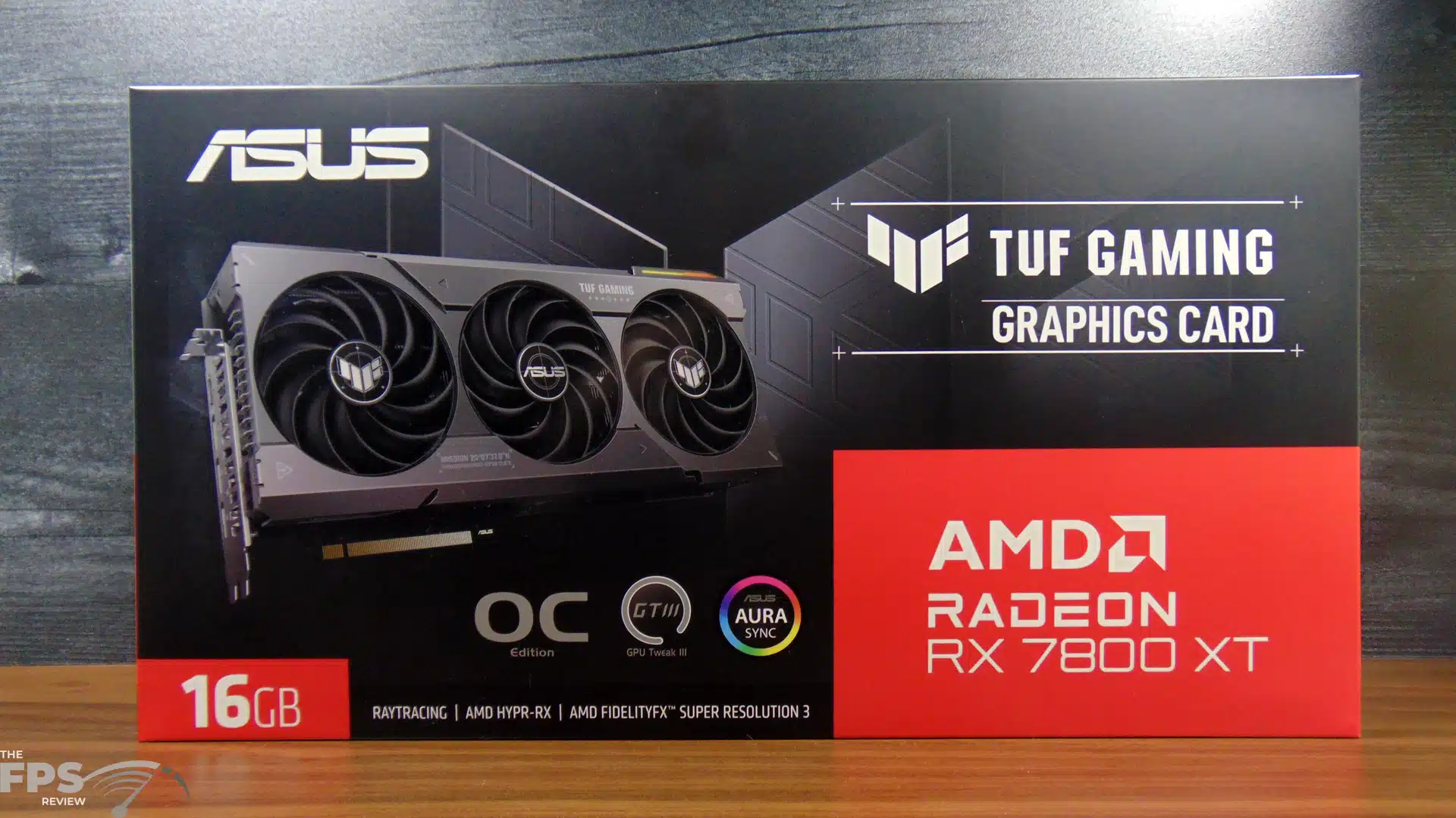
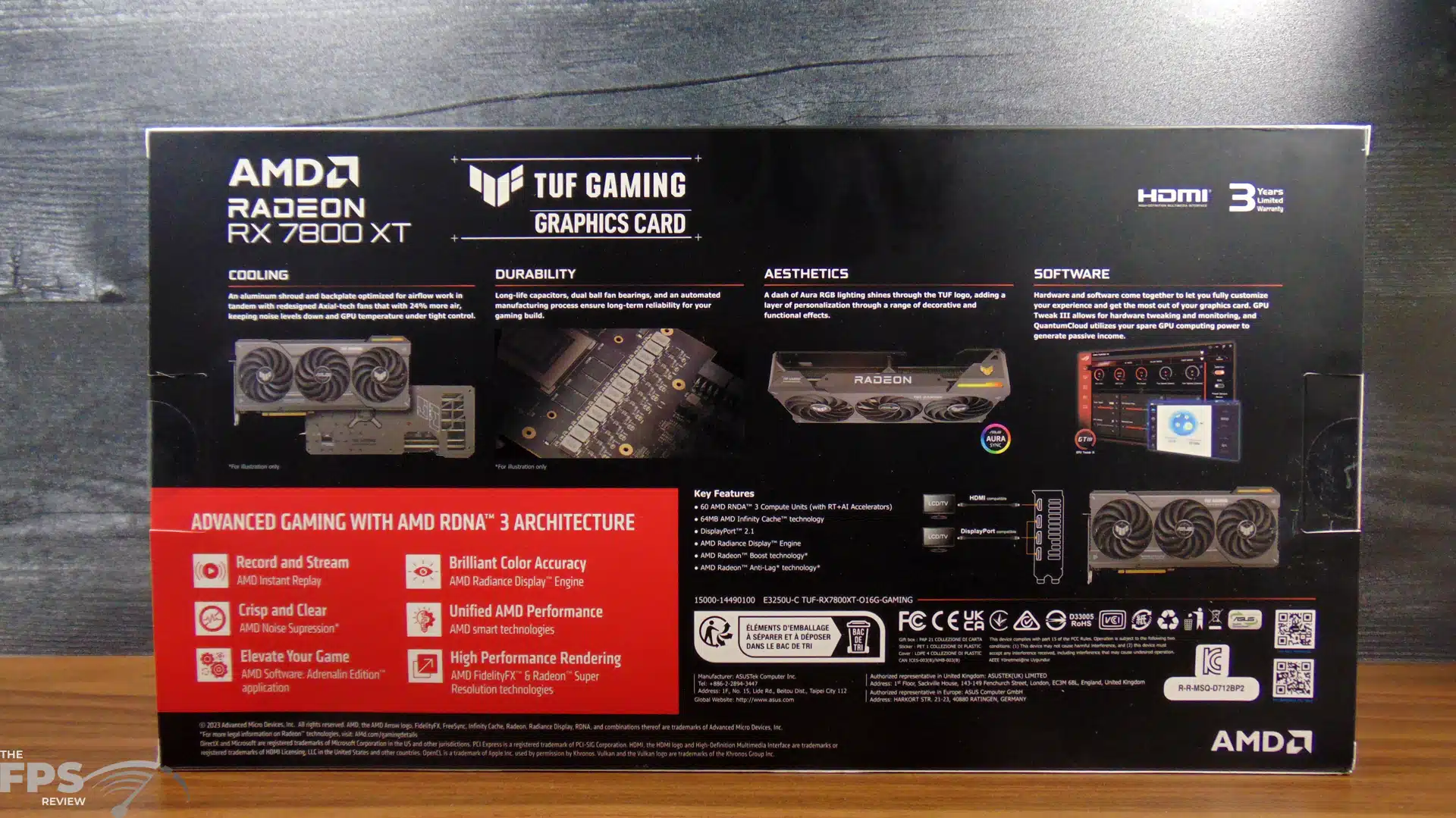
Under ASUS’s models of AMD video cards, ASUS offers two different cards based on the Radeon RX 7800 XT currently. There is the ASUS TUF Gaming Radeon RX 7800 XT OC Edition we are reviewing today, and then for just a little more, you can also get the ASUS TUF Gaming Radeon RX 7800 XT White OC Edition as well.
Both video cards have the same factory overclock, but one has an all-white appearance, and the other has the classic ASUS TUF grey metal look. ASUS TUF Gaming Series of Graphics Cards are for gamers who demand durability, stability, and great gaming value. These video cards are rigorously tested for endurance through a battery of validation tests, it is the “tank” of graphics cards.
Inside the box you will find a TUF certificate of reliability, a TUF gaming graphics card holder to eliminate video card sag, a TUF velcro hook and loop, a collection card, a thank you card, a speed setup manual, and even a screwdriver to help you build.

The ASUS TUF Gaming Radeon RX 7800 XT OC Edition has a factory overclock, the default mode is up to 2213MHz for the Game Clock, and 2520MHz Boost Clock. This compares to the AMD reference spec of 2124MHz for the game clock and 2430MHz Boost Clock. Therefore, by default, it has a 4% higher Game Clock and Boost Clock out-of-the-box. Optionally, there is a software overclock option in ASUS GPU Tweak III that enables an OC Mode that takes it to 2254MHz Game Clock and 2565MHz Boost Clock.
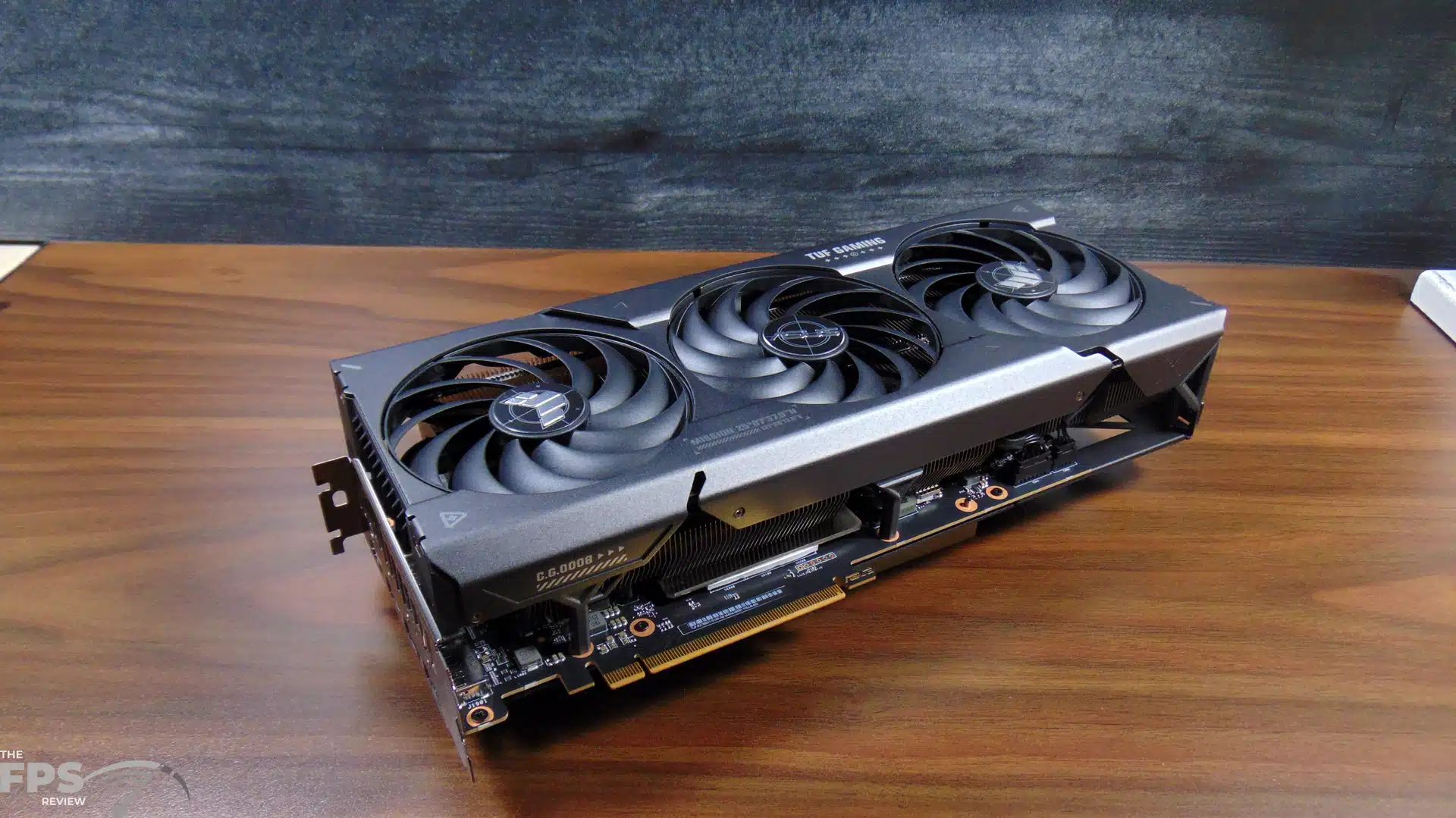
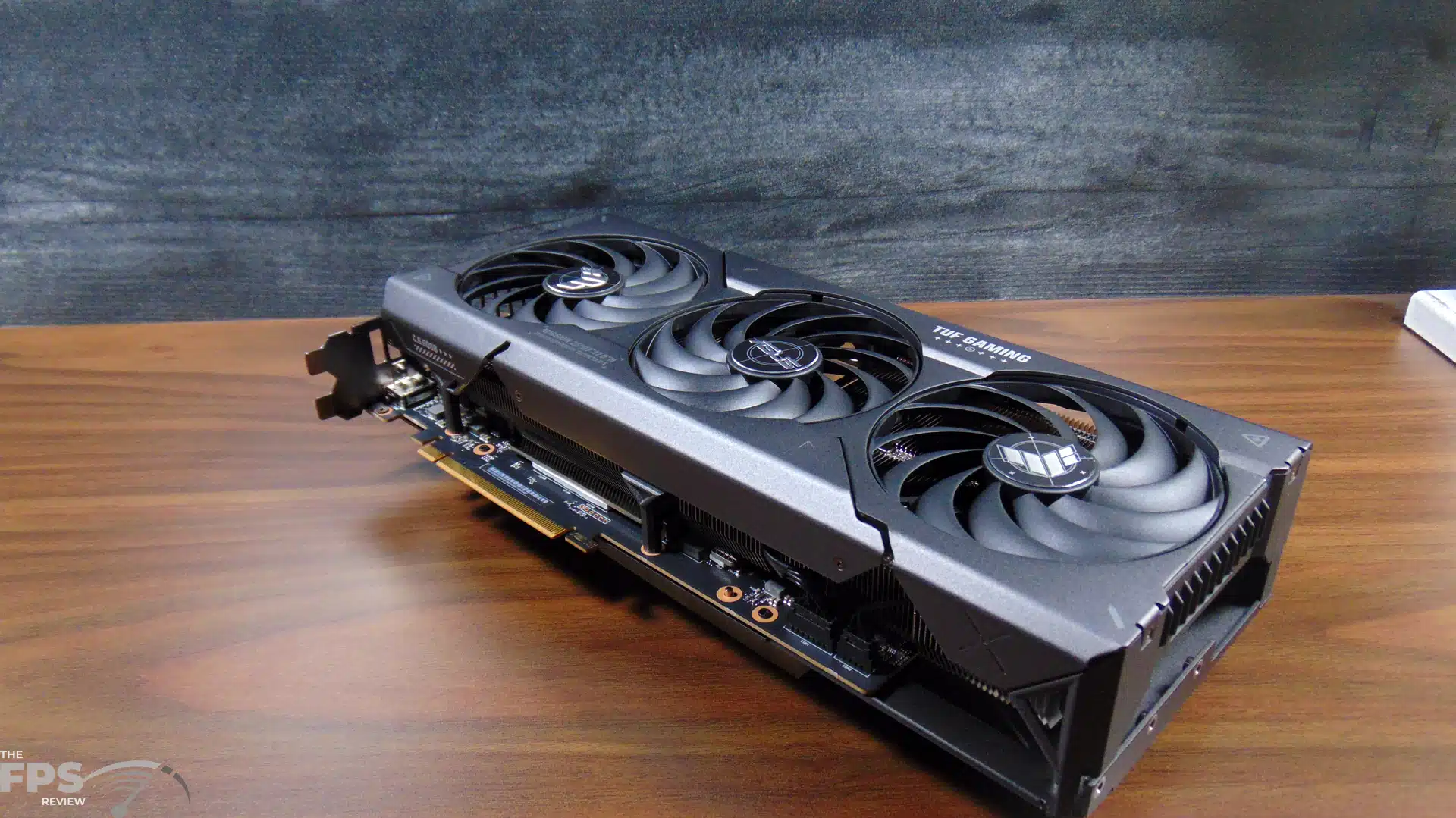
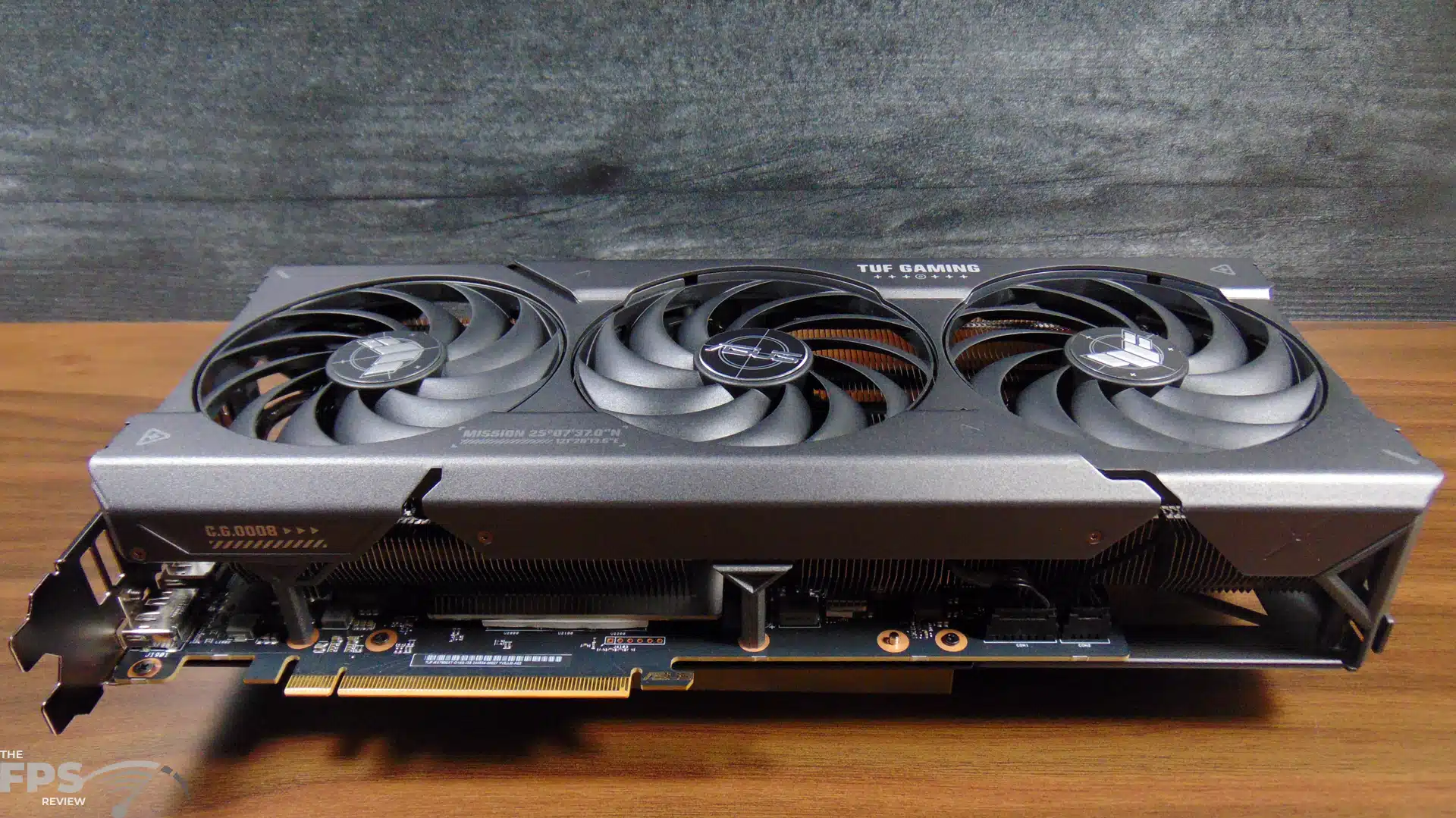
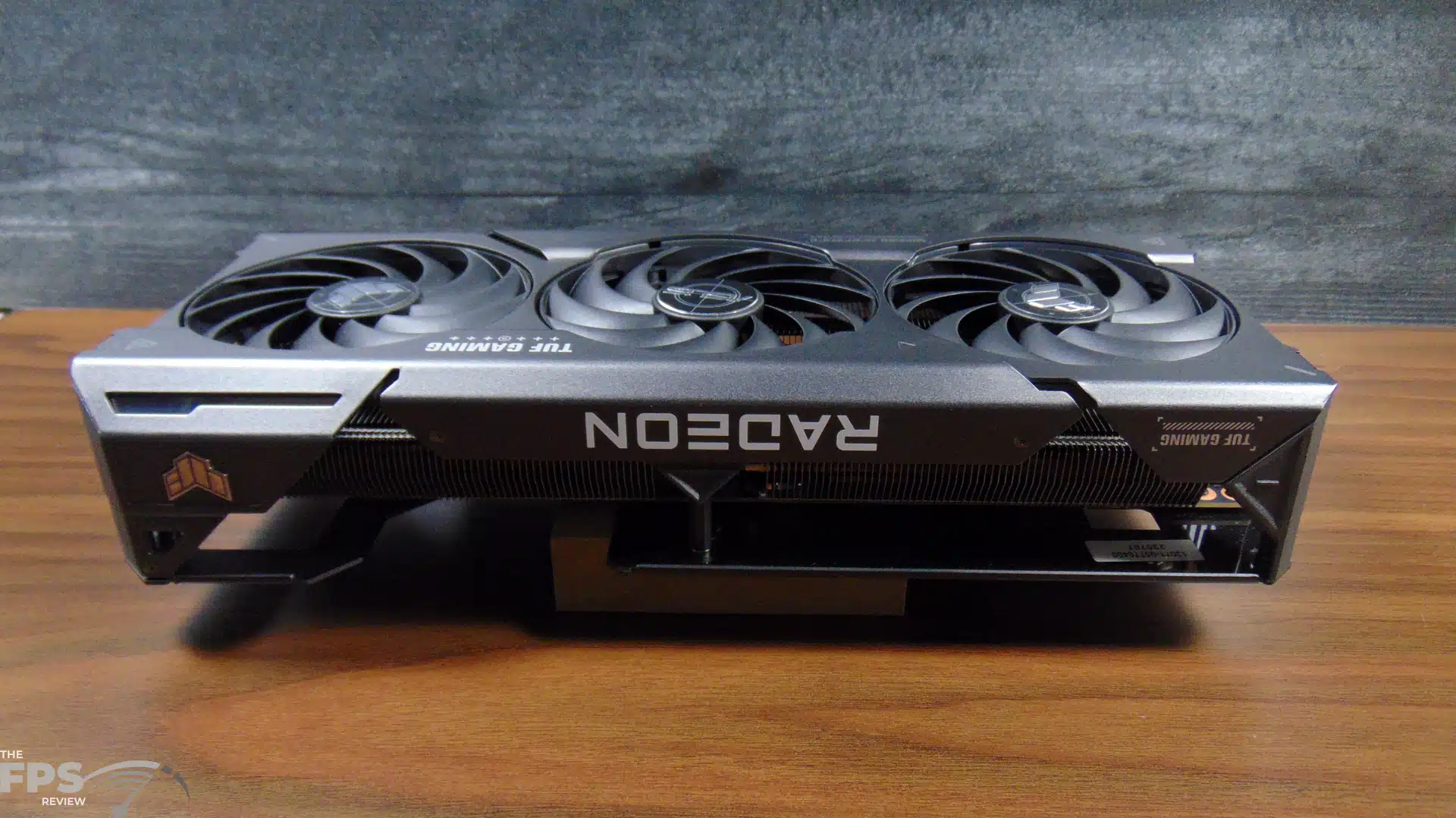
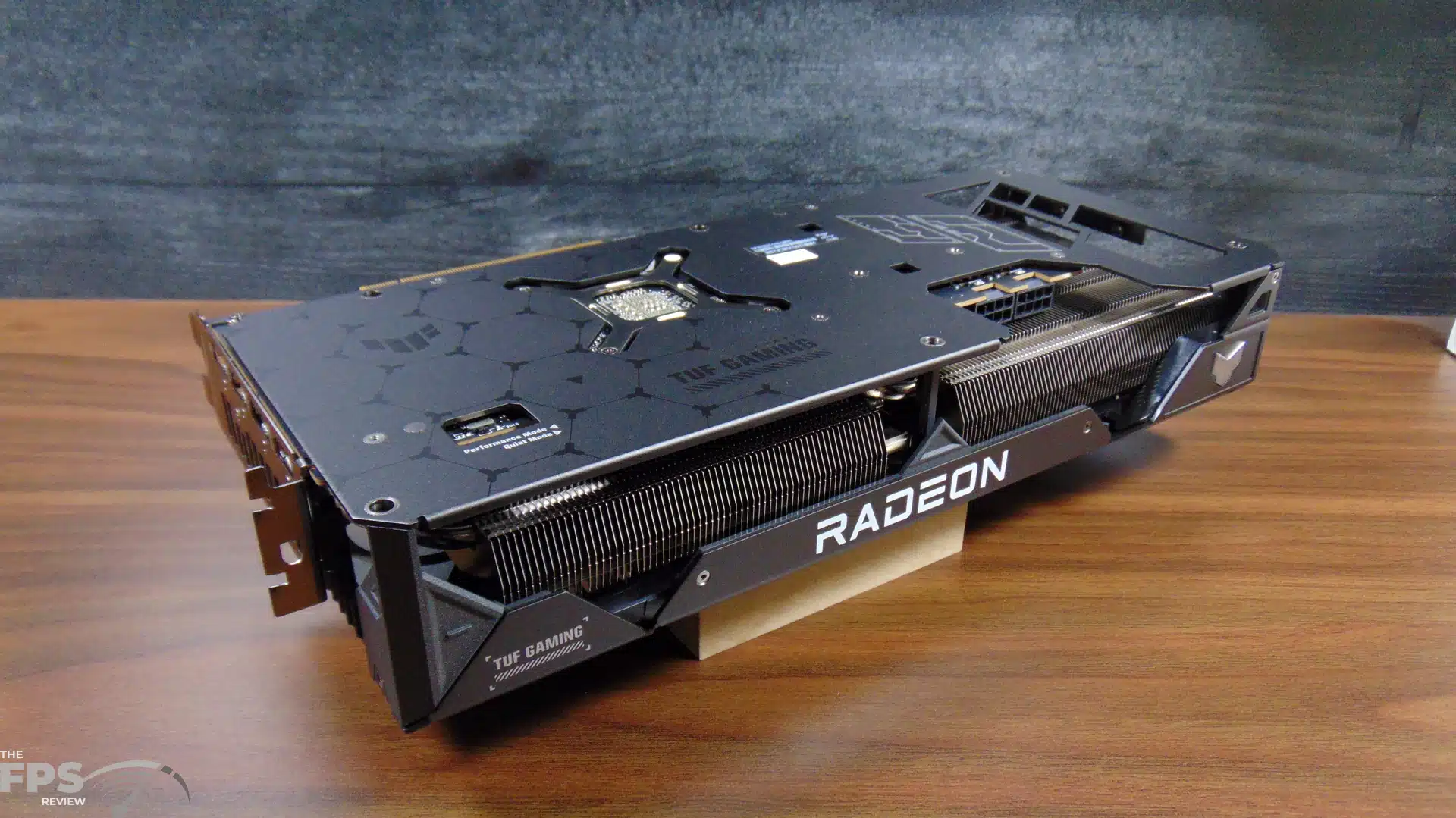
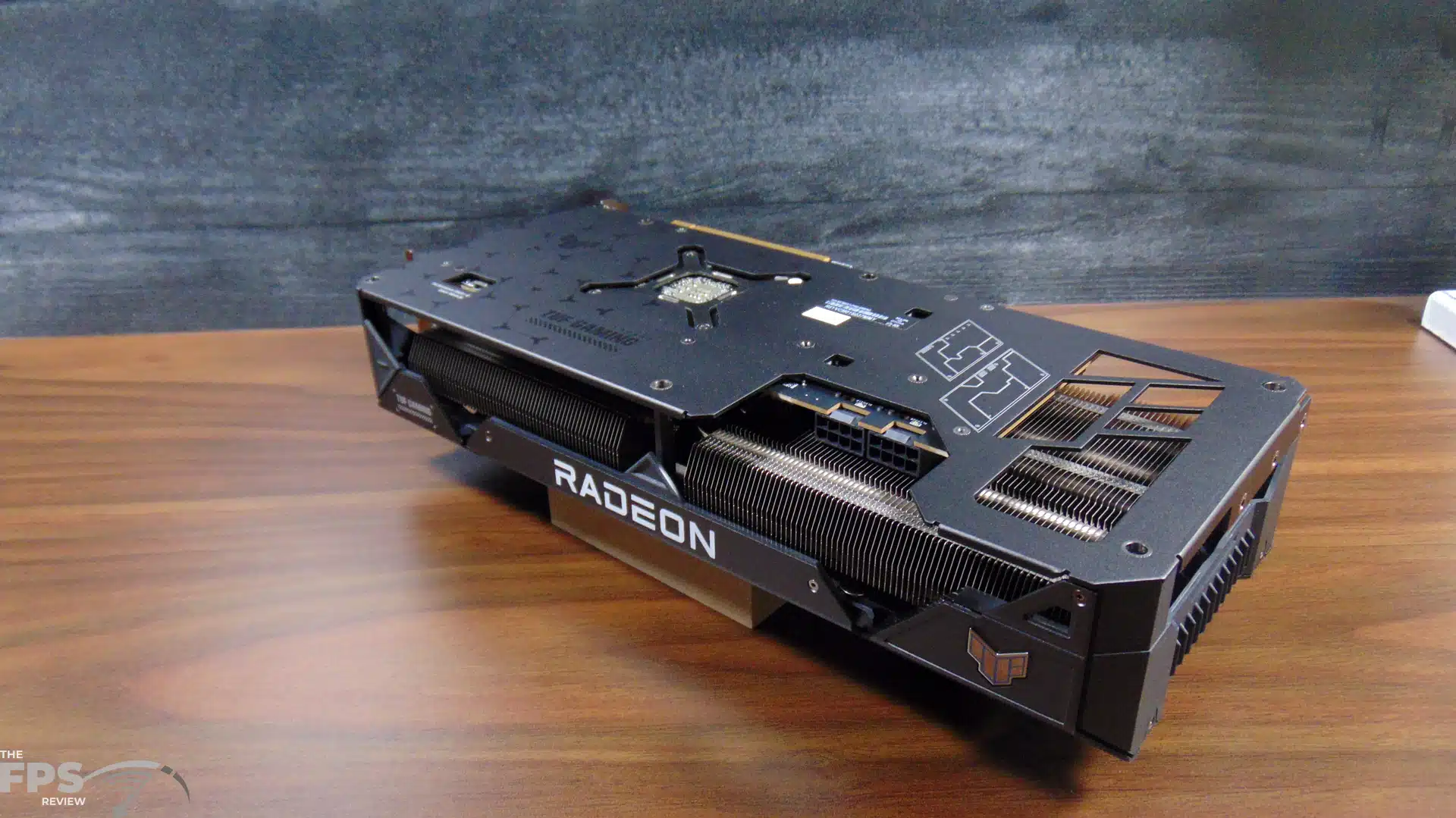
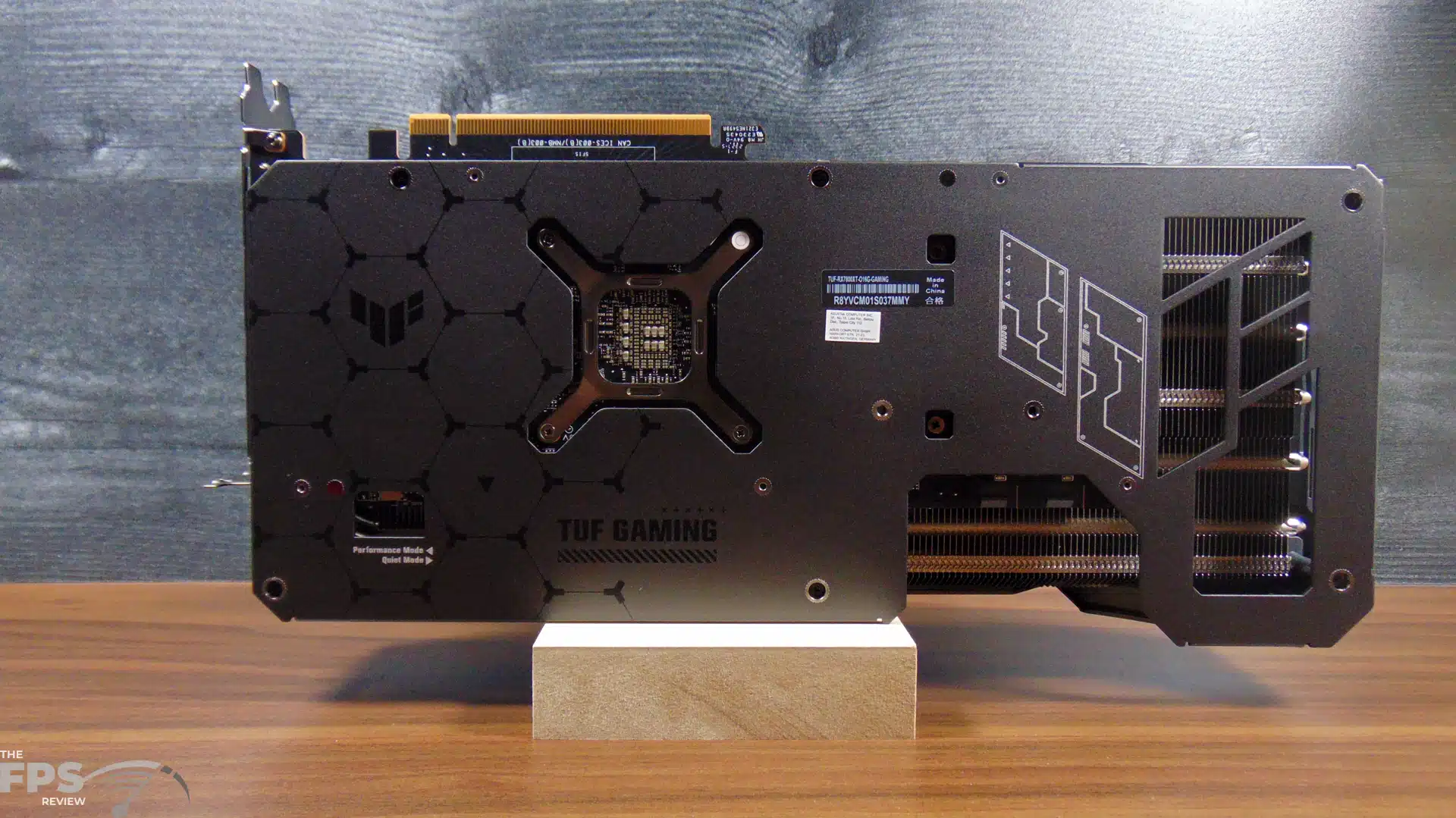
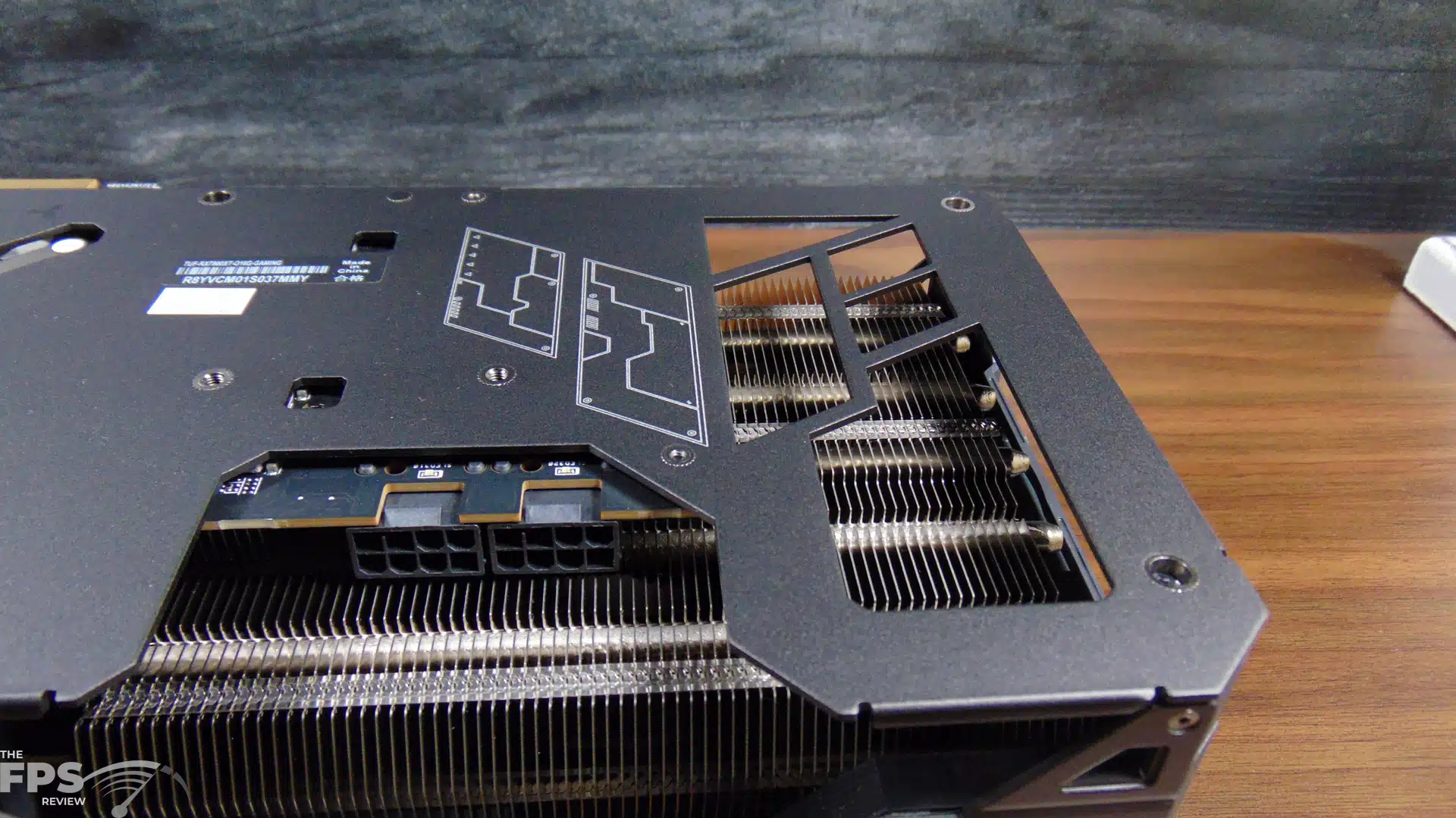
The ASUS TUF Gaming Radeon RX 7800 XT OC Edition uses Military-grade capacitors rated for 20K hours at 105c. It is created with a metal exoskeleton that adds structural rigidity and vents to increase heat dissipation. There is also a backplate to provide stability and has large vents for heat dissipation. It uses the ASUS auto-extreme precision automated manufacturing process for higher reliability.
The ASUS TUF Gaming Radeon RX 7800 XT OC Edition measures 12.6 inches in length, 5.94 inches in width, and 2.33 inches in height.
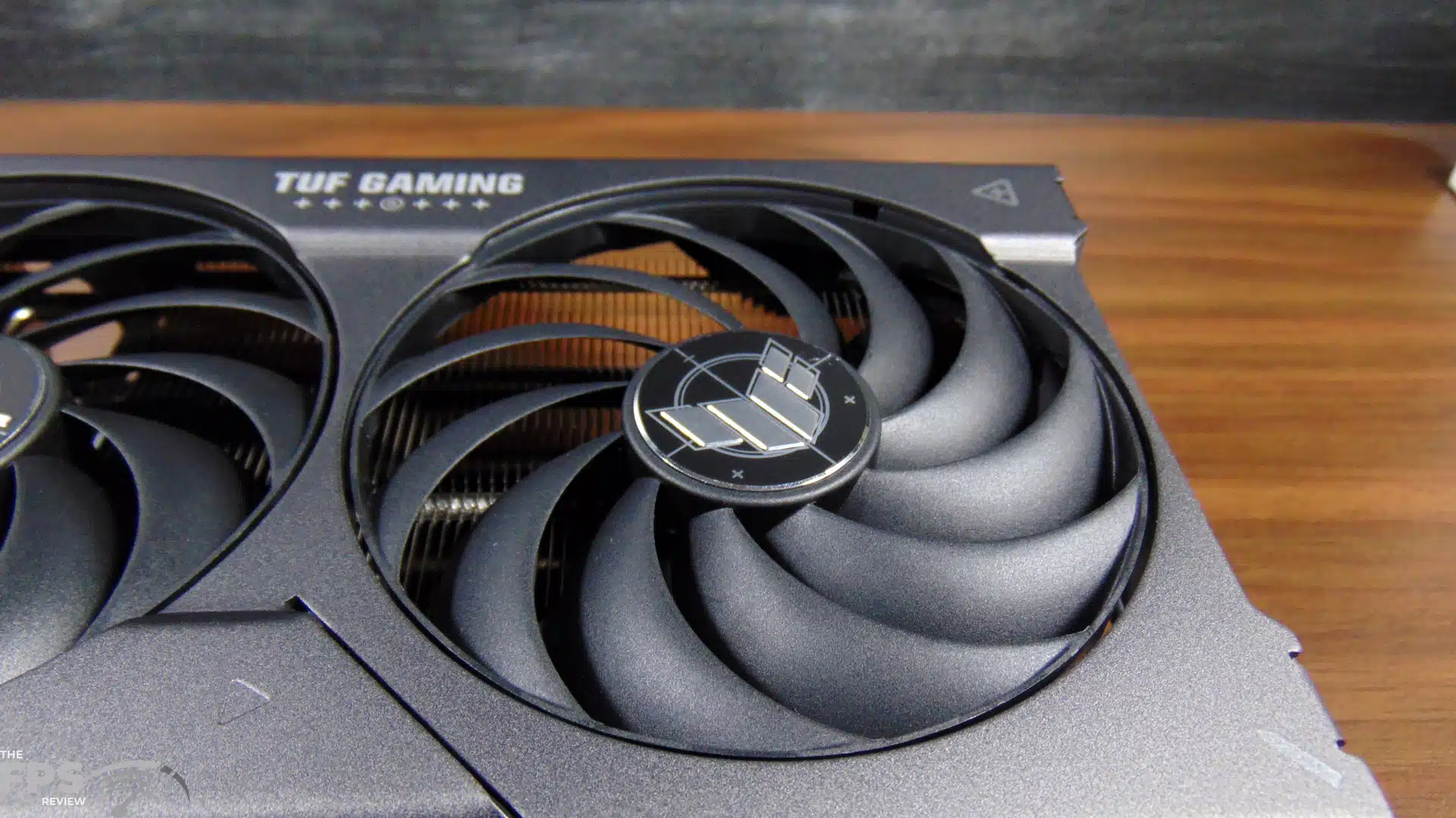
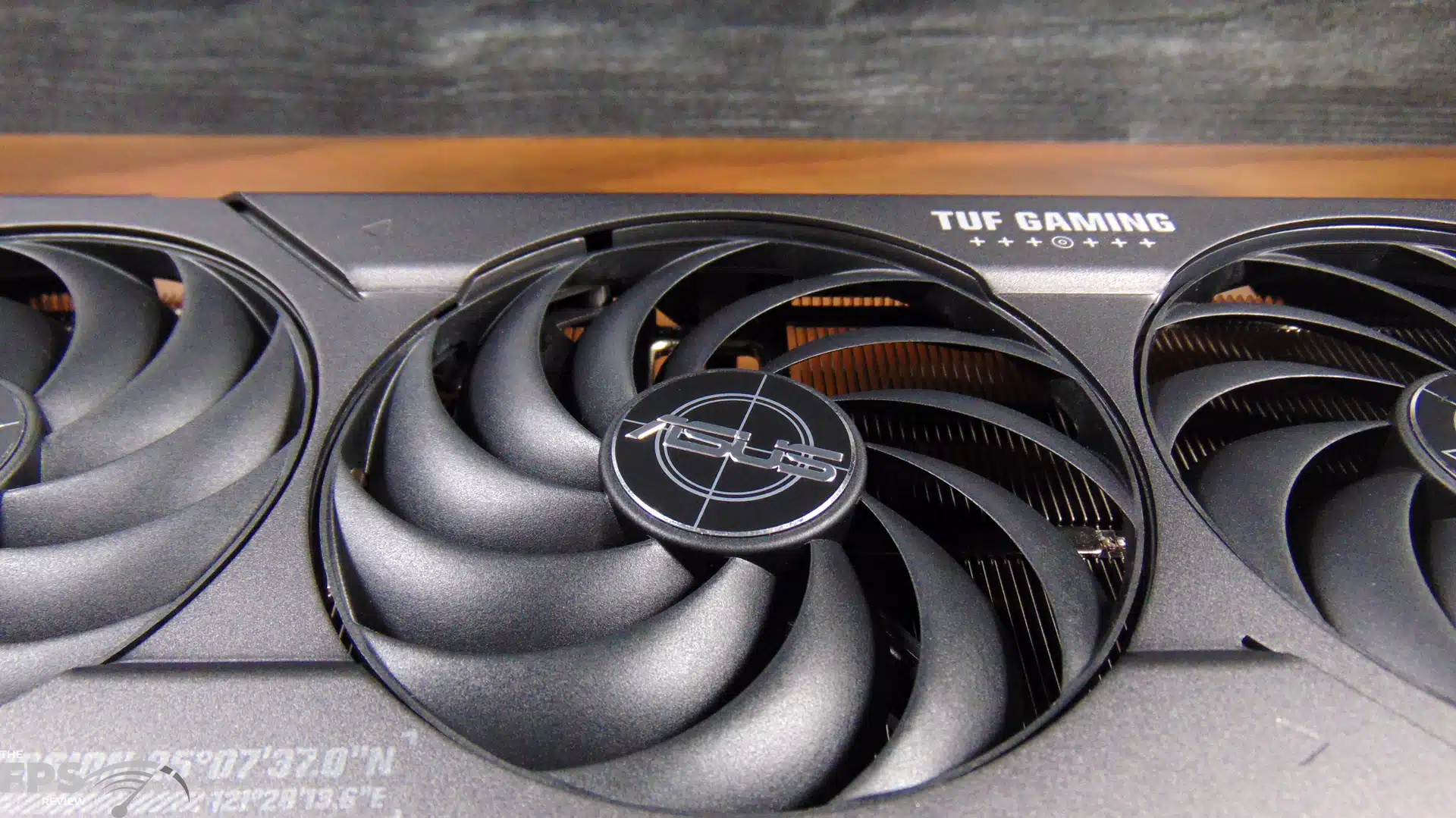
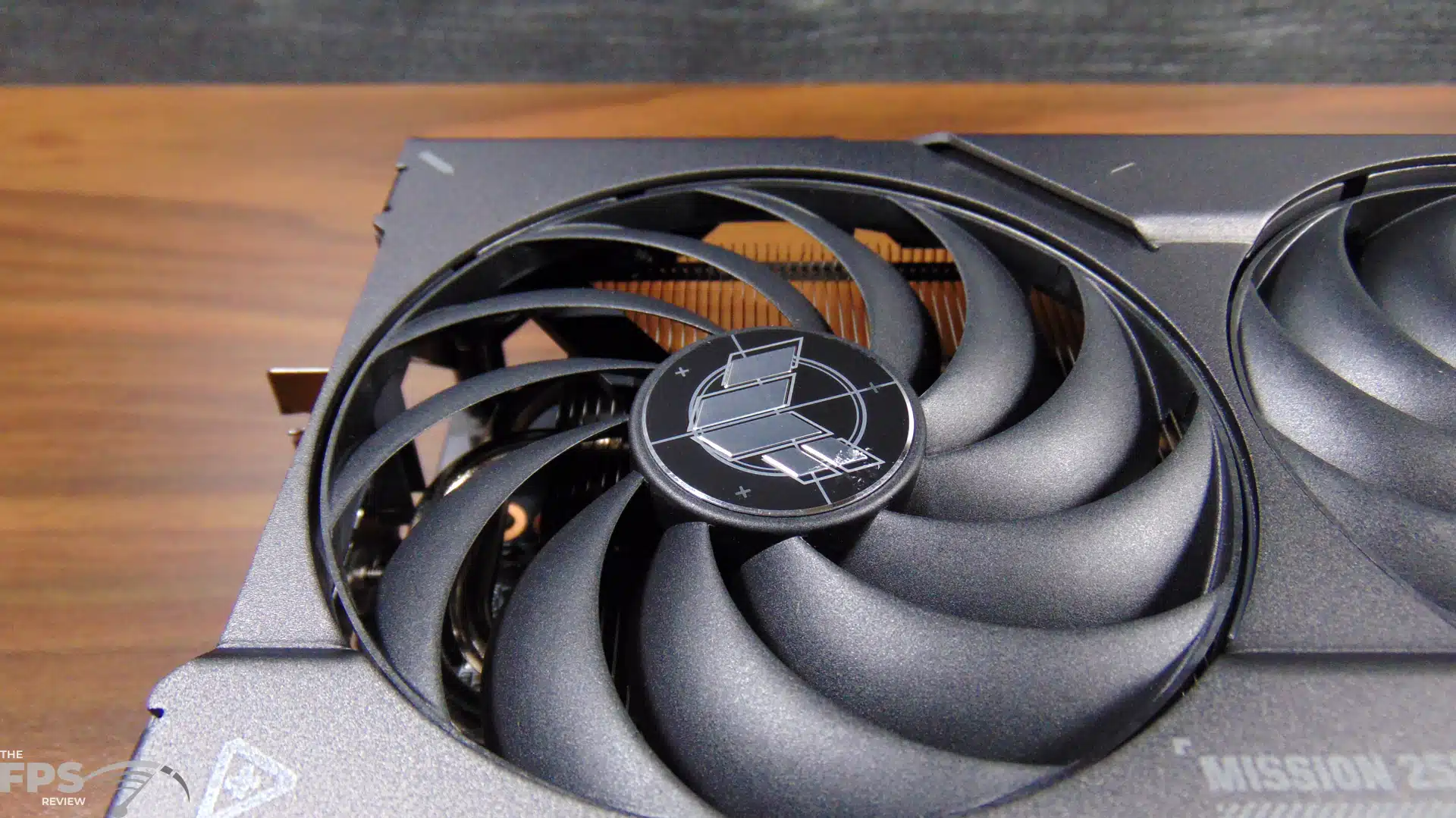
The ASUS TUF Gaming Radeon RX 7800 XT OC Edition uses an enlarged heatsink in a 2.96-slot design. The ASUS TUF Gaming Radeon RX 7800 XT OC Edition uses three larger axial fans with dual-ball bearings. With the scale-up in size, they produce 24% more air through the card. The fans also spin in opposite directions on the sides, compared to the middle fan. The two side fans spin counterclockwise to minimize turbulence and maximize air dispersion. The middle fan spins clockwise. They all also support fan stop so that they stop spinning below 55c, the fans start up again at 60c with a speed curve.
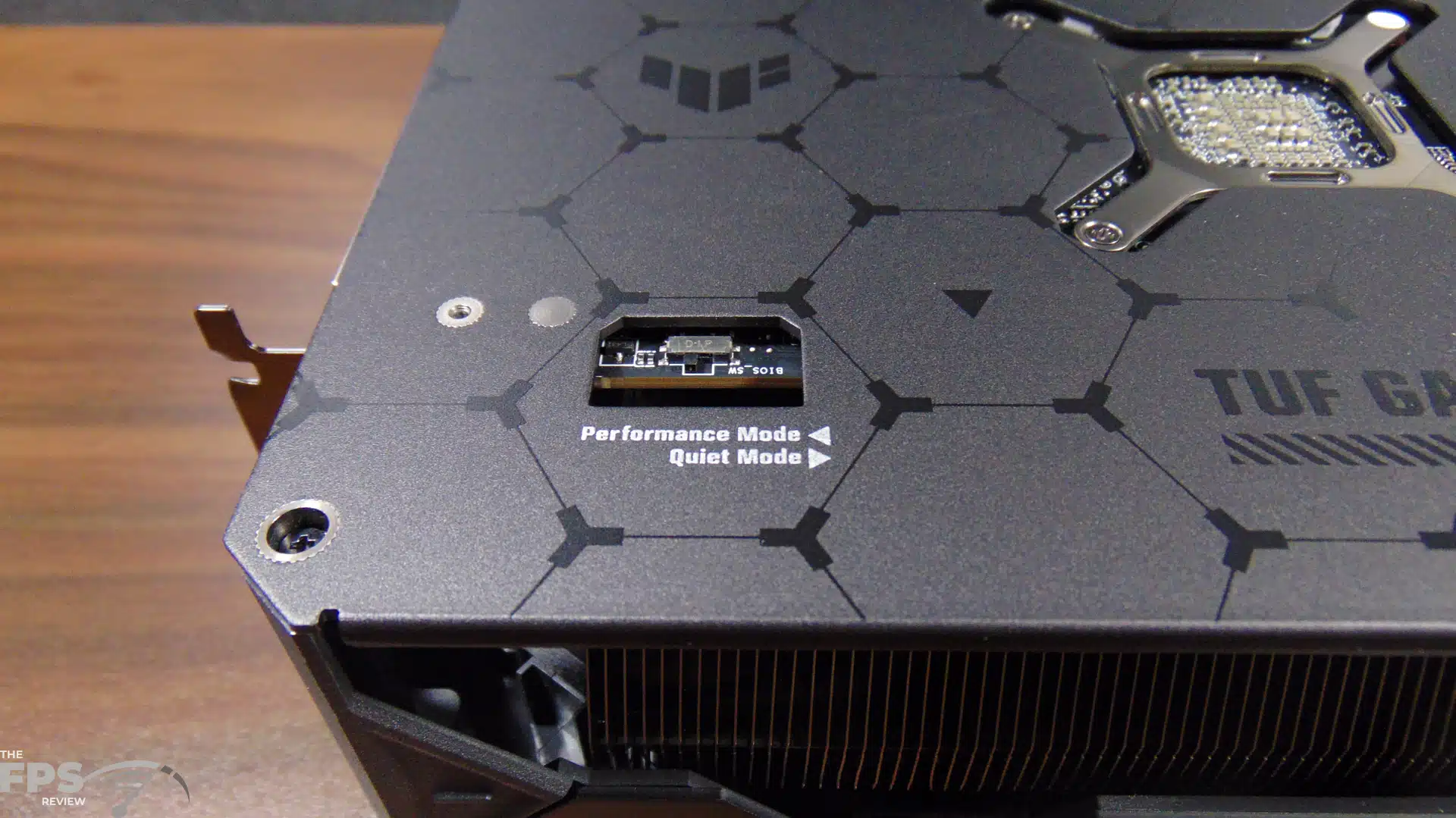
The ASUS TUF Gaming Radeon RX 7800 XT OC Edition also supports a dual-BIOS and has a performance and quiet mode, performance is the default mode. The difference is the fan curve. The ASUS TUF Gaming Radeon RX 7800 XT OC Edition also uses two 8-pin PCIe power connectors.

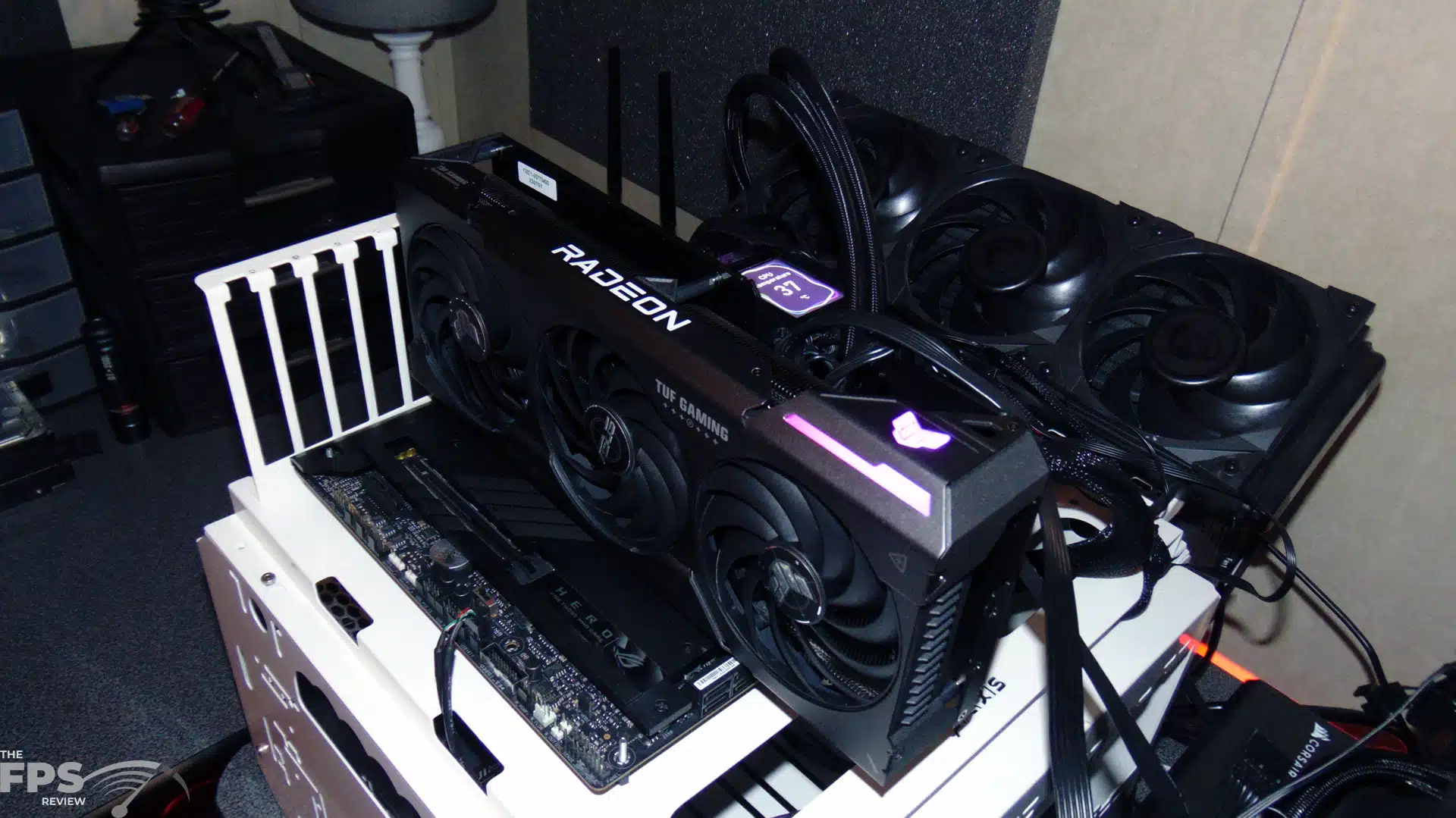
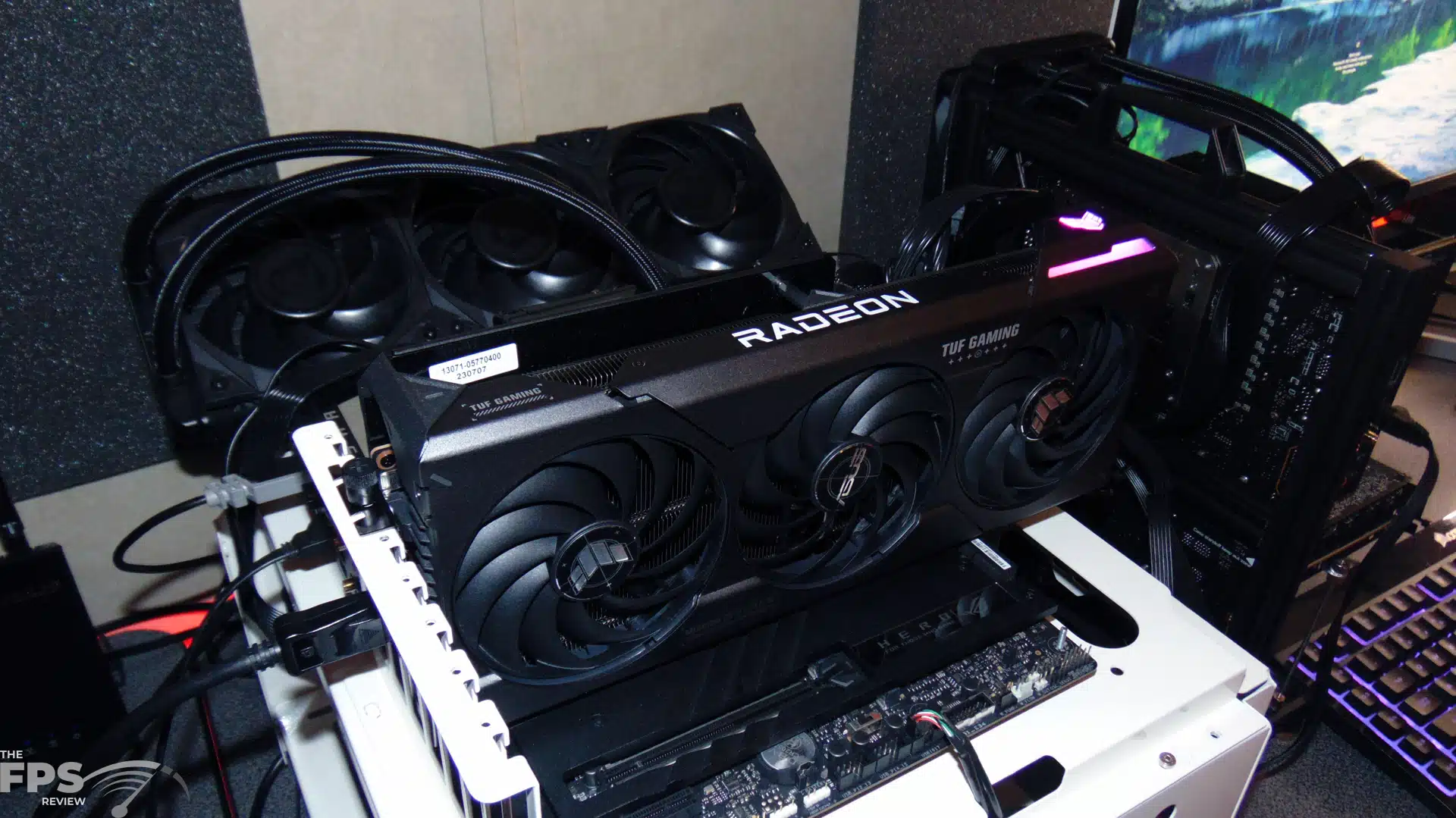
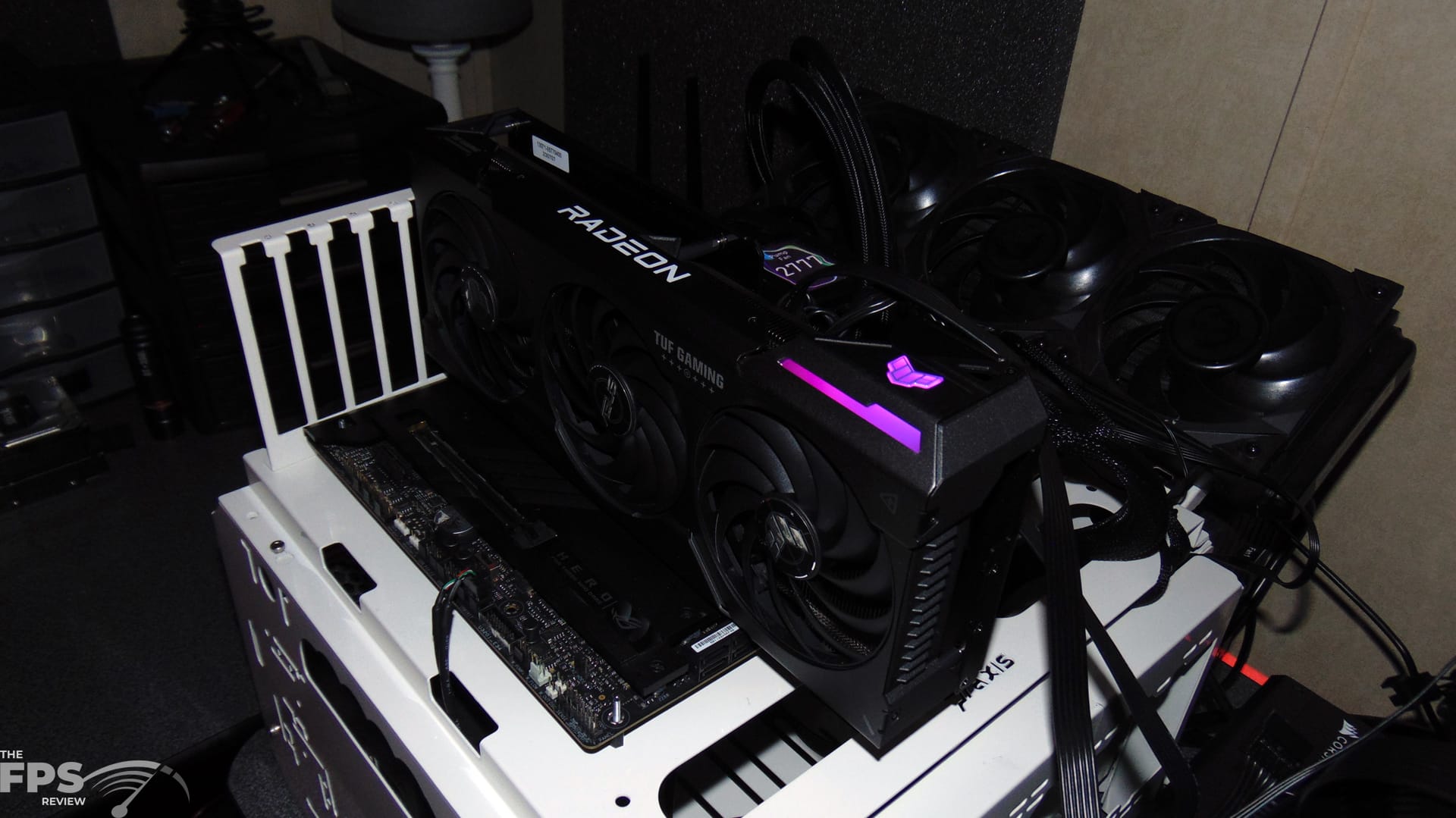
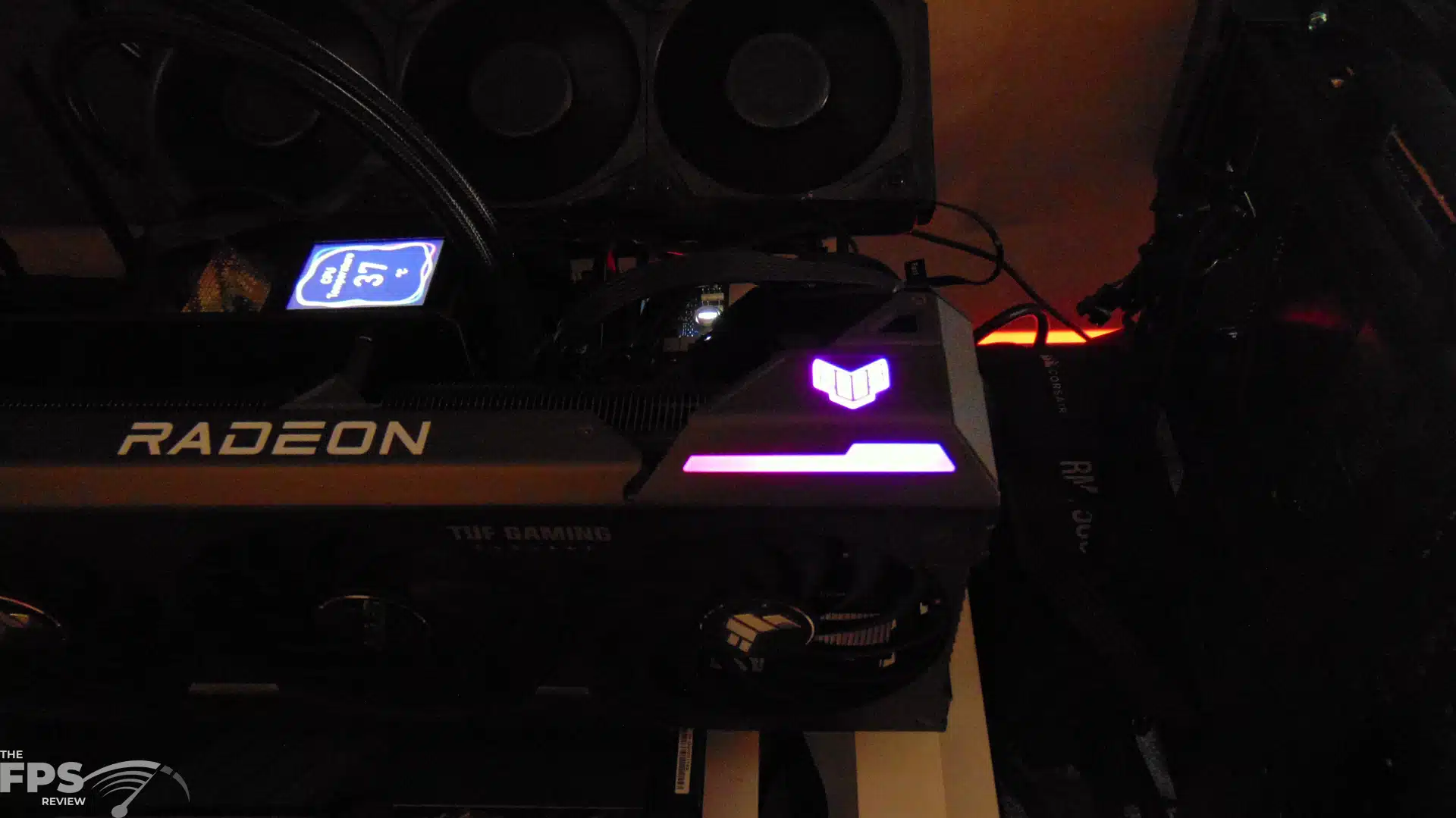
The ASUS TUF Gaming Radeon RX 7800 XT OC Edition supports ASUS Aura Sync ARGB lighting atop the video card controllable in software. Inside the box, you will find a graphics card holder to eliminate video card sag, and there is also an included screwdriver to help you build.
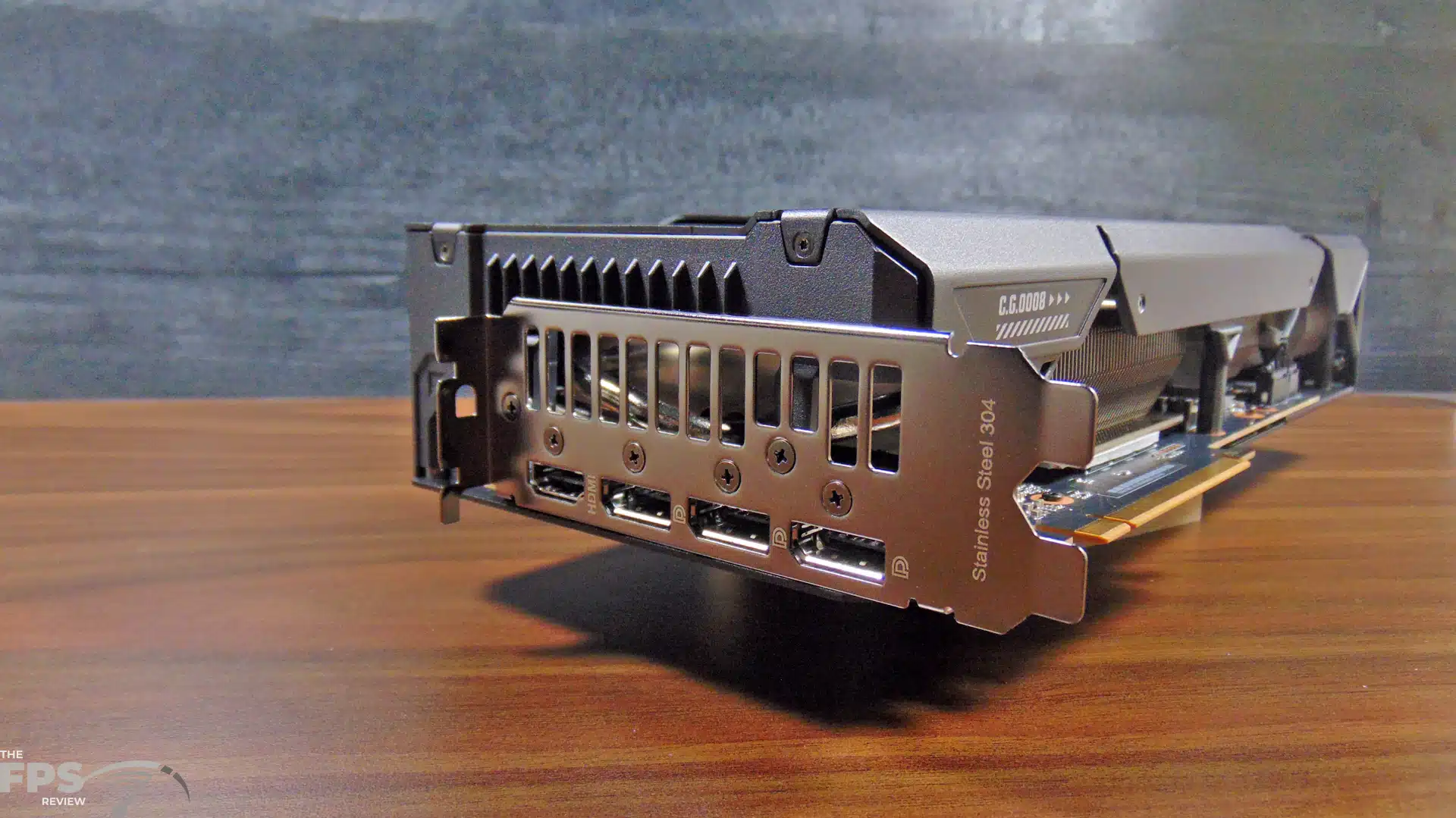
The ASUS TUF Gaming Radeon RX 7800 XT OC Edition has three DisplayPort 2.1 outputs and one HDMI 2.1 output on board. The recommended PSU is 750W.
Discussion (7 replies)
Join Discussion →I get comparing to it's closest competitor. But I feel like I must be remembering reviews with rose colored glasses. Didn't reviews compare new cards to one step up and one step down as well to see how they fit in the stack and if they were worth while?
I mean if you're constantly reading/watching reviews and ingesting data I suppose having just an review against the other teams price parity (or closest) makes sense. But as a consumer I would love to see if the 78000 XT card stacks well against another brands work with an same model, a 7900xt, and a 7600xt, as well as a 4080, and 4070ti/non ti.
Nice review, Brent.
Man I just about had my mind set on a 4070... this is $30 cheaper (than the $550 4070 Gigabyte I was looking at) and seems to be better in most cases. HMMMMMM.
You can look at what we've already reviewed and get a good idea of just that. We have already reviewed the XFX, Sapphire Nitro and reference AMD 7800XT cards. Thats real apples to apples. If you throw in a lesser or higher tier card, then you really don't get fair comparisons. What we try to do is show what is out there in the same price bracket or aimed at the same or similar gaming experience. TBH, right now the prices are all over the place, so that can be hard to do. That said, these reviews have always been pretty much about comparing cards that are closest in price and performance. We do throw in prior generation cards when a new gen is released. Also you have to consider the time it takes to run the data, graph it all out, compile the stats and then publish it. It takes about 4 or 5 days to knock out a polished review using an overclocked card, the out of box card and then the comparison card. If we did any more this stuff would be ancient history by the time you read it.
So why not include those in the chart? Or are we dealing with a like for like hardware issue between reviews. Since recreating the data doesn't make sense. Oh.. I get it with how intrisic driver versions are to performance improvements that wouldn't make sense.
Either you bench everything with an older driver, or you bench everything again with a newer one - and if you're doing it correctly and not over-automating reviews such that you miss things like artifacting and such, or using built-in benchmarks that do not represent gameplay (and perhaps favor one vendor over another, and that is different than gameplay) so that you wind up with results that are correct. At a minimum, really.
Benchmarking well is really a throughput problem that isn't easy to solve, unfortunately.
That has alot to do with it. Everything is tested on that day, using the latest most up to date everything.
Game updates can also make a difference - some games like Cyberpunk on GOG are easy enough to time machine into a specific version, but the more connected ones can force upgrade you.
There's a lot of variables to control for that we have a stack of internal documentation on to get things set up the same way every time. When looking at a single card, it's focused on 1-2 comparison options at that point in time. For a GPU level review, you'll see we run a much larger comparison dataset (usually limited by time before launch and who has what to ship to whom).