
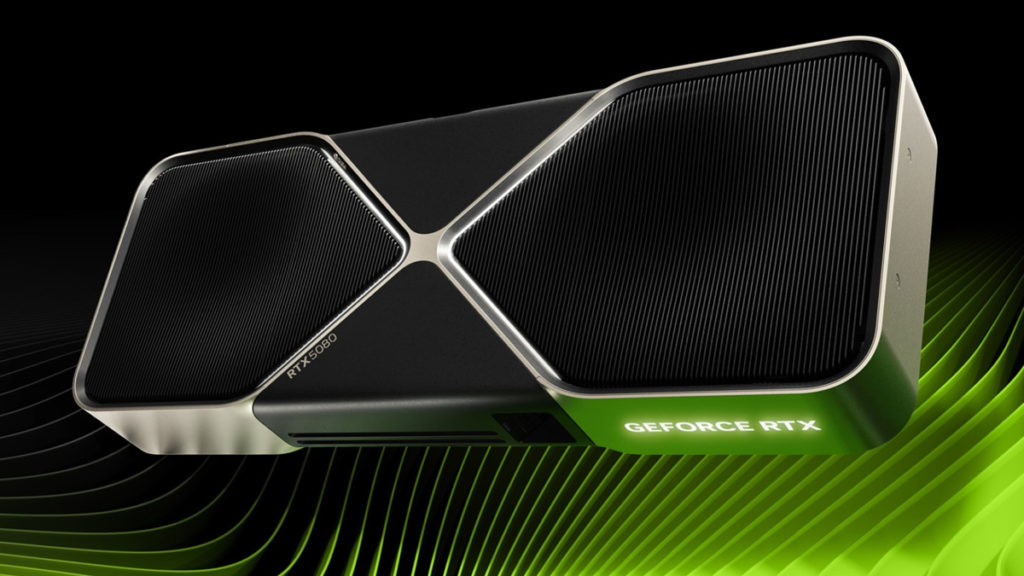
Tucked inside today’s GeForce Game Ready Driver 596.36 post was something a little more significant than a patch note: NVIDIA officially confirmed the existence and imminent launch of a new RTX 5070 Laptop GPU with 12GB of GDDR7. It’s a strange way to announce a new GPU SKU, but here we are in 2026, where memory supply chains drive product strategy more than roadmaps do.
The existing RTX 5070 Laptop GPU ships with 8GB of GDDR7 using four 16Gb (2GB) memory modules on a 128-bit bus. The new 12GB configuration replaces those with 24Gb (3GB) modules, adding 50% more VRAM capacity without widening the memory interface or changing the underlying GPU. It’s still the same GB206 chip: 4,608 CUDA cores, 36 RT cores, 144 Tensor cores, 128-bit bus, 384 GB/s bandwidth. Performance differences between the 8GB and 12GB variants will come primarily from reduced VRAM pressure in memory-hungry titles, not from additional compute headroom.
NVIDIA’s own statement makes the supply rationale explicit: the company says demand for GeForce RTX GPUs remains strong and 16Gb GDDR7 supply is constrained, so the 12GB variant was created to tap a separate pool of 24Gb modules from manufacturers like Samsung and Micron — both of which have been ramping that chip size in recent months. The 8GB model isn’t going away; both will coexist, giving laptop makers more SKU flexibility.
The first 12GB RTX 5070 laptops are expected to start shipping around June 2026, with ASUS, Lenovo, and MSI among the confirmed early adopters. MSI’s Crosshair 16 MAX HX and Lenovo’s Legion Pro 5 16ADR10 have already been confirmed. XMG also flagged that the 12GB RTX 5070 will appear in its Apex 16 Max and Apex 17 systems.
One caveat worth flagging: because the memory bus stays at 128-bit, the 12GB model does not close the bandwidth gap with the RTX 5070 Ti Laptop GPU, which uses a 192-bit interface for 672 GB/s. The 5070 12GB remains at 384 GB/s — same as the 8GB version. So if you’re deciding between the 5070 Ti and this new 5070, the Ti still has a significant bandwidth advantage even though both carry 12GB of total memory.
That said, for the majority of gaming workloads, the extra VRAM capacity should be helpful. The 8GB mobile 5070 has already drawn criticism for sharing a memory amount with the RTX 5050 and 5060, and for running out of headroom in demanding titles. If pricing stays reasonable relative to the 8GB variant, the 12GB is probably the smarter buy for most people looking at a new mid-range gaming laptop this summer.
Discussion (1 reply)
Join Discussion →What it rightly shoulda had the whole time.
Of course, it is really an RTX 5060 with a 128-bit bus, so I guess it was either 8 or 16, but still.