
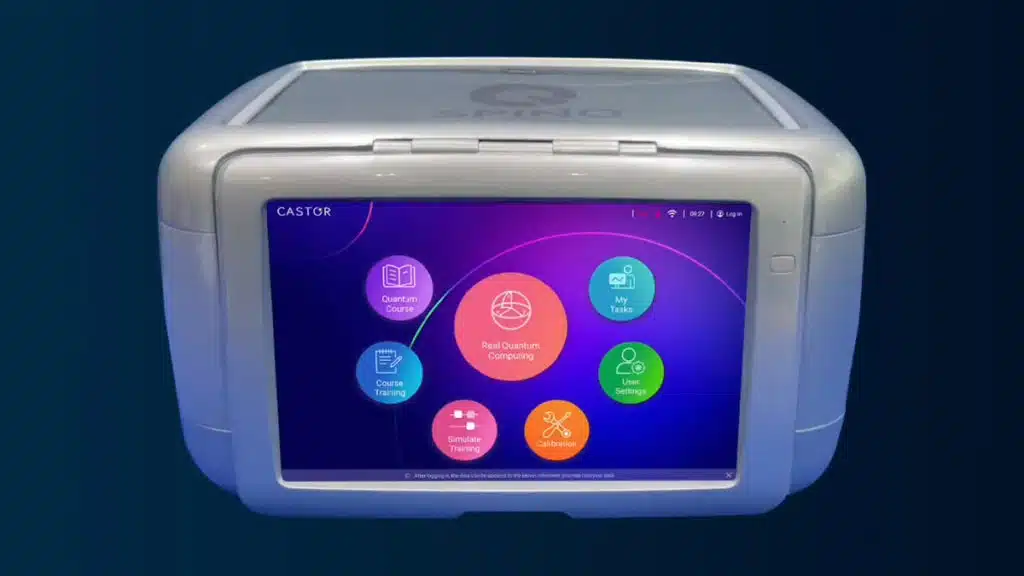
Switch Science Co., Ltd. has released what are reportedly the world’s first portable quantum computers in the form of the Gemini Mini, Gemini, and Triangulum, all of which were developed by SpinQ Technology in Shenzhen, China, and start at ¥1,188,000 (USD ~8,700).
According to a list of specifications shared by PC Watch, the Gemini Mini and Gemini are 2-qubit desktop quantum computers, while the Triangulum features up to 3 qubits, a term that refers to quantum bits, or units of quantum information.
Gemini Mini (1,188,000 yen)
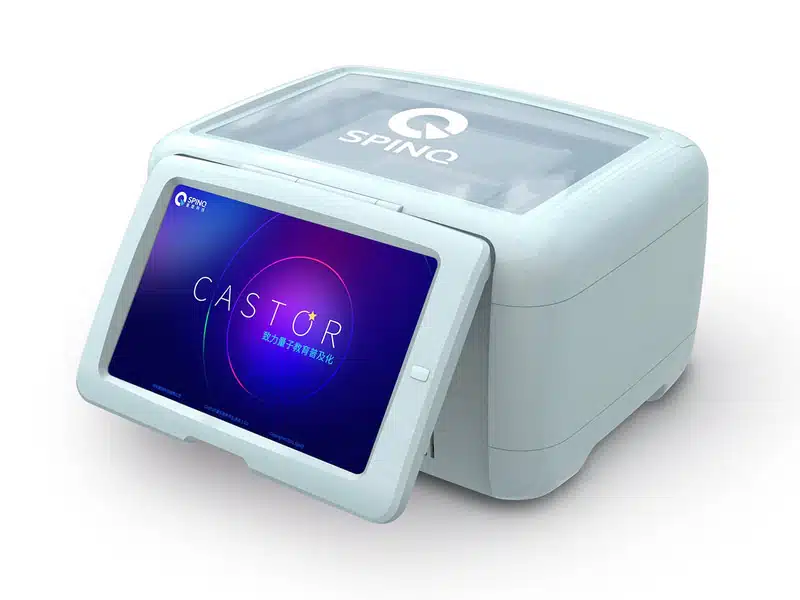
- Number of qubits: 2 Qubits
- Coherence time: >20ms
- Number of 1-qubit gate operations: >30gates
- Number of 2-qubit gate operations: >10gates
- Qubit frequency (H): 27±1.5MHz
- Qubit frequency (P): 11±0.5MHz
- Number of RF channels: 2
- Pulse resolution: <100 ns
- 90° pulse width:-<100 us
- Phase resolution: <0.1°
- Receiver dynamic range: -114 to 60dBm
- Digital converter: 500MS/s; 16Bit
- NMR signal peak resolution <50Hz (FWHM)
- Included software: CASTOR
- Built-in demo algorithms: 18 types
- Custom Algorithm: Configurable
- Rated power supply: 100-240V AC 50Hz/60Hz single phase
- Power consumption: ~60W
- Dimensions: 200 x 350 x 260mm
- Weight: 14kg
Gemini (5.72 million yen)
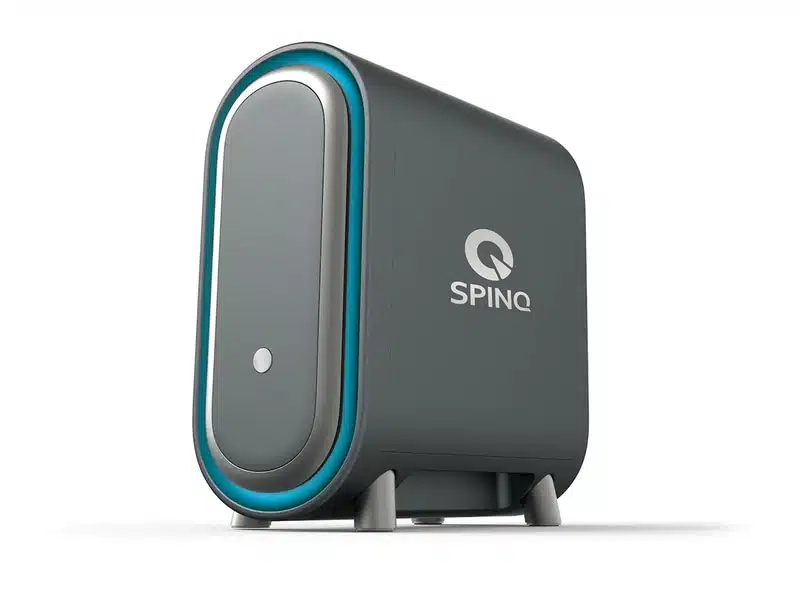
- Number of qubits: 2 Qubits
- Coherence time: >20 ms
- Number of 1-qubit gate operations: >200 gates
- Number of 2-qubit gate operations: >20 gates
- Qubit frequency (H): 41.3±2MHz
- Number of RF channels: 2
- Pulse resolution: <100 ns
- 90° pulse width: <30 us
- Phase resolution: <0.1°
- Receiver dynamic range: -114 to 60 dBm
- Digital converter: 500 MS/s; 8 Bit
- NMR signal peak resolution: <20 Hz (H2O) <41.3 Hz (experimental sample)
- Included software: SpinQuasar
- Built-in demo algorithms: 6 types
- Custom Algorithm: Configurable
- Rated power supply: 100-240V AC 50Hz/60Hz single phase
- Power consumption: ~100W
- Body size: 600 x 280 x 530mm
- Weight: 44kg
Triangulum (7.92 million yen)
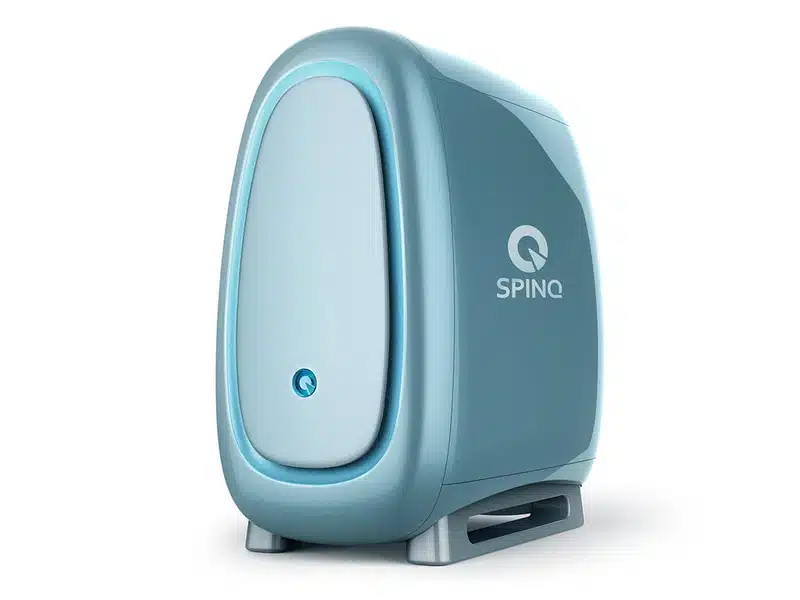
- Number of qubits: 3 Qubits
- Coherence time: >40 ms
- Number of 1-qubit gate operations: >40gates
- Number of multiple-qubit gate operations: >8gates
- Qubit frequency (F): 39.6±1MHz
- Number of RF channels: 2
- Pulse resolution: <10ns
- 90° pulse width: <20us
- Phase resolution: <0.1° Receiver dynamic range -114 to 60 dBm
- Digital converter: 800MS/s; 16Bit
- NMR signal peak resolution: <20Hz
- Included software: SpinQuasar
- Built-in demo algorithms: 6 types
- Custom Algorithm: Configurable
- Rated power supply: 100-240V AC 50Hz/60Hz single phase
- Power consumption: 330W
- Dimensions: 610 x 330 x 560mm
- Weight: 40kg
Quantum computing is a form of computing that uses quantum-mechanical phenomena, such as superposition and entanglement, to perform operations on data, as described by various sources online.
They are different from traditional computers based on transistors, in that traditional computers require data to be encoded into binary digits (i.e., bits), each of which is always in one of two definite states (0 or 1), but quantum computation uses quantum bits, which can be in superpositions of states.
Over 80 companies have invested heavily into quantum computing, according to lists shared online that include well-known names such as IBM, Google, Intel, and Microsoft.
The latter is responsible for Azure Quantum, a quantum cloud computing service that the Windows maker says brings together the most innovative quantum computing and optimization solutions into a single cloud service.
IBM has claimed that it leads the world in quantum computing.