
Power and Temperature
To test the power and temperature we performed an “all-out” “maximum threads maximum performance” “full load” scenario. In this scenario, we run Cinebench R23 for 10 minutes and record the power and temperature. This shows the power and temp with the CPUs flat out, foot to the floor, pushing them as hard as possible. We report the data from HWiNFO64.
Power – Maximum CPU Usage Cinebench R23
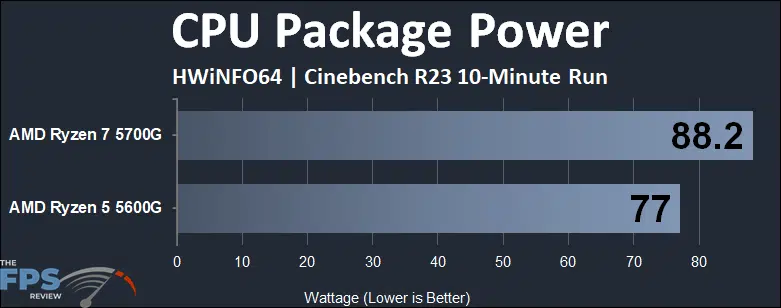
In terms of power both APUs have the same TDP, but depending on how they are configured by the default BIOS they can differ slightly on motherboards. The Ryzen 7 5700G on our setup pulled about 15% more power at the maximum peak power draw or about 10W more. Considering the extra cores/threads this is a very efficient number overall. The 5600G would save you about 13% on power, so if you are in a tightly constrained power situation the 5600G would be slightly better.
Temperature – Maximum CPU Usage Cinebench R23
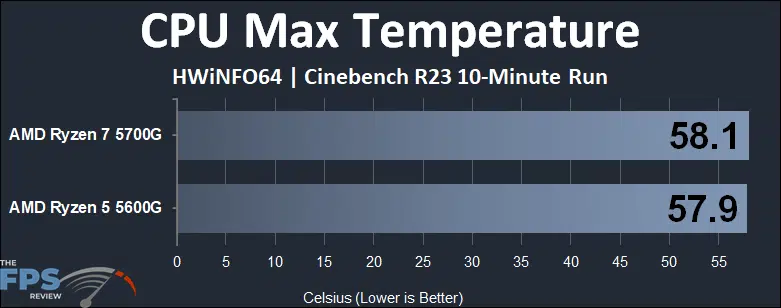
In terms of temperature, they both peaked at the same temperature, which is impressive considering the 5700G has 2 more cores.
Discussion (6 replies)
Join Discussion →How quickly things change. Even though I agree with the article conclusion, the soon to be released Ryzen 5 5600 would seem to be the best option for gaming while saving a few bucks.
If you consider that you are building a system, and want to save money by not buying a dedicated GPU, the G makes a lot of sense.
And that's why I said "Gaming"
Kinda surprised to see them tracking so close to each other.
Gaming wise, not much of a surprise, but even in applications they were much closer than I expected.
This is like deja vu of all the same 5600g v 5700g reviews from last year from other review sites I read and chose the 5600g in mine. Strange so many sites are reviewing these chips again.